Kirjojen hintavertailu. Mukana 12 152 606 kirjaa ja 12 kauppaa.

Kirjailija

Michael Khodarkovsky

Kirjat ja teokset yhdessä paikassa: 7 kirjaa, julkaisuja vuosilta 2004-2026, suosituimpien joukossa Russia's 20th Century. Vertaile teosten hintoja ja tarkista saatavuus suomalaisista kirjakaupoista.

7 kirjaa

Kirjojen julkaisuhaarukka 2004-2026.

The Steppe and Its Empires

The Steppe and Its Empires

Michael Khodarkovsky

YALE UNIVERSITY PRESS
2026
sidottu
A broad comparative study that highlights the importance of the Eurasian steppe and its impact on the arc of Russian history Throughout its existence, Russia has been a hybrid empire shaped by both Europe and Asia. Focusing on the formation of the Russian state between the sixteenth and the mid-nineteenth centuries, renowned historian Michael Khodarkovsky examines Russia’s structural similarities with its neighbors in Asia—the Ottoman, Persian, Mughal, and Chinese empires. While most historians have noted the transformations that brought Russia closer to modern European societies, the Russian empire’s shared characteristics with its non-European counterparts remain poorly understood. Khodarkovsky reveals the critical role of the Eurasian steppe in the formation of the empires, whose military-social institutions and political culture were distinctly different from those of the West. Ultimately, he argues that Russia is best understood as a hybrid Eurasian empire whose steppe origins and fluid frontiers propelled its relentless expansion, producing a vastly diverse empire with a blurred sense of national identity.
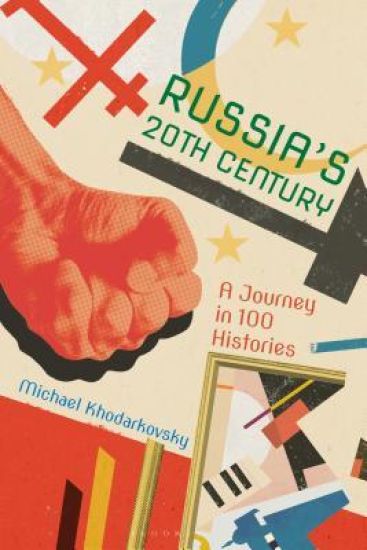
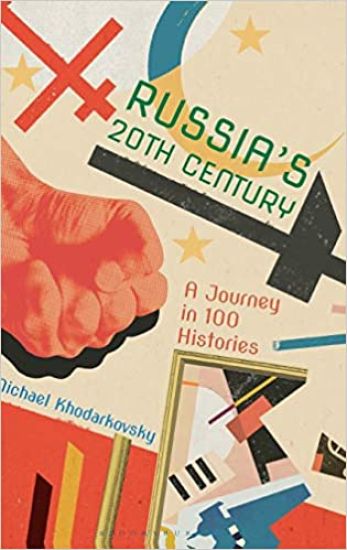
Russia's 20th Century

Russia's 20th Century

Michael Khodarkovsky

Bloomsbury Academic
2019
nidottu
Shortlisted for the William Saroyan International Prize for Writing 2020 Michael Khodarkovsky’s innovative exploration of Russia's 20th century, through 100 carefully selected vignettes that span the century, offers a fascinating prism through which to view Russian history. Each chosen microhistory focuses on one particular event or individual that allows you to understand Russia not in abstract terms but in real events in the lives of ordinary people. Russia's 20th Century covers a broad range of topics, including the economy, culture, politics, ideology, law and society. This introduction provides a vital background and engaging analysis of Russia’s path through a turbulent 20th century. A representative sample of chapters in the book includes: 1902: Peasants 1903: The Pogrom 1906: The Tsar’s Speech 1908: Church 1910: Tolstoy's Death 1913: The Romanovs 1916: Rasputin 1922: USSR 1927: Orphans into Communists 1931: Palace of the Soviets 1935: Manufacturing Heroes 1939: Hitler’s Ally 1941: Moscow on the Brink 1945: Rape of Germany 1949: Atomic Project 1954: Nuclear War Exercise “Snowball” 1955: Empire of Nations 1960: Virgin Lands 1969: The Soviet Dr. Seuss 1971: The Soviet Bob Dylan 1972: Nixon in Moscow and Kiev 1977: USSR, Less than a Sum of its Parts 1980: Moscow Olympic Games 1984: “Iron Maiden” Behind the Iron Curtain 1985: Vodka 1990: Soviet Nationalisms and Ethnic Wars 1997: Russian Fascism 1998: Return of the KGB The historical mosaic of Russia's 20th Century provides a unique examination of modern Russian history one snapshot at a time, prompting us to reflect on a larger picture of Russia’s past and its place in the world today.
Russia's 20th Century

Russia's 20th Century

Michael Khodarkovsky

Bloomsbury Academic
2019
sidottu
Shortlisted for the William Saroyan International Prize for Writing 2020Michael Khodarkovsky’s innovative exploration of Russia's 20th century, through 100 carefully selected vignettes that span the century, offers a fascinating prism through which to view Russian history. Each chosen microhistory focuses on one particular event or individual that allows you to understand Russia not in abstract terms but in real events in the lives of ordinary people. Russia's 20th Century covers a broad range of topics, including the economy, culture, politics, ideology, law and society. This introduction provides a vital background and engaging analysis of Russia’s path through a turbulent 20th century. A representative sample of chapters in the book includes:1902: Peasants1903: The Pogrom1906: The Tsar’s Speech1908: Church1910: Tolstoy's Death1913: The Romanovs1916: Rasputin1922: USSR1927: Orphans into Communists1931: Palace of the Soviets 1935: Manufacturing Heroes1939: Hitler’s Ally1941: Moscow on the Brink 1945: Rape of Germany1949: Atomic Project1954: Nuclear War Exercise “Snowball”1955: Empire of Nations1960: Virgin Lands 1969: The Soviet Dr. Seuss 1971: The Soviet Bob Dylan 1972: Nixon in Moscow and Kiev1977: USSR, Less than a Sum of its Parts 1980: Moscow Olympic Games1984: “Iron Maiden” Behind the Iron Curtain1985: Vodka 1990: Soviet Nationalisms and Ethnic Wars1997: Russian Fascism1998: Return of the KGBThe historical mosaic of Russia's 20th Century provides a unique examination of modern Russian history one snapshot at a time, prompting us to reflect on a larger picture of Russia’s past and its place in the world today.
Bitter Choices

Bitter Choices

Michael Khodarkovsky

Cornell University Press
2014
pokkari
Russia's attempt to consolidate its authority in the North Caucasus has exerted a terrible price on both sides since the mid-nineteenth century. Michael Khodarkovsky tells a concise and compelling history of the mountainous region between the Black and Caspian seas during the centuries of Russia's long conquest (1500–1850s). The history of the region unfolds against the background of one man's life story, Semën Atarshchikov (1807–1845). Torn between his Chechen identity and his duties as a lieutenant and translator in the Russian army, Atarshchikov defected, not once but twice, to join the mountaineers against the invading Russian troops. His was the experience more typical of Russia's empire-building in the borderlands than the better known stories of the audacious kidnappers and valiant battles. It is a history of the North Caucasus as seen from both sides of the conflict, which continues to make this region Russia's most violent and vulnerable frontier.
Bitter Choices

Bitter Choices

Michael Khodarkovsky

Cornell University Press
2011
sidottu
Russia's attempt to consolidate its authority in the North Caucasus has exerted a terrible price on both sides since the mid-nineteenth century. Michael Khodarkovsky tells a concise and compelling history of the mountainous region between the Black and Caspian seas during the centuries of Russia's long conquest (1500–1850s). The history of the region unfolds against the background of one man's life story, Semën Atarshchikov (1807–1845). Torn between his Chechen identity and his duties as a lieutenant and translator in the Russian army, Atarshchikov defected, not once but twice, to join the mountaineers against the invading Russian troops. His was the experience more typical of Russia's empire-building in the borderlands than the better known stories of the audacious kidnappers and valiant battles. It is a history of the North Caucasus as seen from both sides of the conflict, which continues to make this region Russia's most violent and vulnerable frontier.
Where Two Worlds Met

Where Two Worlds Met

Michael Khodarkovsky

Cornell University Press
2006
pokkari
During the seventeenth and eighteenth centuries the expanding Russian empire was embroiled in a dramatic confrontation with the nomadic people known as the Kalmyks who had moved westward from Inner Asia onto the vast Caspian and Volga steppes. Drawing on an unparalleled body of Russian and Turkish sources—including chronicles, epics, travelogues, and previously unstudied Ottoman archival materials—Michael Khodarkovsky offers a fresh interpretation of this long and destructive conflict, which ended with the unruly frontier becoming another province of the Russian empire. Khodarkovsky first sketches a cultural anthropology of the Kalmyk tribes, focusing on the assumptions they brought to the interactions with one another and with the sedentary cultures they encountered. In light of this portrait of Kalmyk culture and internal politics, Khodarkovsky rereads from the Kalmyk point of view the Russian history of disputes between the two peoples. Whenever possible, he compares Ottoman accounts of these events with the Russian sources on which earlier interpretations have been based. Khodarkovsky's analysis deepens our understanding of the history of Russian expansion and establishes a new paradigm for future study of the interaction between the Russians and the non-Russian peoples of Central Asia and Transcaucasia.
Russia's Steppe Frontier

Russia's Steppe Frontier

Michael Khodarkovsky

Indiana University Press
2004
pokkari
"Khodarkovsky provides a detailed chronological narrative of Russia's steppe relations, which conveys brilliantly the depth of Moscow's engagement in the world of steppe politics. . . . This is counterbalanced by insightful thematic discussion of the perennial issues involved. . . . Altogether, an excellent study of a vital dimension of Russia's historical evolution." —Slavonic and East European Review ". . . the first connected account of Moscow's assertion of military and political control over its steppe frontier. The book's scope is impressive, as it traces the transformation of a turbulent steppe frontier into an imperial borderland. . . . a signal contribution to our understanding of European history." —American Historical Review Drawing on sources and archival materials in Russian and Turkic languages, Russia's Steppe Frontier presents a complex picture of the encounter between indigenous peoples and the Russians. An original and invaluable resource for understanding Russia's imperial experience.