Kirjailija
Michael Kimmel
Kirjat ja teokset yhdessä paikassa: 22 kirjaa, julkaisuja vuosilta 1990-2026, suosituimpien joukossa Masculinities and the Law. Vertaile teosten hintoja ja tarkista saatavuus suomalaisista kirjakaupoista.
22 kirjaa
Kirjojen julkaisuhaarukka 1990-2026.
According to masculinities theory, masculinity is not a biological imperative but a social construction. Men engage in a constant struggle with other men to prove their masculinity. Masculinities and the Law develops a multidimensional approach. It sees categories of identity—including various forms of raced, classed, and sex-oriented masculinities—as operating simultaneously and creating different effects in different contexts. By applying multidimensional masculinities theory to law, this cutting-edge collection both expands the field of masculinities and develops new thinking about important issues in feminist and critical race theories. The topics covered include how norms of masculinity influence the behavior of policemen, firefighters, and international soldiers on television and in the real world; employment discrimination against masculine cocktail waitresses and all transgendered employees; the legal treatment of fathers in the U.S. and the ways unauthorized migrant fathers use the dangers of border crossing to boost their masculine esteem; how Title IX fails to curtail the masculinity of sport; the racist assumptions behind the prison rape debate; the surprising roots of homophobia in Jamaican dancehall music; and the contradictions of the legal debate over women veiling in Turkey. Ultimately, the book argues that multidimensional masculinities theory can change how law is interpreted and applied.

Playmakers: The Jewish Entrepreneurs Who Created the Toy Industry in America
Michael Kimmel
W. W. Norton Company
2026
sidottu
Using a range of in-depth historical case studies, this timely work excavates the oft-forgotten tradition of progressive populism and highlights the relevance of such movements to our own tumultuous times.Populism in its 21st-century guise is often centered around exclusionary notions of nationality and the exultation of an authoritarian leader. Yet, as this book demonstrates, this has not always been the case. As demonstrated by the Levellers in the English Civil War and the Sans-Culottes in the French Revolution, the ideas of progressive populism have often surfaced in the midst of revolution where they have sought to ensure that revolutions do not deviate from their lofty ideals. Progressive populism has also emerged during periods of crisis and social dislocation, reasserting conceptions of the “moral economy” and a romanticized view of the past in support of their goals. By looking at the trajectories of past iterations of these ideas, Michael Kimmel retrieves a different populism, based not upon the illusory entity of “the people,” but something more concrete: the capacity of real people, living their lives with a sense of both autonomy and community.This book will be of interest to students and scholars in disciplines including sociology, history, and political science.
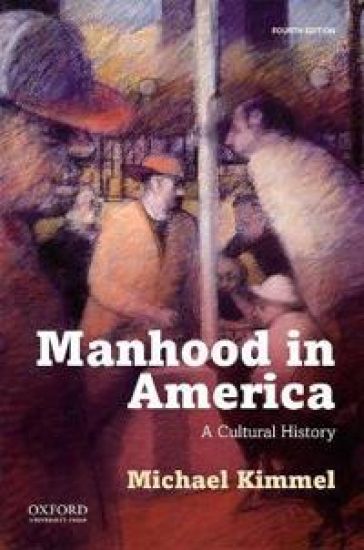
For more than three decades, the women's movement and its scholars have exhaustively studied women's complex history, roles, and struggles. In Manhood in America: A Cultural History, Fourth Edition, author Michael Kimmel argues that it is time for men to rediscover their own evolution. Drawing on a myriad of sources, he demonstrates that American men have been eternally frustrated by their efforts to keep up with constantly changing standards. Kimmel contends that men must follow the lead of the women's movement; it is only by mining their past for its best qualities and worst excesses that men will free themselves from the constraints of the masculine ideal.
Now published by Oxford University Press--at a new, lower price--Men's Lives reflects on the question "What does it mean to be a man in contemporary U.S. society?" Edited by two of the field's most prominent researchers, and organized around themes that define masculinity, this best-selling reader uses a social-constructionist view to examine how men construct masculinity within a social and historical context.
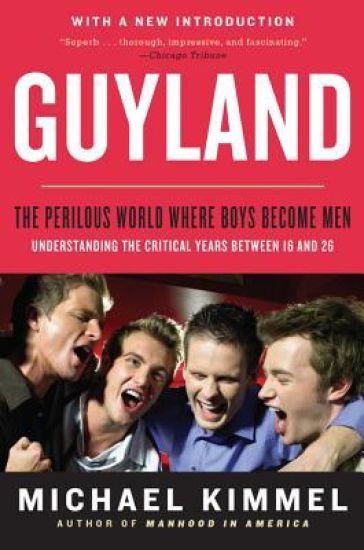
One of the most eminent scholars and writers on men and masculinity and the author of the critically acclaimed Manhood in America turns his attention to the culture of guys, aged 16 to 26: their attitudes, their relationships, their rules, and their rituals."Kimmel is our seasoned guide into a world that, unless we are guys, we barely know exists. As he walks with us through dark territories, he points out the significant and reflects on its meaning."--Mary Pipher, Ph.D., author of Reviving OpheliaThe passage from adolescence to adulthood was once clear. Today, growing up has become more complex and confusing, as young men drift casually through college and beyond--hanging out, partying, playing with tech toys, watching sports. But beneath the appearance of a simple extended boyhood, a more dangerous social world has developed, far away from the traditional signposts and cultural signals that once helped boys navigate their way to manhood--a territory Michael Kimmel has identified as "Guyland."In mapping the troubling social world where men are now made, Kimmel offers a view into the minds and times of America's sons, brothers, and boyfriends, and he works toward redefining what it means to be a man today--and tomorrow. Only by understanding this world and this life stage can we enable young men to chart their own paths, stay true to themselves, and emerge safely from Guyland as responsible and fully formed male adults.
By the time Matthias was in seventh grade, he felt he’d better belong to some group, lest he be alone and vulnerable. The punks and anarchists were identifiable by their tattoos and hairstyles and music. But it was the skinheads who captured his imagination. They had great parties, and everyone seemed afraid of them. “They really represented what it meant to be a strong man,” he said. What draws young men into violent extremist groups? What are the ideologies that inspire them to join? And what are the emotional bonds forged that make it difficult to leave, even when they want to? Having conducted in-depth interviews with ex–white nationalists and neo-Nazis in the United States, as well as ex-skinheads and ex-neo-Nazis in Germany and Sweden, renowned sociologist Michael Kimmel demonstrates the pernicious effects that constructions of masculinity have on these young recruits. Kimmel unveils how white extremist groups wield masculinity to recruit and retain members—and to prevent them from exiting the movement. Young men in these groups often feel a sense of righteous indignation, seeing themselves as victims, their birthright upended in a world dominated by political correctness. Offering the promise of being able to "take back their manhood," these groups leverage stereotypes of masculinity to manipulate despair into white supremacist and neo-Nazi hatred. Kimmel combines individual stories with a multiangled analysis of the structural, political, and economic forces that marginalize these men to shed light on their feelings, yet make no excuses for their actions. Healing from Hate reminds us of some men's efforts to exit the movements and reintegrate themselves back into society and is a call to action to those who make it out to help those who are still trapped.
We hear them on talk radio airwaves bellowing about minorities. We watch them organize anti-immigration demonstrations on the border. We read their opinions regarding the demise of white male privilege. And sometimes, tragically, we witness their aggression through vigilante violence, as in the cases of Wade Michael Page, James Eagan Holmes, Elliot Rodger, George Zimmerman, and many more. They are America's angry white men, including "men's rights" activists who think white men are the victims of discrimination, as well as members of the "white wing" of the rightward fringes of the American political spectrum. Why are they so angry?Sociologist Michael Kimmel, one of the leading writers on men and masculinity in the world today, has spent hundreds of hours in the company of America's angry white men in pursuit of an answer. Raised to expect unparalleled social and economic privilege, white men are suffering today from what Kimmel calls "aggrieved entitlement": a sense that those benefits that white men believed were their due have been snatched away from them. In Angry White Men, Kimmel presents a comprehensive diagnosis of their fears, anxieties, and rage.
In The Gendered Society Reader, Sixth Edition, coeditors Michael Kimmel and Amy Aronson pull together an array of dynamic voices--both male and female, classic and contemporary--to examine various interpretations of gender. These lively, in-depth readings explore gender discourse over a wide range of disciplines, focusing primarily on two central issues: difference and domination. Carefully balanced to reflect the diversity of its subject, this text addresses provocative and fundamental questions including: * How are males and females different?* What do these differences mean?* How to various cultures and religions interpret gender?* Why do societies continue to differentiate people on the basis of gender?* Why is it that almost every known society is based on male domination? Thoroughly updated with rich and timely material, the sixth edition is the perfect complement to Michael Kimmel's textbook, The Gendered Society, Sixth Edition (OUP, 2016).
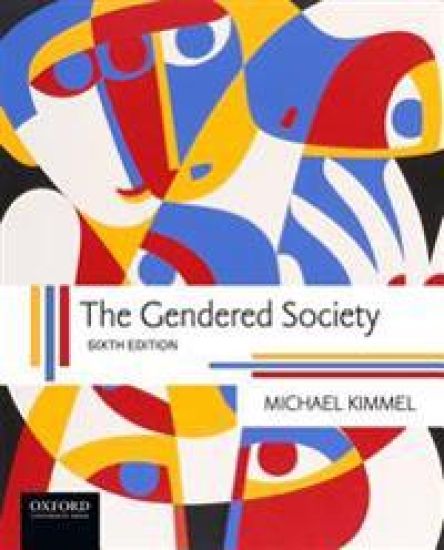
The sixth edition of The Gendered Society explores current thinking about gender, both inside academia and in our everyday lives. Michael Kimmel challenges the claim that gender is limited to women's experiences--his compelling and balanced study of gender includes both masculine and feminine perspectives. Kimmel makes three bold and persuasive statements about gender. First, he demonstrates that gender differences are often extremely exaggerated; in fact, he argues that men and women have much more in common than we think they do. Kimmel also challenges the pop psychologists who suggest that gender difference is the cause of inequality between the sexes; instead, he reveals that the reverse is true-gender inequality itself is the cause of the differences between men and women. Finally, he illustrates that gender is not merely an element of individual identity, but a socially constructed institutional phenomenon.
This anthology on sexuality addresses such key questions as: How are sexualities socially constructed? Why are sexualities more than just natural "urges"? and How are sexualities personal, social, and political? Using multiple disciplines, international populations, and theories to explore sexualities, it opens with classical and contemporary theories, and then explores the ways in which we learn about sexual activities and develop sexual identities. Sexualities: Identities, Behaviors, and Society has a strong sociological approach, but also considers other important perspectives (psychology, biology, history). It is rigorous, yet accessible and engaging, covering classical and contemporary arguments and perspectives. For this second edition, the author and contributors have thoroughly revised the manuscript to include a wide variety of additional topical coverage, added critical thinking and discussing quesitons to each article, and created a glossary of key terms.
Dangers & Discoveries
Michael Kimmel; Chris A. Field
Createspace Independent Publishing Platform
2012
nidottu
In just one generation, age-old ideas about women have been swept aside ...but what does that have to do with men? Authors Michael Kaufman and Michael Kimmel, two of the world's leading male advocates of gender equality, believe it has everything to do with them,and that it's crucial to educate men about feminism in order for them to fully understand just how important and positive these changes have been for them.Kaufman and Kimmel address these issues in The Guy's Guide to Feminism. Hip and accessible, it contains nearly a hundred entries,from Autonomy" to Zero Tolerance",written in varying tones (humorous, satirical, irreverent, thoughtful, and serious) and in many forms ( top ten" lists, comics, interviews, mini-stories, and more). Each topic celebrates the ongoing gains that are improving the lives of women and girls,and what that really means for men.Informal and fun yet substantive and intelligent, The Guy's Guide to Feminism illustrates how understanding and supporting feminism can help men live richer, fuller, and happier lives.
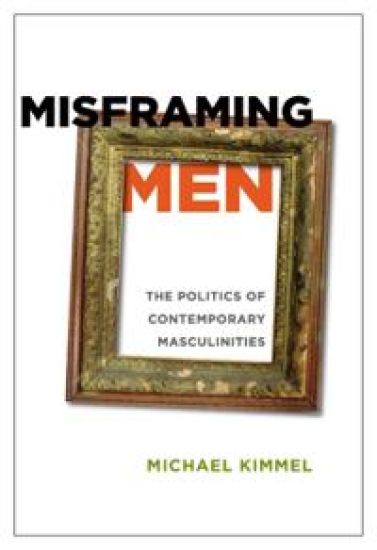
This past decade has witnessed an extraordinary transformation in men's lives. For years, wave after wave of the women's movement, a movement that reshaped every aspect of American life, produced nary a ripple among men. But suddenly men are in the spotlight.Yet, the public discussions often seem strained, silly, and sometimes flat-out wrong. The spotlight itself seems to obscure as much as it illuminates. Old tired clichTs about men's resistance to romantic commitment or reluctance to be led to the marriage altar seem perennially recyclable in advice books and on TV talk shows, but these days the laughter feels more forced, the defensiveness more pronounced. Pop biologists avoid careful confrontation with serious scientific research in their quest to find anatomical or evolutionary bases for promiscuity or porn addiction, hoping that by fiat, one can pronounce that "boys will be boys" and render it more than a flaccid tautology. And political pundits wring their hands about the feminization of American manhood, as if gender equality has neutered these formerly proud studs. Misframing Men, a collection of Michael Kimmel's commentaries on contemporary debates about masculinity, argues that the media have largely misframed this debate.Kimmel, among the world's best-known scholars in gender studies, discusses political moments such as the Virginia Military Institute and Citadel cases that reached the Supreme Court (he participated as expert witness for the Justice Department) along with Promise Keepers rallies, mythopoetic gatherings, and white supremacists. He takes on antifeminists as the real male bashers, questions the unsubstantiated assertions that men suffer from domestic violence to the same degree as women, and examines the claims made by those who want to rescue boys from the "misandrous" reforms initiated by feminism.In writings both solidly grounded and forcefully argued, Kimmel pushes the boundaries of today's modern conversation about men and masculinity.
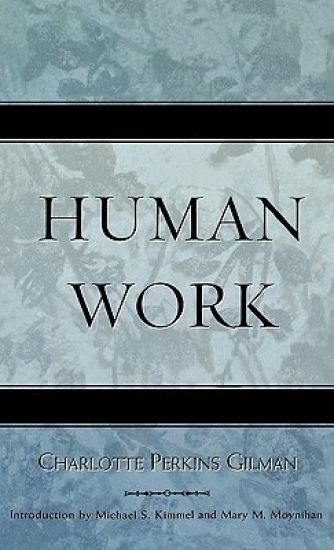
Human Work
Charlotte Perkins Gilman; Michael Kimmel; Mary M. Moynihan
AltaMira Press,U.S.
2005
sidottu
Human Work represents the first ground breaking analysis on the equal importance of work in the lives of men and women. Noted feminist Charlotte Perkins Gilman maintains the notion that it was 'sexuo-economic oppression of women' and not women's biology that kept women from achieving in all areas of work. Accusing men of appropriating certain work as 'men's work' and masking the process as a biological locus rather than an exercise in power relations, Gilman asserts that men created an economic dependence that has prevented women from success in the workplace. Introduced by noted scholars Michael Kimmel and Mary Moynihan, Human Work is necessary reading for anyone interested in power and gender structures in the workplace.
Human Work
Charlotte Perkins Gilman; Michael Kimmel; Mary M. Moynihan
AltaMira Press,U.S.
2005
nidottu
Human Work represents the first ground breaking analysis on the equal importance of work in the lives of men and women. Noted feminist Charlotte Perkins Gilman maintains the notion that it was "sexuo-economic oppression of women" and not women's biology that kept women from achieving in all areas of work. Accusing men of appropriating certain work as "men's work" and masking the process as a biological locus rather than an exercise in power relations, Gilman asserts that men created an economic dependence that has prevented women from success in the workplace. Introduced by noted scholars Michael Kimmel and Mary Moynihan, Human Work is necessary reading for anyone interested in power and gender structures in the workplace.
This fiction anthology chronicles the varied experiences of the road to manhood through the personal narratives and poems of writers from around the world. The contributors include Shepherd Bliss, Robert Bly, Edward Field, John Gilgun, Fred Wei-han Ho, Terry A. Kupers, Rakesh Ratti, John Silva, Malidoma P. Some, Sy Safransky and Bhante Wimala.
A sociological examination into the emergence of male homosexuality with a traditional masculine ethos Before gay liberation, gay men were usually perceived as failed men—"inverts," men trapped in women's bodies. The 1970s saw a radical shift in gay male culture, as a male homosexuality emerged that embraced a more traditional masculine ethos. The gay clone, a muscle-bound, sexually free, hard-living Marlboro man, appeared in the gay enclaves of major cities, changing forever the face of gay male culture. Gay Macho presents the ethnography of this homosexual clone. Martin P. Levine, a pioneer of the sociological study of homosexuality, was among the first social scientists to map the emergence of a gay community and this new style of gay masculinity. Levine was a participant in as well as an observer of gay culture in the 1970s, and this perspective allowed him to capture the true flavor of what it was like to be a gay man before AIDS. Levine's clone was a gender conformist, whose masculinity was demonstrated in patterns of social interaction and especially in his sexuality. According to Levine, his life centered around the "four D's: disco, drugs, dish, and dick." Later chapters, based on Levine's pathbreaking empirical research, explore some of the epidemiological and social consequences of the AIDS epidemic on this particular substratum of the gay community. Although Levine explicitly refuses to pathologize gay men afflicted with HIV, his work develops a scathing, feminist-inspired critique of masculinity, whether practiced by gay or straight men.