Kirjojen hintavertailu. Mukana 12 390 323 kirjaa ja 12 kauppaa.

Kirjailija

Michael L. Peterson

Kirjat ja teokset yhdessä paikassa: 11 kirjaa, julkaisuja vuosilta 1998-2024, suosituimpien joukossa Experimental Test Methods for Inflatable Fabric Beams. Vertaile teosten hintoja ja tarkista saatavuus suomalaisista kirjakaupoista.

Mukana myös kirjoitusasut: Michael L Peterson

11 kirjaa

Kirjojen julkaisuhaarukka 1998-2024.

Jesus and the Genome

Jesus and the Genome

Michael L. Peterson; Timothy J. Pawl; Ben F. Brammell

Cambridge University Press
2024
pokkari
Is a coherent worldview that embraces both classical Christology and modern evolutionary biology possible? This volume explores this fundamental question through an engaged inquiry into key topics, including the Incarnation, the process of evolution, modes of divine action, the nature of rationality, morality, chance and love, and even the meaning of life. Grounded alike in the history and philosophy of science, Christian theology, and the scientific basis for evolutionary biology and genetics, the volume discusses diverse thinkers, both medieval and modern, ranging from Augustine and Aquinas to contemporary voices like Richard Dawkins and Michael Ruse. Aiming to show how a biologically informed Christian worldview is scientifically, theologically, and philosophically viable, it offers important perspectives on the worldview of evolutionary naturalism, a prominent perspective in current science–religion discussions. The authors argue for the intellectual plausibility of a comprehensive worldview perspective that embraces both Christology and evolution biology in intimate relationship.
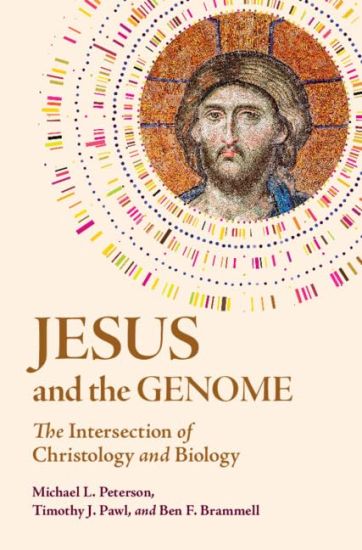
Jesus and the Genome

Jesus and the Genome

Michael L. Peterson; Timothy J. Pawl; Ben F. Brammell

Cambridge University Press
2024
sidottu
Is a coherent worldview that embraces both classical Christology and modern evolutionary biology possible? This volume explores this fundamental question through an engaged inquiry into key topics, including the Incarnation, the process of evolution, modes of divine action, the nature of rationality, morality, chance and love, and even the meaning of life. Grounded alike in the history and philosophy of science, Christian theology, and the scientific basis for evolutionary biology and genetics, the volume discusses diverse thinkers, both medieval and modern, ranging from Augustine and Aquinas to contemporary voices like Richard Dawkins and Michael Ruse. Aiming to show how a biologically informed Christian worldview is scientifically, theologically, and philosophically viable, it offers important perspectives on the worldview of evolutionary naturalism, a prominent perspective in current science–religion discussions. The authors argue for the intellectual plausibility of a comprehensive worldview perspective that embraces both Christology and evolution biology in intimate relationship.
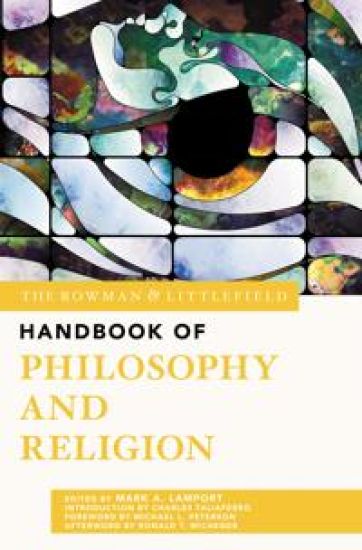
The Rowman & Littlefield Handbook of Philosophy and Religion

The Rowman & Littlefield Handbook of Philosophy and Religion

Michael L. Peterson; Ronald T. Michener

BLOOMSBURY PUBLISHING PLC
2024
nidottu
The Handbook of Philosophy and Religion is a one-volume examination of the most salient concepts that sit at the intersection of religion and philosophy. This book grounds readers in the mysteries that have evoked wonder and consternation for millennia, such as the nature of divinity in relation to humanity, the legitimacy of religious experience and how we frame language to speak about it, the possibility of miraculous occurrences, and theories regarding life after death.
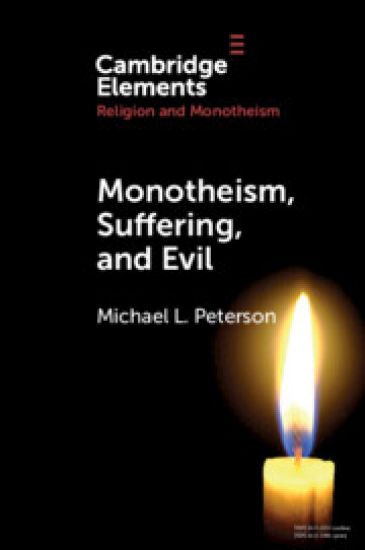
Monotheism, Suffering, and Evil

Monotheism, Suffering, and Evil

Michael L. Peterson

Cambridge University Press
2022
pokkari
Suffering and evil in the world provide the basis for the most difficult challenge to monotheistic belief. This Element discusses how the three great monotheisms – Judaism, Christianity, and Islam – respond to the problem of suffering and evil. Different versions of the problem, types of answers, and recurring themes in philosophical and religious sources are analyzed. Objections to the enterprise of theodicy are also discussed as are additional objections to the monotheistic God more broadly. This treatment culminates in a recommendation for how monotheism can best respond to the most serious formulation of the problem, the argument from gratuitous evil.
The Rowman & Littlefield Handbook of Philosophy and Religion

The Rowman & Littlefield Handbook of Philosophy and Religion

Michael L. Peterson; Ronald T. Michener

BLOOMSBURY PUBLISHING PLC
2022
sidottu
The Handbook of Philosophy and Religion is a one-volume examination of the most salient concepts that sit at the intersection of religion and philosophy. This book grounds readers in the mysteries that have evoked wonder and consternation for millennia, such as the nature of divinity in relation to humanity, the legitimacy of religious experience and how we frame language to speak about it, the possibility of miraculous occurrences, and theories regarding life after death.
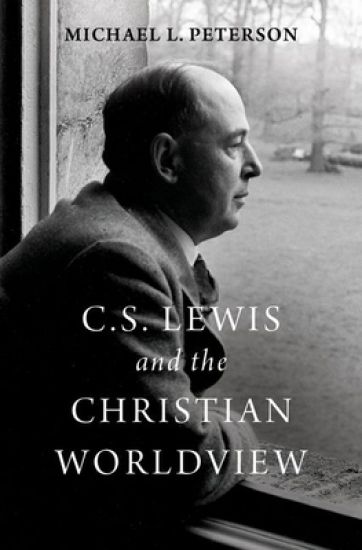
C. S. Lewis and the Christian Worldview

C. S. Lewis and the Christian Worldview

Michael L. Peterson

Oxford University Press Inc
2020
sidottu
C. S. Lewis is one of the most influential and beloved Christian writers of the past century, and interest in him continues to grow as books about his fantasy, fiction, and biography continue to appear. Although Lewis's personal journey was a deeply philosophical search for the most adequate worldview, the few extant books about his Christian philosophy focus on specific topics rather than his overall worldview. In this book, Michael Peterson develops a comprehensive framework for understanding Lewis's Christian worldview--from his arguments from reason, morality, and desire to his ideas about Incarnation, Trinity, and Atonement. All worldviews address fundamental questions about reality, knowledge, human nature, meaning, and so forth. Peterson therefore examines Lewis's Christian approach to these same questions in interaction with other worldviews. Accenting that the intellectual strength and existential relevance of Lewis's works rest on his philosophical acumen as well as his Christian orthodoxy--which he famously called "mere Christianity"--Peterson skillfully shows how Lewis's Christian thought engages a variety of important problems raised by believers and nonbelievers alike: the problem of evil and suffering, the problem of religious diversity, the problem of meaning, and others. Just as Lewis was gifted in communicating philosophical ideas and arguments in an accessible style, Peterson has crafted a major contribution to Lewis scholarship presented in a way that will interest scholars and benefit the general reader.
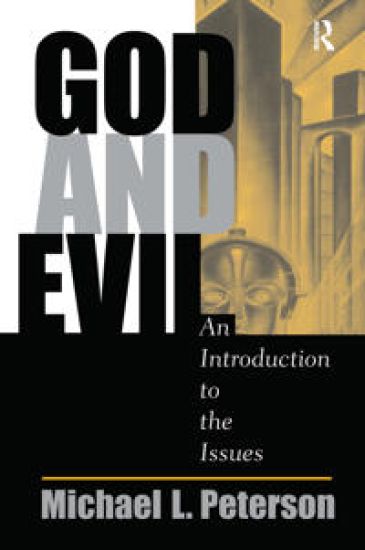
God And Evil

God And Evil

Michael L Peterson

Routledge
2019
sidottu
This concise, well-structured survey examines the problem of evil in the context of the philosophy of religion. One of the core topics in that field, the problem of evil is an enduring challenge that Western philosophers have pondered for almost two thousand years. The main problem of evil consists in reconciling belief in a just and loving God wit
With All Your Mind

With All Your Mind

Michael L. Peterson

University of Notre Dame Press
2001
nidottu
With All Your Mind makes a compelling case for the value of thinking deeply about education in America from a historically orthodox and broadly ecumenical Christian point of view. Few people dispute that education in America is in a state of crisis. But not many have posed workable solutions to this serious problem. Michael Peterson contends that thinking philosophically about education is our only hope for meaningful progress. In this refreshing book, he invites all who are concerned about education in America to "participate" in his study, which analyzes representative theories and practical strategies that reveal the power of Christian ideas in this vital area.
With All Your Mind

With All Your Mind

Michael L. Peterson

University of Notre Dame Press
2001
sidottu
With All Your Mind makes a compelling case for the value of thinking deeply about education in America from a historically orthodox and broadly ecumenical Christian point of view. Few people dispute that education in America is in a state of crisis. But not many have posed workable solutions to this serious problem. Michael Peterson contends that thinking philosophically about education is our only hope for meaningful progress. In this refreshing book, he invites all who are concerned about education in America to "participate" in his study, which analyzes representative theories and practical strategies that reveal the power of Christian ideas in this vital area.
God And Evil

God And Evil

Michael L Peterson

Westview Press Inc
1998
nidottu
This concise, well-structured survey examines the problem of evil in the context of the philosophy of religion. One of the core topics in that field, the problem of evil is an enduring challenge that Western philosophers have pondered for almost two thousand years. The main problem of evil consists in reconciling belief in a just and loving God with the evil and suffering in the world. Michael Peterson frames this issue by working through questions such as the following: What is the relation of rational belief to religious faith? What different conceptual moves are possible on either side of the issue? What responses have important thinkers advanced and which seem most promising? Is it possible to maintain religious commitment in light of evil? Peterson relies on the helpful distinction between moral and natural evil to clarify our understanding of the different aspects of the problem as well as avenues for response.The overall format of the text rests on classifying various types of argument from evil: the logical, the probabilistic, the evidential, and the existential arguments. Each type of argument has its own strategy which both theists and nontheists must recognize and develop. Giving both theistic and nontheistic perspectives fair representation, the text works through the issues of whether evil shows theistic belief to be inconsistent, improbable, discredited by the evidence, or threatened by personal crisis.Peterson explains how defensive strategies are particularly geared for responding to the logical and probabilistic arguments from evil while theodicy is an appropriate response to the evidential argument. Theodicy has traditionally been understood as the attempt to justify belief in a God who is all-powerful and all-good in light of evil. The text discusses the theodicies of Augustine, Leibniz, Hick, and Whitehead as enlightening examples of theodicy. This discussion allows Peterson to identify and evaluate a rather dominant theme in most theodicies: that evil can be justified by designating a greater good. In the end, Peterson even explores how certain types of theodicy, based on specifically Christian renditions of theism, might provide a basis for addressing the existential problem of evil. The reader of this book gains not only an intellectual grasp of the debate over God and evil in professional philosophy but also the personal benefit of thinking through one of the most important issues in human life.