Kirjojen hintavertailu. Mukana 12 595 353 kirjaa ja 12 kauppaa.

Kirjailija

Michael Lenne

Kirjat ja teokset yhdessä paikassa: 3 kirjaa, julkaisuja vuosilta 2011-2024, suosituimpien joukossa Human Factors Methods and Accident Analysis. Vertaile teosten hintoja ja tarkista saatavuus suomalaisista kirjakaupoista.

Mukana myös kirjoitusasut: Michael Lenné

3 kirjaa

Kirjojen julkaisuhaarukka 2011-2024.

Human Factors Methods and Accident Analysis

Human Factors Methods and Accident Analysis

Paul M. Salmon; Neville A. Stanton; Michael Lenné; Daniel P. Jenkins; Laura Rafferty; Guy H. Walker

Ashgate Publishing Limited
2011
sidottu
This book provides an overview of, and practical guidance on, the range of human factors (HF) methods that can be used for the purposes of accident analysis and investigation in complex sociotechnical systems. Human Factors Methods and Accident Analysis begins with an overview of different accident causation models and an introduction to the concepts of accident analysis and investigation. It then presents a discussion focussing on the importance of, and difficulties associated with, collecting appropriate data for accident analysis purposes. Following this, a range of HF-based accident analysis methods are described, as well as step-by-step guidance on how to apply them. To demonstrate how the different methods are applied, and what the outputs are, the book presents a series of case study applications across a range of safety critical domains. It concludes with a chapter focussing on the data challenges faced when collecting, coding and analysing accident data, along with future directions in the area. Human Factors Methods and Accident Analysis is the first book to offer a practical guide for investigators, practitioners and researchers wishing to apply accident analysis methods. It is also unique in presenting a series of novel applications of accident analysis methods, including HF methods not previously used for these purposes (e.g. EAST, critical path analysis), as well as applications of methods in new domains.
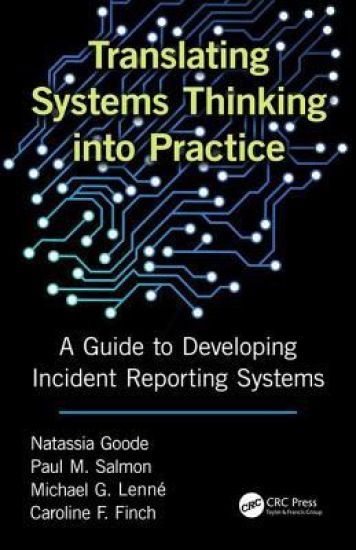
Translating Systems Thinking into Practice

Translating Systems Thinking into Practice

Natassia Goode; Paul M. Salmon; Michael Lenne; Caroline Finch

TAYLOR FRANCIS LTD
2024
nidottu
Systems thinking tells us that human error, violations and technology failures result from poorly designed and managed work systems. To help us understand and prevent injuries and incidents, incident reporting systems must be capable of collecting data on contributory factors from across the overall work system, in addition to factors relating to the immediate context of the event (e.g. front-line workers, environment, and equipment).This book describes how to design a practical, usable incident reporting system based on this approach. The book contains all the information needed to effectively design and implement a new incident reporting system underpinned by systems thinking. It also provides guidance on how to evaluate and improve existing incident reporting systems so they are practical for users, collect good quality data, and reflect the principles of systems thinking.FeaturesHighlights the key principles of systems thinking for designing incident reporting systems Outlines a process for developing and testing incident reporting systems Describes how to evaluate incident reporting systems to ensure they are practical, usable, and collect good quality data Provides detailed guidance on how to analyze incident data, and translate the findings into appropriate incident prevention strategies
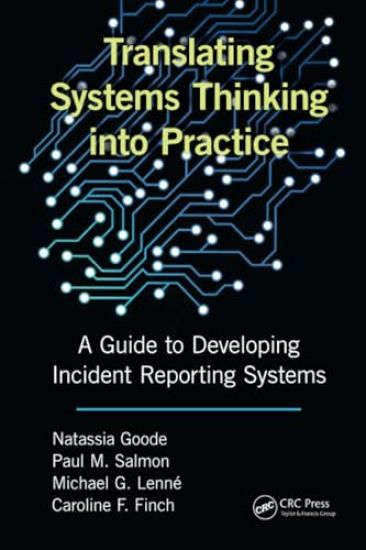
Translating Systems Thinking into Practice

Translating Systems Thinking into Practice

Natassia Goode; Paul M. Salmon; Michael Lenne; Caroline Finch

CRC Press
2018
sidottu
Systems thinking tells us that human error, violations and technology failures result from poorly designed and managed work systems. To help us understand and prevent injuries and incidents, incident reporting systems must be capable of collecting data on contributory factors from across the overall work system, in addition to factors relating to the immediate context of the event (e.g. front-line workers, environment, and equipment).This book describes how to design a practical, usable incident reporting system based on this approach. The book contains all the information needed to effectively design and implement a new incident reporting system underpinned by systems thinking. It also provides guidance on how to evaluate and improve existing incident reporting systems so they are practical for users, collect good quality data, and reflect the principles of systems thinking.Features Highlights the key principles of systems thinking for designing incident reporting systems Outlines a process for developing and testing incident reporting systems Describes how to evaluate incident reporting systems to ensure they are practical, usable, and collect good quality data Provides detailed guidance on how to analyze incident data, and translate the findings into appropriate incident prevention strategies