Kirjojen hintavertailu. Mukana 12 595 353 kirjaa ja 12 kauppaa.

Kirjailija

Michael Lessnoff

Kirjat ja teokset yhdessä paikassa: 4 kirjaa, julkaisuja vuosilta 1996-2002, suosituimpien joukossa Political Culture in Contemporary Britain. Vertaile teosten hintoja ja tarkista saatavuus suomalaisista kirjakaupoista.

4 kirjaa

Kirjojen julkaisuhaarukka 1996-2002.

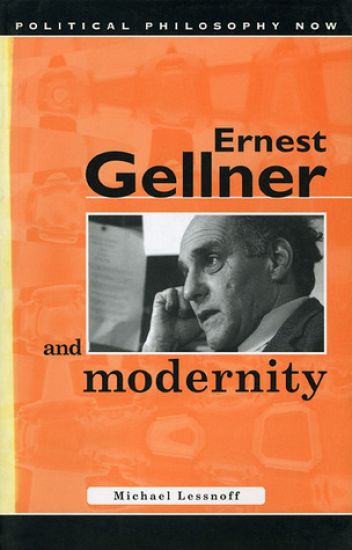
Ernest Gellner and Modernity

Ernest Gellner and Modernity

Michael Lessnoff

University of Wales Press
2002
nidottu
Ernest Gellner (1925 - 1995) was one of the major thinkers of the twentieth century. He held major chairs in philosophy, sociology and social anthropology during his distinguished career and contributed to a wide range of political and philosophical debates, most notably in linguistic philosophy, the theory of political nationalism and the theory of history. Gellner was also an outspoken defender of the Enlightenment tradition and social democracy. In Ernest Gellner and Modernity, Michael Lessnoff presents a lucid and coherent exposition of Gellner's thought, both in terms of the specific areas in which he worked and the underlying consistency of his theoretical principles. Lessnoff provides a context within which to evaluate Gellner's contribution to social and political thought and, in keeping with the aims of the series, demonstrates the importance of Gellner's work for contemporary political philosophy.
Ernest Gellner and Modernity

Ernest Gellner and Modernity

Michael Lessnoff

UNIVERSITY OF WALES PRESS
2002
sidottu
Ernest Gellner (1925-1995) was one of the major thinkers of the twentieth-century. He held major chairs in philosophy, sociology and social anthropology during his distinguished career and contributed to a wide range of political and philosophical debates, from linguistic philosophy to the theory of political nationalism and the theory of history. As an outspoken defender of the Enlightenment tradition and of liberal pluralism, Gellner was a committed opponent of theocracy, totalitarianism and libertarianism, and also acquired a deserved reputation as a scourge of a number of the twentieth century's intellectual idols, most notably Marx, Freud and Wittgenstein.Ernest Gellner and Modernity is a groundbreaking book which provides the first comprehensive discussion of this polymathic writer and thinker. Michael Lessnoff presents a lucid and coherent exposition of Gellner's thought, making clear both his major contributions to the diverse areas in which he worked and the underlying consistency and unity of his thought. He shows how Gellner's analysis of the social, economic and cognitive forms intrinsic to modernity carried forward the work of Max Weber and Karl Popper and also enabled him to develop a profound and original philosophy of science which is at the same time a political philosophy.
Political Culture in Contemporary Britain

Political Culture in Contemporary Britain

William L. Miller; Annis May Timpson; Michael Lessnoff

Clarendon Press
1996
sidottu
This is the most authoritative picture to date of what the British people and their politicians really think about the fundamentals of politics. Based on new and revealing survey data, it presents a wide-ranging analysis of British attitudes to civil, political, and social rights. The study uncovers two broad `macro-dimensions' of political principle - liberty and equality - which underlie a large number of more specific principles and shape people's responses to many practical issues. Controversially, it claims that commitments to liberty and equality tend to run together - only the least educated treat them as alternatives; left-wingers support both and right-wingers oppose both. It explores the influence of social background, personal experience, and the institutional setting on attitudes towards political principles, highlighting in particular age and the complex influences of education and religion. And it also shows how arguments and propganda combine with political principles and party loyalties to influence opinion on practical issues. The final chapter presents an overall model and quantifies the relative power of all these different influences. The book will be invaluable reading for all those interested in British politics, political sociology, civil liberties, and public opinion as well as those planning their own social science survey research.