Kirjailija
Michael Löwy
Kirjat ja teokset yhdessä paikassa: 38 kirjaa, julkaisuja vuosilta 1978-2025, suosituimpien joukossa Um intelectual fora do comum. Vertaile teosten hintoja ja tarkista saatavuus suomalaisista kirjakaupoista.
Mukana myös kirjoitusasut: Michael Lowy, Michaël Löwy
38 kirjaa
Kirjojen julkaisuhaarukka 1978-2025.
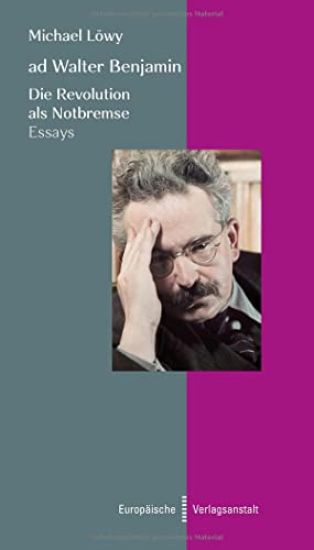
Winner of the 2020 European Walter Benjamin Prize, The Revolution is the Emergency Break is a rich discussion of Walter Benjamin’s lesser-known writings by renowned social scientist Michael Löwy. Translated into several languages but available in English for the very first time, Löwy’s book brings together the philosophical, literary, theological and cultural aspects of Benjamin’s writings, including his relation to figures such as Gershom Scholem and Franz Rosenzweig, his interpretation of historical materialism, surrealism, anti-fascism and anarchism, his contribution to understanding capitalism as a religion, and his relevance for Latin America and ecology today. The concept of revolution in his writings – not only the political ones but also those that deal with art, literature or theology, run through the work, connecting the various chapters. The Revolution is the Emergency Break also features four new chapters in this collection. Written in a clear-eyed, accessible language, The Revolution is the Emergency Break is a must-read for researchers, teachers and students interested in the works of this influential German intellectual.
Winner of the 2020 European Walter Benjamin Prize, The Revolution Is the Emergency Break is a rich discussion of Walter Benjamin’s lesser-known writings by renowned social scientist Michael Löwy. Translated into several languages but available in English for the very first time, Löwy’s book brings together the philosophical, literary, theological and cultural aspects of Benjamin’s writings, including his relation to figures such as Gershom Scholem and Franz Rosenzweig, his interpretation of historical materialism, surrealism, anti-fascism and anarchism, his contribution to understanding capitalism as a religion, and his relevance for Latin America and ecology today. The concept of revolution in his writings – not only the political ones but also those that deal with art, literature or theology, run through the work, connecting the various chapters. The Revolution Is the Emergency Break also features four new chapters in this collection. Written in a clear-eyed, accessible language, The Revolution Is the Emergency Break is a must-read for researchers, teachers and students interested in the works of this influential German intellectual.
Das Reich der Freiheit beginnt mit der Verkürzung des Arbeitstages
Michael Löwy; Olivier Besancenot
Mangroven Verlag
2024
nidottu
Os dois ensaios que comp em este pequeno livro lan am luz sobre um dos intelectuais mais importantes do s culo XX: Walter Benjamin. Nascido em Berlim, em 1892, filho de pais judeus pequeno-burgueses assimilados, Benjamin tornou-se um intelectual fora do comum, uma esp cie de prot tipo do intelectual mannheimiano "desligado", desprovido de la os institucionais. Esta situa o inst vel ser decisiva para o desenvolvimento da sua obra fragmentada e anti-sistem tica por excel ncia. Em conjunto, os dois textos, de F. Querido (UNICAMP, Brasil) e Michael L wy (CNRS, Fran a), revelam alguns dos aspectos mais fascinantes da sua obra singular, cujo "pensamento surrealista", nas palavras de Ernst Bloch sobre Sens unique, parece escapar ao enquadramento nas correntes habituais do pensamento moderno. esta "solid o" intelectual que faz de Benjamin uma das figuras mais sedutoras do s culo XX, uma figura que, n o por acaso, ainda nos persegue no s culo XXI.
Ein außergewöhnlicher Intellektueller: Walter Benjamin oder das surrealistische Denken
Fabio Querido; Michael Löwy
Verlag Unser Wissen
2024
nidottu
Un intellettuale fuori dal comune: Walter Benjamin o il pensiero surrealista
Fabio Querido; Michael Löwy
Edizioni Sapienza
2024
nidottu
Un intelectual fuera de lo común: Walter Benjamin o el pensamiento surrealista
Fabio Querido; Michael Löwy
Ediciones Nuestro Conocimiento
2024
nidottu
An intellectual out of the ordinary
Fabio Querido; Michael Löwy
Our Knowledge Publishing
2024
pokkari
The two essays that make up this little book shed light on one of the most important intellectuals of the twentieth century: Walter Benjamin. Born in Berlin in 1892, the son of assimilated petty-bourgeois Jewish parents, Benjamin became an intellectual out of the ordinary, a kind of prototype of the Mannheimian 'unattached' intellectual, devoid of institutional ties. This unstable situation would be decisive for the development of his fragmented, anti-systematic work par excellence. Together, the two texts, by F. Querido (UNICAMP, Brazil) and Michael L wy (CNRS, France), reveal some of the most fascinating aspects of his singular work, whose 'surrealist thought', in Ernst Bloch's words about Sens unique, seems to escape framing in the usual currents of modern thought. It is this intellectual 'solitude' that makes Benjamin one of the most seductive figures of the twentieth century, a figure who, not coincidentally, still haunts us in the twenty-first century.
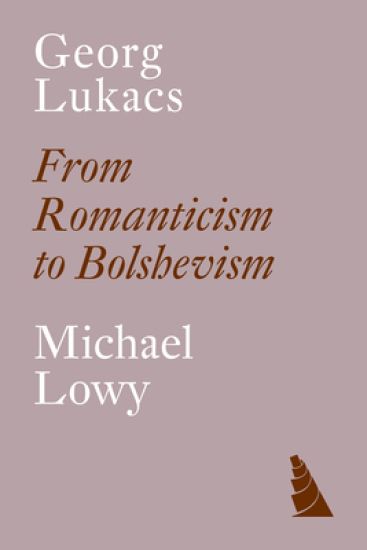
The philosophical and political development that converted Georg Lukács from a distinguished representative of Central European aesthetic vitalism into a major Marxist theorist and Communist militant has long remained an enigma. In this this now classic study, Michael Löwy for the first time traced and explained the extraordinary mutation that occurred in Lukács's thought between 1909 and 1929. Utilizing many as yet unpublished sources, Löwy meticulously reconstructed the complex itinerary of Lukács's thinking as he gradually moved towards his decisive encounter with Bolshevism. The religious convictions of the early Lukács, the peculiar spell exercised on him and on Max Weber by Dostoyevskyan images of pre-revolutionary Russia, the nature of his friendships with Ernst Bloch and Thomas Mann, were amongst the discoveries of the book. Then, in a fascinating case-study in the sociology of ideas, Löwy showed how the same philosophical problematic of Lebensphilosophie dominated the intelligentsias of both Germany and Hungary in the pre-war period, yet how the different configurations of social forces in each country bent its political destiny into opposite directions. The famous works produced by Lukács during and after the Hungarian Commune-Tactics and Ethics, History and Class Consciousness and Lenin-were analysed and assessed. A concluding chapter discussed Lukács's eventual ambiguous settlement with Stalinism in the thirties, and its coda of renewed radicalism in the final years of his life.In this new edition, Löwy has added a substantial new introduction which reassess the nature of Lukács's thought in the light of newly published texts and debates.
A sweeping history of revolutionary struggle and unbreakable alliances, Revolutionary Affinities takes readers from the Paris Commune to the Occupy movement, and through the heart of bloody fratricidal struggles to paint a vivid picture of the greatest anarchist and Marxist figures who dared to join forces, from Louise Michel to Subcomandante Marcos, from Emma Goldman to Walter Benjamin. With the urgent need for a unified front against the far right, there has never been a better time for this inspiring story.Authors Olivier Besancenot and Michael L wy, two of the foremost voices in the French anti-authoritarian radical left, explore the promises--and challenges--of developing a fully sustainable, libertarian Marxist society by examining questions of political organization, economic policy, radical ecology, and more. Strikingly accessible, brilliantly illuminating, Besancenot and L wy have given readers more than a history book, they've created a road map for the future.
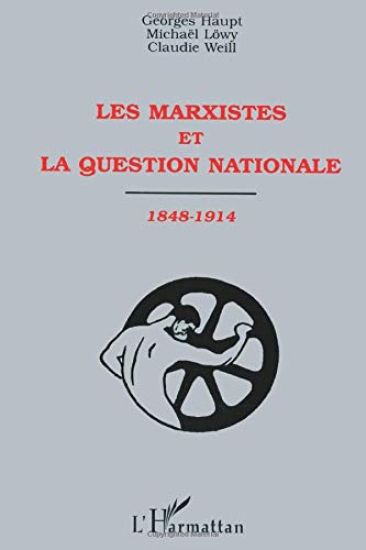
LES MARXISTES ET LA QUESTION NATIONALE 1848-1914
Claudie Weill; Georges Haupt; Michaël Löwy
Editions L'Harmattan
2022
nidottu
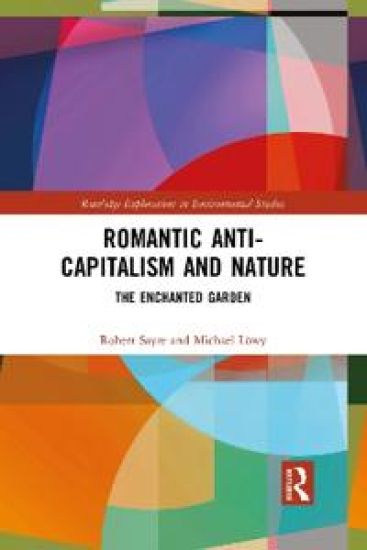
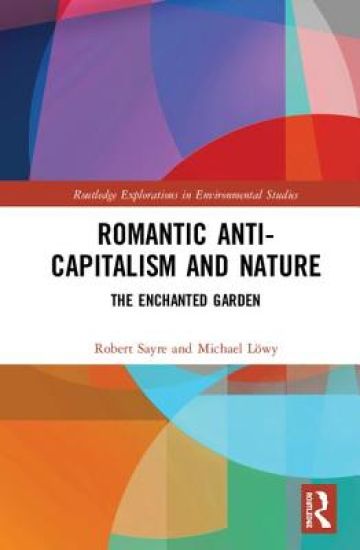
Romantic Anti-capitalism and Nature examines the deep connections between the romantic rebellion against modernity and ecological concern with modern threats to nature. The chapters deal with expressions of romantic culture from a wide variety of different areas: travel writing, painting, utopian vision, cultural studies, political philosophy, and activist socio-political writing. The authors discuss a highly diverse group of figures - William Bartram, Thomas Cole, William Morris, Walter Benjamin, Raymond Williams, and Naomi Klein - from the late eighteenth to the early twenty-first century. They are rooted individually in English, American, and German cultures, but share a common perspective: the romantic protest against modern bourgeois civilisation and its destruction of the natural environment.Although a rich ecocritical literature has developed since the 1990s, particularly in the United States and Britain, that addresses many aspects of ecology and its intersection with romanticism, they almost exclusively focus on literature, and define romanticism as a limited literary period of the late eighteenth and early nineteenth centuries. This study is one of the first to suggest a much broader view of the romantic relation to ecological discourse and representation, covering a range of cultural creations and viewing romanticism as a cultural critique, or protest against capitalist-industrialist modernity in the name of past, pre-modern, or pre-capitalist values.This book will be of great interest to students and scholars of ecology, romanticism, and the history of capitalism.
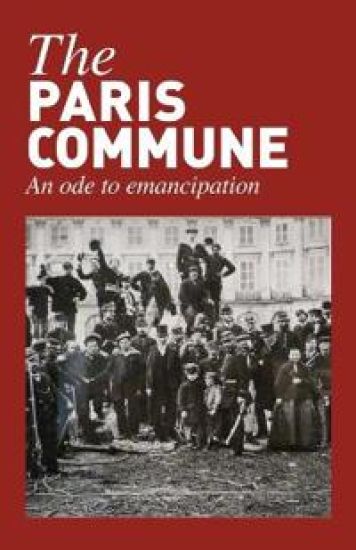
The Paris Commune of 1871 was one of the first working class attempts at the social emancipation of the oppressed and exploited. Between 18 March and 29 May 1871, the popular classes succeeded for a while in breaking their chains. It was a short period when people could take control of their lives. The Paris Commune is an inspiration today. The memory of the past and its struggles strengthens the fight for the utopia of the future.This book, The Paris Commune - An ode to emancipation, is a collection of writings by Daniel Bensa d, Olivier Besancenot, Sandra Bloodworth, Judy Cox, Penelope Duggan, Mathilde Larr re, Michael L wy, Kay Mann, Eric Toussaint.
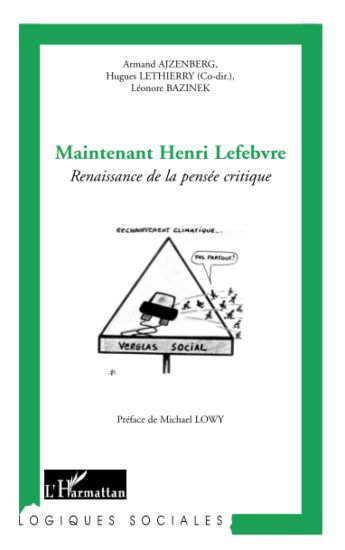
Maintenant Henri Lefebvre
Armand Ajzenberg; Léonore Bazinek; Michaël Löwy
Logiques sociales
2020
nidottu
Romantic Anti-capitalism and Nature examines the deep connections between the romantic rebellion against modernity and ecological concern with modern threats to nature. The chapters deal with expressions of romantic culture from a wide variety of different areas: travel writing, painting, utopian vision, cultural studies, political philosophy, and activist socio-political writing. The authors discuss a highly diverse group of figures - William Bartram, Thomas Cole, William Morris, Walter Benjamin, Raymond Williams, and Naomi Klein - from the late eighteenth to the early twenty-first century. They are rooted individually in English, American, and German cultures, but share a common perspective: the romantic protest against modern bourgeois civilisation and its destruction of the natural environment.Although a rich ecocritical literature has developed since the 1990s, particularly in the United States and Britain, that addresses many aspects of ecology and its intersection with romanticism, they almost exclusively focus on literature, and define romanticism as a limited literary period of the late eighteenth and early nineteenth centuries. This study is one of the first to suggest a much broader view of the romantic relation to ecological discourse and representation, covering a range of cultural creations and viewing romanticism as a cultural critique, or protest against capitalist-industrialist modernity in the name of past, pre-modern, or pre-capitalist values.This book will be of great interest to students and scholars of ecology, romanticism, and the history of capitalism.
Un intellectuel hors norme: Walter Benjamin ou la pensée surréaliste
Fabio Querido; Michael Löwy
ÉDITIONS UNIVERSITAIRES EUROPÉENNES
2018
nidottu
Towards the end of the nineteenth century, there appeared in Central Europe a generation of Jewish intellectuals whose work was to transform modern culture. Drawing at once on the traditions of German Romanticism and Jewish messianism, their thought was organized around the cabalistic idea of the "tikkoun": redemption. Redemption and Utopia uses the concept of "elective affinity" to explain the surprising community of spirit that existed between redemptive messianic religious thought and the wide variety of radical secular utopian beliefs held by this important group of intellectuals. The author outlines the circumstances that produced this unusual combination of religious and non-religious thought and illuminates the common assumptions that united such seemingly disparate figures as Martin Buber, Franz Kafka, Walter Benjamin and Georg Lukács.