Kirjojen hintavertailu. Mukana 12 657 676 kirjaa ja 12 kauppaa.

Kirjailija

Michael Luck

Kirjat ja teokset yhdessä paikassa: 7 kirjaa, julkaisuja vuosilta 2002-2020, suosituimpien joukossa Agent-based Software Development. Vertaile teosten hintoja ja tarkista saatavuus suomalaisista kirjakaupoista.

Mukana myös kirjoitusasut: Michael Lück

7 kirjaa

Kirjojen julkaisuhaarukka 2002-2020.

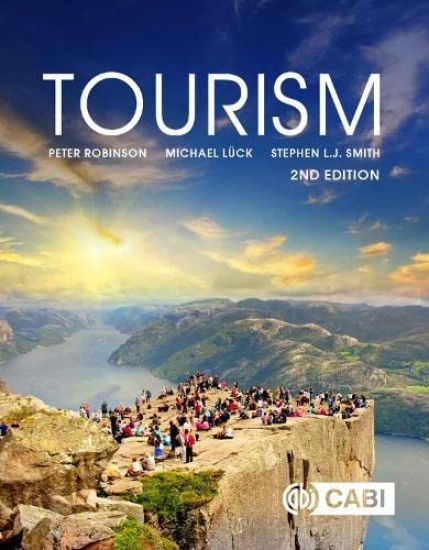
Tourism

Tourism

Peter Robinson; Michael Lück; Stephen Smith

CABI Publishing
2020
sidottu
Fully revised, Tourism, 2nd edition covers aspects of tourism from a modern perspective, providing students with a range of theoretical and research-based explanations, supported by examples, case studies and unique insights from industry representatives. The many facets of tourism management are presented in a style that is as relevant for 1st year students as it is for postgraduates. The text offers introductory definitions and detailed discussions of contemporary issues that recognize current teaching practice around the world. Covering topics such as policy and planning, heritage management, leisure management, event management and hospitality management, the book tackles the practical elements of academic tourism such as infrastructure management and economic development, together with other important contemporary issues such as sustainable development and post-tourists. This new edition also features: Updated and new contemporary case studies, including countries such as Egypt, Croatia and The Philippines New material on tourism and sustainability including the SDGs Unions in the travel and tourism sectors Gender issues in travel and tourism Augmented reality and robots Prosumption and co-creation Contributions from professionals working in the tourism industry for a real-world perspective A fresh new layout and full colour text and figures that make it easy to locate information and aid learning Links to new video material throughout, which provide easy access to additional content for further study This will be an essential text for all students of travel and tourism at all levels of study.
Tourism

Tourism

Peter Robinson; Michael Lück; Stephen Smith

CABI Publishing
2020
nidottu
Fully revised, Tourism, 2nd edition covers aspects of tourism from a modern perspective, providing students with a range of theoretical and research-based explanations, supported by examples, case studies and unique insights from industry representatives. The many facets of tourism management are presented in a style that is as relevant for 1st year students as it is for postgraduates. The text offers introductory definitions and detailed discussions of contemporary issues that recognize current teaching practice around the world. Covering topics such as policy and planning, heritage management, leisure management, event management and hospitality management, the book tackles the practical elements of academic tourism such as infrastructure management and economic development, together with other important contemporary issues such as sustainable development and post-tourists. This new edition also features: · Updated and new contemporary case studies, including countries such as Egypt, Croatia and The Philippines · New material on · tourism and sustainability including the SDGs · Unions in the travel and tourism sectors · Gender issues in travel and tourism · Augmented reality and robots · Prosumption and co-creation · Contributions from professionals working in the tourism industry for a real-world perspective · A fresh new layout and full colour text and figures that make it easy to locate information and aid learning · Links to new video material throughout, which provide easy access to additional content for further study This will be an essential text for all students of travel and tourism at all levels of study.
Der Einstieg ins Öko-Audit für mittelständische Betriebe

Der Einstieg ins Öko-Audit für mittelständische Betriebe

Alexander Keller; Michael Lück

Springer-Verlag Berlin and Heidelberg GmbH Co. K
2011
nidottu
Das modulare Umweltmanagement (MUM) ist vor allem für die mittelständische Industrie ein ideales Verfahren zum sukzessiven Aufbau eines betrieblichen Umweltmanagements. In seiner zukunftsweisenden Perspektive kann es stufenweise und überschaubar in ein Umwelt-Audit münden. Das stufenweise Vorgehen ermöglicht dabei eine Adaption an die jeweiligen Gegebenheiten eines Betriebes und erlaubt zudem durch fortwährende Rückübertragung und Kontrolle der Ergebnisse eine ständige Optimierung des Gesamtprozesses.
Understanding Agent Systems

Understanding Agent Systems

Mark d’Inverno; Michael Luck

Springer-Verlag Berlin and Heidelberg GmbH Co. K
2010
nidottu
Since the first edition was published two years ago, much has been done on extend­ ing the work done on SMART to address new and important areas [3-5,54,79,80, 108-110,116,118-120,122]. In this second edition, we have revised, updated and corrected the existing text and added three new chapters. These chapters provide a broader coverage of the fie1d of agents, and show in more detail how the specific framework described can be used to examine other areas. In Chapter 6, we use the concepts of discovery to apply the framework to autonomous interaction in multi­ agent systems; in Chapter 10 we use it for considering normative agents and sys­ tems; and in Chapter 11 we describe work on an implementation and development environment. As a course text, the book can be considered in different parts, as follows. - Chapter I and Chapter 2 offer a basic introduction to agents and their core com­ ponents. - Chapter 3 and Chapter 4 cover relationships between agents and basic notions of cooperation for multi-agent systems. - Chapter 5 and Chapter 6 introduce sociological agents, which are needed for rea­ soning and planning, and their use in reasoning about communication and inter­ action. - Chapter 7, Chapter 8, Chapter 9 and Chapter 10 each cover different application areas relating to different aspects, inc1uding coordination (through the contract net), agent architecture (through AgentSpeak(L), social dependence networks, and normative systems.
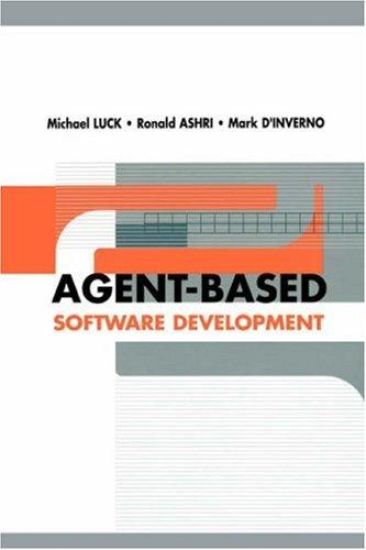
Agent-based Software Development

Agent-based Software Development

Michael Luck; Ronald Ashri

Artech House Publishers
2004
pokkari
Agent technology promises to increase the flexibility and power of software systems 10 accommodate the next generation of computing, including intelligent web services, e-business, and grid computing. In recent years, agent technology has seen dramatic growth and has gained wide acceptance among industry professionals. This unique new reference offers software engineers, system developers and advanced students the most thorough and comprehensive explanation of the methods, tools, standards and techniques used to develop software using the agent-oriented approach. Addressing issues of direct relevance to specific development and task objectives, as well as to industry-wide initiatives, the book is essential for those wanting to understand more about the commercial realities of agent-based computing.
Understanding Agent Systems

Understanding Agent Systems

Mark d’Inverno; Michael Luck

Springer-Verlag Berlin and Heidelberg GmbH Co. K
2003
sidottu
Since the first edition was published two years ago, much has been done on extend­ ing the work done on SMART to address new and important areas [3-5,54,79,80, 108-110,116,118-120,122]. In this second edition, we have revised, updated and corrected the existing text and added three new chapters. These chapters provide a broader coverage of the fie1d of agents, and show in more detail how the specific framework described can be used to examine other areas. In Chapter 6, we use the concepts of discovery to apply the framework to autonomous interaction in multi­ agent systems; in Chapter 10 we use it for considering normative agents and sys­ tems; and in Chapter 11 we describe work on an implementation and development environment. As a course text, the book can be considered in different parts, as follows. - Chapter I and Chapter 2 offer a basic introduction to agents and their core com­ ponents. - Chapter 3 and Chapter 4 cover relationships between agents and basic notions of cooperation for multi-agent systems. - Chapter 5 and Chapter 6 introduce sociological agents, which are needed for rea­ soning and planning, and their use in reasoning about communication and inter­ action. - Chapter 7, Chapter 8, Chapter 9 and Chapter 10 each cover different application areas relating to different aspects, inc1uding coordination (through the contract net), agent architecture (through AgentSpeak(L), social dependence networks, and normative systems.
Introducing UNIX and Linux

Introducing UNIX and Linux

Mike Joy; Stephen Jarvis; Michael Luck

Red Globe Press
2002
nidottu
A tutorial style text covering the basics of UNIX and Linux for the complete beginner, this is a comprehensive introduction to these operating systems. It assumes no prior knowledge of programming nor any experience of using computers.