Kirjojen hintavertailu. Mukana 12 390 323 kirjaa ja 12 kauppaa.

Kirjailija

Michael McKenna

Kirjat ja teokset yhdessä paikassa: 10 kirjaa, julkaisuja vuosilta 2011-2025, suosituimpien joukossa The Great Plains and Other Tales. Vertaile teosten hintoja ja tarkista saatavuus suomalaisista kirjakaupoista.

10 kirjaa

Kirjojen julkaisuhaarukka 2011-2025.

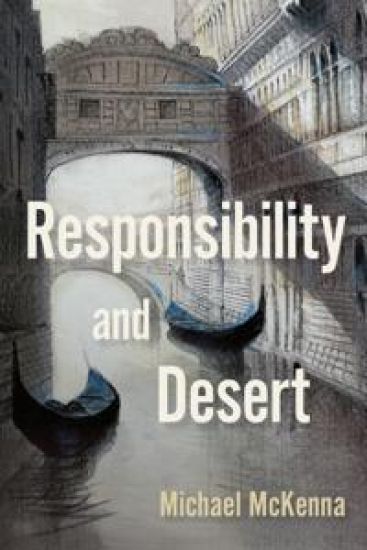
Responsibility and Desert

Responsibility and Desert

Michael McKenna

OXFORD UNIVERSITY PRESS INC
2025
sidottu
Responsibility & Desert advances a conversational theory of moral responsibility that relies upon desert as the normative basis for blame and punishment. A conversational theory understands the relationship between a blameworthy person and one who blames her to be similar to the relationship between competent speakers engaged in a conversational exchange. Blame can therefore be appraised for being meaningful as a reply to a culpable party's conduct. But meaningfulness alone is inadequate to justify blame and punishment. Might one appeal to fairness, reasonableness, or just utility? Desert is widely regarded as the proper basis for blame and punishment. But is this a philosophically defensible position? Philosopher Michael McKenna explores just what desert is within the domain of moral responsibility, when conceptualized within the framework of the conversational theory. He does not offer an unqualified defence, but he does offer a best case for treating desert as the proper basis for the communicative character of blame and punishment. To do so, he takes up familiar challenges to desert and retribution. Does deserved blame and punishment commit us to the non-instrumental goodness of harms to the blameworthy and criminally culpable? Is this mere vengeance? Does it also commit us to extremely harsh treatment in response to extremely egregious wrongdoing? McKenna does not shy away from accepting hard truths about appeal to desert, but he does show that many of the most damning indictments of it are misguided.
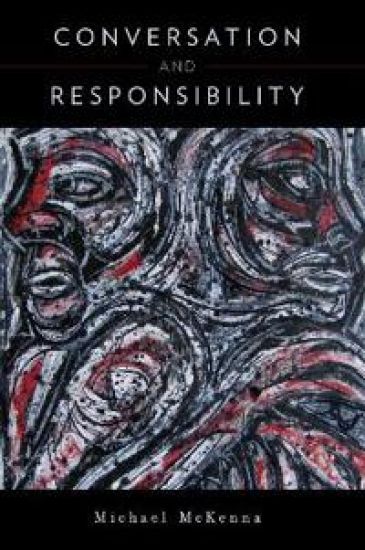
Conversation and Responsibility

Conversation and Responsibility

Michael McKenna

Oxford University Press Inc
2018
nidottu
In this book Michael McKenna advances a new theory of moral responsibility, one that builds upon the work of P. F. Strawson. As McKenna demonstrates, moral responsibility can be explained on analogy with a conversation. The relation between a morally responsible agent and those who hold her morally responsible is similar to the relation between a speaker and her audience. A responsible agent's actions are bearers of meaning--agent meaning--just as a speaker's utterances are bearers of speaker meaning. Agent meaning is a function of the moral quality of the will with which the agent acts. Those who hold an agent morally responsible for what she does do so by responding to her as if in a conversation. By responding with certain morally reactive attitudes, such as resentment or indignation, they thereby communicate their regard for the meaning taken to be revealed in that agent's actions. It is then open for the agent held responsible to respond to those holding her responsible by offering an apology, a justification, an excuse, or some other response, thereby extending the evolving conversational exchange. The conversational theory of moral responsibility that McKenna develops here accepts two features of Strawson's theory: that moral responsibility is essentially interpersonal--so that being responsible must be understood by reference to the nature of holding responsible--and that the moral emotions are central to holding responsible. While upholding these two aspects of Strawson's theory, McKenna's theory rejects a further Strawsonian thesis, which is that holding morally responsible is more fundamental or basic than being morally responsible. On the conversational theory, the conditions for holding responsible are dependent on the nature of the agent who is responsible. So holding responsible cannot be more basic than being responsible. Nevertheless, the nature of the agent who is morally responsible is to be understood in terms of sensitivity to those who would make moral demands of her, thereby holding her responsible. Being responsible is therefore also dependent on holding responsible. Thus, neither being nor holding morally responsible is more basic than the other. They are mutually dependent.
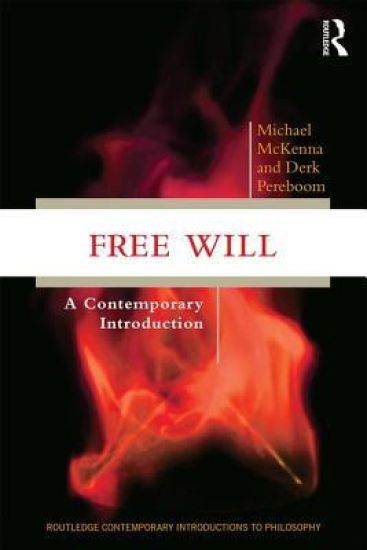
Free Will

Free Will

Michael McKenna; Derk Pereboom

Routledge
2016
sidottu
As an advanced introduction to the challenging topic of free will, this book is designed for upper-level undergraduates interested in a comprehensive first-stop into the field’s issues and debates. It is written by two of the leading participants in those debates—a compatibilist on the issue of free will and determinism (Michael McKenna) and an incompatibilist (Derk Pereboom). These two authors achieve an admirable objectivity and clarity while still illuminating the field’s complexity and key advances. Each chapter is structured to work as one week’s primary reading in a course on free will, while more advanced courses can dip into the annotated further readings, suggested at the end of each chapter. A comprehensive bibliography as well as detailed subject and author indexes are included at the back of the book.
Free Will

Free Will

Michael McKenna; Derk Pereboom

Routledge
2016
nidottu
As an advanced introduction to the challenging topic of free will, this book is designed for upper-level undergraduates interested in a comprehensive first-stop into the field’s issues and debates. It is written by two of the leading participants in those debates—a compatibilist on the issue of free will and determinism (Michael McKenna) and an incompatibilist (Derk Pereboom). These two authors achieve an admirable objectivity and clarity while still illuminating the field’s complexity and key advances. Each chapter is structured to work as one week’s primary reading in a course on free will, while more advanced courses can dip into the annotated further readings, suggested at the end of each chapter. A comprehensive bibliography as well as detailed subject and author indexes are included at the back of the book.
The Great Plains and Other Tales

The Great Plains and Other Tales

Michael McKenna

Lulu.com
2016
nidottu
In The Great Plains, Katie Schmidt is quiet, humble and hard working. Horace O'Leary sees in Katie only greatness, the pride of the industrial, railroad yard-esque Southside of Chicago. Katie is swept off her feet by a handsome pool hustler named Cam and alternately bored by him when he is out late and ignoring her. Katie allows Horace to tell her what Cam cannot and the ensuing love triangle threatens to mock them all. Meanwhile newcomer Betty makes Horace forget all the hard work of unrequited love. Katie finally sees Cam for what he is and becomes what she was always meant to be, perfect humility. In 9000 Miles to Swim is Nothing, Jonna goes for a swim one hot Autumn day in Lake Michigan and is whisked away inside a Russian sub to St. Petersburg and eventually Moscow. In 2021AD, the USA has become a complete police state. Terry has to decide between falling in love or becoming an outlaw.
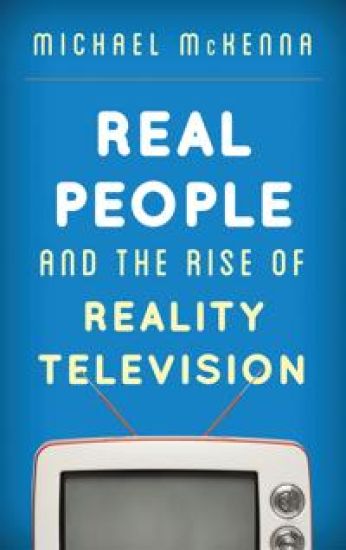
Real People and the Rise of Reality Television

Real People and the Rise of Reality Television

Michael McKenna

Rowman Littlefield
2015
sidottu
The origins of, and in many ways the prototype for, modern reality programming can be traced to Real People, a show that premiered on the NBC network in April of 1979. An instant ratings success, Real People appealed to an audience that clamored for stories about “everyday” men and women. However, many of the vignettes focused on individuals who were far from average—eccentric collectors, allegedly talented performers, and inspirational overachievers—many of whom could be called quirky, if not just plain weird. In the wake of the show’s success, a rash of imitators followed. What had started out as a counter-programming gamble became the norm, and now the television airwaves are littered with reality shows. In Real People and the Rise of Reality Television, Michael McKenna looks at the show that started a trend in television viewing, one that now permeates not only the major networks but almost all of cable channels as well. McKenna traces the history of reality programming back to the early days of television up to the late 1970s when networks were beginning to take a chance on non-scripted prime time shows. The author provides an in-depth look at how Real People evolved from profiles of peculiar characters to an almost weekly display of hyper-patriotism, largely fueled by a desperate desire to recover from the disappointments of the 1970s. McKenna also charts the rise of shows that aimed to duplicate Real People’s success: That’s Incredible!, The People’s Court, COPS, America’s Funniest Home Videos, and MTV’s The Real World. Though Real People was cancelled in 1984, reality-themed programming flourished and this look at the show’s history makes for a fascinating read. Fans of nonfiction programs owe a debt to the show that started it all, and Real People and the Rise of Reality Television provides readers with insights into how and why one show changed the cultural landscape forever.
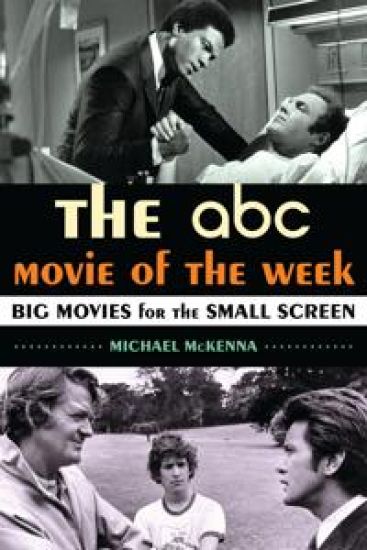
The ABC Movie of the Week

The ABC Movie of the Week

Michael McKenna

Scarecrow Press
2013
sidottu
On September 23, 1969, five years after the first made-for-television movie premiered, the ABC network broadcast Seven in Darkness. This was the first television film for an anthology show called the Tuesday Night Movie of the Week. Dedicating ninety minutes of weekly airtime to a still-emerging genre was a financial risk for the third-place network—a risk that paid off. The films were so successful that in 1972 the network debuted The Wednesday Movie of the Week. Although most of the movies are no longer remembered, a handful are still fondly recalled by viewers today, including Duel, Brian’s Song, and The Night Stalker. The series also showcased pilot films for many eventual series, such as Alias Smith and Jones, The Six Million Dollar Man, and Starsky and Hutch. By the end of both shows’ regular runs in the spring of 1975, the network had broadcast more than 200 made-for-television films. In The ABC Movie of the Week: Big Movies for the Small Screen, Michael McKenna examines this programming experiment that transformed the television landscape and became a staple of broadcast programming for several years. The author looks at how the revolving films showcased the right mixture of romantic comedy, action, horror, and social relevance to keep viewers interested week after week. McKenna also chronicles how the ratings success led to imitations from the other networks, resulting in a saturation of television movies. As a cultural touchstone for millions who experienced the first run and syndicated versions of these films, The ABC Movie of the Week is a worthy subject of study. Featuring a complete filmography of all 240 movies with credit information and plot summaries, a chronology, and a list of pilots—both failed and successful—this volume will be valuable to television historians and scholars, as well as to anyone interested in one of the great triumphs of network programming.
Teaching through Text

Teaching through Text

Michael McKenna; Richard Robinson

Pearson
2013
nidottu
Pre-service and in-service middle and secondary school teachers get a core set of instructional techniques in this evidence-based, practical resource designed to help them incorporate reading-related approaches into their classroom. The approaches are easy to follow, practical, effective, feature a strong empirical base and reflect the latest thinking in the field.
Conversation & Responsibility

Conversation & Responsibility

Michael McKenna

Oxford University Press Inc
2012
sidottu
In this book Michael McKenna advances a new theory of moral responsibility, one that builds upon the work of P.F. Strawson. As McKenna demonstrates, moral responsibility can be explained on analogy with a conversation. The relation between a morally responsible agent and those who hold her morally responsible is similar to the relation between a speaker and her audience. A responsible agent's actions are bearers of meaning -- agent meaning -- just as a speaker's utterances are bearers of speaker meaning. Agent meaning is a function of the morally quality of the will with which the agent acts. Those who hold an agent morally responsible for what she does do so by responding to her as if in a conversation. By responding with certain morally reactive attitudes, such as resentment or indignation, they thereby communicate their regard for the meaning taken to be revealed in that agent's actions. It is then open for the agent held responsible to respond to those holding her responsible by offering an apology, a justification, an excuse, or some other response, thereby extending the evolving conversational exchange. The conversational theory of moral responsibility that McKenna develops here accepts two features of Strawson's theory: that moral responsibility is essentially interpersonal -- so that being responsible must be understood by reference to the nature of holding responsible -- and that the moral emotions are central to holding responsible. While upholding these two aspects of Strawson's theory, McKenna's theory rejects a further Strawsonian thesis, which is that holding morally responsible is more fundamental or basic than being morally responsible. On the conversational theory, the conditions for holding responsible are dependent on the nature of the agent who is responsible. So holding responsible cannot be more basic than being responsible. Nevertheless, the nature of the agent who is morally responsible is to be understood in terms of sensitivity to those who would make moral demands of her, thereby holding her responsible. Being responsible is therefore also dependent on holding responsible. Thus, neither being nor holding morally responsible is more basic than the other. They are mutually dependent.
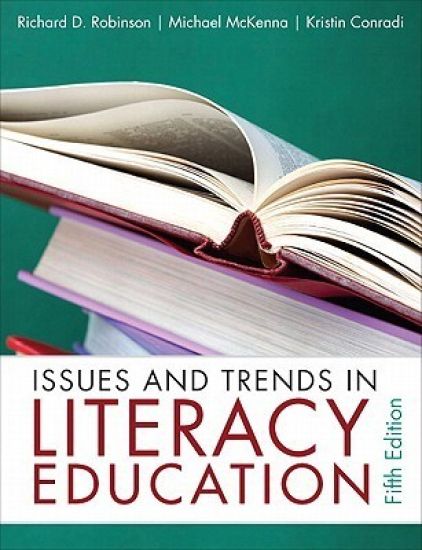
Issues and Trends in Literacy Education

Issues and Trends in Literacy Education

Richard Robinson; Michael McKenna; Kristin Conradi

Pearson
2011
nidottu
In Issues and Trends in Literacy Education, 5/e, well-respected authors Dick Robinson Mike McKenna, and Kristin Conradi pull together the research and opinions of some of today’s leading literacy educators to give readers an authoritative look at all crucial aspects of reading and writing education. This edition is completely revised to include all new, current articles and readings, including new chapters on English language learners and technology, and the scrupulously researched material meets the NCATE/International Reading Association requirements for accreditation of graduate reading programs.