Kirjojen hintavertailu. Mukana 12 595 353 kirjaa ja 12 kauppaa.

Kirjailija

Michael Mewshaw

Kirjat ja teokset yhdessä paikassa: 9 kirjaa, julkaisuja vuosilta 2000-2025, suosituimpien joukossa Sympathy for the Devil: Four Decades of Friendship with Gore Vidal. Vertaile teosten hintoja ja tarkista saatavuus suomalaisista kirjakaupoista.

9 kirjaa

Kirjojen julkaisuhaarukka 2000-2025.

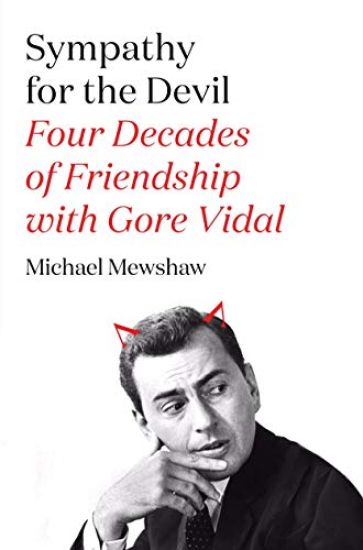
Sympathy for the Devil: Four Decades of Friendship with Gore Vidal
Detached and ironic; a master of the pointed put-down, of the cutting quip; enigmatic, impossible to truly know: this is the calcified public image of Gore Vidal--one the man himself was fond of reinforcing. "I'm exactly as I appear," he once said of himself. "There is no warm, lovable person inside. Beneath my cold exterior, once you break the ice, you find cold water." Michael Mewshaw's Sympathy for the Devil, a memoir of his friendship with the stubbornly iconoclastic public intellectual, is a welcome corrective to this tired received wisdom. A complex, nuanced portrait emerges in these pages--and while "Gore" can indeed be brusque, standoffish, even cruel, Mewshaw also catches him in more vulnerable moments. The Gore Vidal the reader comes to know here is generous and supportive to younger, less successful writers; he is also, especially toward the end of his life, disappointed, even lonely. Sparkling, often hilarious, and filled with spicy anecdotes about expat life in Italy, Sympathy for the Devil is an irresistible inside account of a man who was himself--faults and all--impossible to resist. As enlightening as it is entertaining, it offers a unique look at a figure many only think they know.
Not Heaven but Paradise

Not Heaven but Paradise

Michael Mewshaw

Unbridled Books
2025
sidottu
"Mewshaw's sentences sing. His ability to evoke a setting that many will find exotic rivals Graham Greene's, as does the depth of his characterization and his ability to make the reader keep wondering what in the world might happen next. The narrative keeps delivering surprises all the way to the final line. I love this novel.” — Steve Yarbrough, author Stay Gone DaysThe son of a Spanish mother and an American father who claimed to have worked for the CIA, Paul Stewart lives in his family home, a carmen in the Albaicín district of Granada. The house, which surrounds a lush courtyard, has foundations that date from Spain’s Islamic era and has been in the family for generations.Struggling to make ends meet, Paul has turned the carmen into an artist’s residency that caters primarily to American artists. The only current guests are Simone, a celebrity painter with a sexualized reputation, and an asylum-seeking Algerian professor who is the subject of a fatwa. Paul has been forced to take him in. An African refugee named Blessed, who’s been displaced by the arrival of the professor, suffers a crisis of both body and faith as a result.The relationship between Simone and Paul begins to complicate matters, and suspicions about everybody abound. Murky pasts and private agendas collide with avowed intentions—including those of the U.S. government—as events gather momentum toward an explosive, revelatory finish. In the hands of Michael Mewshaw, a master storyteller, this story fairly shines in our fraught age of political secrets and international terrorism.
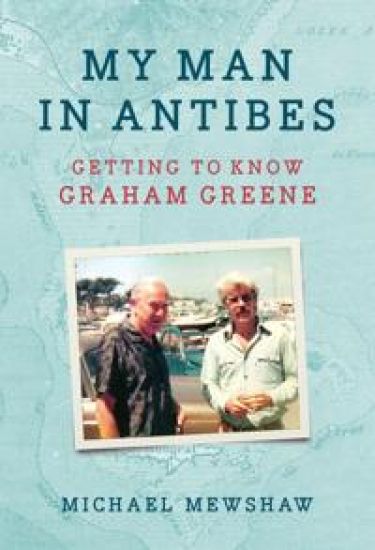
My Man in Antibes

My Man in Antibes

Michael Mewshaw

DAVID R. GODINE PUBLISHER INC
2023
sidottu
“One of the Year’s Best,” Times Literary Supplement When a writer tracks down his literary hero, Graham Greene, who is living quietly on the shores of the Mediterranean, the author finds his new friend is every bit as complex as the fiction he’s famous for. While living in southern France in 1972, Michael Mewshaw engineered a meeting with Graham Greene. Mewshaw was an ambitious young journalist and novelist, Greene was an internationally revered elder statesman of letters. The pair became fast friends and corresponded for the next twenty years. My Man in Antibes is an intimate portrait of what it was like to eat, drink, and gossip with one of the most revered—and complicated—authors of the twentieth century. Growing up Catholic with literary aspirations, Mewshaw believed Greene was the author to emulate. Not only did Greene demonstrate how religious belief and church dogma could be subjects for fiction, he also wrote murder mysteries and political thrillers where his characters’ inner conflicts played out dramatically in exotic settings. Under Greene’s sway, Mewshaw traveled through Mexico like the whiskey priest in Greene’s The Power and the Glory and honeymooned at the Hotel Oloffson in Haiti, the setting of The Comedians. When Mewshaw tracked down Greene in Antibes, he found the author was far from a reclusive, close-mouthed figure: Greene garrulously recounted tales about the many women in his life—and husbands of those women—as well as his extraordinary interviews with political figures such as Fidel Castro and Ho Chi Minh. Over the next two decades, Mewshaw and Greene ate meals together, discussed their travels, and talked about writers they knew in common, such as Anthony Burgess, Shirley Hazzard, and Gore Vidal. While young Mewshaw looked up to the world-weary Greene, their relationship was never simply that of mentor and mentee. My Man in Antibes bristles with misunderstandings, arguments, and one young writer’s desire to get to know a legendary older writer who, in many ways, actively sought to remain unknowable.
The Lost Prince

The Lost Prince

Michael Mewshaw

Counterpoint
2019
sidottu
"In The Lost Prince Michael Mewshaw sets down one of the most gripping stories of friendship I've ever read." --Daniel Menaker, author of My Mistake: A Memoir Pat Conroy was America's poet laureate of family dysfunction. A larger-than-life character and the author of such classics as The Prince of Tides and The Great Santini, Conroy was remembered by everybody for his energy, his exuberance, and his self-lacerating humor. Michael Mewshaw's The Lost Prince is an intimate memoir of his friendship with Pat Conroy, one that involves their families and those days in Rome when they were both young--when Conroy went from being a popular regional writer to an international bestseller. Family snapshots beautifully illustrate that time. Shortly before his forty-ninth birthday, Conroy telephoned Mewshaw to ask a terrible favor. With great reluctance, Mewshaw did as he was asked--and never saw Pat Conroy again. Although they never managed to reconcile their differences completely, Conroy later urged Mewshaw to write about "me and you and what happened . . . i know it would cause much pain to both of us. but here is what that story has that none of your others have." The Lost Prince is Mewshaw's fulfillment of a promise.
If You Could See Me Now

If You Could See Me Now

Michael Mewshaw

Unbridled Books
2014
pokkari
When Michael Mewshaw receives a call from a stranger who says she has reason to believe he is her biological father, Mewshaw realizes he has been half dreading, half hoping for this to happen for over 30 years. Just like the young woman who wants to find the last piece to the puzzle of her life, he hopes to answer questions that have plagued him for decades. But first he has to make sure that she is who she claims to be. In this fascinating memoir, Mewhsaw confronts his own past, the chaos of his family, and complicated memories of the woman he once loved. His unusual role in the baby's birth, her adoption, and, now, her search for her biological parents sets the stage for a revealing personal odyssey that offers a quest for identity and a journey of discovery, an obsession with recapturing the past and righting old wrongs, the constant potential for disappointment balanced against the possibility of redemption. As he finds his old flame and her old lover, rediscovering who he was and who he has become, he finds his life enriched in the process.
Between Terror And Tourism

Between Terror And Tourism

Michael Mewshaw

Counterpoint
2010
nidottu
For his 65th birthday, acclaimed novelist Michael Mewshaw took a 4,000-mile overland trip across North Africa. Arriving in Egypt during food riots, he heads west into Libya, where billions in oil money have produced little except citizens eager to flee to Europe or join the jihad in Iraq. In Tunis, Mewshaw visits an abandoned Star Wars movie set where Al Qaeda has just kidnapped two tourists. Ignoring U.S. Embassy warnings he crosses into Algeria, traveling through mountain towns and seething metropolises where 200,000 people have died during more than a decade of sectarian violence. Searching for the tombs of seven monks murdered by Islamic fundamentalists, he reaches a village where six more people have been beheaded the day before. When he interviews a repentant terrorist responsible for 5,000 deaths, the man praises the Boy Scouts for training him.By contrast, the Moroccan city of Tangier seems almost tame. But then he meets the last literary protege of Paul Bowles who accuses Bowles of plagiarism and murder. In the end, the reader, like the author, is immersed in a fascinating adventure that's sometimes tragic, often funny, occasionally terrifying and always a revelation of a strange place and its people.