Kirjojen hintavertailu. Mukana 12 595 353 kirjaa ja 12 kauppaa.
Kirjailija
Michael Morris
Kirjat ja teokset yhdessä paikassa: 56 kirjaa, julkaisuja vuosilta 1986-2026, suosituimpien joukossa SCHATTENGELD - Die verborgenen Strukturen hinter der neuen Geldordnung. Vertaile teosten hintoja ja tarkista saatavuus suomalaisista kirjakaupoista.
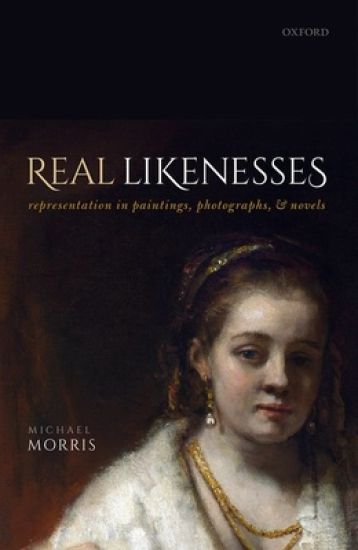
Real Likenesses presents a radical new approach to artistic representation. At its heart is a serious reconsideration of the relationship between medium and content in representational art, which counters currently dominant theories that make attention to the former inevitably a distraction from attending to the latter. Through close analysis of paintings, photographs, and novels, Michael Morris proposes a new understanding of the real likenesses we encounter in representational art; what they are, how they are made present to us, and how they are created. The result is an intuitive way of thinking about how these art forms work.
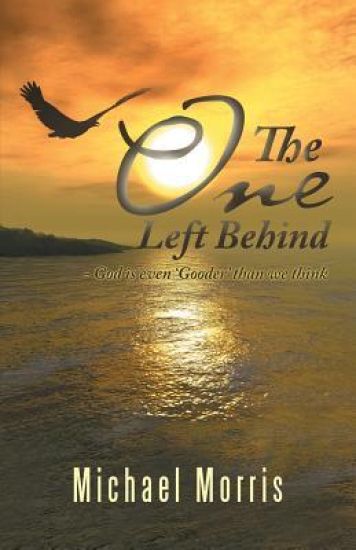
Charmaine, Mike's wife of 43 years, lived with cancer for nearly 8 years until 5 years ago. Then Jesus came back for her as he had promised. He took her to be where He is in his Father's house where He had prepared a home for her. He lifted her up on Eagles' wings and took her to Himself. The cancer is now dead, but Charmaine lives.This is Mike and Charmaine's story. it is a story of hope from the one left behind, a role that one day so many of us will be called upon to fill.It tells of God's goodness and how he is even better than we think - all the time. This they discovered through their circumstances, not despite them.
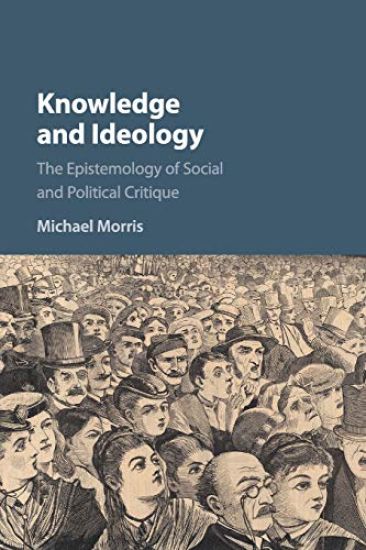
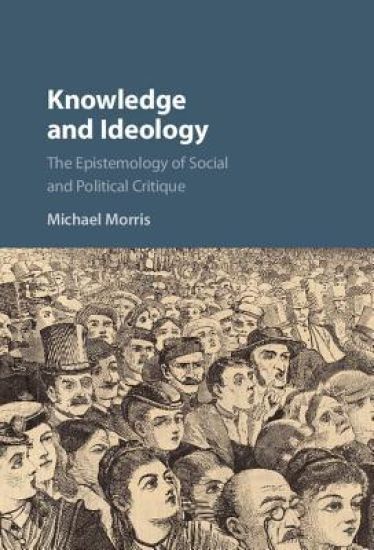
Ideology critique generally seeks to undermine selected theories and beliefs by demonstrating their partisan origins and their insidious social functions. This approach rightly reveals the socially implicated nature of much purported knowledge, but also brackets or bypasses its cognitive properties. In contrast, Michael Morris argues that it is possible to integrate the social and epistemic dimensions of belief in a way that preserves the cognitive and adjudicatory capacities of reason, while acknowledging that reason itself is inevitably social, historical, and interested. Drawing upon insights from Hegel, Lukács, Mannheim, and Habermas, he interprets and reconstructs Marx's critique of ideology as a positive theory of knowledge, one that reconciles the inherently interested and inextricably situated nature of thought with more traditional conceptions of rational adjudication, normativity, and truth. His wide-ranging examination of the social and epistemic dimensions of ideology will interest readers in political philosophy and political theory.
The first book in the new Haunted Handbook line within the popular America's Haunted Road Trip series, Cincinnati Haunted Handbook offers a plethora of eerie spots in the Queen City. Each of the places in Cincinnati Haunted Handbook is presented in a two-page spread that includes directions, a brief history, details about the paranormal activity, and advice on seeing it in person. Sites are organized into sections, including schoolhouses, roads and bridges, hotels and inns, and others. From the winding curves of the spooky Buffalo Ridge Road to the ghost of Music Hall, from the moans heard by the Miamitown bridge to the wispy form that flits through Spring Grove Cemetery, this book offers creepy hideaways that even Cincinnati natives don't know about. Equally suitable as a travel guide or as a diverting read for casual dipping, Cincinnati Haunted Handbook sorts out what creeps and crawls in the Ohio night.
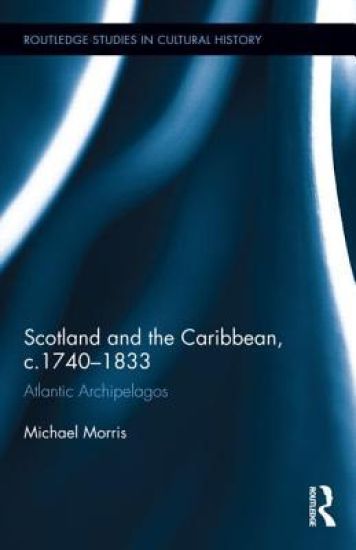
This book participates in the modern recovery of the memory of the long-forgotten relationship between Scotland and the Caribbean. Drawing on theoretical paradigms of world literature and transnationalism, it argues that Caribbean slavery profoundly shaped Scotland’s economic, social and cultural development, and draws out the implications for current debates on Scotland’s national narratives of identity. Eighteenth- to nineteenth-century Scottish writers are re-examined in this new light. Morris explores the ways that discourses of "improvement" in both Scotland and the Caribbean are mediated by the modes of pastoral and georgic which struggle to explain and contain the labour conditions of agricultural labourers, both free and enslaved. The ambivalent relationship of Scottish writers, including Robert Burns, to questions around abolition allows fresh perspectives on the era. Furthermore, Morris considers the origins of a hybrid Scottish-Creole identity through two nineteenth-century figures - Robert Wedderburn and Mary Seacole. The final chapter moves forward to consider the implications for post-devolution (post-referendum) Scotland. Underpinning this investigation is the conviction that collective memory is a key feature which shapes behaviour and beliefs in the present; the recovery of the memory of slavery is performed here in the interests of social justice in the present.
Few thirty-day periods in history have been more tumultuous than the fall of Saigon in April of 1975. Few thirty-day periods in history have been more tumultuous than the fall of Saigon in April of 1975. With US military now gone for two years, the North Vietnamese Army routed South Vietnam’s forces, resulting in thousands of refugees pouring into the former colonial capital. The world watched and waited for what many expected would be a bloodbath. Escape from Saigon follows various people trapped in the besieged city. Among them are a former GI attempting to rescue his Vietnamese wife’s terrified relatives; a Vietnamese-American television reporter whose conflicted heritage threatens her future; an American businessman risking his life to smuggle out his employees; and the last remaining US diplomatic personnel in Saigon, including the ambassador, military liaisons, and CIA operatives. The NVA onslaught is spearheaded by two officers?one intent on maintaining military restraint, the other bent on revenge and will sweep up families, friends, and comrades in this final chapter of a war that has already taken millions of lives. Escape from Saigon is a story of a city and its inhabitants struggling to survive in its most desperate hours?a tale that stays true to the historic record while recounting moments of human hardship, courage, and triumph. Skyhorse Publishing, as well as our Arcade, Yucca, and Good Books imprints, are proud to publish a broad range of books for readers interested in fiction?novels, novellas, political and medical thrillers, comedy, satire, historical fiction, romance, erotic and love stories, mystery, classic literature, folklore and mythology, literary classics including Shakespeare, Dumas, Wilde, Cather, and much more. While not every title we publish becomes a New York Times bestseller or a national bestseller, we are committed to books on subjects that are sometimes overlooked and to authors whose work might not otherwise find a home.
Ideology critique generally seeks to undermine selected theories and beliefs by demonstrating their partisan origins and their insidious social functions. This approach rightly reveals the socially implicated nature of much purported knowledge, but also brackets or bypasses its cognitive properties. In contrast, Michael Morris argues that it is possible to integrate the social and epistemic dimensions of belief in a way that preserves the cognitive and adjudicatory capacities of reason, while acknowledging that reason itself is inevitably social, historical, and interested. Drawing upon insights from Hegel, Lukács, Mannheim, and Habermas, he interprets and reconstructs Marx's critique of ideology as a positive theory of knowledge, one that reconciles the inherently interested and inextricably situated nature of thought with more traditional conceptions of rational adjudication, normativity, and truth. His wide-ranging examination of the social and epistemic dimensions of ideology will interest readers in political philosophy and political theory.
This book participates in the modern recovery of the memory of the long-forgotten relationship between Scotland and the Caribbean. Drawing on theoretical paradigms of world literature and transnationalism, it argues that Caribbean slavery profoundly shaped Scotland’s economic, social and cultural development, and draws out the implications for current debates on Scotland’s national narratives of identity. Eighteenth- to nineteenth-century Scottish writers are re-examined in this new light. Morris explores the ways that discourses of "improvement" in both Scotland and the Caribbean are mediated by the modes of pastoral and georgic which struggle to explain and contain the labour conditions of agricultural labourers, both free and enslaved. The ambivalent relationship of Scottish writers, including Robert Burns, to questions around abolition allows fresh perspectives on the era. Furthermore, Morris considers the origins of a hybrid Scottish-Creole identity through two nineteenth-century figures - Robert Wedderburn and Mary Seacole. The final chapter moves forward to consider the implications for post-devolution (post-referendum) Scotland. Underpinning this investigation is the conviction that collective memory is a key feature which shapes behaviour and beliefs in the present; the recovery of the memory of slavery is performed here in the interests of social justice in the present.
There are powerful groups interacting with Earth that have been working hard to suppress human awareness about extensive changes currently taking place. Their abilities to continue suppressing the truth through the end of 2015 will not be possible. I do not write these words for the sake of creating sensational essays or for entertainment purposes. Nor is this an attempt to grab attention through carefully scripted fiction that is nonsensically supported by doom and gloom scenarios. There are no doom and gloom scenarios attached to any of the forthcoming changes. Everything is happening, universally, because Vast Intelligence has prescribed it this way. It is vitally important that readers understand there is nothing to fear in any of the lifetimes we participate in. Everything sentient beings experience is predicated on garnering knowledge for Vast Intelligence. In this book, Michael Morris explains what the End Game taking place really means for life on Earth.
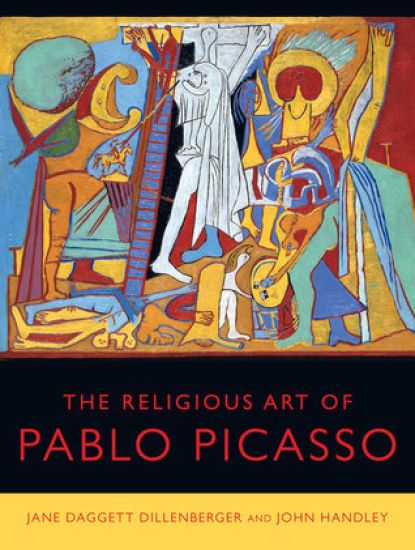
This is the first critical examination of Pablo Picasso's use of religious imagery and the religious import of many of his works with secular subject matter. Though Picasso was an avowed atheist, his work employs spiritual themes--and, often, traditional religious iconography. In five engagingly written, accessible chapters, Jane Daggett Dillenberger and John Handley address Picasso's cryptic 1930 painting of the Crucifixion; the artist's early life in the Catholic church; elements of transcendence in Guernica; Picasso's later, fraught relationship with the church, which commissioned him in the 1950s to paint murals for the Temple of Peace chapel in France; and the centrality of religious themes and imagery in bullfighting, the subject of countless Picasso drawings and paintings.
Your students are changing. Technology is changing. The idea of the “classroom” is changing. Now, the way your students experience Spanish can change as well!At McGraw-Hill, we rededicated ourselves over the past few years to broadening and deepening our understanding of the student and instructor experience in World Languages. Employing a wide array of research tools including surveys, focus groups, and ethnographic studies, we identified a number of areas for improvement upon the existing learning materials available. The result is Experience Spanish.Experience Spanish is a first. Its groundbreaking adaptive diagnostic and synchronous/asynchronous conversation tools create a 24/7 active language-in-culture environment never possible before. With Experience Spanish, instructors can tailor the environment while students tailor the experience, allowing everyone to take ownership of the learning experience. Affording the flexibility that only an integrated solution can provide, Experience Spanish provides an opportunity for instructors to quickly and easily provide a common learning experience for their students regardless of whether the course is face-to-face, online, or hybrid. At the same time, students have all of the tools at their fingertips to take their second language acquisition from the classroom to their communities in an efficient and personalized way. With Experience Spanish, your concerns about different levels of student preparedness and delivering consistent and meaningful courses in different formats are behind you.Own the experience. Take charge of learning. Experience Spanish and experience the world.*Connect Spanish, including but not limited to the workbook/lab manual, LearnSmart, the video program, and chat tools, is sold separately and does not come automatically with the purchase of the textbook.
The first book in the new Haunted Handbook line within the popular America's Haunted Road Trip series, Cincinnati Haunted Handbook offers a plethora of eerie spots in the Queen City. Each of the places in Cincinnati Haunted Handbook is presented in a two-page spread that includes directions, a brief history, details about the paranormal activity, and advice on seeing it in person. Sites are organized into sections, including schoolhouses, roads and bridges, hotels and inns, and others. From the winding curves of the spooky Buffalo Ridge Road to the ghost of Music Hall, from the moans heard by the Miamitown bridge to the wispy form that flits through Spring Grove Cemetery, this book offers creepy hideaways that even Cincinnati natives don't know about. Equally suitable as a travel guide or as a diverting read for casual dipping, Cincinnati Haunted Handbook sorts out what creeps and crawls in the Ohio night.
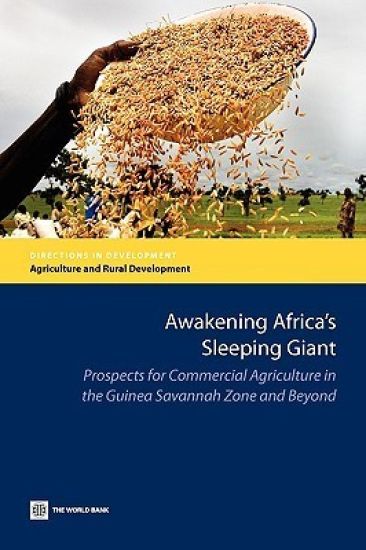
Stronger agricultural growth is needed to reduce poverty in Africa, yet the region continues to fall behind. During the past three decades, many traditional African export crops have lost their competitive advantage in international markets, and many food crops consumed in Africa have faced increased competition from imports. In contrast to Africa's experience, during the same period farmers in two remote and formerly unpromising agricultural regions elsewhere in the developing world-Brazil's Cerrado and the Northeast Region of Thailand-conquered important world markets, defying the predictions of many skeptics. What accounted for their success? And could the experience of these two regions carry important lessons for African agriculture? ""Awakening Africa's Sleeping Giant: Prospects for Commercial Agriculture in the Guinea Savannah Zone and Beyond"" summarizes the findings of the study on Competitive Commercial Agriculture for Africa, a collaborative effort led by the World Bank and the UN Food and Agriculture Organization. The study focused on Africa's Guinea Savannah zone, a vast and still largely unexploited area that shares many similarities with the Brazilian Cerrado and the Northeast Region of Thailand. Based on detailed case studies carried out on three continents, the book concludes that opportunities abound for Africa's farmers to compete effectively in regional and global markets. Considerable challenges will have to be overcome, however, and recent progress observed in a number of African countries could easily be reversed by bad policy choices. Making African agriculture competitive will depend on getting policies right, strengthening institutions, and increasing and refocusing investments in the sector.