
Kirjailija
Michael Newton
Kirjat ja teokset yhdessä paikassa: 92 kirjaa, julkaisuja vuosilta 1996-2026, suosituimpien joukossa Literary Tourism, the Trossachs and Walter Scott. Vertaile teosten hintoja ja tarkista saatavuus suomalaisista kirjakaupoista.
92 kirjaa
Kirjojen julkaisuhaarukka 1996-2026.

Join the search to examine reports of unidentified and misplaced creatures—known as “cryptids”—throughout the Mountain State, from its earliest history to present day. Included are such famous unknowns as Bigfoot; Mothman, harbinger of disaster; giant birds and snakes unrecognized by modern science; anomalous huge human remains unearthed statewide since the 19th century; “extinct” cougars that refuse to die; animals alien to North America, including lions, tigers, black panthers, kangaroos, and piranha; the ferocious “Dogman” and woolly, horned “Sheepsquatch”; freshwater cephalopods; and other creatures that defy classification. Wherever you reside or visit in West Virginia, phantom cryptids have been seen near your location—terrifying witnesses, baffling investigators, and monsters sometimes leave evidence behind to mark their passing through our world. Happy hunting!
Journey with cryptozoologist Michael Newton as he seeks Bigfoot in North America. BHMs (“Big Hairy Monsters”) have been called Bigfoot, Sasquatch, Oh-Mah, Skookum, Momo, Skunk Ape, and more throughout history, and the quest for these elusive beings has been reported and pursued from time immemorial. Read seven classic cases that put Bigfoot “on the map” and established the riddle of its existence in public consciousness. Then wander through 47 states and six Canadian provinces where there have been sightings since the year 2000. Meet Bigfoot hunters and learn methods employed in ongoing quests. Examine details of the debate considering whether Bigfoot should be killed (to prove the species exists) or if conclusive evidence may be obtained by other means. Discover physical evidence for Bigfoot’s existence, ranging from footprints to DNA sampling. Read about hoaxes and the creature’s portrayal in modern media and advertising.
Seanchaidh Na Coille / the Memory-Keeper of the Forest
Michael Newton
Nimbus Publishing (CN)
2015
nidottu


JOURNEY TO THE KILLING GROUND It was an age of innocence -- an era of carhops, poodle skirts, and hula hoops. It was also a time of terror. In 1958, a man named Harvey Glatman sped along the Santa Ana freeway out of L.A., headed to the desert with his "date" huddled in the passenger seat beside him. In his pockets Harvey had a gun and a length of rope. Drunk on power, arousal, and rage, Harvey also had a plan. And beneath the desert stars, by the light of the moon, he carried out his ordeal of unimaginable cruelty -- using his body, a camera, and his rope.... Months later, after one of his inhuman attacks went awry, Harvey's torture killings were described to a shocked and silent California courtroom. For decades, these infamous deeds would inspire television and movie plots. But until now, there has been no definitive account of the forces that drove one of America's most legendary serial killers. And never before has it been explained why, for Harvey Glatman, his crimes weren't about killing, raping, and torturing at all -- they were all about the rope.

A gripping account of Charles Starkweather and Caril Ann Fugate's rampage across Nebraska in the late 1950s. Complete with an update on Fugate's life today, WASTE LAND compellingly probes not only the mind-set of history's deadliest juvenile delinquents--but also the tragic end of America's innocence. 1958. More than a decade before Charles Manson warned parents to beware their homicidal children, nineteen-year-old Caril Ann Fugate embarked on a shocking, eight-day rampage across America's heartland that left eleven bloody bodies in its wake--including Caril Ann's parents. In an Ozzie and Harriet era of drive-ins, malts, and tail-finned cars, Starkweather and Fugate embraced the "live fast, die young" credo of The Wild One and James Dean, and touched off the Midwest's greatest manhunt since John Dillinger. Now, utilizing firsthand interviews, court transcripts, death-row confessions, and never-before-revealed case detail, WASTE LAND shines new light on the dark saga of Starkweather and Fugate--from their first kisses and kills to their capture and convictions. Complete with an update on Fugate's life today, WASTE LAND compellingly probes not only the mind-set of history's deadliest juvenile delinquents--but also the tragic end of America's innocence.

Stolen Away is the shocking true story of kidnapping and murder.Stolen Away describes the December 14, 1927 abduction of twelve-year-old Marian Parker, the daughter of a prominent Los Angeles banker, the bizarre ransom notes that followed, her brutal murder, and the arrest of William Edward Hickman, a sadistic monster who hid his evil behind the facade of a likable, all-American young man.

Proportionality in International Law
Michael Newton; Larry May
Oxford University Press Inc
2014
nidottu
Proportionality is intimately linked to the overarching concepts of self-defense, lawful force, and the controlled application of violence. It is one of the most visible facets of humanitarian law designed to reduce unnecessary human suffering and avoid excessive damage to property, and the natural environment. However, its application has come under renewed scrutiny and sustained controversy as a result of wars against non-state actors and from the extensive use of drones, human shields, cyber war techniques, and counterinsurgency tactics. Proportionality in International Law critically assesses the law of proportionality in normative terms combining abstract philosophical and legal analysis with highly emotive contemporary combat cases. The principle of proportionality permits actions that are logically linked to the intended goal, and thus defines the permissible boundaries for the initiation and conduct of modern wars. The case studies discussed in this book are predominantly from the perspective of those who make decisions in the midst of armed conflict, bringing analytic rigor to the debates as well as sensitivity to facts on the ground. The authors analyze modern usages of proportionality across a wide range of contexts enabling a more complete comprehension of the values that it preserves. This book contrasts the applications of proportionality in both jus ad bellum (the law and morality of resort to force) and within jus in bello (the doctrines applicable for using force in the midst of conflicts). Proportionality in International Law provides the reader with a unique interdisciplinary approach, offering practitioners and policymakers alike greater clarity over how proportionality should be understood in theory and in practice.
On every continent and in every nation, animals unrecognized by modern science are reported on a daily basis. People passionately pursue these creatures--the name given to their field of study is cryptozoology. Coined in the 1950s, the term literally means the science of hidden animals. When the International Society of Cryptozoology (ISC) was formed in 1982, the founders declared that the branch of science is also concerned with "the possible existence of known animals in areas where they are not supposed to occur (either now or in the past) as well as the unknown persistence of presumed extinct animals to the present time or to the recent past…what makes an animal of interest to cryptology is that it is unexpected." This reference work presents a "flesh and blood" view of cryptozoology. Here, 2,744 entries are listed, the majority of which each describe one specific creature or type of creature. Other entries cover 742 places where unnamed cryptids are said to appear; profiles of 77 groups and 112 individuals who have contributed to the field; descriptions of objects and events important to the subject; and essays on cryptotourism and hoaxes, for example. Appendices offer a timeline of zoological discoveries, annotated lists of movies and television series with cryptozoological themes, a list of crypto-fiction titles and a list of Internet websites devoted to cryptozoology.
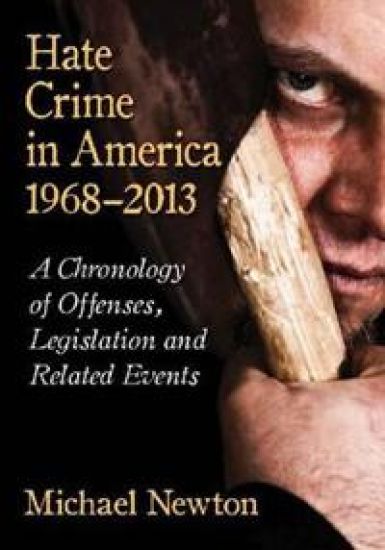
Crimes motivated by prejudice date to the beginning of human history. Despite legislation addressing bias-driven offenses hate crimes continue to plague modern American society. Beginning with the assassination of Dr. Martin Luther King, Jr., and the passage of the Civil Rights Act of 1968 six days later, this chronology catalogs hate crimes and the relevant statutes and amendments affecting the definition, prosecution and punishment of hate crimes within the U.S. through 2013. The introduction sketches the history of hate crimes legislation through 1968, while an appendix lists and briefly describes hate crime statutes presently in force in various states. From racial violence and attacks on gays and lesbians to the bombings of abortion clinics by "pro-life" extremists to assaults on Muslims in the wake of 9/11, this reference work lays bare an ugly but critical aspect of American history.

With its fiery crosses and nightriders in pointed hoods and flowing robes, the Ku Klux Klan remains a recurring nightmare in American life. What began in the earliest post-Civil War days as a social group engaging in drunken hijinks at the expense of perceived inferiors soon turned into a murderous paramilitary organization determined to resist the "evils" of radical Reconstruction. For six generations and counting, the Klan has inflicted misery and death on countless victims nationwide and since the early 1920s, has expanded into distant corners of the globe. From the Klan's post-Civil War lynchings in support of Jim Crow laws, to its bloody stand against desegregation during the 1960s, to its continued violence in the militia movement at the turn of the 21st century, this revealing volume chronicles the complete history of the world's oldest surviving terrorist organization from 1866 to the present. The story is told without embellishment because, as this work demonstrates, the truth about the Ku Klux Klan is grim enough.
Proportionality in International Law
Michael Newton; Larry May
Oxford University Press Inc
2014
sidottu
Proportionality is intimately linked to the overarching concepts of self-defense, lawful force, and the controlled application of violence. It is one of the most visible facets of humanitarian law designed to reduce unnecessary human suffering and avoid excessive damage to property, and the natural environment. However, its application has come under renewed scrutiny and sustained controversy as a result of wars against non-state actors and from the extensive use of drones, human shields, cyber war techniques, and counterinsurgency tactics. Proportionality in International Law critically assesses the law of proportionality in normative terms combining abstract philosophical and legal analysis with highly emotive contemporary combat cases. The principle of proportionality permits actions that are logically linked to the intended goal, and thus defines the permissible boundaries for the initiation and conduct of modern wars. The case studies discussed in this book are predominantly from the perspective of those who make decisions in the midst of armed conflict, bringing analytic rigor to the debates as well as sensitivity to facts on the ground. The authors analyze modern usages of proportionality across a wide range of contexts enabling a more complete comprehension of the values that it preserves. This book contrasts the applications of proportionality in both jus ad bellum (the law and morality of resort to force) and within jus in bello (the doctrines applicable for using force in the midst of conflicts). Proportionality in International Law provides the reader with a unique interdisciplinary approach, offering practitioners and policymakers alike greater clarity over how proportionality should be understood in theory and in practice.
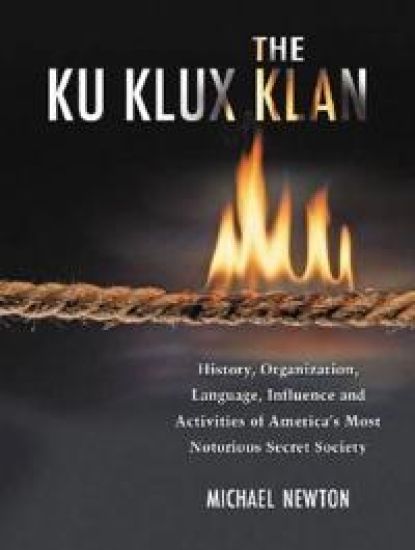
This monumental reference work is a comprehensive guide to the Ku Klux Klan. It begins with a brief history of the KKK, from antebellum predecessors to the present day. Subsequent chapters cover beliefs, including white supremacy, nativism, religion, moralism and education; terms and abbreviations, with a definitive glossary; biographies of prominent historical Klansmen and profiles of KKK groups and front groups; profiles of individuals and groups linked or friendly to the Klan; an historical overview of the Klan in politics, including friendly and adversarial politicians; a discussion of activities in the United States and abroad; the use of violence, with a roster of murder victims, a compilation of arson and bombing incidents, and sketches of riots and lynchings; state and federal efforts to police or infiltrate the Klan; watchdog groups; and current and historic journalists who covered Klan activities. Appendices provide a KKK timeline and reproductions of several key Klan documents.
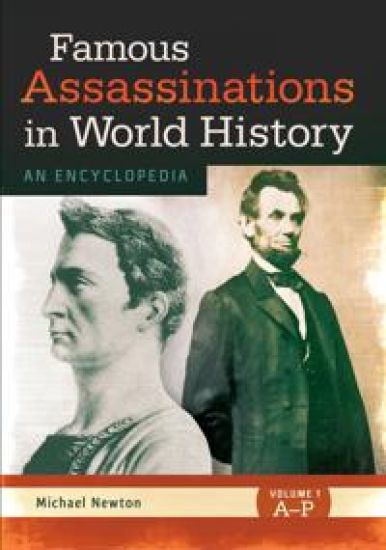
Representing a unique reference tool for readers interested in history, criminology, or terrorism, this book provides the most complete and up-to-date coverage of assassinations of key figures throughout history and around the world. Effecting the death of a political figure, a leader of a nation, or a public figure usually captures people's attention. But how often is assassination effective to achieve the larger objective beyond the death of the targeted individual? Famous Assassinations in World History: An Encyclopedia offers more than 200 entries on assassinations of all kinds that will allow readers to grasp the often-complex motivating factors behind each event and better understand historical and contemporary social unrest. Each entry identifies the assassination target and summarizes that person's significance; discusses the person's assassination, including the factors that led up to it and its political and cultural contexts; and explains the powerful effects of the assassination in world history. The encyclopedia also includes various sidebars that spotlight relevant individuals, groups, and movements and present intriguing factoids such as the final disposition of notorious assassins' weapons and various films and novels that were inspired by famous assassinations. In addition, 23 primary source documents provide accounts of assassinations throughout world history.
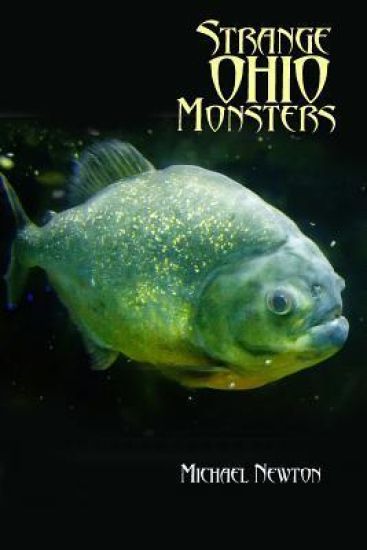
Strange Ohio Monsters is the first book-length survey of unknown creatures reported from the Buckeye State throughout recorded history. The list includes hundreds of Bigfoot sightings, serpentine monsters reported from several lakes, encounters with huge birds and winged creatures resembling prehistoric reptiles, meetings with "Mothman," giant snakes and lizards, phantom kangaroos, alien mystery cats resembling tigers and African lions, and apparently thriving populations of creatures deemed officially extinct for generations. Beyond the "normal" range of unidentified creatures, modern witnesses report sightings of humanoid giants and pygmies, child-sized bipedal frogs, and lurking nocturnal predators that mutilate livestock and pets from farm country to the suburbs. Aboriginal tribes were the first to encounter such creatures, but bizarre reports continue in this second decade of the 21st century.
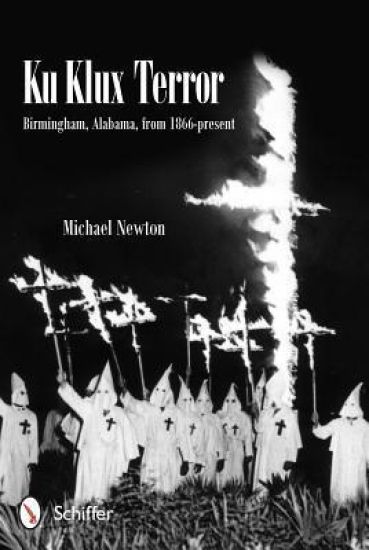
Everything you need to know about the bloody history of the Ku Klux Klan in Alabama, from its inception in 1866 to its current abominations, is here. During Reconstruction, the KKK "redeemed" the state for white, one-party rule, then disbanded. In 1915, it reappeared as a fraternal order and political vehicle. What started out as a small group of drunken Confederate veterans on horseback harassing freed slaves became a vast network of violent, power-hungry racists. The Klan committed its most atrocious crimes against the African-American civil rights movement from 1954 to 1969. Read about an innocent man whose irreparable mutilation was intended as a warning to a pastor who supported racial integration of schools. The Klan's most devastating hate crime of that era, the deadly bombing of Sixteenth Street Baptist Church, remained technically unsolved until 1977. Even today, the KKK and its philosophy endure.
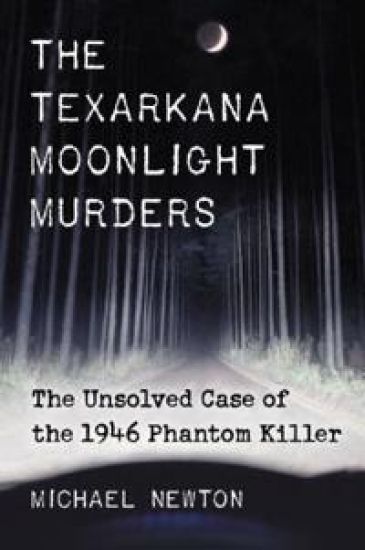
In 1946, years before the phrase "serial murder" was coined, a masked killer terrorized the town of Texarkana on the Texas-Arkansas border. Striking five times within a ten-week period, always at night, the prowler claimed six lives and left three other victims wounded. Survivors told police that their assailant was a man, but could supply little else. A local newspaper dubbed him the Phantom Killer, and it stuck. Other reporters called the faceless predator the "Moonlight Murderer," though the lunar cycle had nothing to do with the crimes. Texarkana's phantom was not America's first serial slayer; he certainly was not the worst, either in body count or sheer brutality. But he has left a crimson mark on history as one of those who got away. Like the elusive Axeman of New Orleans, Cleveland's Mad Butcher of Kingsbury Run, and San Francisco's Zodiac Killer, the Phantom Killer left a haunting mystery behind. This is the definitive story of that mystery.