Kirjojen hintavertailu. Mukana 12 356 598 kirjaa ja 12 kauppaa.

Kirjailija

Michael Novak

Kirjat ja teokset yhdessä paikassa: 48 kirjaa, julkaisuja vuosilta 1979-2018, suosituimpien joukossa Rebound. Vertaile teosten hintoja ja tarkista saatavuus suomalaisista kirjakaupoista.

48 kirjaa

Kirjojen julkaisuhaarukka 1979-2018.

Choosing Presidents

Choosing Presidents

Michael Novak

Transaction Publishers
1991
nidottu
In Choosing Presidents, Novak uses the election of an American president as a means to dissect the symbols of our national life and politics, exposing many as distorted perceptions of American realities. This work is a guide to the complexities of electoral politics and a lasting contribution to our understanding of the presidency.The author is Michael Novak.
Catholic Social Thought and Liberal Institutions

Catholic Social Thought and Liberal Institutions

Michael Novak

Transaction Publishers
1988
nidottu
Increasingly, the religious leaders of the world are addressing problems of political economy, expressing concern about the poor. But will their efforts actually help the poor? Or harm them? Much depends, Michael Novak asserts, upon what kind of institutions are constructed, that is, upon realism and practicality.His thesis may be simply stated: Although the Catholic Church during the nineteenth and early twentieth centuries set itself against liberalism as an ideology, it has slowly come to admire liberal institutions such as democracy and free markets. Between the Catholic vision of social justice and liberal institutions, Novak argues, there is a profound consonance (but not identity). Both celebrate realism, respect for institutions, and prudence or practical wisdom. The Catholic tradition adds to liberal individualism a strong communitarian sense.This book was first published in 1984 as Freedom with Justice. This new edition adds both a lengthy introduction carrying forward the original argument and a long concluding chapter on Pope John Paul IPs controversial new encyclical of early 1988, Sollicitudo Rei Socialis.
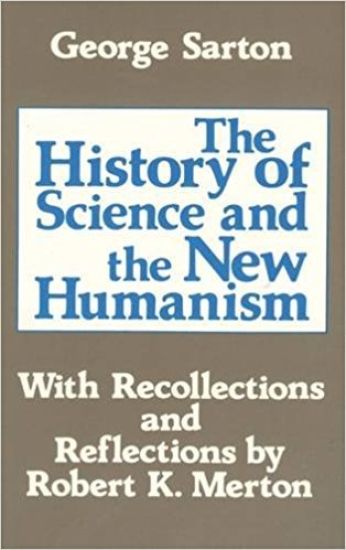
The History of Science and the New Humanism

The History of Science and the New Humanism

Michael Novak

Transaction Publishers
1987
nidottu
In this classic work, the foremost historian of science in our time, George Sarton, sums up his reflections on the role of science and of the humanities in our culture. Voicing his opposition to the old-fashioned humanists on the one hand, and to the 'uneducated' men of science and technicians on the other, Sarton points out to the former that the humanities without scientific are essentially incomplete. He warns the latter that without history, without philosophy, without arts and letters, without a living religion, human life on this planet would cease to be worthwhile.After outlining his 'Faith of a Humanist' in the opening section, Sarton goes on to analyze 'The History of Science and the History of Civilization,' to discuss the progress of scientific thought since ancient times in 'East and West,' and to propose the solution for the educational and cultural crisis of our time in 'The New Humanism' and in 'The History of Science and the Problems of Today.' He concludes not only that science is a source of technological development that has changed the face of the earth and has convulsed our lives for good and evil, but that it nonetheless affords the best means of understanding the world, its people, and the multitude of their relationships. 'Science is the conscience of mankind.'Included in this edition is Robert M. Merton's address before the Sarton Centennial meeting of November 1984. It is a stunning tour de force in its own right, providing insights into Sarton, teaching and research at Harvard in the 1930s, and the personal interaction between Sarton the mentor, and Merton the pupil. The essay supplements May Sarton's earlier 'Informal Portrait of George Sarton.'
Toward the Future

Toward the Future

Michael Novak; Michael Joyce

University Press of America
1985
nidottu
A response to the Catholic Bishops' Pastoral on the U.S. economy, this book presents a lay point of view on Catholic social thought and the economy. Three fundamental principles of Catholic social thought are stated: the sacred dignity of the person, the social nature of human life, and the obligation to assign social decisions to the level of authority best suited to take them (subsidiarity). Within those principles, a sense of balance must be maintained. Co-published with the Lay Commission on Catholic Social Teaching and the U.S. Economy.
Concepts of Ethnicity

Concepts of Ethnicity

William Petersen; Michael Novak; Philip Gleason

The Belknap Press
1980
nidottu
The monumental Harvard Encyclopedia of American Ethnic Groups is the most authoritative single source available on the history, culture, and distinctive characteristics of ethnic groups in the United States. The Dimensions of Ethnicity series is designed to make this landmark scholarship available to everyone in a series of handy paperbound student editions. Selections in this series will include outstanding articles that illuminate the social dynamics of a pluralistic nation or masterfully summarize the experience of key groups. Written by the best-qualified scholars in each field, Dimensions of Ethnicity titles will reflect the complex interplay between assimilation and pluralism that is a central theme of the American experience.The tightening and loosening of ethnic identity under changing definitions of “Americanism” is emphasized in this volume.