Kirjojen hintavertailu. Mukana 12 390 323 kirjaa ja 12 kauppaa.

Kirjailija

Michael O. Emerson

Kirjat ja teokset yhdessä paikassa: 15 kirjaa, julkaisuja vuosilta 2001-2026, suosituimpien joukossa Genomics Data Analysis. Vertaile teosten hintoja ja tarkista saatavuus suomalaisista kirjakaupoista.

Mukana myös kirjoitusasut: Michael O Emerson

15 kirjaa

Kirjojen julkaisuhaarukka 2001-2026.

Divided by Faith

Divided by Faith

Michael O. Emerson; Christian Smith

OXFORD UNIVERSITY PRESS INC
2026
sidottu
First published in 2000, Divided by Faith has become a landmark book for understanding race and religion in the United States. Drawing on a nationwide telephone survey of two thousand people and an additional two hundred face-to-face interviews, it probes the grassroots of white evangelical America. A quarter of a century on from the first edition, Michael O. Emerson and Christian Smith find that despite efforts by the movement's leaders to address the problem of racial discrimination, evangelicals themselves are still preserving America's racial chasm. In fact, most white evangelicals see no systematic discrimination against Black Americans or other racial groups. The authors contend that it is not overt racism that prevents evangelicals from recognizing ongoing problems in American society. Instead, it is the evangelical movement's emphasis on individualism, free will, and personal relationships that makes invisible the pervasive injustice that perpetuates racial inequality. This second edition has been thoroughly overhauled with updated statistics and an additional chapter covering developments over the last twenty-five years. The authors assess the growth of the rise of Christian nationalism, whiteness studies, critical race theory, the racialization of religion, and the religionization of race. Through a large body of evidence combined with sophisticated analysis and interpretation, they throw a bright light on the oldest American dilemma. In the end, they conclude that despite the best intentions of evangelical leaders and some positive trends, real racial reconciliation remains far over the horizon.

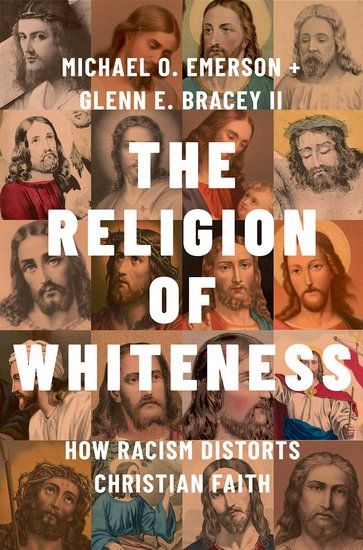
The Religion of Whiteness

The Religion of Whiteness

Michael O. Emerson; Glenn E. Bracey II

OXFORD UNIVERSITY PRESS INC
2024
sidottu
Are most white American Christians actually committed to a Religion of Whiteness? Recent years have seen a growing recognition of the role that White Christian Nationalism plays in American society. As White Christian Nationalism has become a major force, and as racial and religious attitudes become increasingly aligned among whites--for example, the more likely you are to say that the decline of white people as a share of the population is "bad for society," the more likely you are to believe the government should support religious values--it has become reasonable to wonder which of the adjectives in the phrase "White Christian Nationalism" takes precedence. In this book, Michael O. Emerson and Glenn E. Bracey II respond definitively: the answer is "white." The majority of white Christians in America, they argue, are believers in a "Religion of Whiteness" that shapes their faith, their politics, and more. The Religion of Whiteness, they argue, raises the perpetuation of racial inequality to a level of spiritual commitment that rivals followers' commitment to Christianity itself. This religion has its own unique beliefs, practices, sacred symbols, and organizations. What is more, this religion affects more than just churches. It drives the nation's politics, divides families, and is especially harmful to communities of color. Using national survey data, in-depth interviews, and focus group results gathered over several years, Emerson and Bracey show how the Religion of Whiteness shapes the practice of Christianity for millions of Americans--and what can be done to confront it.
Religion Matters

Religion Matters

William A. Mirola; Michael O. Emerson; Susanne C Monahan

TAYLOR FRANCIS LTD
2022
sidottu
Religion Matters: How Sociology Helps Us Understand Religion in Our World focuses on religion’s interplay with broader society, introducing students to the basic questions, ideas, and methods with which sociologists have analyzed the relationship between religion and society.Since the first edition, religion as a social force has changed dramatically in its content and consequences for the world. In this new edition, the authors update the foundational lenses used to understand religion’s multiple roles in society, assess the impact of technology and social media on religion and faith, draw further reflection from contemporary studies of religion and gender, and add a new chapter examining the increasing amount of religious polarization in the United States and throughout the world.With new illustrations and connections that make this readable textbook more accessible and relevant for today’s student, the second edition of Religion Matters remains a perfect counterpart for introductory courses concerned with the sociological study of religion.
Religion Matters

Religion Matters

William A. Mirola; Michael O. Emerson; Susanne C Monahan

TAYLOR FRANCIS LTD
2022
nidottu
Religion Matters: How Sociology Helps Us Understand Religion in Our World focuses on religion’s interplay with broader society, introducing students to the basic questions, ideas, and methods with which sociologists have analyzed the relationship between religion and society.Since the first edition, religion as a social force has changed dramatically in its content and consequences for the world. In this new edition, the authors update the foundational lenses used to understand religion’s multiple roles in society, assess the impact of technology and social media on religion and faith, draw further reflection from contemporary studies of religion and gender, and add a new chapter examining the increasing amount of religious polarization in the United States and throughout the world.With new illustrations and connections that make this readable textbook more accessible and relevant for today’s student, the second edition of Religion Matters remains a perfect counterpart for introductory courses concerned with the sociological study of religion.
Faithful Antiracism – Moving Past Talk to Systemic Change

Faithful Antiracism – Moving Past Talk to Systemic Change

Christina Barla Edmondson; Chad Brennan; Korie Little Edwards; Michael O. Emerson

INTERVARSITY PRESS
2022
sidottu
Reader's Choice Award Winner It's time to move past talk. It's no longer news to most of us that our society has a deep-seated racism problem. Christians of all ethnic and economic backgrounds are tired of seeing the ugly legacy of racism play out before their eyes and feeling ill-equipped to respond. They watch as friends and family members leave the visible church over this issue, or fall prey to a gospel of White nationalism that is an affront to the cross of Christ. Racism presents itself as an undefeatable foe—a sustained scourge on the reputation of the church. In Faithful Antiracism, Christina Barland Edmondson and Chad Brennan take confidence from the truth that Christ has overcome the world, including racism, and offer clear analysis and interventions to challenge and resist its pernicious power. Drawing on brand-new research from the landmark Race, Religion, and Justice Project led by Michael Emerson and others, this book represents the most comprehensive study on Christians and race since Emerson's own book Divided by Faith (2001). It invites readers to put this data to immediate practical use, applying it to their own specific context. Compelled by our grievous social moment and by the timeless truth of Scripture, Faithful Antiracism will equip readers to move past talk and enter the fight against racism in both practical and hopeful ways.
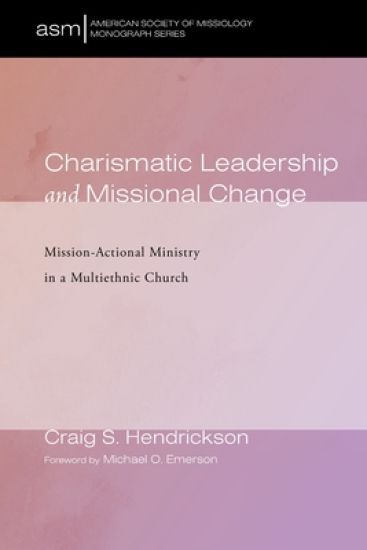
Charismatic Leadership and Missional Change

Charismatic Leadership and Missional Change

Craig S Hendrickson; Michael O Emerson

Pickwick Publications
2020
sidottu
Too often, the solution sought by many struggling churches is to make the homerun hire--to find the charismatic leader who will take them to the promised land of growth and vibrant ministry. While this strategy occasionally pays off, it has overwhelmingly failed as seen in the hundreds of churches across the United States that close their doors annually. Is it possible that there is another way forward for those seeking to lead local congregations into missionally vibrant ministry, especially those located in multiethnic urban areas? In Charismatic Leadership and Missional Change, one church's journey from a struggling, primarily Anglo congregation of less than 100 members to becoming a missionally vibrant, multiethnic church of more than 700 attendees with no clear ethnic majority documented. The charismatic leadership style that drove this change is discussed and critiqued, as well as the adaptive challenges that have arisen in the church because of it. An alternative approach--interpretive leadership--is proposed as a different pathway forward in response to these challenges. The result, the author suggests, will be to empower the diverse, everyday people of God to participate in God's mission in exciting and surprising new ways.
Charismatic Leadership and Missional Change

Charismatic Leadership and Missional Change

Craig S Hendrickson; Michael O Emerson

Pickwick Publications
2020
pokkari
Too often, the solution sought by many struggling churches is to make the homerun hire--to find the charismatic leader who will take them to the promised land of growth and vibrant ministry. While this strategy occasionally pays off, it has overwhelmingly failed as seen in the hundreds of churches across the United States that close their doors annually. Is it possible that there is another way forward for those seeking to lead local congregations into missionally vibrant ministry, especially those located in multiethnic urban areas? In Charismatic Leadership and Missional Change, one church's journey from a struggling, primarily Anglo congregation of less than 100 members to becoming a missionally vibrant, multiethnic church of more than 700 attendees with no clear ethnic majority documented. The charismatic leadership style that drove this change is discussed and critiqued, as well as the adaptive challenges that have arisen in the church because of it. An alternative approach--interpretive leadership--is proposed as a different pathway forward in response to these challenges. The result, the author suggests, will be to empower the diverse, everyday people of God to participate in God's mission in exciting and surprising new ways.
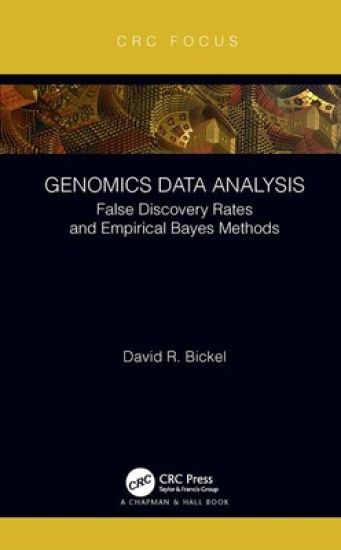
Genomics Data Analysis

Genomics Data Analysis

William A. Mirola; Michael O. Emerson; Susanne C Monahan

CRC Press
2019
sidottu
Statisticians have met the need to test hundreds or thousands of genomics hypotheses simultaneously with novel empirical Bayes methods that combine advantages of traditional Bayesian and frequentist statistics. Techniques for estimating the local false discovery rate assign probabilities of differential gene expression, genetic association, etc. without requiring subjective prior distributions. This book brings these methods to scientists while keeping the mathematics at an elementary level. Readers will learn the fundamental concepts behind local false discovery rates, preparing them to analyze their own genomics data and to critically evaluate published genomics research.Key Features:* dice games and exercises, including one using interactive software, for teaching the concepts in the classroom* examples focusing on gene expression and on genetic association data and briefly covering metabolomics data and proteomics data* gradual introduction to the mathematical equations needed* how to choose between different methods of multiple hypothesis testing* how to convert the output of genomics hypothesis testing software to estimates of local false discovery rates* guidance through the minefield of current criticisms of p values* material on non-Bayesian prior p values and posterior p values not previously published
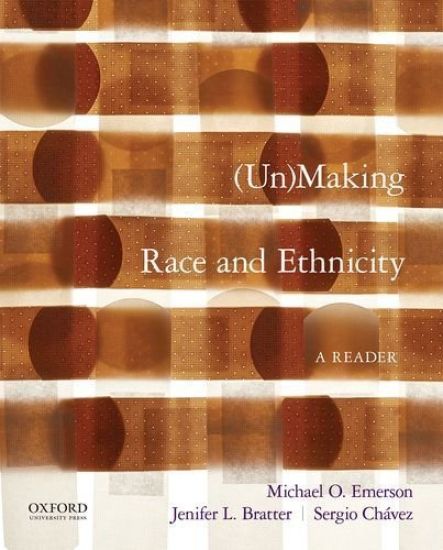
Unmaking Race and Ethnicity: A Reader

Unmaking Race and Ethnicity: A Reader

Michael O. Emerson; Jenifer L. Bratter; Sergio Chávez

Oxford University Press
2016
nidottu
Race and ethnicity is a contentious topic that presents complex problems with no easy solutions. (Un)Making Race and Ethnicity: A Reader, edited by Michael O. Emerson, Jenifer L. Bratter, and Sergio Ch vez, helps instructors and students connect with primary texts in ways that are informative and interesting, leading to engaging discussions and interactions. With more than thirty collective years of teaching experience and research in race and ethnicity, the editors have chosen selections that will encourage students to think about possible solutions to solving the problem of racial inequality in our society. Featuring global readings throughout, (Un)Making Race and Ethnicity covers both race and ethnicity, demonstrating how they are different and how they are related. It includes a section dedicated to unmaking racial and ethnic orders and explains challenging concepts, terms, and references to enhance student learning.
Passing the Plate

Passing the Plate

Christian Smith; Michael O Emerson; Patricia Snell

Oxford University Press Inc
2008
sidottu
Passing the Plate shows that few American Christians donate generously to religious and charitable causes--a parsimony that seriously undermines the work of churches and ministries. Far from the 10 percent of one's income that tithing requires, American Christians' financial giving typically amounts, by some measures, to less than one percent of annual earnings. And a startling one out of five self-identified Christians gives nothing at all. This eye-opening book explores the reasons behind such ungenerous giving, the potential world-changing benefits of greater financial giving, and what can be done to improve matters. If American Christians gave more generously, say the authors, any number of worthy projects-from the prevention and treatment of HIV/AIDS to the promotion of inter-religious understanding to the upgrading of world missions-could be funded at astounding levels. Analyzing a wide range of social surveys and government and denominational statistical datasets and drawing on in-depth interviews with Christian pastors and church members in seven different states, the book identifies a crucial set of factors that appear to depress religious financial support-among them the powerful allure of a mass-consumerist culture and its impact on Americans' priorities, parishioners' suspicions of waste and abuse by nonprofit administrators, clergy hesitations to boldly ask for money, and the lack of structure and routine in the way most American Christians give away money. In their conclusion, the authors suggest practical steps that clergy and lay leaders might take to counteract these tendencies and better educate their congregations about the transformative effects of generous giving. By illuminating the social and psychological forces that shape charitable giving, Passing the Plate is sure to spark a much-needed debate on a critical issue.
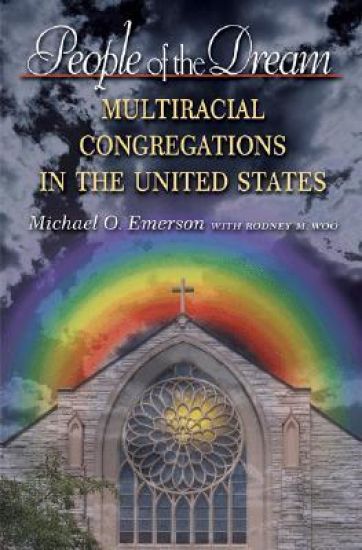
People of the Dream

People of the Dream

Michael O. Emerson

Princeton University Press
2008
pokkari
It is sometimes said that the most segregated time of the week in the United States is Sunday morning. Even as workplaces and public institutions such as the military have become racially integrated, racial separation in Christian religious congregations is the norm. And yet some congregations remain stubbornly, racially mixed. People of the Dream is the most complete study of this phenomenon ever undertaken. Author Michael Emerson explores such questions as: how do racially mixed congregations come together? How are they sustained? Who attends them, how did they get there, and what are their experiences? Engagingly written, the book enters the worlds of these congregations through national surveys and in-depth studies of those attending racially mixed churches. Data for the book was collected over seven years by the author and his research team. It includes more than 2,500 telephone interviews, hundreds of written surveys, and extensive visits to mixed-race congregations throughout the United States. People of the Dream argues that multiracial congregations are bridge organizations that gather and facilitate cross-racial friendships, disproportionately housing people who have substantially more racially diverse social networks than do other Americans. The book concludes that multiracial congregations and the people in them may be harbingers of racial change to come in the United States.
United by Faith

United by Faith

Curtiss Paul DeYoung; Michael O. Emerson; George Yancey; Karen Chai Kim

Oxford University Press Inc
2004
nidottu
In the last four decades, desegregation has revolutionized almost every aspect of life in the United States: schools, businesses, government offices, even entertainment. But there is one area that remains largely untouched, and that is the church. Now comes a major new call for multiracial congregations in every possible setting--a call that is surprisingly controversial, even in the twenty-first century. In United By Faith, a multiracial team of sociologists and a minister of the Church of God argue that multiracial Christian congregations offer a key to opening the still-locked door between the races in the United States. They note, however, that a belief persists--even in African-American and Latino churches--that racial segregation is an acceptable, even useful practice. The authors examine this question from biblical, historical, and theological perspectives to make their case. They explore the long history of interracialism in the church, with specific examples of multiracial congregations in the United States. They cite examples ranging from the abolitionist movement to an astonishing 1897 camp meeting in Alabama that brought together hundreds of whites and blacks literally into the same tent. Here, too, is a critical account of the theological arguments in favor of racial separation, as voiced in the African-American, Latino, Asian-American, Native-American, and white contexts. The authors respond in detail, closing with a foundation for a theology suited to sustaining multiracial congregations over time. Faith can be the basis for healing, but too often Christian faith has been a field for injury and division. In this important new book, readers will glimpse a way forward, a path toward once again making the church the basis for racial reconciliation in our still-splintered nation.
United by Faith

United by Faith

Curtiss Paul DeYoung; Michael O. Emerson; George Yancey; Karen Chai Kim

Oxford University Press Inc
2003
sidottu
In the last four decades, desegregation has revolutionized almost every aspect of life in the United States: schools, businesses, government offices, even entertainment. But there is one area that remains largely untouched, and that is the church. Now comes a major new call for multiracial congregations in every possible setting--a call that is surprisingly controversial, even in the twenty-first century. In United By Faith, a multiracial team of sociologists and a minister of the Church of God argue that multiracial Christian congregations offer a key to opening the still-locked door between the races in the United States. They note, however, that a belief persists--even in African-American and Latino churches--that racial segregation is an acceptable, even useful practice. The authors examine this question from biblical, historical, and theological perspectives to make their case. They explore the long history of interracialism in the church, with specific examples of multiracial congregations in the United States. They cite examples ranging from the abolitionist movement to an astonishing 1897 camp meeting in Alabama that brought together hundreds of whites and blacks literally into the same tent. Here, too, is a critical account of the theological arguments in favor of racial separation, as voiced in the African-American, Latino, Asian-American, Native-American, and white contexts. The authors respond in detail, closing with a foundation for a theology suited to sustaining multiracial congregations over time. Faith can be the basis for healing, but too often Christian faith has been a field for injury and division. In this important new book, readers will glimpse a way forward, a path toward once again making the church the basis for racial reconciliation in our still-splintered nation.
Divided by Faith

Divided by Faith

Michael O. Emerson; Christian Smith

Oxford University Press Inc
2001
nidottu
In recent years, the leaders of the American evangelical movement have brought their characteristic passion to the problem of race, notably in the Promise Keepers movement and in reconciliation theology. But the authors of this provocative new study reveal that despite their good intentions, evangelicals may actually be preserving America's racial chasm. In Divided by Faith, Michael O. Emerson and Christian Smith probe the grassroots of white evangelical America, through a nationwide telephone survey of 2,000 people, along with 200 face-to-face interviews. The results of their research are surprising. Most white evangelicals, they learned, see no systematic discrimination against blacks; indeed, they deny the existence of any ongoing racial problem in the United States. Many of their subjects blamed the continuing talk of racial conflict on the media, unscrupulous black leaders, and the inability of African Americans to forget the past. What lies behind this perception? Evangelicals, Emerson and Smith write, are not so much actively racist as committed to a theological view of the world that makes it difficult for them to see systematic injustice. The evangelical emphasis on individualism, free will, and personal relationships makes invisible the pervasive injustice that perpetuates inequality between the races. Most racial problems, they told the authors, can be solved by the repentance and conversion of the sinful individuals at fault. Combining a substantial body of evidence with sophisticated analysis and interpretation, Emerson and Smith throw sharp light on the oldest American dilemma. Despite the best intentions of evangelical leaders and some positive trends, the authors conclude that real racial reconciliation remains far over the horizon.