Kirjojen hintavertailu. Mukana 12 390 323 kirjaa ja 12 kauppaa.
Kirjailija
Michael O'Malley
Kirjat ja teokset yhdessä paikassa: 12 kirjaa, julkaisuja vuosilta 2008-2024, suosituimpien joukossa Face Value. Vertaile teosten hintoja ja tarkista saatavuus suomalaisista kirjakaupoista.
A uniquely blended personal family history and history of the changing definitions of race in America. A zealous eugenicist ran Virginia’s Bureau of Vital Statistics in the first half of the twentieth century, misusing his position to reclassify people he suspected of hiding their “true” race. But in addition to being blinded by his prejudices, he and his predecessors were operating more by instinct than by science. Their whole dubious enterprise was subject not just to changing concepts of race but outright error, propagated across generations. This is how Michael O’Malley, a descendant of a Philadelphia Irish American family, came to have “colored” ancestors in Virginia. In The Color of Family, O’Malley teases out the various changes made to citizens’ names and relationships over the years, and how they affected families as they navigated what it meant to be “white,” “colored,” “mixed race,” and more. In the process, he delves into the interplay of genealogy and history, exploring how the documents that establish identity came about, and how private companies like Ancestry.com increasingly supplant state and federal authorities—and not for the better. Combining the history of O’Malley’s own family with the broader history of racial classification, The Color of Family is an accessible and lively look at the ever-shifting and often poisoned racial dynamics of the United States.
The remarkable story of how modern Irish music was shaped and spread through the brash efforts of a Chicago police chief. Irish music as we know it today was invented not only in the cobbled lanes of Dublin or the green fields of County Kerry but in the burgeoning American metropolis of early-twentieth-century Chicago. The boundaries of the genre combine a long vernacular tradition with one man's curatorial quirks. That man was Francis O'Neill: a larger-than-life Chicago police chief, and an Irish immigrant with an intense interest in his home country's music. Michael O'Malley's The Beat Cop tells the story of this hardly unknown yet little-investigated figure, from his birth in Ireland in 1865 to a rough-and-tumble early life in the United States. By 1901, O'Neill had worked his way up to become Chicago's chief of police, where he developed new methods of tracking people and recording their identities. At the same, he also obsessively tracked and recorded the music he heard from local Irish immigrants, favoring specific rural forms and enforcing a strict view of what he felt was and wasn't authentic. His police work and his musical work were flip sides of the same coin: as a music collector, O'Neill tracked down fugitive tunes, established their backstories, and formally organized them by type. O'Malley delves deep into how O'Neill harnessed his policing skills and connections to publish classic songbooks still widely used today, becoming the foremost shaper of how Americans see, and hear, the music of Ireland.
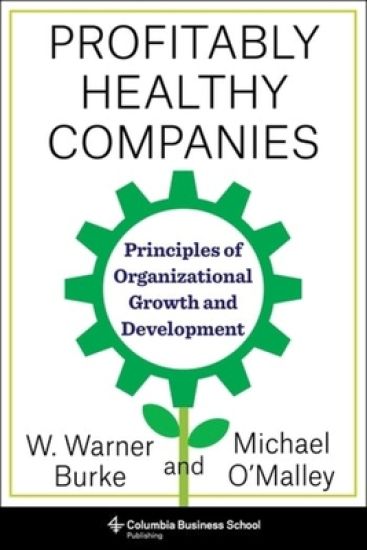
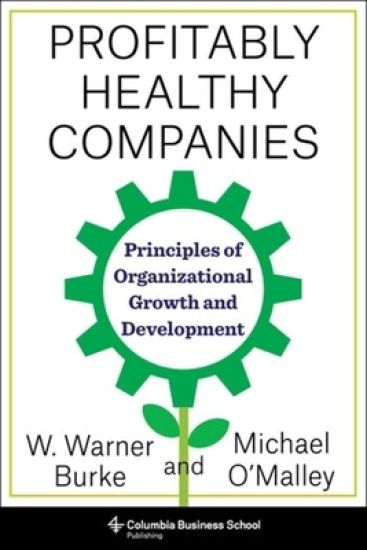
Every company faces challenges, but some are able to achieve long-term vitality while others flame out. What distinguishes a healthy, high-performing organization? Which ingredients, decisions, and values result in a business that is built for the long haul?Profitably Healthy Companies lays out ten essential principles of organizational development for sustained success. Bringing together practical and academic expertise, W. Warner Burke and Michael O’Malley detail proven methods for every organization at each level. They demonstrate why a focus on employee and community well-being is more likely to ensure lasting profitability than a single-minded focus on the bottom line. Burke and O’Malley explain the keys to company resilience, examining safeguards against decline and disaster as well as tools for generative renewal and growth. They show how organizational culture encourages optimal performance, flexible and adaptive corporate strategy, and employee motivation and commitment. The book emphasizes up-to-the-moment issues, such as how to center diversity and inclusion and the promise and pitfalls of remote work.Burke and O’Malley base their recommendations on research in organizational psychology as well as their own extensive consultative experience, providing a rich array of case studies and examples. Profitably Healthy Companies is a clear and authoritative guide for practitioners, leaders, and decision makers, synthesizing an all-inclusive treatment of organizational life with a comprehensive checklist of what organizations must do in order to thrive.
Every company faces challenges, but some are able to achieve long-term vitality while others flame out. What distinguishes a healthy, high-performing organization? Which ingredients, decisions, and values result in a business that is built for the long haul?Profitably Healthy Companies lays out ten essential principles of organizational development for sustained success. Bringing together practical and academic expertise, W. Warner Burke and Michael O’Malley detail proven methods for every organization at each level. They demonstrate why a focus on employee and community well-being is more likely to ensure lasting profitability than a single-minded focus on the bottom line. Burke and O’Malley explain the keys to company resilience, examining safeguards against decline and disaster as well as tools for generative renewal and growth. They show how organizational culture encourages optimal performance, flexible and adaptive corporate strategy, and employee motivation and commitment. The book emphasizes up-to-the-moment issues, such as how to center diversity and inclusion and the promise and pitfalls of remote work.Burke and O’Malley base their recommendations on research in organizational psychology as well as their own extensive consultative experience, providing a rich array of case studies and examples. Profitably Healthy Companies is a clear and authoritative guide for practitioners, leaders, and decision makers, synthesizing an all-inclusive treatment of organizational life with a comprehensive checklist of what organizations must do in order to thrive.
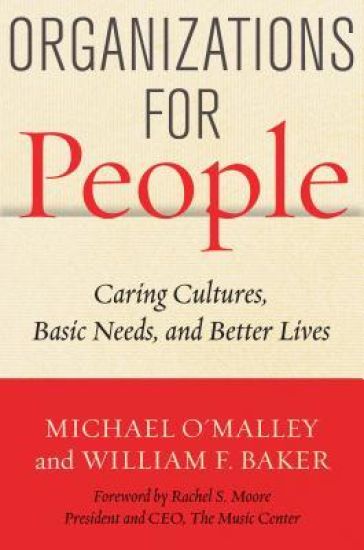
For many years, there has been quite a bit of talk about employee engagement as a means to lift corporate profits and reduce absenteeism and turnover. However, this talk has not produced better companies. In fact, the evidence shows that incivility and instances of employee abuse are getting worse. Additionally, with profit as the primary goal of organizations, most employees view any benign treatment they receive as a secondary convenience that will dissipate once corporate fortunes decline. That is, many employees still believe they are expendable in the eyes of their employers. This book turns that equation around by examining the practices of twenty-one companies that put the interests and needs of employees first. Profits are necessary but insufficient for corporate health. The companies featured in this book see it as their mission to offer people a better, more fulfilling life for themselves, and assist with that holistic journey by providing the organizational elements people need to reach their potential. They do this first by creating respectful and kind cultures that treat every person as an equal, sentient partner in the success of the company. Second, they diligently work to satisfy people's basic needs: financial security, belonging, meaning, autonomy, self-acceptance, self-confidence, and growth. The result is a web of fellow-feeling: earnest affection among people who feverishly work to live up to both the high standards of the institution and their obligations to one another. By providing a place where people can do their best work and thrive as individuals and as members of a cohesive community, everyone profits.
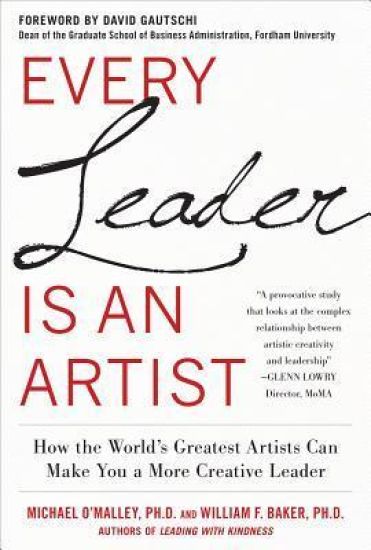
Make Every Business Day a Masterpiece“This fascinating book is a must-read for every leader or individual that aspires to become one. It eloquently offers tips, examples, and analogies that help the reader focus effort and attention in that noble attempt to become a better leader.”—Eric Weber, Associate Dean IESE, Business School“Unlike explorations of leadership that too often provide ‘more heat than light,’ O’Malley and Baker offer a refreshing and engaging lens that not only illuminates but inspires the reader.”—Mary C. Gentile, Creator and Director of Giving Voice to Values, and Senior Research Scholar, Babson College“This is not another book on leadership. Its essence is that all great leaders show an intense artistry. O’Malley and Baker give leadership criteria that weave business language with a strong dose of artistic principles. A great read.” —Chuck Royce, Chairman, Royce Funds“Impressive! O’Malley and Baker have written a book that is at once entertaining, intellectually engaging, and practical—a tough combination, rarely achieved.” —Ed Greenberg, University of Colorado, coauthor of Turbulence“O’Malley and Baker thoughtfully illustrate the intersections between leadership and art, explaining the requisite attributes for leadership excellence, such as focus, intellectual challenge, imagination, and authenticity.” —Josh Weston, Honorary Chairman, Automatic Data Processing, Inc.“O’Malley and Baker have written a wonderful book that illustrates the complexities and necessities of what should be understood as the ultimate qualities of leadership.”—David Finn, Chairman, Ruder Finn, Inc.About the Book:Artists put their work on display for everyone to judge, accepting a position of vulnerability for want of something important to say and in the service of contributing to the common good. Artists bring people closer together by providing a forum for shared experiences. Artists challenge, excite, comfort, and motivate people, and they don’t learn their craft by reading about it in a book; they practice, push themselves and their means of expression, and execute, execute, execute.These are exactly the same things effective business leaders do day in and day out.In Every Leader Is an Artist, leadership experts O’Malley and Baker employ the “leadership as an art” metaphor to its conceptual limits: leadership is an art. Literally. And leaders are artists; they just happen to work in a different medium.This groundbreaking look at leadership offers a completely new perspective on the age-old question: What separates the effective leader from the ineffective leader? O’Malley and Baker reveal 12 key characteristics shared by great artists and leaders, including:Intention: Makes an express commitment to achieve certain exceptional endsAuthenticity: Expresses individuality and personal beliefs with honesty and transparencyEngagement: Challenges the intellectual capacities of employees and tests their abilities to develop creative solutions to problemsImagination: Makes surprising and unconventional departures from the ordinary that create a new sense of awareness or understandingForm: Diligently combines various communications, structures, and policies into a unified, coherent whole“Collectively, these attributes make great leadership possible, or, in their absence, difficult,” write the authors. “Their presence does not assure leadership excellence, but it does set the range of potential.”Providing the tools and techniques for developing these qualities, the authors provide vignettes that draw parallels between the personal qualities of famous artists and effective leaders.Every Leader Is an Artist will make you see your own leadership characteristics with newfound clarity and help you build upon them to be the best leader you can be. After reading this book, you will never think about leadership and your responsibilities as a leader in quite the same way again.
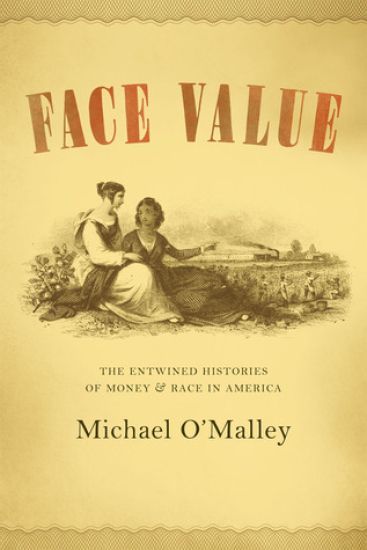
From colonial history to the present, Americans have passionately, even violently, debated the nature and the character of money. They have painted it and sung songs about it, organized political parties around it, and imprinted it with the name of God - all the while wondering: is money a symbol of the value of human work and creativity, or a symbol of some natural, intrinsic value? In "Face Value", Michael O'Malley provides a deep history and a penetrating analysis of American thinking about money and the ways that this ambivalence unexpectedly intertwines with race. Like race, money is bound up in questions of identity and worth, each a kind of shorthand for the different values of two similar things. O'Malley illuminates how these two socially constructed hierarchies are deeply rooted in American anxieties about authenticity and difference. In this compelling work of cultural history, O'Malley interprets a stunning array of historical sources to evaluate the comingling of ideas about monetary value and social distinctions. More than just a history, "Face Value" offers us a new way of thinking about the present culture of coded racism, gold fetishism, and economic uncertainty.
From colonial history to the present, Americans have passionately, even violently, debated the nature and the character of money. They have painted it and sung songs about it, organized political parties around it, and imprinted it with the name of God - all the while wondering: is money a symbol of the value of human work and creativity, or a symbol of some natural, intrinsic value? In "Face Value", Michael O'Malley provides a deep history and a penetrating analysis of American thinking about money and the ways that this ambivalence unexpectedly intertwines with race. Like race, money is bound up in questions of identity and worth, each a kind of shorthand for the different values of two similar things. O'Malley illuminates how these two socially constructed hierarchies are deeply rooted in American anxieties about authenticity and difference. In this compelling work of cultural history, O'Malley interprets a stunning array of historical sources to evaluate the comingling of ideas about monetary value and social distinctions. More than just a history, "Face Value" offers us a new way of thinking about the present culture of coded racism, gold fetishism, and economic uncertainty.
'It seemed to me that the bees were working on the very same kinds of problems we are trying to solve. How can large, diverse groups work together harmoniously and productively? Perhaps we could take what the bees do so well and apply it to our institutions.'When Michael O'Malley first took up beekeeping he thought it would be a nice hobby to share with his son. But he noticed that bees not only work together to achieve a common goal but, in the process, create a remarkably productive organization, like a miniature but incredibly successful business.O'Malley also realized that bees can teach managers a lot, identifying 25 powerful insights such as: * Distribute authority: the queen bee delegates relentlessly and worker bees make daily decisions * Keep it simple: bees exchange only relevant information* Protect the future: when a lucrative vein of nectar is discovered, the entire colony doesn't rush off to mine itBlending practical advice with interesting facts about the hive, The Wisdom of Bees is a useful and entertaining guide for any manager looking to get the most out of his or her organization.
"Military Aviation in Ireland" charts the history of the Air Corps from its early days as the Military Air Service established by Michael Collins in 1922 to the ineffective air operations conducted during the Second World War period. The Air Service came about when the Civil War caused the postponement of Michael Collins' plans for a civil air service. After participation in the war of 1922-3 a small Air Corps was confirmed as the token air element of a substantially infantry army. The Army Air Corps survived the 1920s and 1930s, despite the absence of government defence policy and the Army leadership's great indifference to military aviation. In the Second World War period, two squadrons of the Air Corps were given air force tasks for which they had little aptitude and for which they were totally unprepared in terms of personnel, airmanship, aircraft and training, failures which led directly to the demoralization of the Corps. During most of this period the Air Corps, on secretive government orders, carried out tasks aimed at assisting the war effort of the Royal Air Force. Using extensive archival research, Michael C. O'Malley throws new light on the people and operations of Ireland's early aviation history.
"Military Aviation in Ireland" charts the history of the Air Corps from its early days as the Military Air Service established by Michael Collins in 1922 to the ineffective air operations conducted during the Second World War period. The Air Service came about when the Civil War caused the postponement of Michael Collins' plans for a civil air service. After participation in the war of 1922-3 a small Air Corps was confirmed as the token air element of a substantially infantry army. The Army Air Corps survived the 1920s and 1930s, despite the absence of government defence policy and the Army leadership's great indifference to military aviation. In the Second World War period, two squadrons of the Air Corps were given air force tasks for which they had little aptitude and for which they were totally unprepared in terms of personnel, airmanship, aircraft and training, failures which led directly to the demoralization of the Corps. During most of this period the Air Corps, on secretive government orders, carried out tasks aimed at assisting the war effort of the Royal Air Force. Using extensive archival research, Michael C. O'Malley throws new light on the people and operations of Ireland's early aviation history.
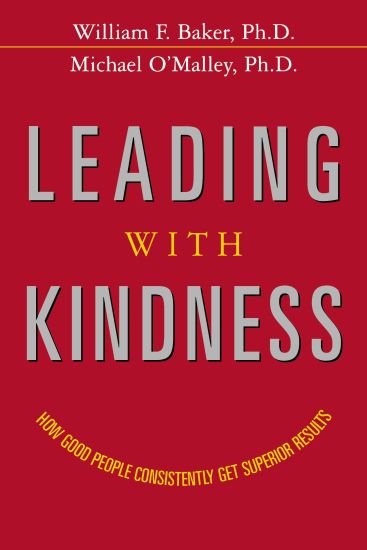
Authors William Baker and Michael O’Malley teach you that--far from popular media portrayals of corporate callousness--kindness has a very distinct and essential place in the office.Without presenting a naive idea of kindness, this eye-opening book identifies the surprising attributes successful and resoundingly kind leaders share--revealing how traits like sincerity, honesty, and respect can benefit organizations and help them to thrive.In Leading With Kindness, business professionals will learn how to apply these lessons in their own workplace, gaining tips for how to:motivate employees, committee members, and others;recognize unique talents while nurturing all employees;establish a supportive environment;spur continuous organizational growth;adapt to change;and prepare the next generation of leaders.Subtly and very effectively, a gentler, more human conception of leadership has become the gold standard for excellence. Leading With Kindness shows leaders how they can leverage the deceptively complex notion of kindness as guiding principle to lead more effectively.