Kirjojen hintavertailu. Mukana 12 595 353 kirjaa ja 12 kauppaa.

Kirjailija

Michael Oakeshott

Kirjat ja teokset yhdessä paikassa: 18 kirjaa, julkaisuja vuosilta 1991-2017, suosituimpien joukossa L'Association Civile Selon Hobbes: Suivi de Cinq Essais Sur Hobbes. Vertaile teosten hintoja ja tarkista saatavuus suomalaisista kirjakaupoista.

18 kirjaa

Kirjojen julkaisuhaarukka 1991-2017.

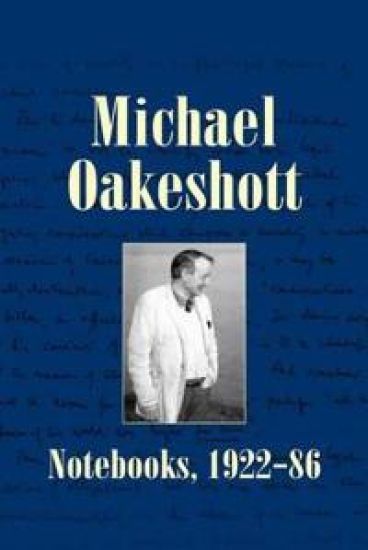
Michael Oakeshott: Notebooks, 1922-86

Michael Oakeshott: Notebooks, 1922-86

Michael Oakeshott

Imprint Academic
2017
pokkari
From the 1920s to the 1980s Oakeshott filled dozens of notebooks with his private reflections, both personal and intellectual. Their contents range from aphorisms to miniature essays, forming a unique record of his intellectual trajectory over his entire career. This volume makes them accessible in print for the first time, drawing together a host of his previously inaccessible observations on politics, philosophy, art, education, and much else besides. Religion in particular emerges as an ongoing concern for him in a way that is not visible from his published works.The notebooks also provide a unique source of insight into Oakeshott's musings on life, thanks to the hitherto unsuspected existence of the series of 'Belle Dame' notebooks that were written in the late 1920s and early 1930s but which only came to light two decades after his death. At the same period in which he was developing the concepts that would form Experience and its Modes, Oakeshott’s personal life lead him to reflect extensively on love and death, themes that highlight his enduring romantic affinities.Accompanied by an original editorial introduction, the volume allows readers to see for themselves exactly which works Oakeshott used in compiling each of his notebooks, providing a much clearer record of his intellectual influences than has previously been available. It will be an essential addition to the library of his works for all those interested in his ideas.
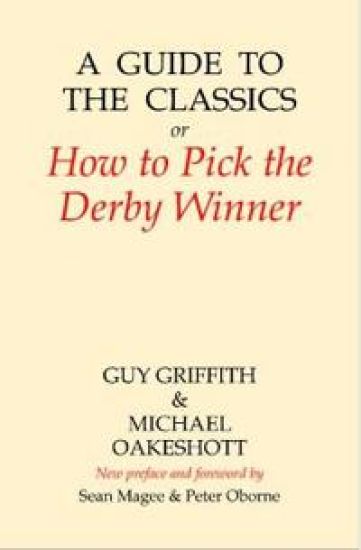
A Guide to the Classics

A Guide to the Classics

Guy Griffith; Michael Oakeshott; Sean Magee

Amphora Press
2017
sidottu
Originally written in 1936 by two young Cambridge Fellows, A Guide to the Classics is a light-hearted manual on how to pick the Derby winner. However, as the tongue-in-cheek title suggested, there is more to the book than meets the eye, especially as one of the young dons went on to become, according to his 1990 Telegraph obituary, 'the greatest political philosopher in the Anglo-Saxon tradition since Mill – or even Burke'.The book takes the abstraction out of the Derby by attacking the systems which had been developed by generations of 'form' experts. It exposes theoretical solutions as fraudulent – instead it applies hard-headed empirical and historical analysis. Oakeshott went on to apply this methodology to his famous critique of 'rationalism' in politics.This long-awaited edition of Griffith and Oakeshott’s classic text includes a new preface and foreword by horse racing journalist and author Sean Magee, and political commentator Peter Oborne.
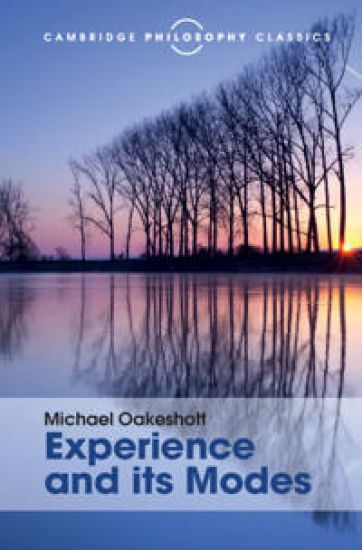
Experience and its Modes

Experience and its Modes

Michael Oakeshott

Cambridge University Press
2015
sidottu
When it first appeared in 1933, Experience and its Modes was not considered a classic. But as philosophical fashion moved away from the analytic philosophy of the 1930s, this work began to seem ahead of its time. Arguing that experience is 'modal', in the sense that we always have a theoretical or practical perspective on the world, Michael Oakeshott explores the nature of philosophical experience and its relationship to three of the most important 'modes' of non-philosophical experience - science, history and practice - seeking to establish the autonomy and superiority of philosophy. In recognition of its enduring importance, this book is presented in a fresh series livery for a new generation of readers, featuring a specially commissioned Preface written by Paul Franco.
Experience and its Modes

Experience and its Modes

Michael Oakeshott

Cambridge University Press
2015
pokkari
When it first appeared in 1933, Experience and its Modes was not considered a classic. But as philosophical fashion moved away from the analytic philosophy of the 1930s, this work began to seem ahead of its time. Arguing that experience is 'modal', in the sense that we always have a theoretical or practical perspective on the world, Michael Oakeshott explores the nature of philosophical experience and its relationship to three of the most important 'modes' of non-philosophical experience - science, history and practice - seeking to establish the autonomy and superiority of philosophy. In recognition of its enduring importance, this book is presented in a fresh series livery for a new generation of readers, featuring a specially commissioned Preface written by Paul Franco.
Michael Oakeshott: Notebooks, 1922-86

Michael Oakeshott: Notebooks, 1922-86

Michael Oakeshott

Imprint Academic
2014
sidottu
From the 1920s to the 1980s Oakeshott filled dozens of notebooks with his private reflections, both personal and intellectual. Their contents range from aphorisms to miniature essays, forming a unique record of his intellectual trajectory over his entire career. This volume makes them accessible in print for the first time, drawing together a host of his previously inaccessible observations on politics, philosophy, art, education, and much else besides. Religion in particular emerges as an ongoing concern for him in a way that is not visible from his published works.The notebooks also provide a unique source of insight into Oakeshott's musings on life, thanks to the hitherto unsuspected existence of the series of 'Belle Dame' notebooks that were written in the late 1920s and early 1930s but which only came to light two decades after his death. At the same period in which he was developing the concepts that would form Experience and its Modes, Oakeshott’s personal life lead him to reflect extensively on love and death, themes that highlight his enduring romantic affinities.Accompanied by an original editorial introduction, the volume allows readers to see for themselves exactly which works Oakeshott used in compiling each of his notebooks, providing a much clearer record of his intellectual influences than has previously been available. It will be an essential addition to the library of his works for all those interested in his ideas.
L'Association Civile Selon Hobbes: Suivi de Cinq Essais Sur Hobbes

L'Association Civile Selon Hobbes: Suivi de Cinq Essais Sur Hobbes

Michael Oakeshott

Librarie Philosophique J. Vrin
2011
nidottu
Thomas Hobbes est le seul penseur de la tradition philosophique a qui le philosophe britannique Michael Oakeshott consacra entierement l'un de ses livres, un recueil d'essais et de conferences qu'il publia en 1975 sous le titre de Hobbes on Civil Association. A quoi tient l'importance decisive reconnue ainsi a l'oeuvre de Hobbes, et quel role particulier joua la pensee de Hobbes dans l'elaboration de la pensee de Oakeshott lui-meme? Le titre donne au recueil donne une indication precieuse. Tant d'un point de vue philosophique que d'un point de vue historique, Oakeshott a en effet thematise a travers le concept d' association civile un mode d'association politique precis des hommes, celui dans lequel les individus sont lies par le respect de certaines regles et de certaines pratiques, mais non par une fin commune unique. C'est dans cette perspective que Oakeshott a pu opposer la nomocratie d'une societas a la teleocratie d'une universitas, c'est-a-dire d'un Etat qui se donnerait comme mission d'imposer un meme objectif a tous ses membres. La lecture que fait Oakeshott de Hobbes est ainsi tres clairement une lecture liberale il comprend Hobbes comme un penseur du cadre formel d'une societas, et non pas d'une universitas, c'est-a-dire comme un penseur, precisement, de l' association civile . Afin de permettre l'evaluation d'une telle lecture, la traduction de l'ouvrage de Oakeshott, la premiere en langue francaise, est accompagnee de la traduction de cinq autres essais que l'auteur a consacres a Hobbes entre 1935 et 1974.
Religion, Politics, and the Moral Life

Religion, Politics, and the Moral Life

Michael Oakeshott

Yale University Press
2011
pokkari
Michael Oakeshott’s interest in religion and theology was especially prominent in his essays of the 1920s and 1930s. This book consists of four important unpublished pieces, together with six essays by Oakeshott that originally appeared in remote and inaccessible journals. Much of the collection was written early in his career and reveals not only Oakeshott’s initial intellectual preoccupations but the idiosyncratic nature of his religious outlook and the moral convictions that governed his own life. The opening essay, "Religion and the World," which dates from 1925, reflects his view of what it means to live "religiously" in the world and prefigures arguments later elaborated in Experience and Its Modes. All the essays probe the meaning of words commonly—but often inappropriately—used in the discussion of political life. Thus Oakeshott explores meanings of religion and worldliness, society and sociality, authority and the state, political activity, and the character of political ideas and political philosophy. His writing is persuasive and compelling, and the essays are distinguished by great clarity and a genuinely philosophic spirit. In a substantial introduction, Timothy Fuller provides the first full explanation of Oakeshott’s religious ideas, setting them within their philosophical and political contexts. He shows how, over a thirty-year period, Oakeshott elaborated the implications of Experience and Its Modes, worked out his political theory as summarized in Rationalism in Politics, and gradually assembled his own philosophical account of the ideal that European civilization had made concrete in history—civil association under the rule of law—and to which he gave definitive expression in On Human Contact.Timothy Fuller is Dean of the College, Colorado College, and editor of The Voice of Liberal Learning: Michael Oakeshott on Education.
Michael Oakeshott: Early Political Writings 1925-30
Michael Oakeshott (1901-90) made his reputation as a political philosopher, but for a long time it seemed as if he had little interest in politics before 1945. His major pre-war work, Experience and its Modes (1933) was an examination of the nature of philosophy and its relation to other forms of thought that made almost no mention of politics. However, it has become increasingly clear that this initial judgment was misleading. A posthumous collection of early essays, Religion, Politics, and the Moral Life (1993), proved that political philosophy was a lifelong concern. Nevertheless, the belief that Oakeshott was relatively uninterested in politics, at least in the 1920s, has persisted. This volume dispels that notion for good. It contains two previously unpublished works, a manuscript entitled 'A Discussion of some Matters preliminary to the Study of Political Philosophy', and the first version of a course of lectures on 'The Philosophical Approach to Politics' that Oakeshott gave between 1928 and 1930. These works establish that politics was a central concern in the first decade of his intellectual career, and show beyond any doubt that the ideas of Experience and its Modes actually grew out of Oakeshott's prior philosophical interest in politics.
The Concept of a Philosophical Jurisprudence

The Concept of a Philosophical Jurisprudence

Michael Oakeshott

Imprint Academic
2009
pokkari
This volume brings together for the first time over a hundred of Oakeshott's essays and reviews, written between 1926 and 1951, that until now have remained scattered through a variety of scholarly journals, periodicals and newspapers. A new editorial introduction explains how these pieces, including the lengthy essay on the philosophical nature of jurisprudence that occupies an important position in Oakeshott's work, illuminate his other published writings. The collection throws new light on the context of his thought by placing him in dialogue with a number of other major figures in the humanities and social sciences during this period, including Leo Strauss, A.N. Whitehead, Karl Mannheim, Herbert Butterfield, E.H. Carr, Gilbert Ryle, and R.G. Collingwood.
Vocabulary of a Modern European State

Vocabulary of a Modern European State

Michael Oakeshott

Imprint Academic
2008
sidottu
The Vocabulary of a Modern European State is the companion volume to The Concept of a Philosophical Jurisprudence and completes the enterprise of gathering together Oakeshott's previously scattered essays and reviews. As with all the other volumes in the series it contains an entirely new editorial introduction explaining how the writings it contains find their place in his work as a whole. It covers the years 1952 to 1988, the period during which Oakeshott wrote his definitive work, On Human Conduct. The essay from which the volume takes its title was intended as a companion piece to the third part of the latter work, and is just one of over sixty pieces that it includes. The volume draws together critical responses to works by major philosophers, historians, and political theorists of his own generation such as Bertrand de Jouvenel, Herbert Marcuse, and Michael Polanyi as well as to some major figures of current scholarship such as Quentin Skinner and Roger Scruton.
Lectures in the History of Political Thought

Lectures in the History of Political Thought

Michael Oakeshott

Imprint Academic
2007
pokkari
Oakeshott's memorable lectures on the history of political thought, delivered each year at the London School of Economics, will now be available in print for the first time as Volume II of his Selected Writings. Based on manuscripts in the LSE archive for 1966–67, the last year of Oakeshott’s tenure as Professor of Political Science, these thirty lectures deal with Greek, Roman, mediaeval, and modern European political thought in a uniquely accessible manner. Scholars familiar with Oakeshott’s work will recognize his own ideas subtly blended with an exposition carefully crafted for an undergraduate audience; those discovering Oakeshott for the first time will find an account of the subject that remains illuminating and provocative.
The Politics of Faith and the Politics of Scepticism

The Politics of Faith and the Politics of Scepticism

Michael Oakeshott

Yale University Press
2005
pokkari
Michael Oakeshott, the foremost British political philosopher of the twentieth century, died in 1990, leaving a substantial collection of unpublished material. Yale University Press is continuing to make available the best of these illuminating works.In this polished and hitherto unknown work, Oakeshott argues that modern politics was constituted out of a debate, persistent through centuries of European political experience down to our own day, over the question "What should governments do?" According to Oakeshott, two different answers have dominated our thought since the fifteenth century. One, exemplified by such thinkers as Rousseau and Marx, expresses a belief in the capacity of human beings to control, design, and monitor all aspects of social and political life, a belief fostered by the intoxicating increase in power available to governments in modern times. On the other hand, sceptics such as Montaigne, Pascal, and Hobbes argued that governments cannot, in principle, produce perfection and that we should prevent concentrations of power that may result in tyrannies that oppress the dignity of the human spirit. Oakeshott exposes the pitfalls of both positions and shows the value of a middle ground that incorporates scepticism with enough faith to avoid total quietism. Readers of Oakeshott will find here the thinking that lies behind his famous definition of politics as "the pursuit of intimations.".
What is History? And Other Essays

What is History? And Other Essays

Michael Oakeshott

Imprint Academic
2004
sidottu
This highly readable new collection of thirty pieces by Michael Oakeshott, almost all of which are previously unpublished, covers every decade of his intellectual career, and adds significantly to his contributions to the philosophy of historical understanding and political philosophy, as well as to the philosophy of education and aesthetics. The essays were intended mostly for lectures or seminars, and are consequently in an informal style that will be accessible to new readers as well as to those already well acquainted with Oakeshott's works. Early pieces include a long essay 'On the Relations of Philosophy, Poetry, and Reality’, and Oakeshott’s comments on ‘The Cambridge School of Political Science’ through which he himself had passed as an undergraduate. The collection also reproduces a substantial wartime essay ‘On Peace with Germany’. There are two new essays on the philosophy of education, and the essay which gives the work its title, ‘What is History?’, is just one of over half a dozen discussions of the nature of historical knowledge. Oakeshott’s later sceptical, ‘hermeneutic’, thought is also well represented by pieces such as ‘What is Political Theory?’ and ‘The Emergence of the History of Thought.’ Reviews of books by English and European contemporaries such as Butterfield, Hayek, Voegelin, and Arendt also help to place him in context more clearly than before. The book will be indispensable for all Oakeshott’s readers, no matter which area of his thought concerns them most.
Voice of Liberal Learning

Voice of Liberal Learning

Michael Oakeshott

Liberty Fund Inc
2001
nidottu
To those weary and wary of the cacophony about what's wrong with education in America and what ought to be done about it, Oakeshott's voice beckons. As usual, his approach to the subject is subtle, comprehensive, and radical -- in the sense of summoning readers to the root of the matter. That root, Oakeshott believed, is the very nature of learning itself and, concomitantly, the means (as distinct from the method) by which the life of learning is discovered, cultivated, and pursued. As Oakeshott has written, "This, then, is what we are concerned with: adventures in human self-understanding. Not the bare protestation that a human being is a self-conscious, reflective intelligence and that he does not live by bread alone, but the actual enquiries, utterances, and actions in which human beings have expressed their understanding of the human condition. This is the stuff of what has come to be called a liberal' education -- liberal' because it is liberated from the distracting business of satisfying contingent wants". Includes a foreword by Timothy Fuller that reiterates the timelessness of Oakeshott's reflections amid the continuing clamour that characterises discourse about liberal education.
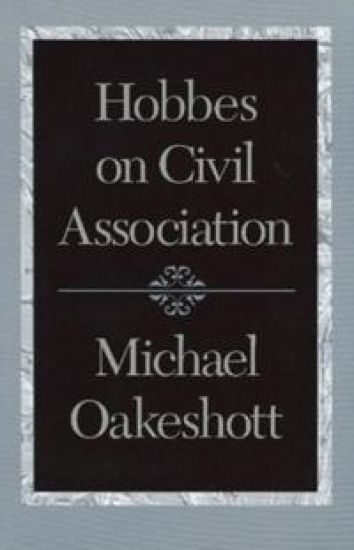
Hobbes on Civil Association

Hobbes on Civil Association

Michael Oakeshott

Liberty Fund Inc
2000
nidottu
Of Michael Oakeshott and his interest in Thomas Hobbes, Professor Paul Franco has written, "The themes Oakeshott stresses in his interpretation of Hobbes are... scepticism about the role of reason in politics, allegiance to the morality of individuality as opposed to any sort of collectivism, and the principle of a noninstrumental, nonpurposive mode of political association, namely, civil association.". Of Hobbes's Leviathan, Oakeshott has written, "Leviathan is the greatest, perhaps the sole, masterpiece of political philosophy written in the English language.". Hobbes on Civil Association consists of Oakeshott's four principal essays on Hobbes and on the nature of civil association as civil association pertains to ordered liberty.
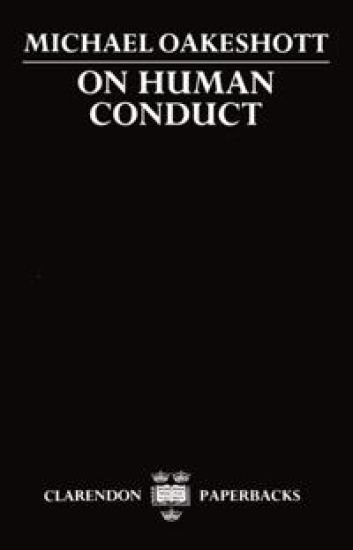
On Human Conduct

On Human Conduct

Michael Oakeshott

Clarendon Press
1991
nidottu
On Human Conduct is composed of three connected essays. Each has its own concern: the first with theoretical understanding, and with human conduct in general; the second with an ideal mode of human relationship which the author has called civil association; and the third with that ambiguous, historic association commonly called a modern European state. Running through the work is Professor Oakshott's belief in philosophical reflection as an adventure: the adventure of one who seeks to understand in other terms what he already understands, and where the understanding is sought is a disclosure of the conditions of the understanding enjoyed and not a substitute for it. Its most appropriate expression is an essay, which, he writes, 'does not dissemble the conditionality of the conclusions it throws up and although it may enlighten it does not instruct.'
Rationalism in Politics & Other Essays

Rationalism in Politics & Other Essays

Michael Oakeshott

Liberty Fund Inc
1991
nidottu
Rationalism in Politics, first published in 1962, has established the late Michael Oakeshott as the leading conservative political theorist in modern Britain. This expanded collection of essays astutely points out the limits of 'reason' in rationalist politics. Oakeshott criticizes ideological schemes to reform society according to supposedly 'scientific' or rationalistic principles that ignore the wealth and variety of human experience. "Rationalism in politics," says Oakeshott, "involves a misconception with regard to the nature of human knowledge." History has shown that it produces unexpected, often disastrous results. "Having cut himself off from the traditional knowledge of his society, and denied the value of any education more extensive than a training in a technique of analysis," the Rationalist succeeds only in undermining the institutions that hold civilized society together. In this regard, rationalism in politics is "a corruption of the mind."
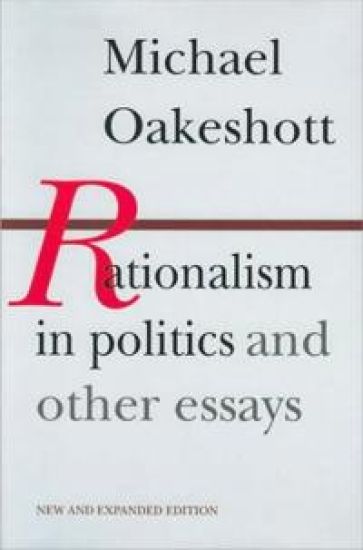
Rationalism in Politics & Other Essays

Rationalism in Politics & Other Essays

Michael Oakeshott

Liberty Fund Inc
1991
sidottu
Rationalism in Politics, first published in 1962, has established the late Michael Oakeshott as the leading conservative political theorist in modern Britain. This expanded collection of essays astutely points out the limits of "reason" in rationalist politics. Oakeshott criticizes ideological schemes to reform society according to supposedly "scientific" or rationalistic principles that ignore the wealth and variety of human experience. "Rationalism in politics," says Oakeshott, "involves a misconception with regard to the nature of human knowledge." History has shown that it produces unexpected, often disastrous results. "Having cut himself off from the traditional knowledge of his society, and denied the value of any education more extensive than a training in a technique of analysis," the Rationalist succeeds only in undermining the institutions that hold civilized society together. In this regard, rationalism in politics is "a corruption of the mind."