Kirjojen hintavertailu. Mukana 12 152 606 kirjaa ja 12 kauppaa.

Kirjailija

Michael Owen Jones

Kirjat ja teokset yhdessä paikassa: 7 kirjaa, julkaisuja vuosilta 1980-2022, suosituimpien joukossa Craftsman of the Cumberlands. Vertaile teosten hintoja ja tarkista saatavuus suomalaisista kirjakaupoista.

7 kirjaa

Kirjojen julkaisuhaarukka 1980-2022.

Frankenstein Was a Vegetarian

Frankenstein Was a Vegetarian

Michael Owen Jones

UNIVERSITY PRESS OF MISSISSIPPI
2022
pokkari
In Frankenstein Was a Vegetarian: Essays on Food Choice, Identity, and Symbolism, Michael Owen Jones tackles topics often overlooked in foodways. At the outset he notes it was Victor Frankenstein’s "daemon" in Mary Shelley’s novel that advocated vegetarianism, not the scientist whose name has long been attributed to his creature. Jones explains how we communicate through what we eat, the connection between food choice and who we are or want to appear to be, the ways that many of us self-medicate moods with foods, and the nature of disgust. He presents fascinating case studies of religious bigotry and political machinations triggered by rumored bans on pork, the last meal requests of prisoners about to be executed, and the Utopian vision of Percy Bysshe Shelley, one of England’s greatest poets, that was based on a vegetable diet like the creature’s meals in Frankenstein.Jones also scrutinizes how food is used and abused on the campaign trail, how gender issues arise when food meets politics, and how eating preferences reflect the personalities and values of politicians, one of whom was elected president and then impeached twice. Throughout the book, Jones deals with food as symbol as well as analyzes the link between food choice and multiple identities. Aesthetics, morality, and politics likewise loom large in his inquiries. In the final two chapters, Jones applies these concepts to overhauling penal policies and practices that make food part of the pains of imprisonment, and looks at transforming the counseling of diabetes patients, who number in the millions.
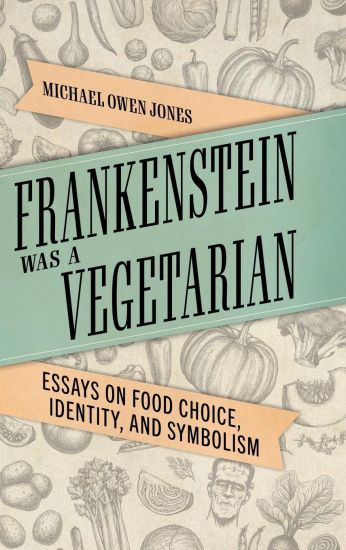
Frankenstein Was a Vegetarian

Frankenstein Was a Vegetarian

Michael Owen Jones

UNIVERSITY PRESS OF MISSISSIPPI
2022
sidottu
In Frankenstein Was a Vegetarian: Essays on Food Choice, Identity, and Symbolism, Michael Owen Jones tackles topics often overlooked in foodways. At the outset he notes it was Victor Frankenstein’s "daemon" in Mary Shelley’s novel that advocated vegetarianism, not the scientist whose name has long been attributed to his creature. Jones explains how we communicate through what we eat, the connection between food choice and who we are or want to appear to be, the ways that many of us self-medicate moods with foods, and the nature of disgust. He presents fascinating case studies of religious bigotry and political machinations triggered by rumored bans on pork, the last meal requests of prisoners about to be executed, and the Utopian vision of Percy Bysshe Shelley, one of England’s greatest poets, that was based on a vegetable diet like the creature’s meals in Frankenstein.Jones also scrutinizes how food is used and abused on the campaign trail, how gender issues arise when food meets politics, and how eating preferences reflect the personalities and values of politicians, one of whom was elected president and then impeached twice. Throughout the book, Jones deals with food as symbol as well as analyzes the link between food choice and multiple identities. Aesthetics, morality, and politics likewise loom large in his inquiries. In the final two chapters, Jones applies these concepts to overhauling penal policies and practices that make food part of the pains of imprisonment, and looks at transforming the counseling of diabetes patients, who number in the millions.
Mary Black's Family Quilts

Mary Black's Family Quilts

Laurel Horton; Michael Owen Jones

University of South Carolina Press
2005
nidottu
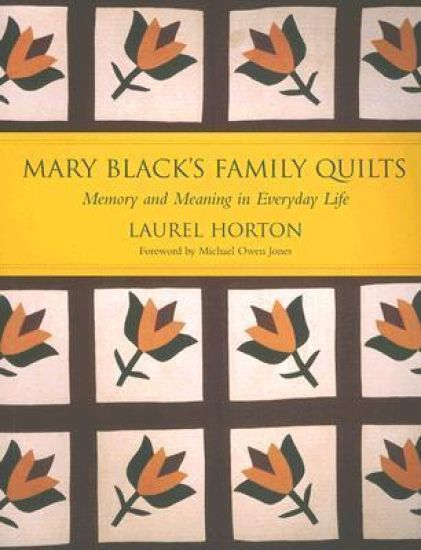
A lavishly illustrated exploration of quilting across six generations. ""Mary Black's Family Quilts"" utilizes a remarkable collection of sixteen quilts to tell the story of a family through six generations and to document with scholarly and aesthetic insights the material behaviors associated with quilting traditions. The daughter of a prominent farmer, Mary Louisa Snoddy Black (1860-1927) is remembered in the Spartanburg, South Carolina, region for the hospital named in her honor and for the philanthropic foundation that continues to support community health and wellness. Laurel Horton explores the even more tangible legacy Black left to her descendants - trunks full of quilts made by the Black family women, each labeled with detailed information about its origin and significance. Pairing the information from the labels with research culled from interviews, letters, and public documents, Horton stitches together the family's history across the fabric of two centuries as she explores the roles of women as keepers of home, hearth, and history in nineteenth- and twentieth-century America. Valuable both as artistic creations and as historical artifacts, the Black family quilts reflect decades of work, familial interactions, economic philosophy, and personal and communal values. Suggesting that quilts were exchanged as a mode of currency in an informal, female-centered economy, Horton uncovers the clues they hold about the people who made and used them in their daily lives. From the whole-cloth quilt made by Black's great-grandmother around 1850 to examples from the early twentieth century, Horton traces changes in style, material, and functions of quilts. In doing so, she dispels popular misconceptions associated with these pieces of Americana. ""Mary Black's Family Quilts"" also includes a foreword by Michael Owen Jones, professor of culture and performance, University of California, Los Angeles, and author of Craftsman of the Cumberlands: Tradition and Creativity.
Craftsman of the Cumberlands

Craftsman of the Cumberlands

Michael Owen Jones

The University Press of Kentucky
2003
nidottu
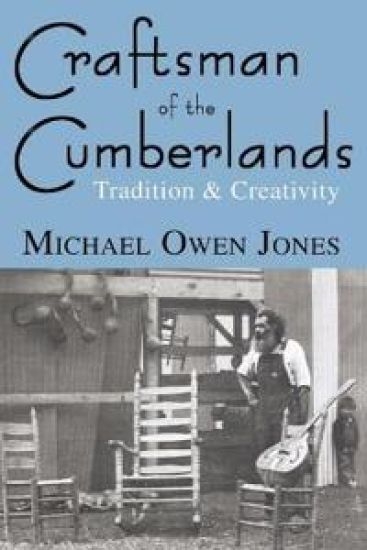
Why do people consider aesthetic qualities as well as utilitarian ones in the making of everyday objects? Why do they maintain traditions? What is the nature of their creative process? These are some of the larger questions addressed by Michael Owen Jones in his book on craftsmen in the Cumberland Mountains of eastern Kentucky. Concentrating on the work of one man, woodworker and chairmaker Chester Cornett, Jones not only describes the tools and techniques employed by Cornett but also his aspirations and values. Cornett possessed a deep knowledge of his materials and a mastery of construction methods. Some of his chairs represent not objects of utility but aesthetic developments of the chair form. Cornett sought to cope with the problems of his life, Jones maintains; their massiveness provided a sense of security, the virtuosity of their design and construction, a feeling of self-esteem. Jones also compares other area craftsmen and their views about their work.
Studying Organizational Symbolism

Studying Organizational Symbolism

Michael Owen Jones

SAGE Publications Inc
1996
nidottu
Gaining a better understanding of the way organizations work through the study of the symbols connected to them is the subject of Studying Organizational Symbolism. Michael Owen Jones briefly discusses the most obvious symbolic aspects of organizations--corporate logos, office sizes, use of titles--but focuses on the less obvious but crucial aspect of expressive forms of symbolism--storytelling, institutional jargon, and workplace personalization, among others. Jones carefully defines organizational symbolism and then explains the various methodologies that assist the researcher in documenting it. Finally, he examines the symbolism inherent in doing research on organizations. Researchers interested in any facet of organizational studies will find Studying Organizational Symbolism to be a useful and necessary guide.
Folkloristics

Folkloristics

Robert A. Georges; Michael Owen Jones

Indiana University Press
1995
pokkari
"Excellent." —The Reader's Review "Anybody contemplating the study and pursuit of folklore . . . will benefit from reading this presentation thoroughly to determine your place in this most exciting scholastic world." —Come-All-Ye This is the most complete and up-to-date study of folklore and folklore methodologies available. The authors describe the pervasiveness of folklore, including its uses in literature, films, television, cartoons, comic strips, advertising, and other media in a variety of cultures.
People Studying People

People Studying People

Robert A. Georges; Michael Owen Jones

University of California Press
1980
pokkari
The authors of this book demonstrate that fieldwork is first and foremost a human pursuit. They draw upon published and unpublished accounts of fieldworkers' personal experiences to develop the thesis that an appreciation of fieldwork as a unique mode of inquiry depends upon an understanding of the role the human element plays in it. They analyze the processes involved when people study people firsthand, focusing upon the recurrent human problems that arise and must be solved. The human processes and problems, they argue, are common to all fieldwork, regardless of the disciplinary backgrounds or the specific interests of individual researchers.