

Kirjailija
Michael Patrick Cullinane
Kirjat ja teokset yhdessä paikassa: 6 kirjaa, julkaisuja vuosilta 2017-2026, suosituimpien joukossa Theodore Roosevelt and the Tennis Cabinet. Vertaile teosten hintoja ja tarkista saatavuus suomalaisista kirjakaupoista.
6 kirjaa
Kirjojen julkaisuhaarukka 2017-2026.
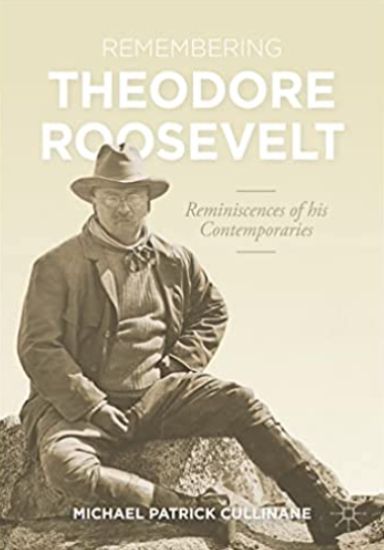
Remembering Theodore Roosevelt
Michael Patrick Cullinane
Springer Nature Switzerland AG
2021
nidottu
This book sheds new light on the life and times of Theodore Roosevelt, drawing on a remarkable set of oral histories gathered in the 1950s from those who knew him. Remembering Theodore Roosevelt presents fourteen intimate interviews with Roosevelt’s friends, family, and contemporaries. Never before published, the transcripts reveal colorful details about the infamous Rough Riders, the political scene in New York City, the lives of his extended family, including the Hyde Park Roosevelts Franklin and Eleanor, and how the former president inspired successive generations. The book benefits from the author’s discerning annotations and commentary that provide the reader with lesser-known facts and a full appreciation of the oral history project.
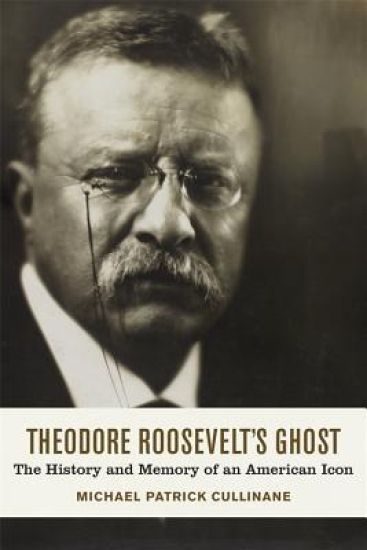
A century after his death, Theodore Roosevelt remains one of the most recognizable figures in U.S. history, with depictions of the president ranging from the brave commander of the Rough Riders to a trailblazing progressive politician and early environmentalist to little more than a caricature of grinning teeth hiding behind a mustache and pince-nez. Theodore Roosevelt's Ghost follows the continuing shifts and changes in this president's reputation since his unexpected passing in 1919.In the most comprehensive examination of Roosevelt's legacy, Michael Patrick Cullinane explores the frequent refashioning of this American icon in popular memory. The immediate aftermath of Roosevelt's death created a groundswell of mourning and goodwill that ensured his place among the great Americans of his generation, a stature bolstered by the charitable and political work of his surviving family. When Franklin Roosevelt ascended to the presidency, he worked to situate himself as the natural heir of Theodore Roosevelt, reshaping his distant cousin's legacy to reflect New Deal values of progressivism, intervention, and patriotism. Others retroactively adapted Roosevelt's actions and political record to fit the discourse of social movements from anticommunism to civil rights, with varying degrees of success. Richard Nixon's frequent invocation led to a decline in Roosevelt's popularity and a corresponding revival effort by scholars endeavoring to give an accurate, nuanced picture of the 26th president.This wide-ranging study reveals how successive generations shaped the public memory of Roosevelt through their depictions of him in memorials, political invocations, art, architecture, historical scholarship, literature, and popular culture. Cullinane emphasizes the historical contexts of public memory, exploring the means by which different communities worked to construct specific representations of Roosevelt, often adapting his legacy to suit the changing needs of the present. Theodore Roosevelt's Ghost provides a compelling perspective on the last century of U.S. history as seen through the myriad interpretations of one of its most famous and indefatigable icons.
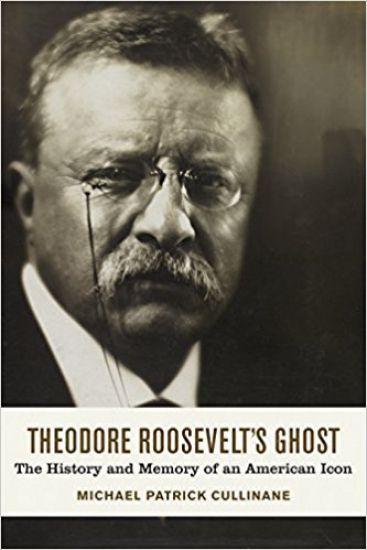
A century after his death, Theodore Roosevelt remains one of the most recognizable figures in U.S. history, with depictions of the president ranging from the brave commander of the Rough Riders to a trailblazing progressive politician and early environmentalist to little more than a caricature of grinning teeth hiding behind a mustache and pince-nez. Theodore Roosevelt's Ghost follows the continuing shifts and changes in this president's reputation since his unexpected passing in 1919.In the most comprehensive examination of Roosevelt's legacy, Michael Patrick Cullinane explores the frequent refashioning of this American icon in popular memory. The immediate aftermath of Roosevelt's death created a groundswell of mourning and goodwill that ensured his place among the great Americans of his generation, a stature bolstered by the charitable and political work of his surviving family. When Franklin Roosevelt ascended to the presidency, he worked to situate himself as the natural heir of Theodore Roosevelt, reshaping his distant cousin's legacy to reflect New Deal values of progressivism, intervention, and patriotism. Others retroactively adapted Roosevelt's actions and political record to fit the discourse of social movements from anticommunism to civil rights, with varying degrees of success. Richard Nixon's frequent invocation led to a decline in Roosevelt's popularity and a corresponding revival effort by scholars endeavoring to give an accurate, nuanced picture of the 26th president.This wide-ranging study reveals how successive generations shaped the public memory of Roosevelt through their depictions of him in memorials, political invocations, art, architecture, historical scholarship, literature, and popular culture. Cullinane emphasizes the historical contexts of public memory, exploring the means by which different communities worked to construct specific representations of Roosevelt, often adapting his legacy to suit the changing needs of the present. Theodore Roosevelt's Ghost provides a compelling perspective on the last century of U.S. history as seen through the myriad interpretations of one of its most famous and indefatigable icons.
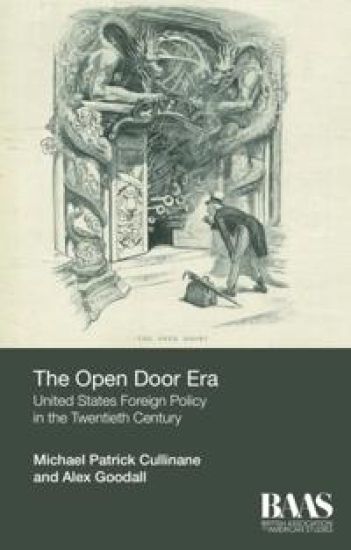
In 1899, U.S. Secretary of State John Hay wrote six world powers calling for an Open Door in China that would guarantee equal trading opportunities, curtail colonial annexation, and prevent conflict in the Far East. Within a year, the region had succumbed to renewed colonisation and war, but despite the apparent failure of Hay's diplomacy, the ideal of the Open Door emerged as the central component of U.S. foreign policy in the twentieth century. Just as visions of Manifest Destiny'shaped continental expansion in the nineteenth century, Woodrow Wilson used the Open Door to make the case for a world safe for democracy, Franklin Roosevelt developed it to inspire the fight against totalitarianism and imperialism, and Cold War containment policy envisioned international communism as the latest threat to a global system built upon peace, openness, and exchange. In a concise yet wide-ranging examination of its origins and development, readers will discover how the idea of the Open Door came to define the American Century.
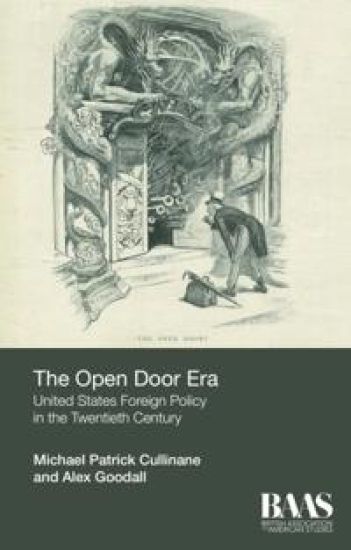
In 1899, U.S. Secretary of State John Hay wrote six world powers calling for an 'Open Door' in China that would guarantee equal trading opportunities, curtail colonial annexation, and prevent conflict in the Far East. Within a year, the region had succumbed to renewed colonisation and war, but despite the apparent failure of Hay's diplomacy, the ideal of the Open Door emerged as the central component of U.S. foreign policy in the twentieth century. Just as visions of 'Manifest Destiny' shaped continental expansion in the nineteenth century, Woodrow Wilson used the Open Door to make the case for a world 'safe for democracy', Franklin Roosevelt developed it to inspire the fight against totalitarianism and imperialism, and Cold War containment policy envisioned international communism as the latest threat to a global system built upon peace, openness, and exchange. In a concise yet wide-ranging examination of its origins and development, readers will discover how the idea of the Open Door came to define the American Century.Key Features:Uncovers the ideological wellspring of U.S. foreign policy in the twentieth centuryPresents debates over U.S. foreign policy, including the 'Wisconsin School' critique of the Open Door as a mechanism of informal empireReveals both the consistency of U. S. foreign policy thinking and offers a deeper context to critical foreign policy decisionsContextulises the roots of contemporary U.S. policy