Kirjailija
Michael Patrick Gillespie
Kirjat ja teokset yhdessä paikassa: 14 kirjaa, julkaisuja vuosilta 2000-2025, suosituimpien joukossa Film Appreciation Through Genres. Vertaile teosten hintoja ja tarkista saatavuus suomalaisista kirjakaupoista.
14 kirjaa
Kirjojen julkaisuhaarukka 2000-2025.
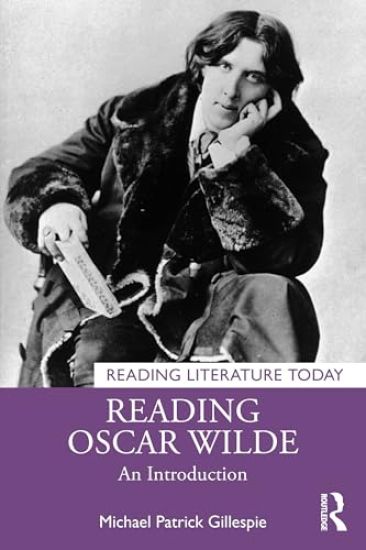
Reading Oscar Wilde is a comprehensive interpretive guide designed for students and readers who come to Wilde’s writings for the first time, delivering a fuller understanding of the works and the background from which the canon has emerged. This ready-at-hand compendium details the scholarly perspectives of Wilde’s vast literary output. Meticulously arranged, this accessible volume includes freestanding discussions of individual works, including clarification of Wilde’s pioneering contextual examinations and his innovative and influential stylistic achievements. Readers will find a solid foundation for understanding his works and will benefit from new insights into the impact of his writing on subsequent authors. Additionally, the surveys of the interpretive approaches offered by contemporary literary theories will highlight for readers a range of research possibilities. This book also includes lists of selected websites and artistic adaptations of Wilde’s works, a chronology of Wilde’s publications, and a comprehensive secondary bibliography to permit readers to develop both a wide-ranging background and a selective focus of interests.
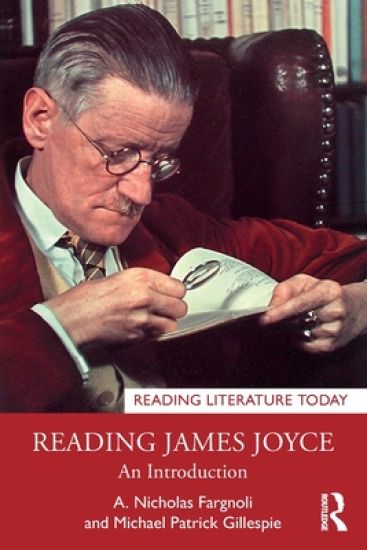
Reading James Joyce is a ready-at-hand compendium and all-encompassing interpretive guide designed for teachers and students approaching Joyce’s writings for the first time, guiding readers to better understand Joyce’s works and the background from which they emerged. Meticulously organized, this text situates readers within the world of Joyce including biographical exploration, discussion of Joyce’s innovations and prominent works such as Dubliners, Ulysses, and Finnegans Wake, surveys of significant critical approaches to Joyce’s writings, and examples of alternative readings and contemporary responses. Each chapter will provide interpretive approaches to contemporary literary theories and key issues, including end-of-chapter strategies and extended readings for further engagement. This book also includes shorter assessments of Joyce’s lesser-known works—critical writings, drama, poetry, letters, epiphanies, and personal recollections—to contextualize the creative and social environments from which his most notable publications arose. This uniquely comprehensive guide to Joyce will be an invaluable and comprehensive resource for readers exploring the influential world of Joyce studies.
Branding Oscar Wilde traces the development and perception of Wilde’s public persona and examines the impact of interpretations of his writing. Through calculated behavior, provocative language, and arresting dress, Wilde self-consciously created a brand initially recognized by family and friends, then by the British public, and ultimately by large audiences over the world. That brand changed over the course of his public career—both in the way Wilde projected it and in the way it was perceived. Comprehending the fundamental elements of the Wilde brand and following its evolution are integral to a full understanding of his art. The study focuses on how branding established important assumptions about Wilde and his work in his own mind and in those of his readers, and it examines how each stage of brand development affected the immediate responses to Wilde’s writings and, as it continued to evolve, progressively shaped our understanding of the Wilde canon.
Many intelligent, enthusiastic individuals approach conversations about films as an extension of the pleasures derived while watching them. Love for movies and enthusiasm for discussion makes many people want to attain a better understanding of what they have seen and to develop a greater skill in talking articulately about their experiences. This sophisticated midpoint between theorizing and plot summary is not as difficult to achieve as some might assume, and “it’s so cool” should only be the starting point.Since their introduction just before the turn of the last century, the vast majority of narrative films have followed the same structure, a method that eventually came to be called Classic Hollywood Cinema. Using that basic narrative form, a range of different types or genres emerged to explore particular themes and issues from clearly defined assumptions and perspectives. In each of these categories, fundamental elements that make up any film adapted to the subject of the genre and took on increasingly complex significance, while maintaining the familiar structure that contributes so much to the understanding of a particular movie and to the expectations that viewers brought to all. Understanding these structures and elements enables one to speak with discernment about any number of movies, whether one has seen them or not.
Branding Oscar Wilde traces the development and perception of Wilde’s public persona and examines the impact of interpretations of his writing. Through calculated behavior, provocative language, and arresting dress, Wilde self-consciously created a brand initially recognized by family and friends, then by the British public, and ultimately by large audiences over the world. That brand changed over the course of his public career—both in the way Wilde projected it and in the way it was perceived. Comprehending the fundamental elements of the Wilde brand and following its evolution are integral to a full understanding of his art. The study focuses on how branding established important assumptions about Wilde and his work in his own mind and in those of his readers, and it examines how each stage of brand development affected the immediate responses to Wilde’s writings and, as it continued to evolve, progressively shaped our understanding of the Wilde canon.
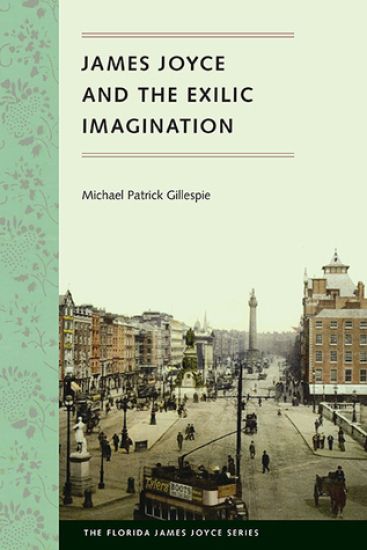
James Joyce and the Exilic Imagination
Michael Patrick Gillespie
University Press of Florida
2015
nidottu
James Joyce left Ireland in 1904 in self-imposed exile. Though he never permanently returned to Dublin, he continued to characterize the city in his prose throughout the rest of his life. This volume elucidates the ways Joyce wrote about his homeland with conflicting bitterness and affection - a common ambivalence in expatriate authors, whose time in exile tends to shape their creative approach to the world. Yet this duality has not been explored in Joyce’s work until now.The first book to read Joyce’s writing through the lens of exile studies, James Joyce and the Exilic Imagination challenges the tendency of scholars to stress the writer’s negative view of Ireland. Instead, it showcases the often-overlooked range of emotional attitudes imbuing Joyce’s work and produces a fuller understanding of Joyce’s canon.
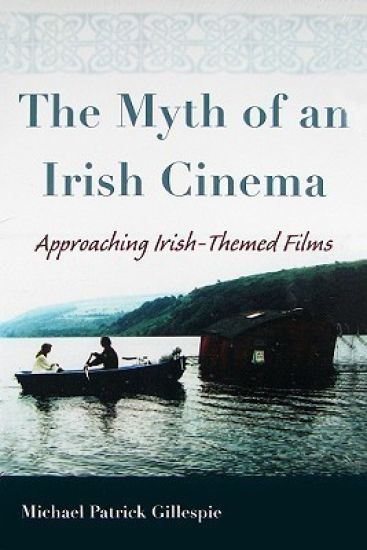
For the past seventy years the discipline of film studies has widely invoked the term national cinema. Such a concept suggests a unified identity with distinct cultural narratives. As the current debate over the meaning of nation and nationalism has made thoughtful readers question the term, its application to the field of film studies has become the subject of recent interrogation. In ""The Myth of an Irish Cinema"", Michael Patrick Gillespie presents a groundbreaking challenge to the traditional view of filmmaking, contesting the existence of an Irish national cinema. Given the social, economic, and cultural complexity of contemporary Irish identity, Gillespie argues, filmmakers can no longer present Irishness as a monolithic entity.The book is arranged thematically, with chapters exploring cinematic representation of the middle class, urban life, rural life, religion, and politics. Offering close readings of Irish-themed films, Gillespie identifies a variety of interpretative approaches based on the diverse elements that define national character. Covering a wide range of films, from John Ford's ""The Quiet Man"" and Kirk Jones' ""Waking Ned Devine"" to Bob Quinn's controversial ""Budawanny"" and ""The Bishop's Story"", ""The Myth of an Irish Cinema"" signals a paradigm shift in the field of film studies and promises to reinvigorate dialogue on the subject of national cinema.
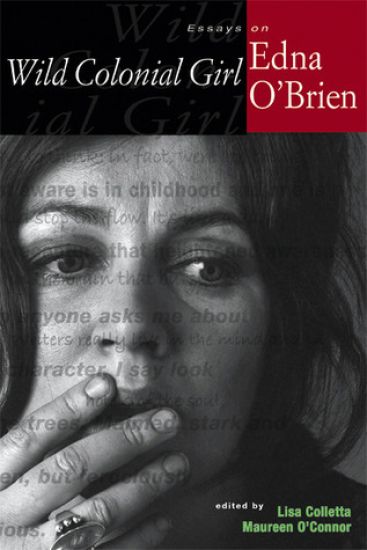
Wild Colonial Girl
Wanda Balzano; Kristine Byron; Danine Farquharson; Michael Patrick Gillespie; Sophia Hillan; Rebecca Pelan; Bernice Schrank; Helen Thompson
University of Wisconsin Press
2006
nidottu
Since the 1960 publication of her first novel, ""The Country Girls"", award-winning Irish writer Edna O'Brien has been both celebrated and maligned. Praised for her lyrical prose and vivid female characters and attacked for her frank treatment of sexuality and alleged sensationalism, O'Brien and her work seem always to spawn controversy, including the past banning in Ireland of several of her works. O'Brien's attention to ""women's"" concerns such as sex, romance, marriage, and childbirth has often relegated her to critical neglect at best and, at worst, outright contempt. This essay collection promises to be a long overdue critical reevaluation and exciting rediscovery of her oeuvre. ""Wild Colonial Girl"" situates O'Brien in Irish contexts that allow for an appraisal of her significant contribution to a specifically Irish women's literary tradition while attesting to the potency of writing against patriarchal conventions. Each chapter's clear and detailed readings of O'Brien's fiction build a convincing case for her literary, political, and cultural importance, providing an invaluable critical guide for an enriched appreciation of O'Brien and her work.
This text provides an introduction to students and others interested in William Kennedy's work. It provides an analysis of Kennedy's best-known works, a firm base for interpretation, and a better understanding of the cultural world that shapes the characters and plots. Rather than laying down what one should see when reading Kennedy's works, the text moves to the next stage of exploring diverse responses to Kennedy's canon, broadening the reader's awareness of the range of alternative strategies and perspective. It begins with an introduction that lays out the imaginative context for Kennedy's work. Subsequent chapters, in three parts, provide extended treatments of his early work, key elements in the first three Albany novels, and finally the maturity of his overall fiction.
Recent Criticism of James Joyce's Ulysses
Michael Patrick Gillespie; Paula Gillespie
Camden House Inc
2000
sidottu
A study that must be read by all scholars and students of Joyce. Since its appearance in 1922, James Joyce's novel Ulysses has remained extremely popular, never having gone out of print. Since the expiration of its copyright in the early 1990s, almost every major press in the US and England has produced an edition of the novel. This widespread public interest, in turn, has led well-known literary critics--from T. S. Eliot and Ezra Pound to Terry Eagleton and Homi Bhabha--to attempt to explain the intricacies of the great novel. Debate continues over even the most fundamental aspects of its plot, characterization, and themes. Every year, more and more scholars offer insights into the structure and style of Joyce's writing, the significanceof his imagery, the consequences of his ideological dispositions, the association between his fictional representations and a myriad of cultural, social, and communal institutions and beliefs. Merely remaining cognizant of the range of views of Ulysses now offered has become a daunting task for any student of Joyce, especially in view of the explosion of critical viewpoints available to today's critics. While no single work could fully synthesize all that has been written on Ulysses, this book distinguishes the features of major methodological trends and important critical studies that have shaped our sense of Joyce's novel in recent years.