Kirjojen hintavertailu. Mukana 12 473 565 kirjaa ja 12 kauppaa.
Kirjailija
Michael Peppiatt
Kirjat ja teokset yhdessä paikassa: 16 kirjaa, julkaisuja vuosilta 2008-2024, suosituimpien joukossa The Studio Reader – On the Space of Artists. Vertaile teosten hintoja ja tarkista saatavuus suomalaisista kirjakaupoista.
Mary Jane Jacob; Glenn Adamson; Svetlana Alpers; John Badlessari; Alice Bellony–rewold; Mary Bergstein; Walead Beshty; Andrea Bowers; Daniel Buren; Rochelle Feinstein; David J Getsy; Michelle Grabner; Rodney Graham; Amy Granat; Karl Haendel; Rachel Harrison; Caroline A Jones; Suzanne Lacy; Thomas Lawson; Lynn Lester Hershman; Shana Lutker; Annika Marie; Courtney Martin; Carrie Moyer; Bruce Nauman; Michael Peppiatt; David Reed; Lane Relyea; David Robbins; Judith Rodenbeck; Joe Scanlan; Brenda Schmahmann; Carolee Schneemann
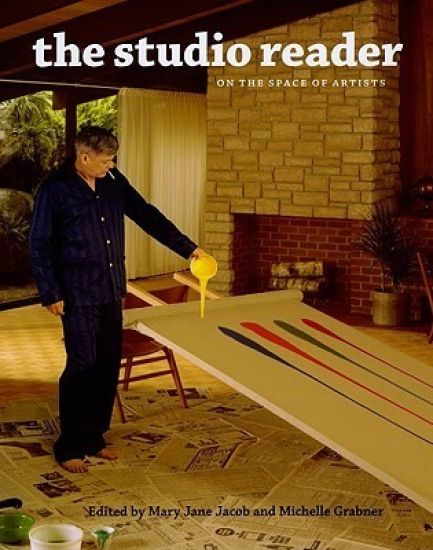
The image of a tortured genius working in near isolation has long dominated our conceptions of the artist's studio. Examples are abound: think Jackson Pollock dripping resin on a cicada carcass in his shed in the Hamptons. But times have changed; ever since Andy Warhol declared his art space a 'factory', artists have begun to envision themselves as the leaders of production teams, and their sense of what it means to be in the studio has altered just as dramatically as their practices. "The Studio Reader" pulls back the curtain from the art world to reveal the real activities behind artistic production. What does it mean to be in the studio? What is the space of the studio in the artist's practice? How do studios help artists envision their agency and, beyond that, their own lives? This forward-thinking anthology features an all-star array of contributors, ranging from Svetlana Alpers, Bruce Nauman, and Robert Storr to Daniel Buren, Carolee Schneemann, and Buzz Spector, each of whom locates the studio both spatially and conceptually - at the center of an art world that careens across institutions, markets, and disciplines. A companion for anyone engaged with the spectacular sites of art at its making, "The Studio Reader" reconsiders this crucial space as an actual way of being that illuminates our understanding of both artists and the world they inhabit.
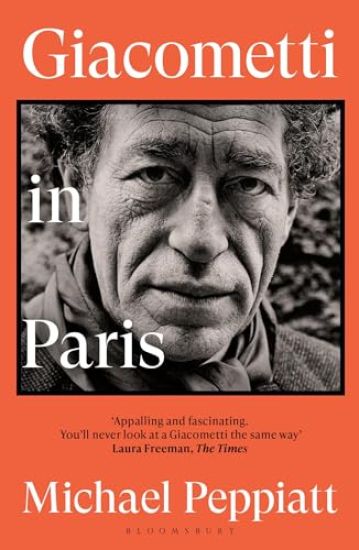
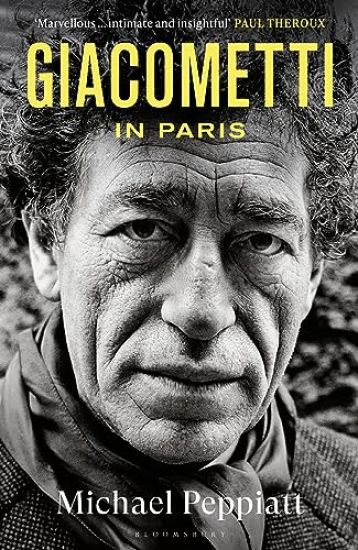
THE TIMES AND WATERSTONES BEST ART BOOK OF 2023'Intimate and insightful . . . reads like a novel by Samuel Beckett’ Paul Theroux A portrait of one of the twentieth century’s greatest sculptors from one of our most eminent art historiansToday the work of Alberto Giacometti is world-famous and his sculptures sell for record-breaking prices. But from his early days as an unknown outsider to the end of a dramatic international career, Giacometti lived in the same hovel of a studio in Paris. It was Paris that made him, and he in turn immortalised the city through his art.Arriving in Paris from the Swiss Alps in 1922, Giacometti was shaped not only by his relationships with remarkable artists and writers – from Picasso, Breton and Dalí to Sartre, Beauvoir and Beckett – but by the everyday life, pre-war and post-war, of Paris itself. His distinctive figures emerged from the city’s unique atmosphere: the crumbling grey stone of its humbler streets and the café-terraces buzzing with radical ideas and racy gossip.In Giacometti in Paris, Michael Peppiatt, who spent thirty years documenting the Parisian art world and mixing with many of the people Giacometti knew, brilliantly charts the course of the artist’s life and work. From falling in and out with the Surrealists to years of artistic anguish, from devotion to his mother to intense friendships, tragic love affairs and a fraught marriage, this is an intimate portrait of an outstanding artist in exceptional times.
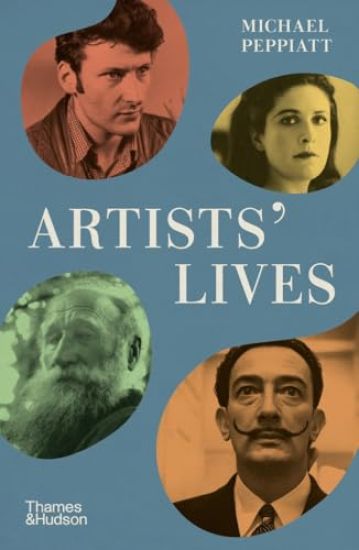
Engaging encounters, personal anecdotes and jargon-free critical insights into some of the liveliest creative minds in modern art, by an international art world insider. Michael Peppiatt has been studying, meeting and writing about artists for almost sixty years. In this brilliant selection of his biographical writing, he introduces us to some of the best-known artists of the modern age, from Vincent van Gogh and Pierre Bonnard to Francis Bacon and Lucian Freud. We follow the writer into the studios of some of these individuals, observing their creative process at close quarters, and gaining insight into the way their personal histories have shaped and directed their work, bringing both the art and its maker alive. Peppiatt meets an elderly but spirited Sonia Delaunay in Paris to hear her revive long-forgotten worlds; visits Catalan artist Antoni Tàpies, ‘the alchemist’, and joins him on late-night walks around Barcelona; interviews poet Jacques Dupin, in his pyjamas, on his memories of Giacometti; makes the life-changing acquaintance of Bacon in the bars and clubs of Soho; and gives us a considered opinion on Picasso’s trousers. These essays are essential reading for anyone wanting to find out more about the lives of some of the great creative figures of modern times, from a writer who is not only an authority on art, but also one of the liveliest and most entertaining observers of artists and their worlds.
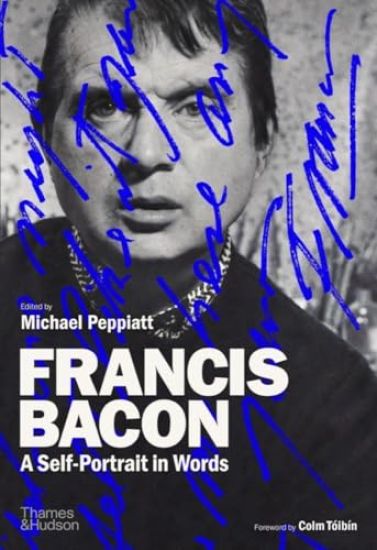
A new selection of letters, statements and interviews reveal the preoccupations, thoughts and ideas of Francis Bacon, one of the 20th century’s most influential and important artists. The documents selected for Francis Bacon: A Self-Portrait in Words illustrate Bacon’s sharp wit and ability to express complex ideas in highly personal, memorable language. Included here are not only letters to friends, patrons and fellow artists, but also intriguing notes and lists of paintings. They often come with a sketch as an aide-mémoire or an injunction to himself as he worked in the studio, and many have only come to light since his death. Bacon’s letters mirror and reveal his dominant preoccupations at different points throughout his long career. Most of Bacon’s letters have never been published and include several that he wrote to the author. Particularly intriguing is the record of a dream that he jotted down, outlining impossibly beautiful paintings he had conjured up in his sleep. Together with photographs, archive material and works by the artist are numerous reproductions of Bacon’s characteristic handwriting, from the briefest jottings and notes to more extensive letters and statements. Bacon frequently came up with memorable epithets and definitions. He delighted in doing with words what he set out to do in painting: 'I like phrases that cut me.' Michael Peppiatt explores the personal legacy of one of the 20th century’s most important painters and presents a compelling verbal self-portrait that reveals both man and artist.
THE TIMES AND WATERSTONES BEST ART BOOK OF 2023'Marvellous . . . intimate and insightful . . . reads like a novel by Samuel Beckett’ Paul Theroux A portrait of one of the twentieth century’s greatest sculptors from one of our most eminent art historiansToday the work of Alberto Giacometti is world-famous and his sculptures sell for record-breaking prices. But from his early days as an unknown outsider to the end of a dramatic international career, Giacometti lived in the same hovel of a studio in Paris. It was Paris that made him, and he in turn immortalised the city through his art.Arriving in Paris from the Swiss Alps in 1922, Giacometti was shaped not only by his relationships with remarkable artists and writers – from Picasso, Breton and Dalí to Sartre, Beauvoir and Beckett – but by the everyday life, pre-war and post-war, of Paris itself. His distinctive figures emerged from the city’s unique atmosphere: the crumbling grey stone of its humbler streets and the café-terraces buzzing with radical ideas and racy gossip.In Giacometti in Paris, Michael Peppiatt, who spent thirty years documenting the Parisian art world and mixing with many of the people Giacometti knew, brilliantly charts the course of the artist’s life and work. From falling in and out with the Surrealists to years of artistic anguish, from devotion to his mother to intense friendships, tragic love affairs and a fraught marriage, this is an intimate portrait of an outstanding artist in exceptional times.
Engaging encounters, personal anecdotes and jargon-free critical insights into some of the liveliest creative minds in modern art, by an international art world insider. Praised by the Art Newspaper as ‘the best art writer of his generation’, Michael Peppiatt has encountered many European modern artists over more than fifty years. This selection of some of his best biographical writing covers a wide spectrum of modern art, from Van Gogh and Pierre Bonnard, to personal conversations with painter Sonia Delaunay, artist Dora Maar, who was Picasso’s lover in the 1930s and 1940s, and Francis Bacon, perhaps the most famous of the many artists with whom Peppiatt has formed personal friendships. Michael Peppiatt’s lively, engaging writing takes us into the company of many notable art-world personalities, such as the Catalan painter Antoni Tàpies, whom he visits in his studio, and moments of disillusion, such as his meeting with the self-mythologizing artist Balthus. Art criticism blends with anecdote: riding with Lucian Freud in his Bentley, drinking with Bacon in Soho, discussing Picasso’s trousers with David Hockney... This collection of Peppiatt’s most perceptive texts includes under-recognized artists, such as Dachau survivor Zoran Music, or Montenegrin artist Dado, whose retrospective Peppiatt curated at the 2009 Venice Biennale. Remarkably varied in their scope and lucidly written for a general reader, these selected essays not only provide us with perceptive commentary and acute critical judgment, they also give a unique personal insight into some of the greatest creative minds of the modern era.
While working on 'Bacon-Giacometti', a major exhibition at the Fondation Beyeler in Basel in 2018, the curator, writer, and art historian Michael Peppiatt carried out extensive research on the relationship between the two artists. "At one point I felt I could almost hear the two of them talking", he revealed. For Peppiatt, the dialogue between Francis Bacon and Alberto Giacometti has been 'turning slowly' in his mind ever since Bacon told him in detail about his encounters with the Swiss artist, while the latter was in London in 1965 to supervise the preparations for his major exhibition at the Tate. This book, written in the form of a play, is about an imagined encounter between the two men. On the evening imagined by Peppiatt, Bacon and Giacometti enjoy a lavish dinner at Wheeler's fish restaurant, then go on to the Colony Room-Bacon's favourite club in Soho-to pursue their freely flowing conversation about life, art, and their mutual friends. After a while, the club begins to empty out, but the two artists, sensing that they may never have another occasion to talk, order more champagne...
Francis Bacon was one of most elusive and enigmatic creative geniuses of the twentieth century. However much his avowed aim was to simplify both himself and his art, he remained a deeply complex person. Bacon was keenly aware of this underlying contradiction, and whether talking or painting, strove consciously towards absolute clarity and simplicity, calling himself ‘simply complicated’. Until now, this complexity has rarely come across in the large number of studies on Bacon’s life and work. Francis Bacon: Studies for a Portrait shows a variety of Bacon’s many facets, and questions the accepted views on an artist who was adept at defying categorization. The essays and interviews brought together here span more than half a century. Opening with an interview by the author in 1963, the year that he met Bacon, there are also essays written for exhibitions, memoirs and reflections on Bacon’s late work, some published here for the first time. Included are recorded conversations with Bacon in Paris that lasted long into the night, and an overall account of the artist’s sources and techniques in his extraordinary London studio. This is an updated edition of Francis Bacon: Studies for a Portrait (2008), published for the first time in a paperback reading book format. It brings this fascinating artist into closer view, revealing the core of his talent: his skill for marrying extreme contradictions and translating them into immediately recognizable images, whose characteristic tension derives from a life lived constantly on the edge.With 14 illustrations, 7 in colour
While working on ‘Bacon–Giacometti’, a major exhibition at the Fondation Beyeler in Basel in 2018, the curator, writer, and art historian Michael Peppiatt carried out extensive research on the relationship between the two artists. “At one point I felt I could almost hear the two of them talking”, he revealed.For Peppiatt, the dialogue between Francis Bacon and Alberto Giacometti has been ‘turning slowly’ in his mind ever since Bacon told him in detail about his encounters with the Swiss artist, while the latter was in London in 1965 to supervise the preparations for his major exhibition at the Tate. This book, written in the form of a play, is about an imagined encounter between the two men.On the evening imagined by Peppiatt, Bacon and Giacometti enjoy a lavish dinner at Wheeler’s fish restaurant, then go on to the Colony Room—Bacon’s favourite club in Soho—to pursue their freely flowing conversation about life, art, and their mutual friends. After a while, the club begins to empty out, but the two artists, sensing that they may never have another occasion to talk, order more champagne...
This book, a biography on Francis Bacon, is inspired by the friendship the author had with Bacon and based on records of the conversations that took place since 1963. The book forms the first comprehensive account of the artist's life and his work.
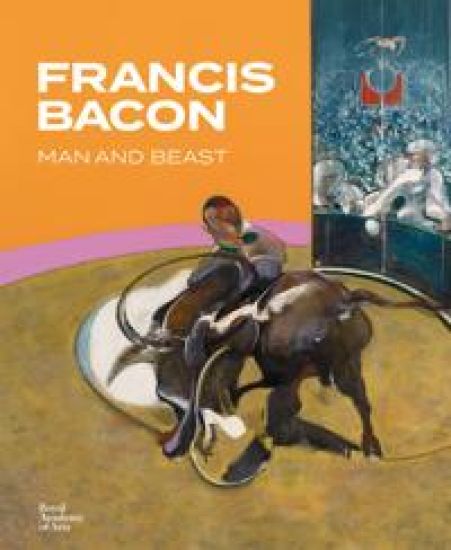
Selected writings from a leading critic of modern art, “the best art writer of his generation” (Art Newspaper) Michael Peppiatt, guest curator of the Royal Academy of Arts’ 2021 exhibition ‘Francis Bacon: Man and Beast’, has for more than 50 years written trenchant and lively dispatches from the centre of the international art world. In this collection of key essays, Peppiatt gives his unique insight into the making and interpretation of modern art, from Manet and Degas through to Kandinksy and Picasso to Freud and Hockney. Covering a whole spectrum of artists and art-world figures—from pioneers such as Klimt and Soutine, to collectors and dealers who played a pivotal role in the modern art world, to artists such as Jean Dubuffett, Francis Bacon and Zoran Music, with whom he had close relationships—Peppiatt interweaves personal anecdote with critical judgement. Each text is accompanied by a new introduction, written in the author’s signature vivid and jargon-free style, in which he contextualises his writings and reflects on significant moments in a lifetime of artistic engagement. This volume will provide readers with an exhilarating tour of the extraordinary reach and variety of modern art.
This book, a biography on Francis Bacon, is inspired by the friendship the author had with Bacon and based on records of the conversations that took place since 1963. The book forms the first comprehensive account of the artist's life and his work.
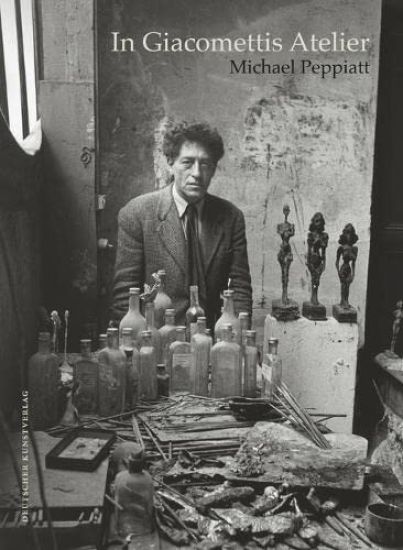
In Giacometti's Studio takes a look at one of the most influential places in 2 th century art, namely the tiny studio where the great sculptor lived and worked until his death in Montparnasse from 92 . For almost 4 years, this chaotic but highly creative place was the center of Alberto Giacometti's world. His studio was a magnet for a whole generation of artists and writers in Paris, from Picasso and Braque to Breton, Sartre, Genet and Beckett. Michael Peppiatt is an expert on the life and work of Alberto Giacometti. The author initially worked in London as an art critic for the Observer until he moved to Paris in the late 9 s to write about art for Le Monde and as a correspondent for the New York Times and the Financial Times. A captivating and vivid exploration of one of the most evocative and influential spaces in 2 th-century art