Kirjojen hintavertailu. Mukana 12 657 676 kirjaa ja 12 kauppaa.
Kirjailija
Michael Pickering
Kirjat ja teokset yhdessä paikassa: 16 kirjaa, julkaisuja vuosilta 1997-2021, suosituimpien joukossa Memory and the Management of Change. Vertaile teosten hintoja ja tarkista saatavuus suomalaisista kirjakaupoista.
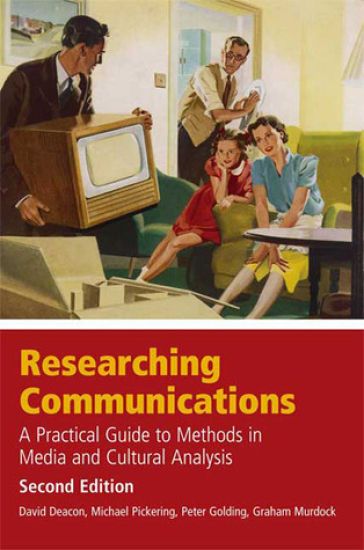
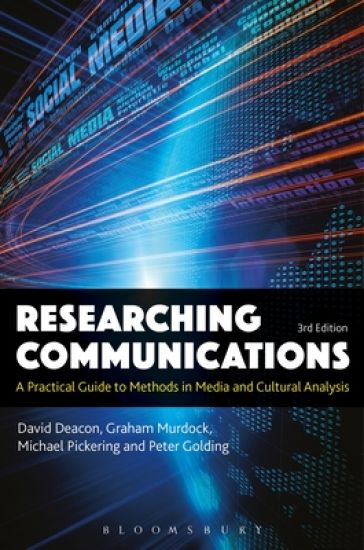
The new edition of the highly respected Researching Communications is a comprehensive and authoritative guide to researching media and communication. Researching Communications, Third Edition is an invaluable guide to performing and analysing research tasks, introducing the major research methods, giving detailed examples of research analysis and practical step-by-step guidance in clear language.Written by highly regarded experts in the field, the third edition includes new sections on social media analysis, digital research methods and comparative research, as well as updated case studies, international examples and details of recent developments in media and communication studies.Undergraduate and postgraduate media and communication students will find Researching Communications an invaluable resource at all stages of their course.

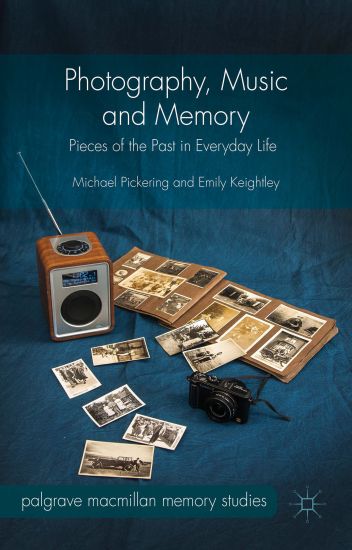
This book shows how the mnemonic imagination creatively uses the resources of photography and music in the registering and management of change. Looking in particular at major transitions and turning points, it covers key issues of identity for the remembering subject and key scales of remembering in vernacular milieus. The book explores the connections of memory and remembering with transformations in intimate relationships, migration and spatial mobilities, loss and bereavement involving loved ones or those with whom close affinities are felt, resulting in a volume that helps fill the gap in memory studies caused by lack of sustained ethnographic work. Drawing on extensive fieldwork on the processes and practices of remembering in everyday life, it demonstrates how the mnemonic imagination is central to the management of change and transition, and how its cross-temporal interanimations of past, present and future are fostered and facilitated by the visual and sonic resources of photography and recorded music.
Originally published in 1982. The songs on which this study is based were once vibrant in the throats and ears and minds of living people. This book examines the songs and their meanings in relation to the lives of those people, and relates them to the cultural tradition and practice of which they were an integral part. The art of village song represents a sense of cohesiveness and mutual identity around local patterns of kinship, social groupings, territorial orientations and cultural relationships. The actual ways in which songs were part of village life is of course highly problematic, but this book endeavours, most of all, to present an understanding of the place of song in the social life of villagers.
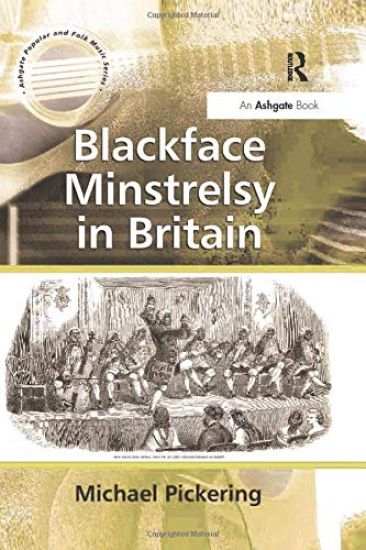
Blackface minstrelsy is associated particularly with popular culture in the United States and Britain, yet despite the continual two-way flow of performers, troupes and companies across the Atlantic, there is little in Britain to match the scholarship of blackface studies in the States. This book concentrates on the distinctively British trajectory of minstrelsy. The historical study and cultural analysis of minstrelsy is important because of the significant role it played in Britain as a form of song, music and theatrical entertainment. Minstrelsy had a marked impact on popular music, dance and other aspects of popular culture, both in Britain and the United States. Its impact in the United States fed into significant song and music genres that were assimilated in Britain, from ragtime and jazz onwards, but prior to these influences, minstrelsy in Britain developed many distinct features and was adapted to operate within various conventions, themes and traditions in British popular culture. Pickering provides a convincing counter-argument to the assumption among writers in the United States that blackface was exclusively American and its British counterpart purely imitative. Minstrelsy was not confined to its value as song, music and dance. Jokes at the expense of black people along with demeaning racial stereotypes were integral to minstrel shows. As a form of popular entertainment, British minstrelsy created a cultural low-Other that offered confirmation of white racial ascendancy and imperial dominion around the world. The book attends closely to how this influence on colonialism and imperialism operated and proved ideologically so effective. At the same time British minstrelsy cannot be reduced to its racist and imperialist connections. Enormously important as those connections are, Pickering demonstrates the complexity of the subject by insisting that the minstrel show and minstrel performers are understood also in terms of their own theatrical dynamics, talent and appeal.
The Compass Dances is a collection of poems written from 1955 to 2015; the work of almost a lifetime. Influenced by the author's long absence from England, this strikingly original collection provides unique reflection on simultaneously writing in two languages, far away from the familiarity of home.
Originally published in 1982. The songs on which this study is based were once vibrant in the throats and ears and minds of living people. This book examines the songs and their meanings in relation to the lives of those people, and relates them to the cultural tradition and practice of which they were an integral part. The art of village song represents a sense of cohesiveness and mutual identity around local patterns of kinship, social groupings, territorial orientations and cultural relationships. The actual ways in which songs were part of village life is of course highly problematic, but this book endeavours, most of all, to present an understanding of the place of song in the social life of villagers.
This book explores how photography and recorded music act as vehicles or catalysts in processes of remembering, and how they are regarded, treated, valued and drawn upon as resources connecting past and present in everyday life. It does so via two key concepts: vernacular memory and the mnemonic imagination.
Blackface minstrelsy is associated particularly with popular culture in the United States and Britain, yet despite the continual two-way flow of performers, troupes and companies across the Atlantic, there is little in Britain to match the scholarship of blackface studies in the States. This book concentrates on the distinctively British trajectory of minstrelsy. The historical study and cultural analysis of minstrelsy is important because of the significant role it played in Britain as a form of song, music and theatrical entertainment. Minstrelsy had a marked impact on popular music, dance and other aspects of popular culture, both in Britain and the United States. Its impact in the United States fed into significant song and music genres that were assimilated in Britain, from ragtime and jazz onwards, but prior to these influences, minstrelsy in Britain developed many distinct features and was adapted to operate within various conventions, themes and traditions in British popular culture. Pickering provides a convincing counter-argument to the assumption among writers in the United States that blackface was exclusively American and its British counterpart purely imitative. Minstrelsy was not confined to its value as song, music and dance. Jokes at the expense of black people along with demeaning racial stereotypes were integral to minstrel shows. As a form of popular entertainment, British minstrelsy created a cultural low-Other that offered confirmation of white racial ascendancy and imperial dominion around the world. The book attends closely to how this influence on colonialism and imperialism operated and proved ideologically so effective. At the same time British minstrelsy cannot be reduced to its racist and imperialist connections. Enormously important as those connections are, Pickering demonstrates the complexity of the subject by insisting that the minstrel show and minstrel performers are understood also in terms of their own theatrical dynamics, talent and appeal.
Researching Communications, Second Edition provides a practical, authoritative, step-by-step guide to media and communications studies students taking courses in communications research. The authors also examine the complementary nature of qualitative and quantitative research methods, and aim to show how these techniques hold up in practice. The new edition also incorporates new information on using archives and computers as well as the use of the internet as a resource for research. 'This is an enormously useful text for anyone interested in an up-to-date guide to cultural analysis; it will be indispensible for teaching research methods in communication studies.' - Hanno Hardt, University of Iowa
'There have been few critical engagements with the concept of creativity in recent years, so the authors provide an important contribution in drawing attention to what is arguably at the heart of much of what we most value in culture' - Douglas Kellner, University of California, Los Angeles 'In this important book, Keith Negus and Michael Pickering challenge commonplace assumptions about creativity and casual invocations of genius. They give comfort neither to popular wisdom nor to academic convention. Drawing on the work of philosophers, sociologists, political theorists and economists, as well as artists, musicians and novelists, they raise profound questions about the very ideas which sustain our understanding of art and culture' - Professor John Street, University of East Anglia 'It's all too rare to read a cultural studies book that offers any real originality. This one achieves this, not only by addressing debates and sources neglected in the field, but also by traversing high and low culture, and all points between' - Dave Hesmondhalgh, The Open University Creativity has become a buzzword and key issue in debates about cultural policy, human growth and the media and cultural industries. It has also become a very misused term used to describe anything from musical and artistic genius, to shady financial accounting, to the teaching of children and the management of employees. But what does it mean? Negus and Pickering provide a clear and logical way of understanding what we describe as creative, and how this term has become central to attaching cultural value. Their book: · Develops an approach which enables us to think of creativity as both ordinary and exceptional · Focuses on creativity as a way of rethinking key concepts in the study of culture such as: Convention; innovation; tradition and experience. This book is useful to those studying Media and Cultural Studies who need to understand Cultural Production, Communication, Popular Culture and Cultural Theory.
The Garawa Aboriginal people of the southern inland Gulf of Carpentaria, Northern Australia were, until relatively recently, hunter-gatherers. The three principal objectives of this volume are to provide an ethnography of Garawa land-use and settlement, to develop the methodological and theoretical strategies for studying hunter-gatherer settlement patterns in a way that will yield information useful to archaeologists, and, thirdly, to identify the main variables contributing to the regional and long term structure of subsistence and settlement patterns. The core study area is centred on three contiguous river catchments (Wearyan, Foelsche, Robinson Rivers) within the Robinson River Land Trust, representing approximately 11,000 square kilometers. Garawa institutions and strategies of land tenure, land-use and site location are compared, with each other and with environmental phenomena, to identify the phenomena and processes that structured the macro-scale spatial, temporal, and demographic characteristics of Garawa settlement patterns.
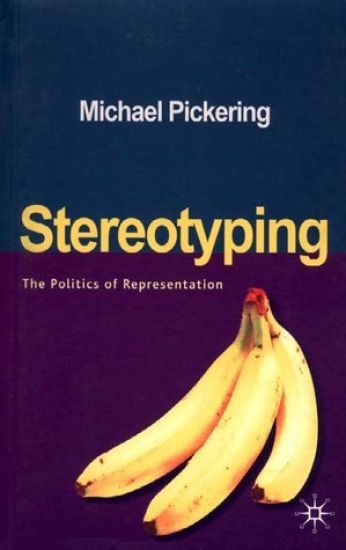
Stereotyping stands in need of serious re-appraisal. This book provides a critical assessment of the concept and its use in the social sciences, considering its theoretical basis and historical development and linking these closely to the concept of the Other. As the first sustained book-length treatment of stereotyping in either sociology or media and cultural studies, the text embraces such key topics as nationalism and national identity, gender, racism and imperialism, normality and social order, and the figure of the stranger in the modern city. It is genuinely interdisciplinary, moving between sociology, social psychology, cultural history, psychoanalysis and postcolonial theory, and offers an indispensable examination of the roots of prejudice and bigotry in modern societies.
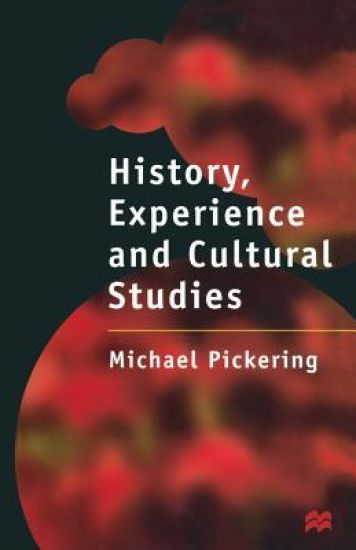
This elegantly written and illuminating book explores the attenuated relationship between history and cultural studies, reappraising some of the issues and positions which have led to the impasse between them and highlighting the contribution to be made by a new engagement between cultural and historical theory. Focusing on the contested concept of 'experience' as a central part of his argument, Pickering advances new ways of attending to the myriad voices of everyday cultures, past and present.