Kirjojen hintavertailu. Mukana 12 595 353 kirjaa ja 12 kauppaa.

Kirjailija

Michael Plekon

Kirjat ja teokset yhdessä paikassa: 14 kirjaa, julkaisuja vuosilta 2002-2025, suosituimpien joukossa Community as Church, Church as Community. Vertaile teosten hintoja ja tarkista saatavuus suomalaisista kirjakaupoista.

14 kirjaa

Kirjojen julkaisuhaarukka 2002-2025.

Recovering the Eucharistic Ecclesiology of the Early Church

Recovering the Eucharistic Ecclesiology of the Early Church

Anastacis Wooden; Michael Plekon; Paul McPartlan

THE CATHOLIC UNIVERSITY OF AMERICA PRESS
2025
sidottu
The first theologian who spoke of eucharistic ecclesiology was the Russian Orthodox church historian and canonist Nicholas Afanasiev (1893-1966). He claimed to have re-discovered and systematized the original ecclesiology of the early church, which he called "eucharistic." Since then, the eucharistic ecclesiology crossed confessional borders and shaped the theological discussion on the nature of the church. Many authors of different Christian confessions developed Afanasiev's basic intuition while proposing a variety of their own understandings of the "eucharistic nature" of the church: from Orthodox theologians like John Zizioulas and John Romanides to Catholic theologians like J.-M. Tillard and Joseph Ratzinger. Ironically, the details of Afanasiev's own ecclesiological system remain largely unknown. The aim of this book is to formulate a comprehensive view of Afanasiev's ecclesiological vision and of its significance for contemporary ecclesial life in two parts.It is Anastacia Wooden's conviction that the prevailing "stereotypical" view of Afanasiev's ecclesiology is suffering from misapprehension of his thought. Therefore, Part one addresses the issues that historically complicated understanding of Afanasiev's ecclesiology. It will provide historical, theological, and biographical context of Afanasiev's scholarship by presenting keys to understanding of his eucharistic ecclesiology.In the second part the book provides a synthesis of Afanasiev's total ecclesiological vision as well as systematic presentation of six specific ecclesiological issues. It demonstrates how Afanasiev's methodological assumption that ecclesiology can serve as a tool to make sense of the historical data on the life of the church led to his realization that the early church had an operative ecclesiology which placed the exercise of royal priesthood in the Eucharist as the starting point of the ecclesial structure. In each chapter of the second part, this book provides reflections on the contemporary relevance of Afanasiev's work. In the current crises of leadership in the Catholic Church (as well as other Christian churches) it may prevent the adoption of arbitrary forms of lay participation in the church governance by reminding church leaders that a theologically meaningful increase of lay participation should always be framed in terms of the increased participation of local churches.
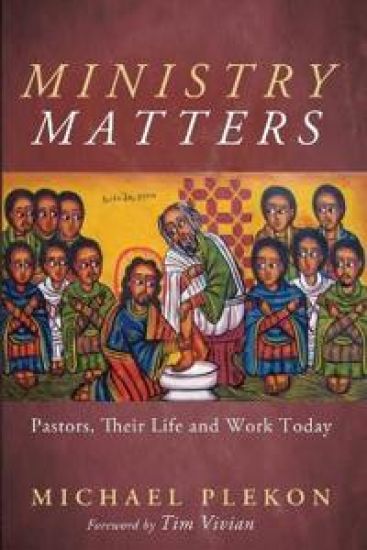
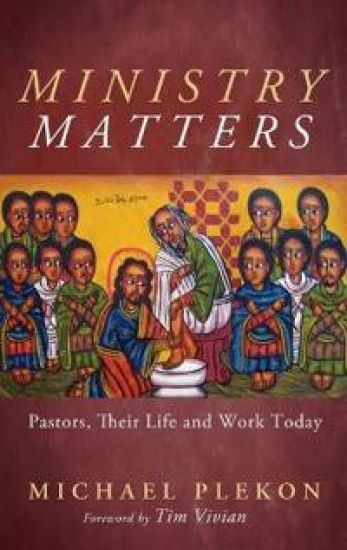
Ministry Matters

Ministry Matters

Michael Plekon; Tim Vivian

Cascade Books
2024
sidottu
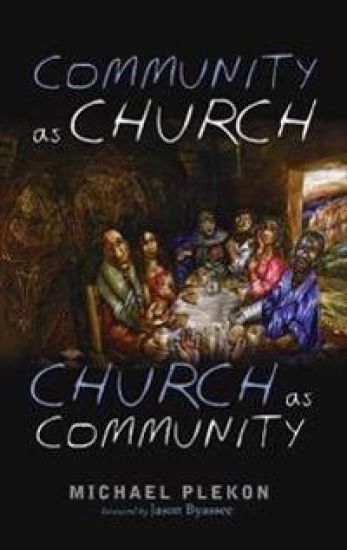
Congregations are shrinking and in decline. Fewer people are part of communities of faith. Michael Plekon's previous book, Community as Church, Church as Community, traced the factors behind this as well as the resurrection of parishes that have reimagined themselves in diverse ways. Pastors have played essential roles in such transformation. But where are the ordained today? Ministry Matters is a sustained meditation on the vocation, lives, and work of pastors today. We listen to an ecumenical group of exceptional pastor-theologians on how pastors live and serve. These include George Keith, Nicholas Afanasiev, Barbara Brown Taylor, C. Andrew Doyle, Andrew Root, Sarah Coakley, Samuel Wells, Rowan Williams, Henri Nouwen, Pope Francis, David Barnhart, and Will Willimon, with commentary from Michael Plekon, who has served as priest in both western and eastern churches for over forty years. Many years of pastoral experience are shared here, providing a feast of reflection on the shepherds of God's flock.
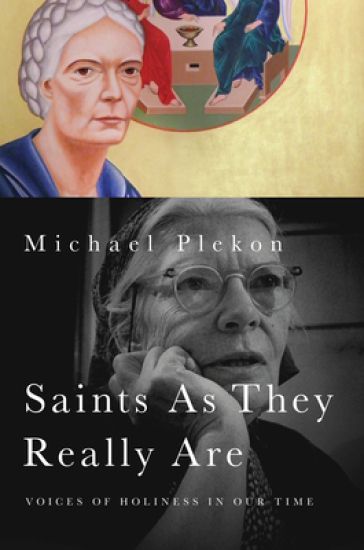
Saints As They Really Are

Saints As They Really Are

Michael Plekon

UNIVERSITY OF NOTRE DAME PRESS
2022
sidottu
In his new book, Saints As They Really Are, priest and scholar Michael Plekon traces the spiritual journeys of several American Christians, using their memoirs and other writings. These "saints-in-the-making" show all their doubts and imperfections as they reflect on their search for God and their efforts to lead holy lives. They are gifted yet ordinary women and men trying to follow Christ within their flawed and broken humanity—"saints as they really are," as Dorothy Day put it. Saints As They Really Are is the third book in Plekon's critically acclaimed series on saints and holiness in our time. He draws on the autobiographical work of Dorothy Day, Peter Berger, Thomas Merton, Kathleen Norris, and Barbara Brown Taylor, among others, as well as from his own experiences as a Carmelite seminarian and brother. Plekon shares the power of these individuals' stories as they unfold. The book offers a strong argument that our failings and weaknesses are not disqualifications to holiness. Plekon further confronts the institutional church and its relationship to individuals seeking God, focusing on some of the challenges to this search—the destructive potential of religion and religious institutions, as well as our personal tendencies to extremism, overwork, pious obsessions, and legalism. But he also underscores the healing qualities of faith and the spiritual life. Plekon's insights will help readers better understand their own spiritual pilgrimages as they learn how others have dealt with the trials and joys of their path to everyday holiness.
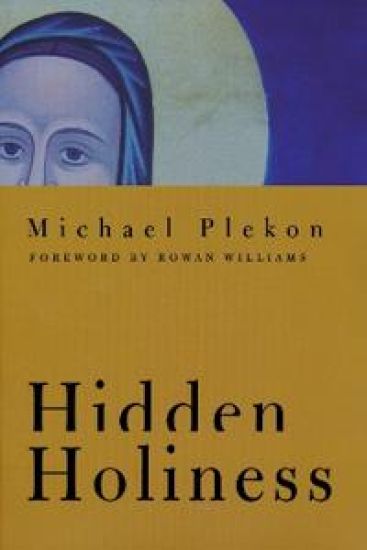
Hidden Holiness

Hidden Holiness

Michael Plekon; Rowan Williams

UNIVERSITY OF NOTRE DAME PRESS
2022
sidottu
In Hidden Holiness, Michael Plekon challenges us to examine the concept of holiness. He argues that both Orthodox and Catholic churches understand saints to be individuals whose lives and deeds are unusual, extraordinary, or miraculous. Such a requirement for sainthood undermines, in his view, one of the basic messages of Christianity: that all people are called to holiness. Instead of focusing on the ecclesiastical process of recognizing saints, Plekon explores a more ordinary and less noticeable "hidden" holiness, one founded on the calling of all to be prophets and priests and witnesses to the Gospel. As Rowan Williams has insisted, people of faith need to find God's work in their culture and daily lives. With that in mind, Plekon identifies a fascinatingly diverse group of faithful who exemplify an everyday sanctity, as well as the tools they have used to enact their faith. Plekon calls upon contemporary writers—among them, Rowan Williams, Kathleen Norris, Sara Miles, Simone Weil, and Darcey Steinke—as well as such remarkable and controversial figures as Mother Teresa, Thomas Merton, and Dorothy Day—to demonstrate ways to imagine a more diverse and everyday holiness. He also introduces four individuals of "hidden holiness": a Yup'ik Alaskan, Olga Arsumquak Michael; the artist Joanna Reitlinger; the lay theologian Elisabeth Behr-Sigel; and human rights activist Paul Anderson. A generous and expansive treatment of the holy life, accessibly written for all readers, Plekon's book is sure to inspire us to recognize and celebrate the holiness hidden in the ordinary lives of those around us.
Uncommon Prayer

Uncommon Prayer

Michael Plekon

University of Notre Dame Press
2016
nidottu
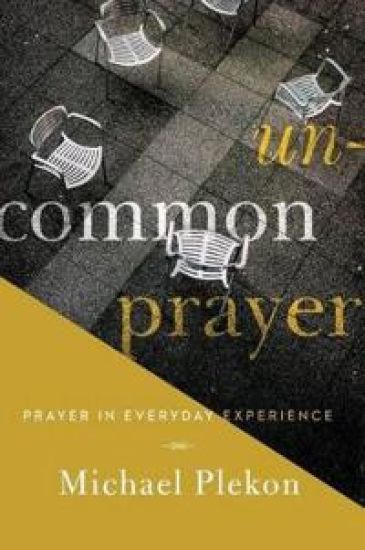
In Uncommon Prayer: Prayer in Everyday Experience, Michael Plekon wants to change our minds on what constitutes prayer. In doing so, he makes a theological claim that commonplace aspects of the Christian life are best understood as prayer, whereby encouraging us to see that everyday life carries religious import; prayer and the religious life are not restricted to special places and times, but are open to all believers at all times. Plekon examines the works of diverse authors, including many who have challenged the status quo of institutional churches. He asks us to listen to what poets, writers, activists, and others tell us about how they pray at work and at home, with colleagues, family, and friends, in all the experiences of life, from joy to suffering, sadness to hope. Among them are Sarah Coakley, Rowan Williams, Heather Havrilesky, Sara Miles, Thomas Merton, Mary Oliver, Christian Wiman, Mary Karr, Barbara Brown Taylor, Dorothy Day, Maria Skobtsova, Paul Evdokimov, Seraphim of Sarov, and Richard Rohr. Plekon argues that prayer encompasses a much wider variety of activity than formal and liturgical prayers and that, by recognizing such aspects of prayer, the believer is made more receptive to transformative aspects of prayerful attitudes.
Uncommon Prayer

Uncommon Prayer

Michael Plekon

University of Notre Dame Press
2016
sidottu
In Uncommon Prayer: Prayer in Everyday Experience, Michael Plekon wants to change our minds on what constitutes prayer. In doing so, he makes a theological claim that commonplace aspects of the Christian life are best understood as prayer, whereby encouraging us to see that everyday life carries religious import; prayer and the religious life are not restricted to special places and times, but are open to all believers at all times. Plekon examines the works of diverse authors, including many who have challenged the status quo of institutional churches. He asks us to listen to what poets, writers, activists, and others tell us about how they pray at work and at home, with colleagues, family, and friends, in all the experiences of life, from joy to suffering, sadness to hope. Among them are Sarah Coakley, Rowan Williams, Heather Havrilesky, Sara Miles, Thomas Merton, Mary Oliver, Christian Wiman, Mary Karr, Barbara Brown Taylor, Dorothy Day, Maria Skobtsova, Paul Evdokimov, Seraphim of Sarov, and Richard Rohr. Plekon argues that prayer encompasses a much wider variety of activity than formal and liturgical prayers and that, by recognizing such aspects of prayer, the believer is made more receptive to transformative aspects of prayerful attitudes.
Saints As They Really Are

Saints As They Really Are

Michael Plekon

University of Notre Dame Press
2012
nidottu
In his new book, Saints As They Really Are, priest and scholar Michael Plekon traces the spiritual journeys of several American Christians, using their memoirs and other writings. These "saints-in-the-making" show all their doubts and imperfections as they reflect on their search for God and their efforts to lead holy lives. They are gifted yet ordinary women and men trying to follow Christ within their flawed and broken humanity—"saints as they really are," as Dorothy Day put it. Saints As They Really Are is the third book in Plekon's critically acclaimed series on saints and holiness in our time. He draws on the autobiographical work of Dorothy Day, Peter Berger, Thomas Merton, Kathleen Norris, and Barbara Brown Taylor, among others, as well as from his own experiences as a Carmelite seminarian and brother. Plekon shares the power of these individuals' stories as they unfold. The book offers a strong argument that our failings and weaknesses are not disqualifications to holiness. Plekon further confronts the institutional church and its relationship to individuals seeking God, focusing on some of the challenges to this search—the destructive potential of religion and religious institutions, as well as our personal tendencies to extremism, overwork, pious obsessions, and legalism. But he also underscores the healing qualities of faith and the spiritual life. Plekon's insights will help readers better understand their own spiritual pilgrimages as they learn how others have dealt with the trials and joys of their path to everyday holiness.
Hidden Holiness

Hidden Holiness

Michael Plekon; Rowan Williams

University of Notre Dame Press
2009
nidottu
In Hidden Holiness, Michael Plekon challenges us to examine the concept of holiness. He argues that both Orthodox and Catholic churches understand saints to be individuals whose lives and deeds are unusual, extraordinary, or miraculous. Such a requirement for sainthood undermines, in his view, one of the basic messages of Christianity: that all people are called to holiness. Instead of focusing on the ecclesiastical process of recognizing saints, Plekon explores a more ordinary and less noticeable "hidden" holiness, one founded on the calling of all to be prophets and priests and witnesses to the Gospel. As Rowan Williams has insisted, people of faith need to find God's work in their culture and daily lives. With that in mind, Plekon identifies a fascinatingly diverse group of faithful who exemplify an everyday sanctity, as well as the tools they have used to enact their faith. Plekon calls upon contemporary writers—among them, Rowan Williams, Kathleen Norris, Sara Miles, Simone Weil, and Darcey Steinke—as well as such remarkable and controversial figures as Mother Teresa, Thomas Merton, and Dorothy Day—to demonstrate ways to imagine a more diverse and everyday holiness. He also introduces four individuals of "hidden holiness": a Yup'ik Alaskan, Olga Arsumquak Michael; the artist Joanna Reitlinger; the lay theologian Elisabeth Behr-Sigel; and human rights activist Paul Anderson. A generous and expansive treatment of the holy life, accessibly written for all readers, Plekon's book is sure to inspire us to recognize and celebrate the holiness hidden in the ordinary lives of those around us.
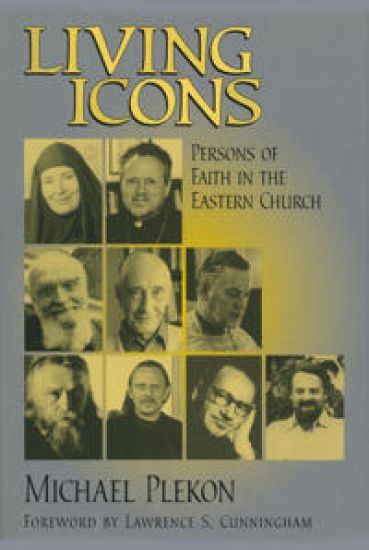
Living Icons

Living Icons

Michael Plekon

University of Notre Dame Press
2004
sidottu
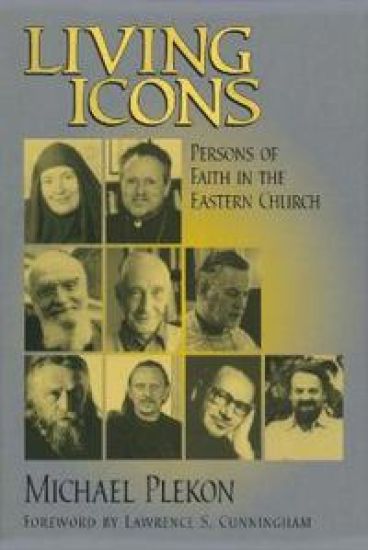
Living Icons presents an intimate portrait of holiness as exemplified in the lives and thoughts of ten people of faith in the Eastern Orthodox Church. In this inspiring volume, Michael Plekon introduces readers to a diverse and unusual group of men and women who strove to put the Gospel of Christ into action in their lives. The "living icons" Plekon describes were, among other things, priests, theologians, writers, and caregivers to the homeless and poor. One was an artist who became the greatest icon painter in this century; another was assassinated for his teachings in post-Soviet Russia. These remarkable people of faith lived through times of great suffering: forced emigration, the Great Depression, World War II, and the Cold War. Many of them were criticized, if not condemned, by ecclesiastical opponents and authorities. Yet each demonstrate a unique pattern for holiness, illustrating that the path to sainthood is open to all. With the fall of state socialism, Eastern Orthodox churches and monasteries are being reopened and receiving renewed interest from believers and nonbelievers alike. Plekon calls to our attention people like Saint Seraphim of Sarov (1759–1832), a monk, mystic, counselor, healer, and visionary; Father Alexander Men (1935–1990), a Russian whose writings after Glasnost ultimately led to his tragic assassination; Mother Maria Skobtsova (1891–1945), a painter, poet, and political activist who was killed in a concentration camp for hiding her Jewish neighbors; and Father Lev Gillet (1893–1980), one of the twentieth century's greatest spiritual teachers. Living Icons, which includes a foreword by Lawrence S. Cunningham, brings to life the beautiful, and often unfamiliar, spirituality of the Eastern Orthodox Church through some of its most remarkable members. It shows with simplicity and clarity that Christ and the Gospel are often manifested in extraordinary ways in the lives of ordinary people.
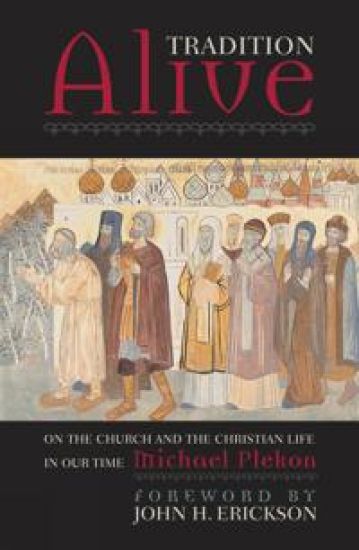
Tradition Alive

Tradition Alive

Michael Plekon; John H. Erickson

Sheed Ward,U.S.
2003
nidottu
Michael Plekon's Tradition Alive presents a collection of essays highlighting not only the vibrant tradition of 20th century Eastern Orthodox thought, but also the necessity of its inclusion in the theological canon constructed mainly by Western Christian thinkers. Ranging from the thought of the first generation of Russian ZmigrZs to contemporary Eastern Orthodox theologians, the essays in Tradition Alive point toward a positive theology that is convinced of the immanence of the holy spirit despite a world torn apart by revolution, violence, and despair. The contributors profess their faith in the transforming presence of Christ and the divine dimensions of the church by looking to the meaning and power of tradition in the practices of Eastern Orthodox Christianity. By focusing on the Orthodox Church's ecclesial and liturgical character, the authors emphasize the living character of the Christian tradition. With many contributions difficult, if not impossible, to access until now, Tradition Alive presents a brave and distinctive effort to enliven Western theology by looking to the theology of the East.
Living Icons

Living Icons

Michael Plekon

University of Notre Dame Press
2002
nidottu
Living Icons presents an intimate portrait of holiness as exemplified in the lives and thoughts of ten people of faith in the Eastern Orthodox Church. In this inspiring volume, Michael Plekon introduces readers to a diverse and unusual group of men and women who strove to put the Gospel of Christ into action in their lives. The "living icons" Plekon describes were, among other things, priests, theologians, writers, and caregivers to the homeless and poor. One was an artist who became the greatest icon painter in this century; another was assassinated for his teachings in post-Soviet Russia. These remarkable people of faith lived through times of great suffering: forced emigration, the Great Depression, World War II, and the Cold War. Many of them were criticized, if not condemned, by ecclesiastical opponents and authorities. Yet each demonstrate a unique pattern for holiness, illustrating that the path to sainthood is open to all. With the fall of state socialism, Eastern Orthodox churches and monasteries are being reopened and receiving renewed interest from believers and nonbelievers alike. Plekon calls to our attention people like Saint Seraphim of Sarov (1759–1832), a monk, mystic, counselor, healer, and visionary; Father Alexander Men (1935–1990), a Russian whose writings after Glasnost ultimately led to his tragic assassination; Mother Maria Skobtsova (1891–1945), a painter, poet, and political activist who was killed in a concentration camp for hiding her Jewish neighbors; and Father Lev Gillet (1893–1980), one of the twentieth century's greatest spiritual teachers. Living Icons, which includes a foreword by Lawrence S. Cunningham, brings to life the beautiful, and often unfamiliar, spirituality of the Eastern Orthodox Church through some of its most remarkable members. It shows with simplicity and clarity that Christ and the Gospel are often manifested in extraordinary ways in the lives of ordinary people.