Kirjojen hintavertailu. Mukana 12 290 406 kirjaa ja 12 kauppaa.

Kirjailija

Michael Pollan

Kirjat ja teokset yhdessä paikassa: 54 kirjaa, julkaisuja vuosilta 1988-2026, suosituimpien joukossa Cómo Cambiar Tu Mente / How to Change Your Mind: Lo Que La Nueva Ciencia de la Psicodelia Nos Enseña Sobre La Conciencia, La Muerte, La Adicción, La D. Vertaile teosten hintoja ja tarkista saatavuus suomalaisista kirjakaupoista.

54 kirjaa

Kirjojen julkaisuhaarukka 1988-2026.

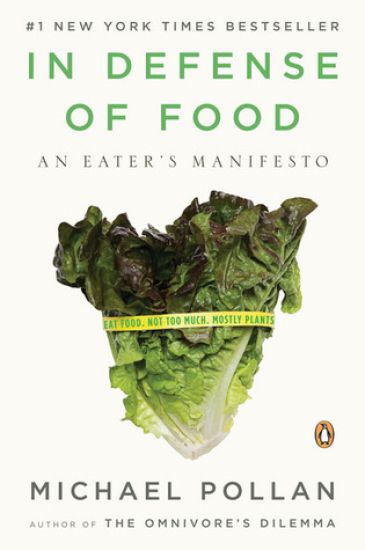
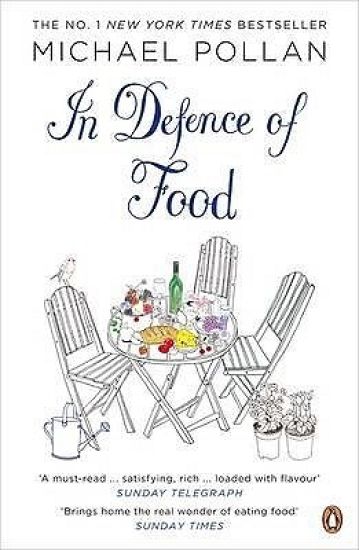
In Defence of Food

In Defence of Food

Michael Pollan

Penguin Books Ltd
2009
pokkari
Michael Pollan's In Defence of Food is a simple invitation to junk the science, ditch the diet and instead rediscover the joys of eating well. This book is a celebration of food. By food, Michael Pollan means real, proper, simple food - not the kind that comes in a packet, or has lists of unpronounceable ingredients, or that makes nutritional claims about how healthy it is. More like the kind of food your great-grandmother would recognize. By following a few pieces of advice (Eat at a table - a desk doesn't count. Don't buy food where you'd buy your petrol!), you will enrich your life and your palate, and enlarge your sense of what it means to be healthy and happy. It's time to fall in love with food again. 'Brings home the real wonder of eating food' Sunday Times 'Instantly makes redundant all diet books and 99 per cent of discussions around healthy eating ... Sense, at last' Daily Mail 'Pollan invites us to grab our pots and pans and cook some real food for dinner' Time Out 'Read this witty book for a healthier life and diet' The Times 'Eminently sensible' Fay Maschler, Keynote 'A must-read ... satisfying, rich ... loaded with flavour' Sunday Telegraph For the past twenty years, Michael Pollan has been writing about the places where the human and natural worlds intersect: food, agriculture, gardens, drugs, and architecture. His most recent book, about the ethics and ecology of eating, is The Omnivore's Dilemma, named one of the ten best books of 2006 by the New York Times and the Washington Post. He is also the author of The Botany of Desire, A Place of My Own and Second Nature.
In Defense of Food: An Eater's Manifesto

In Defense of Food: An Eater's Manifesto

Michael Pollan

PENGUIN BOOKS
2009
nidottu
#1 New York Times Bestseller from the author of This is Your Mind on Plants, How to Change Your Mind, The Omnivore's Dilemma, and Food Rules Food. There's plenty of it around, and we all love to eat it. So why should anyone need to defend it? Because in the so-called Western diet, food has been replaced by nutrients, and common sense by confusion--most of what we're consuming today is longer the product of nature but of food science. The result is what Michael Pollan calls the American Paradox: The more we worry about nutrition, the less healthy we see to become. With In Defense of Food, Pollan proposes a new (and very old) answer to the question of what we should eat that comes down to seven simple but liberating words: "Eat food. Not too much. Mostly plants." Pollan's bracing and eloquent manifesto shows us how we can start making thoughtful food choices that will enrich our lives, enlarge our sense of what it means to be healthy, and bring pleasure back to eating.
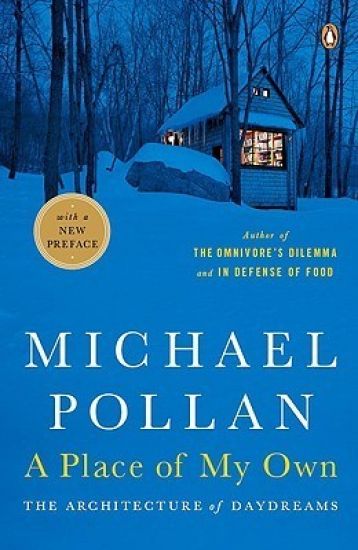
A Place of My Own: The Architecture of Daydreams
"A glorious piece of prose . . . Pollan leads readers on his adventure with humor and grace." --Chicago Tribune A captivating personal inquiry into the art of architecture, the craft of building, and the meaning of modern work "A room of one's own: Is there anybody who hasn't at one time or another wished for such a place, hasn't turned those soft words over until they'd assumed a habitable shape?" When Michael Pollan decided to plant a garden, the result was the acclaimed bestseller Second Nature. In A Place of My Own, he turns his sharp insight to the craft of building, as he recounts the process of designing and constructing a small one-room structure on his rural Connecticut property--a place in which he hoped to read, write, and daydream, built with his own two unhandy hands. Michael Pollan's unmatched ability to draw lines of connection between our everyday experiences--whether eating, gardening, or building--and the natural world has been the basis for the popular success of his many works of nonfiction, including the genre-defining bestsellers The Omnivore's Dilemma and In Defense of Food. With this updated edition of his earlier book A Place of My Own, readers can revisit the inspired, intelligent, and often hilarious story of Pollan's realization of a room of his own--a small, wooden hut, his "shelter for daydreams"--built with his admittedly unhandy hands. Inspired by both Thoreau and Mr. Blandings, A Place of My Own not only works to convey the history and meaning of all human building, it also marks the connections between our bodies, our minds, and the natural world.
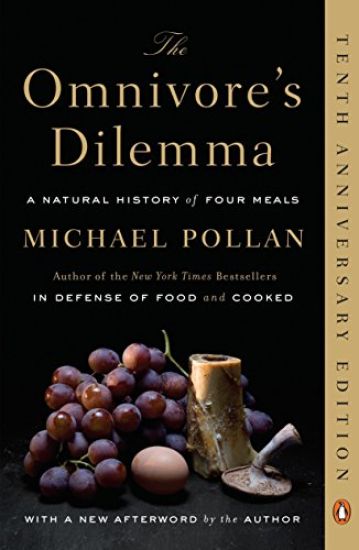
The Omnivore's Dilemma: A Natural History of Four Meals
"Outstanding . . . a wide-ranging invitation to think through the moral ramifications of our eating habits." --The New Yorker One of the New York Times Book Review's Ten Best Books of the Year and Winner of the James Beard Award Author of This is Your Mind on Plants, How to Change Your Mind and the #1 New York Times Bestseller In Defense of Food and Food Rules What should we have for dinner? Ten years ago, Michael Pollan confronted us with this seemingly simple question and, with The Omnivore's Dilemma, his brilliant and eye-opening exploration of our food choices, demonstrated that how we answer it today may determine not only our health but our survival as a species. In the years since, Pollan's revolutionary examination has changed the way Americans think about food. Bringing wide attention to the little-known but vitally important dimensions of food and agriculture in America, Pollan launched a national conversation about what we eat and the profound consequences that even the simplest everyday food choices have on both ourselves and the natural world. Ten years later, The Omnivore's Dilemma continues to transform the way Americans think about the politics, perils, and pleasures of eating.
The Omnivores Dilemma

The Omnivores Dilemma

Michael Pollan

Large Print Press
2007
nidottu
A national bestseller that has changed the way readers view the ecology of eating, this revolutionary book by award winner Michael Pollan asks the seemingly simple question: What should we have for dinner? Tracing from source to table each of the food chains that sustain us— More...whether industrial or organic, alternative or processed—he develops a portrait of the American way of eating. The result is a sweeping, surprising exploration of the hungers that have shaped our evolution, and of the profound implications our food choices have for the health of our species and the future of our planet. OBS: Den här utgåvan är en Easy Reader.
The Omnivore's Dilemma: A Natural History of Four Meals
What should we have for dinner? When you can eat just about anything nature (or the supermarket) has to offer, deciding what you should eat will inevitably stir anxiety, especially when some of the foods might shorten your life. Today, buffeted by one food fad after another, America is suffering from a national eating disorder. As the cornucopia of the modern American supermarket and fast food outlet confronts us with a bewildering and treacherous landscape, what's at stake becomes not only our own and our children's health, but the health of the environment that sustains life on earth. Pollan follows each of the food chains--industrial food, organic or alternative food, and food we forage ourselves--from the source to the final meal, always emphasizing our coevolutionary relationship with the handful of plant and animal species we depend on. The surprising answers Pollan offers have profound political, economic, psychological, and even moral implications for all of us.--From publisher description.Offers insight into food consumption in the twenty-first century, explaining how an abundance of unlimited food varieties reveals the responsibilities of consumers to protect their health and the environment.
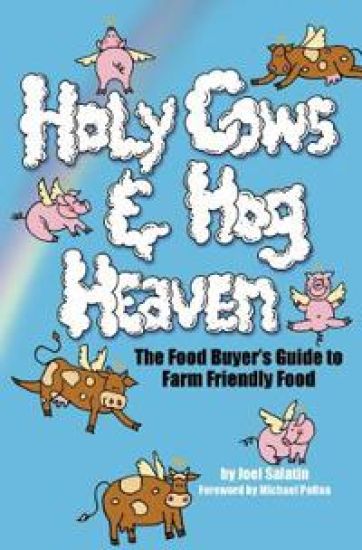
Holy Cows and Hog Heaven

Holy Cows and Hog Heaven

Joel Salatin; Michael Pollan

Polyface, Incorporated
2004
pokkari
Holy Cows and Hog Heaven is written by an honest-to-goodness-dirt-under-the-fingernails, optimistic clean good farmer. His goal is to: Empower food buyers to pursue positive alternatives to the industrialized food system Bring clean food farmers and their patrons into a teamwork relationship Marry the best of western technology with the soul of eastern ethics Educate food buyers about productions Create a food system that enhances nature's ecology for future generations Holy Cows and Hog Heaven has an overriding objective of encouraging every food buyer to embrace the notion that menus are a conscious decision, creating the next generation's world one bite at a time.
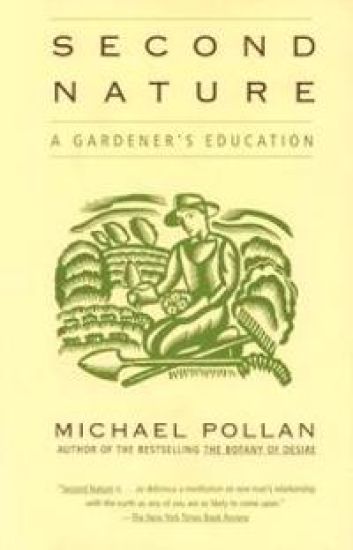
Second Nature

Second Nature

Michael Pollan

Black Cat
2003
nidottu
The author of The Botany of Desire draws on his gardening experiences to explore attitudes toward nature and wilderness, environmental questions, and what gardening teaches about the borders between nature and culture. Reprint.
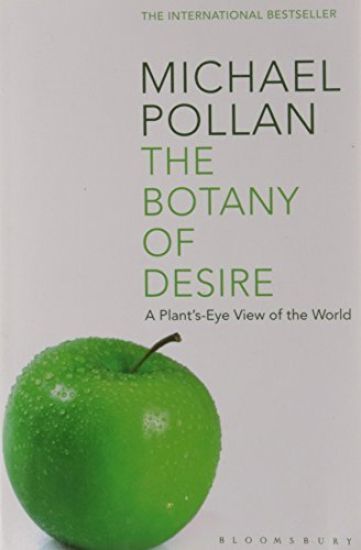
The Botany of Desire

The Botany of Desire

Michael Pollan

Bloomsbury Publishing PLC
2003
pokkari
A farmer cultivates genetically modified potatoes so that a customer at McDonald's half a world away can enjoy a long, golden french fry. A gardener plants tulip bulbs in the autumn and in the spring has a riotous patch of colour to admire. Two simple examples of how humans act on nature to get what we want. Or are they? What if those potatoes and tulips have evolved to gratify certain human desires so that humans will help them multiply? What if, in other words, these plants are using us just as we use them? In blending history, memoir and superb science writing, Pollan tells the story of four domesticated species - the apple, the tulip, marijuana and the potato. All four plants are integral to our everyday lives and Pollan demonstrates how each has thrived by satisfying one of humankind's most basic desires. Weaving fascinating anecdote and accessible science, Pollan takes the reader on an absorbing journey through the landscape of botany and desire. It is a journey that will change the way we think about our place in nature
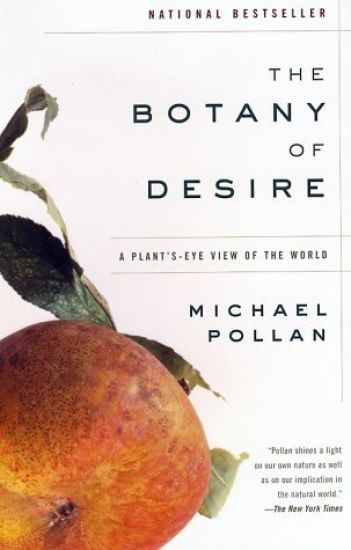
The Botany of Desire: A Plant's-Eye View of the World
"Pollan shines a light on our own nature as well as on our implication in the natural world." --The New York Times "A wry, informed pastoral." --The New Yorker The book that helped make Michael Pollan, the New York Times bestselling author of How to Change Your Mind, Cooked and The Omnivore's Dilemma, one of the most trusted food experts in America Every schoolchild learns about the mutually beneficial dance of honeybees and flowers: The bee collects nectar and pollen to make honey and, in the process, spreads the flowers' genes far and wide. In The Botany of Desire, Michael Pollan ingeniously demonstrates how people and domesticated plants have formed a similarly reciprocal relationship. He masterfully links four fundamental human desires--sweetness, beauty, intoxication, and control--with the plants that satisfy them: the apple, the tulip, marijuana, and the potato. In telling the stories of four familiar species, Pollan illustrates how the plants have evolved to satisfy humankind's most basic yearnings. And just as we've benefited from these plants, we have also done well by them. So who is really domesticating whom?
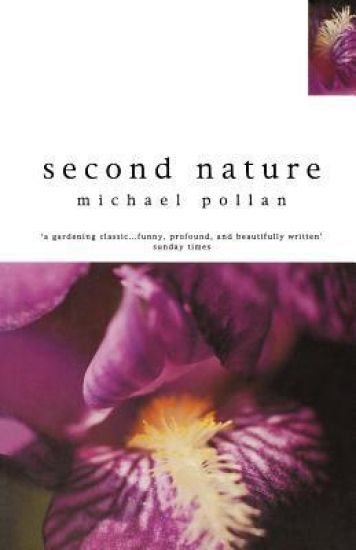
Second Nature

Second Nature

Michael Pollan

Bloomsbury Publishing PLC
1997
pokkari
This is an account of one man's experience in his garden. The book invites an exploration of unexamined feelings about nature and the place of society in the landscape, and what gardening has to teach about the troubled borders between nature and culture.
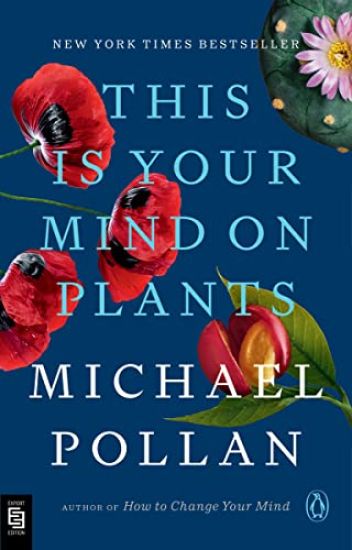
This Is Your Mind on Plants
Of all the things humans rely on plants for-sustenance, beauty, medicine, fragrance, flavor, fiber-surely the most curious is our use of them to change consciousness: to stimulate or calm, fiddle with or completely alter, the qualities of our mental experience. Take coffee and tea: People around the world rely on caffeine to sharpen their minds. But we do not usually think of caffeine as a drug, or our daily use as an addiction, because it is legal and socially acceptable. So, then, what is a "drug"? And why, for example, is making tea from the leaves of a tea plant acceptable, but making tea from a seed head of an opium poppy a federal crime?In This Is Your Mind on Plants, Michael Pollan dives deep into three plant drugs-opium, caffeine, and mescaline-and throws the fundamental strangeness, and arbitrariness, of our thinking about them into sharp relief. Exploring and participating in the cultures that have grown up around these drugs while consuming (or, in the case of caffeine, trying not to consume) them, Pollan reckons with the powerful human attraction to psychoactive plants. Why do we go to such great lengths to seek these shifts in consciousness, and then why do we fence that universal desire with laws and customs and fraught feelings?In this unique blend of history, science, and memoir, as well as participatory journalism, Pollan examines and experiences these plants from several very different angles and contexts, and shines a fresh light on a subject that is all too often treated reductively-as a drug, whether licit or illicit. But that is one of the least interesting things you can say about these plants, Pollan shows, for when we take them into our bodies and let them change our minds, we are engaging with nature in one of the most profound ways we can. Based in part on an essay published almost twenty-five years ago, this groundbreaking and singular consideration of psychoactive plants, and our attraction to them through time, holds up a mirror to our fundamental human needs and aspirations, the operations of our minds, and our entanglement with the natural world.