Kirjojen hintavertailu. Mukana 12 174 952 kirjaa ja 12 kauppaa.

Kirjailija

Michael Redclift

Kirjat ja teokset yhdessä paikassa: 13 kirjaa, julkaisuja vuosilta 1987-2017, suosituimpien joukossa Wasted. Vertaile teosten hintoja ja tarkista saatavuus suomalaisista kirjakaupoista.

13 kirjaa

Kirjojen julkaisuhaarukka 1987-2017.

Chewing Gum

Chewing Gum

Michael Redclift

Routledge
2017
nidottu
In Chewing Gum, Michael Redclift deftly chronicles the growing popularity of gum in the U.S. alongside a fascinating history of peasant revolution led by charismatic Indians in the jungles of southern Mexico.
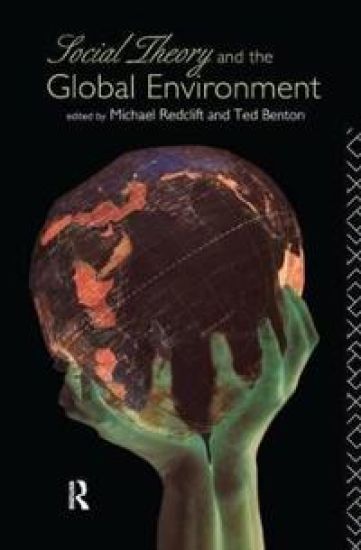
Social Theory and the Global Environment

Social Theory and the Global Environment

Ted Benton; Michael Redclift

Routledge
2016
sidottu
This book marks a watershed in the social sciences. The qualitative, critical perspective of sociology and allied disciplines challenges the technocentric `managerialism' which dominates environmental policy, its discourse and its impact. The authors explore the relationship between social theory and sustainability in an attempt to transend technical rhetoric and embrace a broader understanding of `nature'.
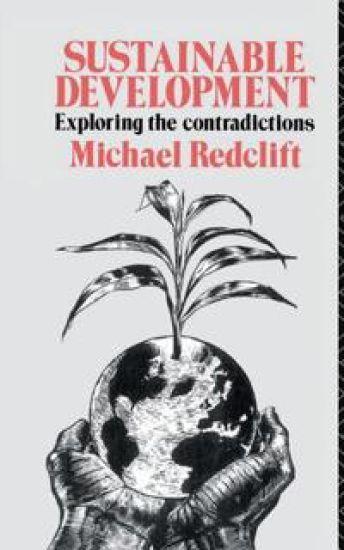
Sustainable Development

Sustainable Development

Michael Redclift

Routledge
2016
sidottu
Argues that environmental problems need to be looked at internationally, in terms of the global economic system, and that the degradation of the environment is not natural', but an historical process which is intrinsically linked and shaped by economic and political systems.
Refashioning Nature

Refashioning Nature

David Goodman; Michael Redclift

Routledge
2015
nidottu
We live in a society as dominated by food preference as by sexual preference, as obsessed with eating too much as with eating too little. In this accessible, cross-disciplinary text, David Goodman and Michael Redclift look at the development of the modern food system, integrating different bodies of knowledge and debate concerning food, agriculture, the environment and the household. They link changes in our diet and concern with the environment to many of the problems afflicting developing countries: food shortages, poor nutrition and wholesale environmental destruction.
Development and the Environmental Crisis
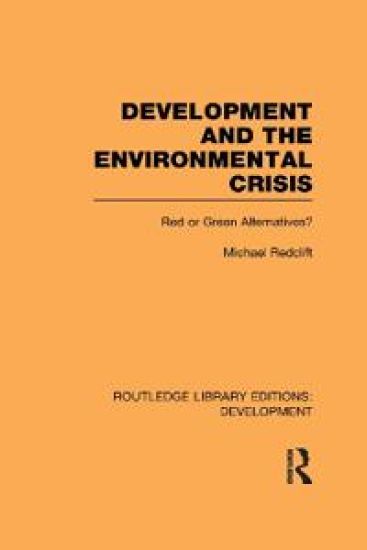
First published in 1984, Michael Redclift’s book makes the global environmental crisis a central concern of political economy and its structural causes a central concern of environmentalism.Michael Redclift argues that a close analysis of the environmental crisis in the South reveals the importance of the share of resources obtained by different social groups. The development strategies based on the experiences and interests of Western capitalist countries fail to recognise that environmental degradation in the South is a product of inequalities in both global and local economic relations and cannot be solved simply by applying solutions borrowed from environmentalism in the North. The key to understanding the South’s environmental problems lies in the recognition that structural processes – markets, technology, state intervention – are also a determining influence upon the way natural resources are used.Through his review of Europe’s Green Movement, contemporary breakthroughs in biotechnology and information systems and recent feminist discourse, Michael Redclift has enlarged the compass of the environmental debate and produced a book which should serve as a benchmark in future discussions of development and the environment. It will be of importance to students in a range of disciplines, within development studies, geography, ecology and the social sciences.
Development and the Environmental Crisis
First published in 1984, Michael Redclift’s book makes the global environmental crisis a central concern of political economy and its structural causes a central concern of environmentalism.Michael Redclift argues that a close analysis of the environmental crisis in the South reveals the importance of the share of resources obtained by different social groups. The development strategies based on the experiences and interests of Western capitalist countries fail to recognise that environmental degradation in the South is a product of inequalities in both global and local economic relations and cannot be solved simply by applying solutions borrowed from environmentalism in the North. The key to understanding the South’s environmental problems lies in the recognition that structural processes – markets, technology, state intervention – are also a determining influence upon the way natural resources are used.Through his review of Europe’s Green Movement, contemporary breakthroughs in biotechnology and information systems and recent feminist discourse, Michael Redclift has enlarged the compass of the environmental debate and produced a book which should serve as a benchmark in future discussions of development and the environment. It will be of importance to students in a range of disciplines, within development studies, geography, ecology and the social sciences.
Wasted

Wasted

Michael Redclift

Earthscan Ltd
2009
sidottu
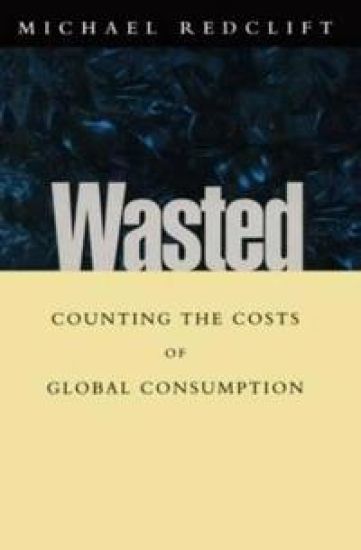
Sustainable development cannot be achieved solely at the international level. Without the creation of more sustainable livelihoods, it will remain a utopian and elusive goal. Yet given the huge differences in economic development and levels of consumption between North and South, how might this bebrought about?Taking the 1992 Rio Summit as its point of departure, Wasted examines what we now need to know, and what we need to do, to live within sustainable limits. One of the key issues is how we use the environment: converting natural resources into human artifices, commodities and services. In the process of consuming,we also create sinks. Today, these sinks - the empty back pocket in the global biogeographical system - are no longer empty. The fate of the global environment is indissolubly linked to our consumption: particularly in the energy-profligate North.To understand and overcome environmental challenges, we need to build the outcomes of our present consumption rates into our future behaviour: to accept sustainable development as a normative goal for societies; one that is bound up with our everyday social practices and actions. In this absorbing book, Michael Redclift argues that the way we understand and think about the environn1ent conditions our responses, and our ability to meet the challenge, and discusses tangible policies for increased sustainability that are grounded in recent research and practice.MICHAEL RedcliftIs Professor of International Environmental Policy at the Department of Geography, King's College London. He was previously Professor of International Environmental Policy at the University of Keele and before that Professor of Environmental Sociology at Wye College, University of London, and Director of the ESRC Global Environmental Change Programme. He is author and editor of numerous books, including Sustainable Development: Exploring the Contradictions (1987), Social Theory and the Global Environment (1994) and Sustainability: Life Chances and Lifestyles (1999).Originally published in 1996
Chewing Gum

Chewing Gum

Michael Redclift

Routledge
2004
sidottu
In Chewing Gum, Michael Redclift deftly chronicles the growing popularity of gum in the U.S. alongside a fascinating history of peasant revolution led by charismatic Indians in the jungles of southern Mexico.
Wasted

Wasted

Michael Redclift

Earthscan Ltd
1996
nidottu
Sustainable development cannot be achieved solely at the international level. Without the creation of more sustainable livelihoods, it will remain a utopian and elusive goal. Yet given the huge differences in economic development and levels of consumption between North and South, how might this bebrought about?Taking the 1992 Rio Summit as its point of departure, Wasted examines what we now need to know, and what we need to do, to live within sustainable limits. One of the key issues is how we use the environment: converting natural resources into human artifices, commodities and services. In the process of consuming,we also create sinks. Today, these sinks - the empty back pocket in the global biogeographical system - are no longer empty. The fate of the global environment is indissolubly linked to our consumption: particularly in the energy-profligate North.To understand and overcome environmental challenges, we need to build the outcomes of our present consumption rates into our future behaviour: to accept sustainable development as a normative goal for societies; one that is bound up with our everyday social practices and actions. In this absorbing book, Michael Redclift argues that the way we understand and think about the environn1ent conditions our responses, and our ability to meet the challenge, and discusses tangible policies for increased sustainability that are grounded in recent research and practice.MICHAEL RedcliftIs Professor of International Environmental Policy at the Department of Geography, King's College London. He was previously Professor of International Environmental Policy at the University of Keele and before that Professor of Environmental Sociology at Wye College, University of London, and Director of the ESRC Global Environmental Change Programme. He is author and editor of numerous books, including Sustainable Development: Exploring the Contradictions (1987), Social Theory and the Global Environment (1994) and Sustainability: Life Chances and Lifestyles (1999).Originally published in 1996

Wasted

Wasted

Michael Redclift

Earthscan Ltd
1996
sidottu
Sustainable development cannot be achieved solely at the international level. Without the creation of more sustainable livelihoods, it will remain a utopian and elusive goal. Yet given the huge differences in economic development and levels of consumption between North and South, how might this be brought about? Taking the 1992 Rio Summit as its point of departure, Wasted examines what we now need to know, and what we need to do, to live within sustainable limits. One of the key issues is how we use the environment: converting natural resources into human artifices, commodities and services. In the process of consuming, we also create sinks. Today, these sinks - the empty back pocket in the global biogeographical system - are no longer empty. The fate of the global environment is indissolubly linked to our consumption: particularly in the energy-profligate North. To understand and overcome environmental challenges, we need to build the outcomes of our present consumption rates into our future behavior: to accept sustainable development as a normative goal for societies; one that is bound up with our everyday social practices and actions. In this absorbing new book, Michael Redclift argues that the way we understand and think about the environment conditions our responses, and our ability to meet the challenge, and discusses tangible policies for increased sustainability that are grounded in recent research and practice.
Social Theory and the Global Environment

Social Theory and the Global Environment

Ted Benton; Michael Redclift

Routledge
1994
nidottu
This book marks a watershed in the social sciences. The qualitative, critical perspective of sociology and allied disciplines challenges the technocentric `managerialism' which dominates environmental policy, its discourse and its impact. The authors explore the relationship between social theory and sustainability in an attempt to transend technical rhetoric and embrace a broader understanding of `nature'.
Refashioning Nature

Refashioning Nature

David Goodman; Michael Redclift

Routledge
1991
sidottu
We live in a society as dominated by food preference as by sexual preference, as obsessed with eating too much as with eating too little. In this accessible, cross-disciplinary text, David Goodman and Michael Redclift look at the development of the modern food system, integrating different bodies of knowledge and debate concerning food, agriculture, the environment and the household. They link changes in our diet and concern with the environment to many of the problems afflicting developing countries: food shortages, poor nutrition and wholesale environmental destruction.
Sustainable Development

Sustainable Development

Michael Redclift

Routledge
1987
nidottu
Argues that environmental problems need to be looked at internationally, in terms of the global economic system, and that the degradation of the environment is not natural', but an historical process which is intrinsically linked and shaped by economic and political systems.