Kirjojen hintavertailu. Mukana 12 253 736 kirjaa ja 12 kauppaa.

Kirjailija

Michael Roberts

Kirjat ja teokset yhdessä paikassa: 60 kirjaa, julkaisuja vuosilta 1902-2026, suosituimpien joukossa Boone's Chance. Vertaile teosten hintoja ja tarkista saatavuus suomalaisista kirjakaupoista.

60 kirjaa

Kirjojen julkaisuhaarukka 1902-2026.

The Great Recession

The Great Recession

Michael Roberts

Lulu.com
2009
pokkari
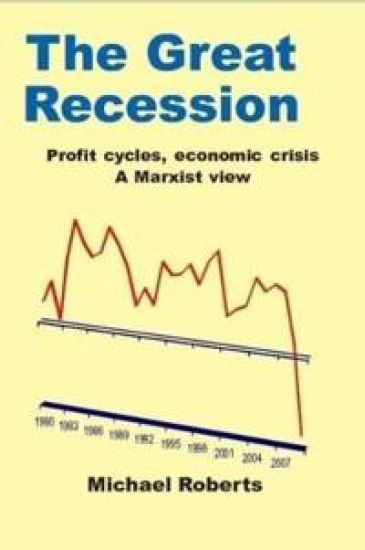
The Great Recession of 2008-9 was the worst slump in the world economy since the Great Depression in the 1930s. Michael Roberts forecast that it would happen a few years before and in this book he explains why the Great Recession happened - relying on Marx's analysis of the laws of motion in a capitalist economy. And he makes predictions of whether and when it could happen again.
The Faber Book of Modern Verse

The Faber Book of Modern Verse

Michael Roberts

Faber Faber
2009
pokkari
First published in February 1936, just under a year from when the idea for it was first discussed, this is one of the most important and influential anthologies of the twentieth century. Since then three further editions by, in succession, Anne Ridler, Donald Hall and Peter Porter have been published. All took as their kernel the original selection by Michael Roberts. This Faber Finds reissue restores that pristine selection.More likely than not, the original idea was T. S. Eliot's, the choice of editor was undoubtedly his, and it was an inspired one. Michael Roberts was a poet himself, and a good one, but more important for this task was his acute awareness of the poetry scene, and his sense of the modern movement within it. Yes, his purpose was tendentious. He excludes some poets he admires such asEdmund Blunden and Walter de la Mare because (they) 'seem to me to have written good poems without having been compelled to make any notable development of poetic technique.' On the other hand, 'I have included only poems which seem to me to add to the resources of poetry, to be likely to influence the future development of poetry and language . . .' From the very start (and could there be a more arresting one?) with Gerard Manley Hopkins' The Wreck of the Deutschland Michael Roberts powerfully and consistently fulfils that aim. Philip Hobsbaum, in The Oxford Companion to Twentieth-Century Poetry, says of The Faber Book of Modern Verse, 'it also encapsulates, as no other literary document quite does, the innovative quality of the 1930s.'
The Humblest Sparrow

The Humblest Sparrow

Michael Roberts

The University of Michigan Press
2009
sidottu
In The Humblest Sparrow, Michael Roberts illuminates the poetry of the sixth-century bishop and poet Venantius Fortunatus. Often regarded as an important transitional figure, Fortunatus wrote poetry that is seen to bridge the late classical and earlier medieval periods. Written in Latin, his poems combined the influences of classical Latin poets with a medieval tone, giving him a special place in literary history. Yet while interest has been growing in the early Merovingian period, and while the writing of Fortunatus' patron Gregory of Tours has been well studied, Fortunatus himself has often been neglected. This neglect is remedied by this in-depth study, which will appeal to scholars of late antique, early Christian, and medieval Latin poetry. Roberts divides Fortunatus' poetry into three main groups: poetry of praise, hagiographical poetry, and personal poetry. In addition to providing a general survey, Roberts discusses in detail many individual poems and proposes a number of theses on the nature, function, relation to social and linguistic context, and survival of Fortunatus' poetry, as well as the image of the poet created by his work.Jacket illustration: L. Alma Tadema, Venantius Fortunatus Reading his Poems to Radegonda VI AD 555. (Courtesy of Dordrecht, Dordrechts Museum.)
Evangelicals and Science

Evangelicals and Science

Michael Roberts

Greenwood Press
2008
sidottu
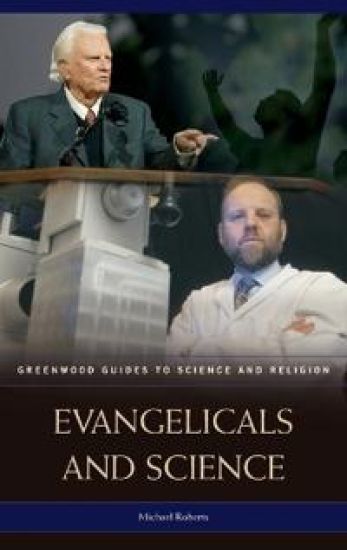
Most people, when they think about the purported conflict between science and religion, would most likely think first of evangelical Protestantism. Because of the prominent place evolution versus creationism - and such events as the Scopes Trial - has had in the debates over science and religion, many people think of evangelicals as hostile to science. As with other volumes in the Greenwood Guides to Science and Religion series, this work addresses the more complex interworkings between modern science and evangelical Christianity. Creationism will feature prominently, of course, but there will be other chapters covering other aspects of this relationship - geology, environmental issues, and technology.Evangelicals and Science provides a thorough overview of the history of the relationship between these two dominant forces in public life, including chapters on evangelicals, the Bible and science, evangelicals and geology, the rise of Creationism, and evangelicals and modern science.The volume includes primary source documents to give readers a flavor of the writings of evangelicals on science, a timeline, and an annotated bibliography.
Caste Conflict Elite Formation

Caste Conflict Elite Formation

Michael Roberts

Cambridge University Press
2007
pokkari
Caste Conflict and Elite Formation is a study in the social history of Sri Lanka. However, it does not merely document the remarkable successes in business enterprise and in the acquisition of Western-educated professional skills which were achieved by families from the Karava caste during the last two centuries; their advances, and the social and political struggles which accompanied this process, are employed as a window through which a survey of social change in Sri Lanka during the last four hundred years is conducted. The interest of the book extends beyond the many fascinating social incidents, historical trends and channels of elite formation that are described within its pages to a series of controlled comparisons which reveal the factors responsible for the formation of the Karava elite. Thus the book extends the methodological frontiers of the social history of the region. It emphasizes the significance of the patterns of caste discrimination and caste interaction in Sri Lankan politics, and reveals how these patterns were central to the incentives and opportunities which powered the advances of the Karava families.
From Oxenstierna to Charles XII

From Oxenstierna to Charles XII

Michael Roberts

Cambridge University Press
2003
pokkari
The spectacular career of Gustav Adolf by no means established Sweden as a great power. In the four years after his death such a development became increasingly improbable. At Westphalia in 1648 the improbable became a fact; but the momentum of Swedish imperial expansion did not culminate until 1658, when Charles X imposed peace upon a prostrate Denmark. The core of this volume of four essays, by the doyen of historians of Sweden, lies in the two studies of the man who bestrode the summit. One, an examination (if Charles X’s domestic policies and constitutional significance; the other, a discussion of the objectives of his foreign policy. Both are matters of controversy, and these studies attempt to assess the debate. Flanking these essays are a study of Oxenstierna’s magnificent failure in Germany between 1633 and 1636, and an examination of the great controversy surrounding the death of Charles XII.
The Age of Liberty

The Age of Liberty

Michael Roberts

Cambridge University Press
2003
pokkari
After three-quarters of a century in which Sweden had been reckoned as one of the great powers of Europe, it fell almost overnight into the position of being one of the weakest. But if in international affairs this was a period of decrepitude, in domestic affairs it was a period of remarkable achievements. Between 1720 and 1772 Sweden had the most advanced constitution in Europe. Foreign observers regarded her as ‘the freest country in the world’. To an analysis of the principles and practice of the constitution, and of the nature and functioning of Swedish parties, the central chapters of this book are devoted. The final chapter attempts to explain why it was that in 1772 Gustav III was so easily able to bring the Age of Liberty to an end, and why an egalitarian social revolution, which had seemed imminent, was temporarily aborted by his coup d’état.
Nothing Is Without Poison

Nothing Is Without Poison

Michael Roberts

The Chinese University Press
2002
nidottu
This book aims to provide the reader with a simple explanation of some of the fundamental principles of the sciences of pharmacology, therapeutics and toxicology. It sketches the history of drug treatment from traditional therapy with mainly herbal preparations to today's explosion of synthetic drugs. It outlines the roles of the academic research laboratories and the pharmaceutical industry in the development, synthesis, testing and marketing of new drugs. What happens to these drugs when introduced into the body, and how they produce their actions, the good, the bad and the fatal, are the main themes of the first part of this book. The final two chapters address briefly the toxicities produced in our civilized society by the industrial chemicals released into our air, water, soil and food. This overview aims to help the layman understand the two frequent therapeutic disappointments and unexpected disasters that appear inevitably to accompany the extraordinary progress of medical science over the past hundred years or so. It should enable him to cultivate rational and well-informed opinions on these problems. The widespread problem of pollution in advanced technological societies of our soil, air and water by the chemicals produced intentionally or as waste products by industry can also be better understood from this theoretical background. The second part is devoted to chemical substances that act on the nervous system, as these include the drugs which are widely abused and can lead to chemical dependence and addiction. Substances acting on the involuntary part of the central nervous system (the autonomic nervous system) which controls blood pressure, cardiac function, respiration, etc., are mentioned, since their modes of action throw light on those chemicals which influence the higher centres, leading to alterations in sensation, mood, behaviour and consciousness. There are chapters on the cause and treatment of mental disorder, the alleviation of anxiety neurosis, insomnia and pain. This leads to a discussion of the nature, cause and treatment of the social problem of drug addiction. These matters are also of great concern to the layman, and there is a need to help him to evaluate intelligently the various panaceas proposed to solve this social disaster.
Poetry and the Cult of the Martyrs

Poetry and the Cult of the Martyrs

Michael Roberts

The University of Michigan Press
1993
sidottu
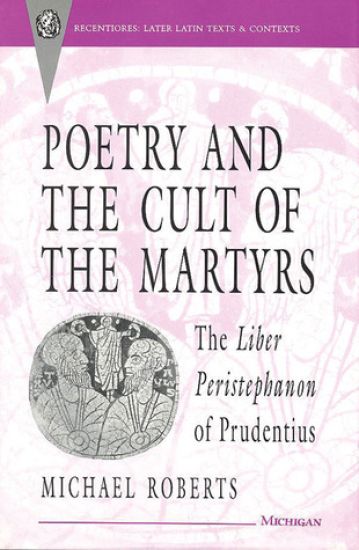
Prudentius' Peristephanon is a collection of martyr texts from a vital period for the growth of martyr cult in the West. Building on recent work on the cult of the saints and on the sacralization of the space and time, Roberts demonstrates how the Peristephanon relates to developments in late fourth century spirituality. The author examines how Prudentius creates an idiom to express devotion to the martyrs, particularly in the structuring of narrative and the use of poetic language. Roberts concludes by demonstrating how Prudentius employs the model of martyr cult to articulate the status of Christian literature, the role of the bishop in the Christian community, and the symbolic status of Rome in the Christian West. Michael Roberts is Robert Rich Professor of Latin, Wesleyan University. Jacket art: Gold-glass vase, after A.D. 350. By permission of the Trustees of the British Museum.
Gustavas Adolphus

Gustavas Adolphus

Michael Roberts

Routledge
1992
nidottu
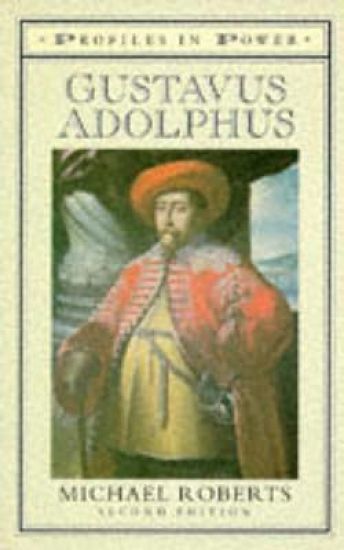
Gustavus Adolphus (1594--1632) dominated his age: he made Sweden the leading power of Northern Europe, was the principal upholder of the Protestant cause in the Thirty Years War, and was a great administrator as well as a brilliant soldier. His toleration and reforms helped define the development of the modern state. This concise study of his career, by the doyen of modern historians of the North, appeared in 1973. Long unavailable but now revised, expanded, updated and reset, it makes a welcome return in Profiles in Power.
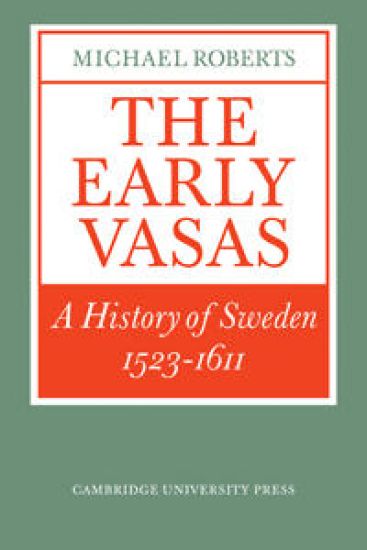
The Early Vasas

The Early Vasas

Michael Roberts

Cambridge University Press
1986
pokkari
This comprehensive history of sixteenth-century Sweden has remained a standard work for English-speaking historians since its publication in 1968. It is now available in paperback for the first time. The book includes a full account of the reign of Gustav Vasa (1523–60), one of the greatest rulers of his age, and of the half-century after his death that paved the way for Sweden's emergence as a great power. Professor Roberts provides an account of the course of the Swedish Reformation: he analyses those trans-Baltic entanglements which were to assume such importance, both for Sweden and for Europe, in the next century; and he pays particular attention to the constitutional controversies which reached their climax, though not their end, with the deposition of King Sigismund and the 'Bloodbath of Linköping'.
The Swedish Imperial Experience 1560–1718

The Swedish Imperial Experience 1560–1718

Michael Roberts

Cambridge University Press
1984
pokkari
In his Wiles Lectures for 1977 Professor Roberts examines some of the problems raised by Sweden's brief career as a great power, and seeks to answer some of the questions that flow from them. Were the underlying considerations which prompted the unexpected development geopolitical, or social, or economic? How was it possible to produce the financial resources and the manpower which the enterprise demanded? How far was seventeenth-century Sweden a militarized society? What importance had official propaganda and national myths? Did the consititutional situation help to make an expansionist foreign policy easier? The structure of the empire is next examined: its administration, the ties that held it together, the differing interests of the provinces, the varying responses of the metropolitan power was there, in fact, anything deserving the name of an imperial policy? How did the provinces view the Swedish connexion? In a final chapter the author tries to answer the question why, if Sweden could acquire an empire without undue strain, she could not retain it; why the collapse was so rapid and so total; and whether her career as a great power had real relevance to the country's subsequent history. On almost all these topics little information is available in English, and no comparable treatment of them on this scale exists in any language.
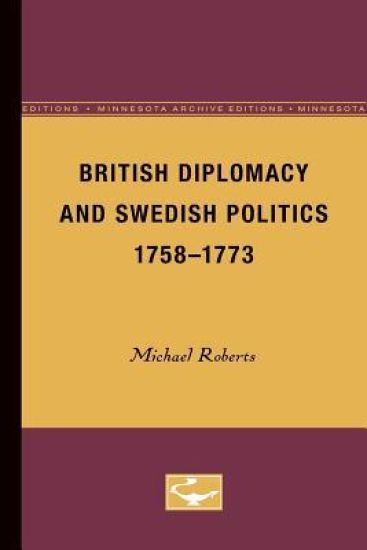
British Diplomacy and Swedish Politics, 1758-1773

British Diplomacy and Swedish Politics, 1758-1773

Michael Roberts

University of Minnesota Press
1980
nidottu
British Diplomacy and Swedish Politics, 1758–1773 was first published in 1980. Minnesota Archive Editions uses digital technology to make long-unavailable books once again accessible, and are published unaltered from the original University of Minnesota Press editions.This book has three objectives; to shed light on the central issue in British foreign policy during a period inadequately explored by historians; to present, for the first time in English, an account of the dramatic last decade of Swedish "liberty" and its final overthrow by Gustavus III; and finally, to direct the attention of historians to the career of Sir John Goodricke—a diplomat whom Lor Rochford called "the best man we have abroad; you can trust him with anything—except money."These themes are in fact inextricably linked. For Great Britain, emerging from the Seven Years War victorious but isolated, needed to safeguard her trade with Russia and British statesmen felt that an Anglo-Russian alliance could best be achieved by first concluding a treaty with Sweden to which Russia would adhere. To achieve this aim, it was essential to break French influence in Stockholm, to oust the francophile Hats from power, and to install their anglophile rivals the Caps. Thus Swedish party politics, and the Swedish constitutions, unexpectedly became matters of great consequence in Whitehall. To win the necessary victory in Stockholm Britain needed a minister of peculiar talents and no little ability. Sir John Goodricke was such a minister. And the record of his exertions, and of his eventual failure, is necessary to any proper understanding of British policy in the postwar decade.This book is an important contribution to both British and Scandinavian history and, since it also illuminates the subject of European political relations in the eighteenth century, it will be welcomed by diplomatic historians and specialists in eighteenth-century studies as well. Michael Roberts tells his story with customary verve and grace, and effectively refutes any idea that diplomatic history need be dull.
British Diplomacy and Swedish Politics, 1758–1773
"British Diplomacy and Swedish Politics, 1758 1773 " was first published in 1980. Minnesota Archive Editions uses digital technology to make long-unavailable books once again accessible, and are published unaltered from the original University of Minnesota Press editions.This book has three objectives; to shed light on the central issue in British foreign policy during a period inadequately explored by historians; to present, for the first time in English, an account of the dramatic last decade of Swedish "liberty" and its final overthrow by Gustavus III; and finally, to direct the attention of historians to the career of Sir John Goodricke a diplomat whom Lor Rochford called "the best man we have abroad; you can trust him with anything except money."These themes are in fact inextricably linked. For Great Britain, emerging from the Seven Years War victorious but isolated, needed to safeguard her trade with Russia and British statesmen felt that an Anglo-Russian alliance could best be achieved by first concluding a treaty with Sweden to which Russia would adhere. To achieve this aim, it was essential to break French influence in Stockholm, to oust the francophile Hats from power, and to install their anglophile rivals the Caps. Thus Swedish party politics, and the Swedish constitutions, unexpectedly became matters of great consequence in Whitehall. To win the necessary victory in Stockholm Britain needed a minister of peculiar talents and no little ability. Sir John Goodricke was such a minister. And the record of his exertions, and of his eventual failure, is necessary to any proper understanding of British policy in the postwar decade.This book is an important contribution to both British and Scandinavian history and, since it also illuminates the subject of European political relations in the eighteenth century, it will be welcomed by diplomatic historians and specialists in eighteenth-century studies as well. Michael Roberts tells his story with customary verve and grace, and effectively refutes any idea that diplomatic history need be dull."