Kirjailija
Michael Roth
Kirjat ja teokset yhdessä paikassa: 25 kirjaa, julkaisuja vuosilta 1987-2026, suosituimpien joukossa Die Bibel als Gefahr für die Ethik. Vertaile teosten hintoja ja tarkista saatavuus suomalaisista kirjakaupoista.
25 kirjaa
Kirjojen julkaisuhaarukka 1987-2026.

With Python, C++, FORTRAN, and a friendly conversational tone peppered with attempted humor, Modeling and Simulation of Everyday Things takes us on a journey through constructing models and simulations of systems and processes in everyday life and beyond. Readers can access an example-packed online repository of programs in each of the three languages, including seldom covered work in generalized geometries and 3D.This second edition is a wonderful confluence of development of Python and C++ applications and will cultivate a broad perspective in the readership through having translations of major programs available in Python, C++, and FORTRAN (as we move forward, software engineers and researchers are recognizing the value of legacy programming). In addition to leveraging the best of the three languages, the readership can explore versatility in visualization by using native Python graphics as well as POV Raytracer and third-party animation tools. We approach modeling of a system by introducing the theoretical framework of the system, followed by its discretized form, and then with narrated programs and sample results that also appear in the online repository.Readers will be able to critically think through constructing models and simulations of a vast array of systems, interpreting results, and visualizing them (which includes examples for visually and auditorily impaired individuals). Most importantly, their confidence will propel them forward to meet the challenges of the field and to think "outside the book". Leveraging the best of three coding languages, two tracks for visualization, a conversational tone, and numerous examples, this book is extremely versatile and can be used by students from high school through science undergraduates in 2-year and 4-year institutions. The text is also ideal for use in Data Science as well as Professional Science Master’s programs.
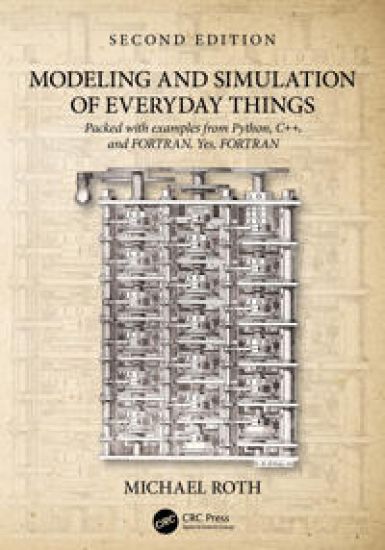
With Python, C++, FORTRAN, and a friendly conversational tone peppered with attempted humor, Modeling and Simulation of Everyday Things takes us on a journey through constructing models and simulations of systems and processes in everyday life and beyond. Readers can access an example-packed online repository of programs in each of the three languages, including seldom covered work in generalized geometries and 3D.This second edition is a wonderful confluence of development of Python and C++ applications and will cultivate a broad perspective in the readership through having translations of major programs available in Python, C++, and FORTRAN (as we move forward, software engineers and researchers are recognizing the value of legacy programming). In addition to leveraging the best of the three languages, the readership can explore versatility in visualization by using native Python graphics as well as POV Raytracer and third-party animation tools. We approach modeling of a system by introducing the theoretical framework of the system, followed by its discretized form, and then with narrated programs and sample results that also appear in the online repository.Readers will be able to critically think through constructing models and simulations of a vast array of systems, interpreting results, and visualizing them (which includes examples for visually and auditorily impaired individuals). Most importantly, their confidence will propel them forward to meet the challenges of the field and to think "outside the book". Leveraging the best of three coding languages, two tracks for visualization, a conversational tone, and numerous examples, this book is extremely versatile and can be used by students from high school through science undergraduates in 2-year and 4-year institutions. The text is also ideal for use in Data Science as well as Professional Science Master’s programs.

Data Migration for SAP
Frank Finkbohner; Martina Höft; Michael Roth; Jonas Kinold; Wolfgang Kuchelmeister; Lukas Widera
SAP PRESS
2024
sidottu
Whether you're moving to the cloud, migrating to SAP S/4HANA, or replacing a legacy system, get the data migration guidance you need in this comprehensive guide. Evaluate your landscape options and plan your strategy; then walk through the migration processes for SAP S/4HANA, SAP SuccessFactors, SAP Ariba, and SAP Business ByDesign. Master built-in tools and templates, IDoc and ALE distribution models, batch input, Cloud Integration from SAP Integration Suite, and more! Highlights include: 1) Planning 2) SAP S/4HANA 3) SAP S/4HANA Cloud 4) SAP SuccessFactors 5) SAP Ariba 6) SAP Business ByDesign 7) SAP Legacy System Migration Workbench 8) SAP S/4HANA migration cockpit 9) Cloud Integration 10) SAP S/4HANA migration object modeler 11) Batch input 12) IDoc and ALE distribution models

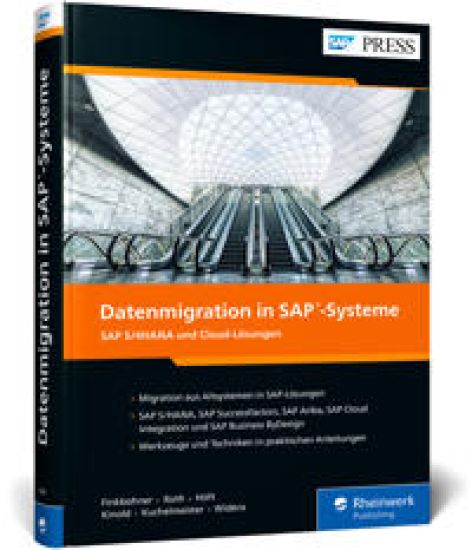
Datenmigration in SAP-Systeme
Frank Finkbohner; Michael Roth; Martina Höft
Rheinwerk Verlag GmbH
2023
sidottu

Theologie Infiziert: Religiose Rede Im Kontext Der Pandemie
Dorothea Erbele-Kuster; Volker Kuster; Michael Roth
Kohlhammer
2021
nidottu
"Theologie infiziert" nimmt anno 2021 angesichts der Covid-19-Pandemie den Begriff der Infektion in metaphorischer Rede auf, um zum Ausdruck zu bringen, dass das AutorInnenkollektiv sich hermeneutisch den "Zeichen der Zeit" stellt und seine Theologie thematisch von der Pandemie beruhren lasst, in der Folge aber auch zu einer Immunreaktion beizutragen hofft. Auf die Klage folgt der Neuanfang Dieser kann nur unter Wachhalten der gefahrlichen Erinnerung an die Opfer der Pandemie und im Angesicht der von ihr aufgedeckten Gerechtigkeitsproblematiken im Kontext des globalen neoliberalen Kapitalismus gelingen. Was das Virus enthullt hat, darf nicht mehr verschleiert werden, sondern harrt der Bearbeitung. Die Mainzer TheologInnen spuren in drei Durchgangen Anthropologie - Theologie - Ethik den Interpretationsmustern und Bewaltigungsstrategien in der Pandemie nach, identifizieren generative Themen und legen Dilemmas offen.
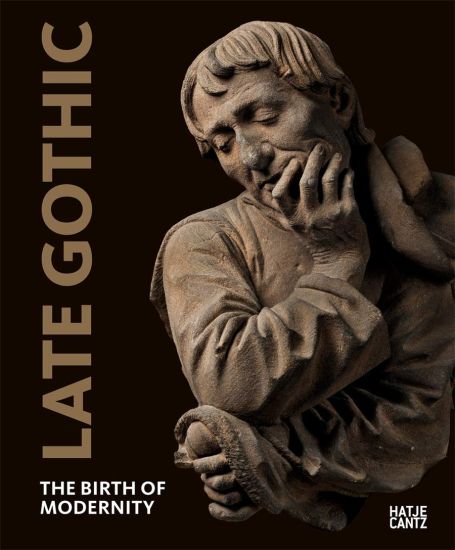
Late Gothic
Stephan Kemperdick; Lothar Lambacher; Jan Friedrich; Michael Roth
Hatje Cantz
2021
nidottu
Hardly any other epoch in art history has been marked by as many profound changes as the Late Gothic was in the fifteenth century. Inspired by Netherlandish role models, depictions of light and shadow, body and space, became increasingly more realistic. Everyday life found entry into the arts. With the invention of printing, images and texts were distributed to an extent previously unheard of. Artists such as Nicolaus Gerhaert and Martin Schongauer became widely known and influenced the development of the visual arts throughout Europe and across all genres. Featuring a wide selection of works, the Staatliche Museen zu Berlin present the first extensive exhibition of Late Gothic art in the German-speaking regions. Its comparison and contrast of the various genres turns the catalogue into a handbook for the arts at the threshold of the modern era.

In 1995, a visiting assistant professor and some old friends converge upon Ann Arbor, Michigan. Don Quixote for the information age, his brain has been rotted by philosophy so that it could be coerced with technology. Instead of dedicating his energy to a continued search for the perfect job, he gets lost in bizarre entanglements that pull and push him away from his lifelong dream. It slowly becomes clear that he and all those who have helped him along the way have carefully crafted his personality with passion for a goal that he is constitutionally incapable of achieving. Working together they cannot discover any truths through deliberation and reflection, only through their actions do they learn, after the fact, what they were aiming for all along. Through a collaborative chain of moments, a group of colleagues and acquaintances moves about the streets, spread out and concentrating, analyzing and imagining, teaching and listening. Set against the impossible odds of today's academia, brimming with philosophical insight and foolishness, each confronts the anxiety that comes from having to make choices that will determine who they are to become, without any insight into what they want and what they can achieve. Time Between Summers will challenge your basic notions of freedom, influence, authority, and the moral universe we have built on these fundamental ideals.
The Poetics of Resistance: Heidegger's Line is a well-informed, carefully written, and detailed treatment of the political implications of Heidegger's philosophy in its Derridean acceptation. It argues that what Heidegger calls poetic dwelling--an element of Heidegger's later thinking often ignored by his more vehement critics--is at once disruptive (of the smooth functioning of technology) and community-founding. To engage in such thoughtful, poetic dwelling is to "cross the line."Roth argues, with Derrida against Heidegger, that crossing this line is not a move into irrationalism (to say nothing of National Socialism); and he argues, with Heidegger against Derrida, that crossing the line, successful resistance, is possible. Grounded in the classics of German scholarship but reaching out to its creative appropriation in postmodernism, The Poetics of Resistance makes an important and timely contribution to the recuperation of a political philosophy from postmodernity.

The Indefinite Article: Anxiety and the Essence of Artificial Intelligence focuses on the implications of technological surveillance for human being and ethics. It shows that human privacy is fragile and susceptible to coercion by both visible and invisible social forces realized by any artificial intelligence that formalizes and universalizes human behavioral characteristics in order to construct personalities. These patterns cannot be resisted with traditional notions of individual liberty and respect for human dignity. The way through lies in the same anxious questioning that drives publicly oriented persons to welcome boundaries that are inscribed upon them as identities under conditions of mass surveillance. The invasion of private life by data collection mechanisms forces the socially constructed subject to imagine itself alone under a microscope. Roth carefully demonstrates how this dystopia can be inverted through a critical inquiry that glares back at the lenses of that power.

Raising the Bar Volume 2: Conversations with Industry Leaders Who Go ABOVE & BEYOND For Their Customers
Tricia Parido; Michael Roth; Annelies James
Authority Media Publishing
2019
nidottu
Conversations with Industry Leaders Who Go ABOVE & BEYOND For Their CustomersFeaturing Conversations with: Chase Morgan - Create a MomentTricia Parido - Recovery, Life, and Wellness CoachMichael Roth - Holistic Addiction & Wellness SpecialistAnnelies James - UK Personal Brand SpecialistDel Lewis - Nationally-Recognized Business Advisor to Today's Entrepreneurs & CEO'sDr. Christine Sauer - Internationally-Recognized Integrative Mental & Brain Health ExpertMiguel de Jesus - Internationally-Recognized Author, Business Leader, & Executive CoachBrock Short - It's All About the ExperienceKevin Parker - True Warrior: Addiction Recovery Coach

How can computer modeling and simulation tools be used to understand and analyze common situations and everyday problems? Readers will find here an easy-to-follow, enjoyable introduction for anyone even with little background training. Examples are incorporated throughout to stimulate interest and engage the reader. Build the necessary skillsets with operating systems, editing, languages, commands, and visualization.Obtain hands-on examples from sports, accidents, and disease to problems of heat transfer, fluid flow, waves, and groundwater flow. Includes discussion of parallel computing and graphics processing units.This introductory, practical guide is suitable for students at any level up to professionals looking to use modeling and simulation to help solve basic to more advanced problems.Michael W. Roth, PhD, serves as Dean of the School of STEM and Business at Hawkeye Community College in Waterloo, Iowa. He was most recently Chair for three years at Northern Kentucky University's Department of Physics, Geology and Engineering Technology, and holds several awards for teaching excellence.
How can computer modeling and simulation tools be used to understand and analyze common situations and everyday problems? Readers will find here an easy-to-follow, enjoyable introduction for anyone even with little background training. Examples are incorporated throughout to stimulate interest and engage the reader. Build the necessary skillsets with operating systems, editing, languages, commands, and visualization.Obtain hands-on examples from sports, accidents, and disease to problems of heat transfer, fluid flow, waves, and groundwater flow. Includes discussion of parallel computing and graphics processing units.This introductory, practical guide is suitable for students at any level up to professionals looking to use modeling and simulation to help solve basic to more advanced problems.Michael W. Roth, PhD, serves as Dean of the School of STEM and Business at Hawkeye Community College in Waterloo, Iowa. He was most recently Chair for three years at Northern Kentucky University's Department of Physics, Geology and Engineering Technology, and holds several awards for teaching excellence.

Warum Wir Moralapostel Nicht Mogen Und Das Moralisieren Verabscheuen: Zur Lebensferne Der Ethik
Michael Roth
Kohlhammer
2017
nidottu
Anders als die Sache "Moral" scheint der Begriff aus der Mode gekommen zu sein. "Moral" bzw. "moralisch" wird auffallend gern abwertend benutzt: Anstatt als Moralapostel zu moralisieren, betrachten wir die Dinge lieber "aus der ethischen Perspektive". Ethik hat offensichtlich Konjunktur. Doch auch hier gibt es Kritik: Unsere lebensweltlichen Orientierungen scheinen nicht recht zu den ethischen Uberlegungen zu passen, zumindest scheinen letztere nicht aus ersteren organisch zu erwachsen, sondern werden als fremd empfunden. Hangen die Unzufriedenheit mit der Ethik und das Phanomen des Moralisierens zusammen? Der vorliegende Essay geht davon aus, dass dies der Fall ist: Roth nimmt die Grundprobleme der Ethik in den Blick und untersucht das Phanomen des Moralapostels. Abschliessend zieht er daraus die Konsequenzen fur eine Ethik, der es darum geht, nicht am Leben vorbeizureden.