Kirjojen hintavertailu. Mukana 12 268 201 kirjaa ja 12 kauppaa.

Kirjailija

Michael Ruse

Kirjat ja teokset yhdessä paikassa: 51 kirjaa, julkaisuja vuosilta 1979-2024, suosituimpien joukossa Darwin and Design. Vertaile teosten hintoja ja tarkista saatavuus suomalaisista kirjakaupoista.

51 kirjaa

Kirjojen julkaisuhaarukka 1979-2024.

Social Darwinism

Social Darwinism

Jeffrey O'Connell; Michael Ruse

Cambridge University Press
2021
pokkari
This Element is a philosophical history of Social Darwinism. It begins by discussing the meaning of the term, moving then to its origins, paying particular attention to whether it is Charles Darwin or Herbert Spencer who is the true father of the idea. It gives an exposition of early thinking on the subject, covering Darwin and Spencer themselves and then on to Social Darwinism as found in American thought, with special emphasis on Andrew Carnegie, and Germany with special emphasis on Friedrich von Bernhardi. Attention is also paid to outliers, notably the Englishman Alfred Russel Wallace, the Russian Peter Kropotkin, and the German Friedrich Nietzsche. From here we move into the twentieth century looking at Adolf Hitler - hardly a regular Social Darwinian given he did not believe in evolution - and in the Anglophone world, Julian Huxley and Edward O. Wilson, who reflected the concerns of their society.
Taking God Seriously

Taking God Seriously

Brian Davies; Michael Ruse

Cambridge University Press
2021
pokkari
Is debate on issues related to faith and reason still possible when dialogue between believers and non-believers has collapsed? Taking God Seriously not only proves that it is possible, but also demonstrates that such dialogue produces fruitful results. Here, Brian Davies, a Dominican priest and leading scholar of Thomas Aquinas, and Michael Ruse, a philosopher of science and well-known non-believer, offer an extended discussion on the nature and plausibility of belief in God and Christianity. They explore key topics in the study of religion, notably the nature of faith, the place of reason in discussions about religion, proofs for the existence of God, the problem of evil, and the problem of multiple competing religious systems, as well as the core concepts of Christian belief including the Trinity and the justification of morality. Written in a jargon-free manner, avoiding the extremes of evangelical literalism and New Atheism prejudice, Taking God Seriously does not compromise integrity or shy from discussing important or difficult issues.
Taking God Seriously

Taking God Seriously

Brian Davies; Michael Ruse

Cambridge University Press
2021
sidottu
Is debate on issues related to faith and reason still possible when dialogue between believers and non-believers has collapsed? Taking God Seriously not only proves that it is possible, but also demonstrates that such dialogue produces fruitful results. Here, Brian Davies, a Dominican priest and leading scholar of Thomas Aquinas, and Michael Ruse, a philosopher of science and well-known non-believer, offer an extended discussion on the nature and plausibility of belief in God and Christianity. They explore key topics in the study of religion, notably the nature of faith, the place of reason in discussions about religion, proofs for the existence of God, the problem of evil, and the problem of multiple competing religious systems, as well as the core concepts of Christian belief including the Trinity and the justification of morality. Written in a jargon-free manner, avoiding the extremes of evangelical literalism and New Atheism prejudice, Taking God Seriously does not compromise integrity or shy from discussing important or difficult issues.
On Purpose

On Purpose

Michael Ruse

Princeton University Press
2019
pokkari
An accessible history of the idea of purpose in Western thought, from ancient Greece to the presentCan we live without the idea of purpose? Should we even try to? Kant thought we were stuck with it, and even Darwin, who profoundly shook the idea, was unable to kill it. Indeed, purpose seems to be making a comeback today, as both religious advocates of intelligent design and some prominent secular philosophers argue that any explanation of life without the idea of purpose is missing something essential. On Purpose explores the history of purpose in philosophical, religious, scientific, and historical thought, from ancient Greece to the present. Accessibly written and filled with literary and other examples, the book traces how Platonic, Aristotelian, and Kantian ideas of purpose continue to shape Western thought. Along the way, it also takes up tough questions about the purpose of life—and whether it’s possible to have meaning without purpose.
Monotheism and Contemporary Atheism

Monotheism and Contemporary Atheism

Michael Ruse

Cambridge University Press
2019
pokkari
In this Element, Michael Ruse offers a critical analysis of contemporary atheism. He puts special emphasis on the work of so-called 'New Atheists': Richard Dawkins, Sam Harris, Daniel Dennett, and Christopher Hitchins, whose views are contrasted with those of Edward O. Wilson. Ruse also provides a full exposition of his own position, which he labels 'Darwinian Existentialism'.
A Meaning to Life

A Meaning to Life

Michael Ruse

Oxford University Press Inc
2019
sidottu
Does human life have any meaning? Does the question even make sense today? For centuries, the question of the meaning or purpose of human life was assumed by scholars and theologians to have a religious answer: life has meaning because humans were made in the image of a good god. In the 19th century, however, Charles Darwin's theory of evolution changed everything-and the human organism was seen to be more machine than spirit. Ever since, with the rise of science and decline of religious belief, there has been growing interest-and growing doubt-about whether human life really does have meaning. If it does, where might we find it? The historian and philosopher of science Michael Ruse investigates this question, and wonders whether we can find a new meaning to life within Darwinian views of human nature. If God no longer exists-or if God no longer cares-rather than promoting a bleak nihilism, many Darwinians think we can convert Darwin into a form of secular humanism. Ruse explains that, in a tradition going back to the time of Darwin himself, and represented today by the evolutionist E. O. Wilson, evolution is seen as progress-"from monad to man"-and that positive meaning is found in continuing and supporting this upwards path of life. In A Meaning to Life, Michael Ruse argues that this is a false turn, and there is no real progress in the evolutionary process. Rather, meaning in the Darwinian age can be found if we turn to a kind of Darwinian existentialism, seeing our evolved human nature as the source of all meaning, both in the intellectual and social worlds. Ruse argues that it is only by accepting our true nature-evolved over millennia- that humankind can truly find what is meaningful.
The Darwinian Revolution

The Darwinian Revolution

Michael Ruse

Cambridge University Press
2019
pokkari
What is the Darwinian Revolution and why is it important for philosophers? These are the questions tackled in this Element. In four sections, the topics covered are the story of the revolution, the question of whether it really was a revolution, the nature of the revolution, and the implications for philosophy, both epistemology and ethics.
On Purpose

On Purpose

Michael Ruse

PRINCETON UNIVERSITY PRESS
2017
sidottu
A brief, accessible history of the idea of purpose in Western thought, from ancient Greece to the present Can we live without the idea of purpose? Should we even try to? Kant thought we were stuck with purpose, and even Darwin's theory of natural selection, which profoundly shook the idea, was unable to kill it. Indeed, teleological explanation--what Aristotle called understanding in terms of "final causes"--seems to be making a comeback today, as both religious proponents of intelligent design and some prominent secular philosophers argue that any explanation of life without the idea of purpose is missing something essential. In On Purpose, Michael Ruse explores the history of the idea of purpose in philosophical, religious, scientific, and historical thought, from ancient Greece to the present. Accessibly written and filled with literary and other examples, the book examines "purpose" thinking in the natural and human world. It shows how three ideas about purpose have been at the heart of Western thought for more than two thousand years. In the Platonic view, purpose results from the planning of a human or divine being; in the Aristotelian, purpose stems from a tendency or principle of order in the natural world; and in the Kantian, purpose is essentially heuristic, or something to be discovered, an idea given substance by Darwin's theory of evolution through natural selection. On Purpose traces the profound and fascinating implications of these ways of thinking about purpose. Along the way, it takes up tough questions about the purpose of life and whether it's possible to have meaning without purpose, revealing that purpose is still a vital and pressing issue.
On Faith and Science

On Faith and Science

Edward J. Larson; Michael Ruse

Yale University Press
2017
sidottu
A captivating historical survey of the key debates, questions, and controversies at the intersection of science and religion Throughout history, scientific discovery has clashed with religious dogma, creating conflict, controversy, and sometimes violent dispute. In this enlightening and accessible volume, distinguished historian and Pulitzer Prize–winning author Edward Larson and Michael Ruse, philosopher of science and Gifford Lecturer, offer their distinctive viewpoints on the sometimes contentious relationship between science and religion. The authors explore how scientists, philosophers, and theologians through time and today approach vitally important topics, including cosmology, geology, evolution, genetics, neurobiology, gender, and the environment. Broaching their subjects from both historical and philosophical perspectives, Larson and Ruse avoid rancor and polemic as they address many of the core issues currently under debate by the adherents of science and the advocates of faith, shedding light on the richly diverse field of ideas at the crossroads where science meets spiritual belief.
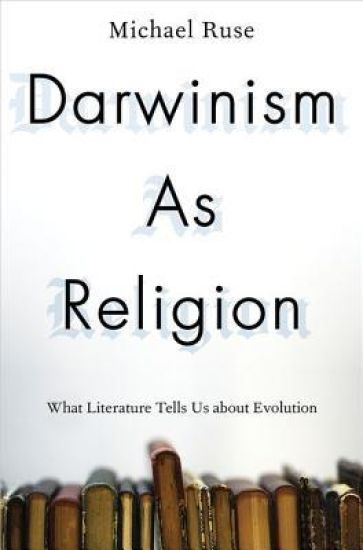
Darwinism as Religion

Darwinism as Religion

Michael Ruse

Oxford University Press Inc
2016
sidottu
The Darwinian Revolution--the change in thinking sparked by Charles Darwin's On the Origin of Species, which argued that all organisms including humans are the end product of a long, slow, natural process of evolution rather than the miraculous creation of an all-powerful God--is one of the truly momentous cultural events in Western Civilization. Darwinism as Religion is an innovative and exciting approach to this revolution through creative writing, showing how the theory of evolution as expressed by Darwin has, from the first, functioned as a secular religion. Drawing on a deep understanding of both the science and the history, Michael Ruse surveys the naturalistic thinking about the origins of organisms, including the origins of humankind, as portrayed in novels and in poetry, taking the story from its beginnings in the Age of Enlightenment in the 18th century right up to the present. He shows that, contrary to the opinion of many historians of the era, there was indeed a revolution in thought and that the English naturalist Charles Darwin was at the heart of it. However, contrary also to what many think, this revolution was not primarily scientific as such, but more religious or metaphysical, as people were taken from the secure world of the Christian faith into a darker, more hostile world of evolutionism. In a fashion unusual for the history of ideas, Ruse turns to the novelists and poets of the period for inspiration and information. His book covers a wide range of creative writers - from novelists like Voltaire and poets like Erasmus Darwin in the eighteenth century, through the nineteenth century with novelists including Elizabeth Gaskell, George Eliot, Thomas Hardy, Henry James and H. G. Wells and poets including Robert Browning, Alfred Tennyson, Walt Whitman, Emily Dickinson and Gerard Manley Hopkins, and on to the twentieth century with novelists including Edith Wharton, D. H. Lawrence, John Steinbeck, William Golding, Graham Greene, Ian McEwan and Marilynne Robinson, and poets including Robert Frost, Edna St Vincent Millay and Philip Appleman. Covering such topics as God, origins, humans, race and class, morality, sexuality, and sin and redemption, and written in an engaging manner and spiced with wry humor, Darwinism as Religion gives us an entirely fresh, engaging and provocative view of one of the cultural highpoints of Western thought.
Debating Darwin

Debating Darwin

Robert J. Richards; Michael Ruse

University of Chicago Press
2016
sidottu
Charles Darwin is easily the most famous scientist of the modern age, and his theory of evolution is constantly referenced in many contexts by scientists and nonscientist alike. And yet, despite how frequently his ideas are evoked, there remains a surprising amount we don't know about the father of modern evolutionary thinking, his intellectual roots, and the science he produced. Debating Darwin seeks to change that, bringing together two leading Darwin scholars Robert J. Richards and Michael Ruse to engage in a spirited and insightful dialogue, offering their interpretations of Darwin and their critiques of each other's thinking. Examining key disagreements about Darwin that continue to confound even committed Darwinists, Richards and Ruse offer divergent views on the origins and nature of Darwin and his ideas. Ruse argues that Darwin was quintessentially British and that the roots of his thought can be traced back to the eighteenth century, particularly to the Industrial Revolution and thinkers such as Adam Smith and Thomas Robert Malthus. Ruse argues that when these influences are appreciated, we can see how Darwin's work in biology is an extension of their theories. In contrast, Richards presents Darwin as a more cosmopolitan, self-educated man, influenced as much by French and particularly German thinkers. Above all, argues Richards, it was Alexander von Humboldt who both inspired Darwin and gave him the conceptual tools that he needed to find and formulate his evolutionary hypotheses. Together, the authors show how the reverberations of the contrasting views on Darwin's influences can be felt in theories about the nature of natural selection, the role of metaphor in science, and the place of God in Darwin's thought. Revealing how much there still is to investigate and interrogate about Darwin's ideas, Debating Darwin contributes to our understanding of evolution itself. The book concludes with a jointly authored chapter that brings this debate into the present, focusing on human evolution, consciousness, religion, and morality. This will be powerful, essential reading for anyone seeking a comprehensive understanding of modern-day evolutionary science and philosophy.
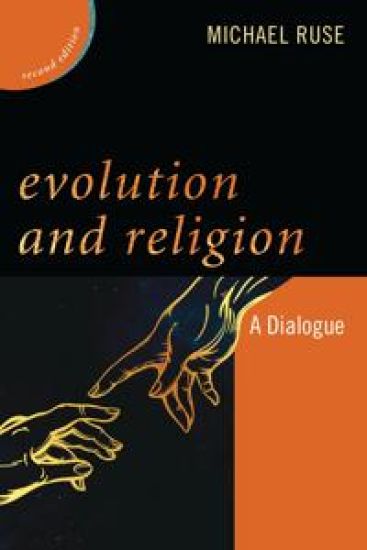
Evolution and Religion

Evolution and Religion

Michael Ruse

Rowman Littlefield
2016
nidottu
Michael Ruse, a leading expert on Charles Darwin, presents a fictional dialogue among characters with sharply contrasting positions regarding the tensions between science and religious belief. Ruse's main characters—an atheist scientist, a skeptical historian and philosopher of science, a relatively liberal female Episcopalian priest, and a Southern Baptist pastor who denies evolution—passionately argue about pressing issues, in a context framed within a television show: "Science versus God— Who is Winning?" These characters represent the different positions concerning science and religion often held today: evolution versus creation, the implications of Christian beliefs upon technological advances in medicine, and the everlasting debate over free will. The second edition of this innovative text incorporates the influence of Eastern religions and philosophies on the debate on human origins, broadening the contextual reach of the dialogue into comparative philosophy and religious studies.
Evolution and Religion

Evolution and Religion

Michael Ruse

Rowman Littlefield
2016
sidottu
Michael Ruse, a leading expert on Charles Darwin, presents a fictional dialogue among characters with sharply contrasting positions regarding the tensions between science and religious belief. Ruse's main characters—an atheist scientist, a skeptical historian and philosopher of science, a relatively liberal female Episcopalian priest, and a Southern Baptist pastor who denies evolution—passionately argue about pressing issues, in a context framed within a television show: "Science versus God— Who is Winning?" These characters represent the different positions concerning science and religion often held today: evolution versus creation, the implications of Christian beliefs upon technological advances in medicine, and the everlasting debate over free will. The second edition of this innovative text incorporates the influence of Eastern religions and philosophies on the debate on human origins, broadening the contextual reach of the dialogue into comparative philosophy and religious studies.
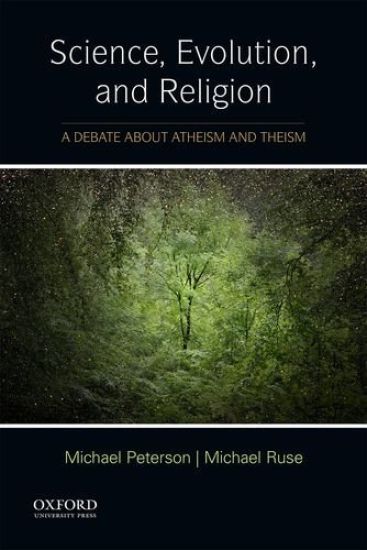
Science, Evolution, and Religion

Science, Evolution, and Religion

Michael Peterson; Michael Ruse

Oxford University Press Inc
2016
nidottu
Comprehensive, up to date, and engaging, Science, Evolution, and Religion provides detailed coverage of the science-religion debate in contemporary culture and academia. The two authors, Michael Peterson and Michael Ruse, present theism and atheism, respectively, and argue for their positions. Peterson occasionally draws from Christian doctrine to supplement theism; Ruse often supplements his atheism with elements drawn from the larger context of philosophical naturalism. The result is a rich and respectful dialogure and debate on the nature of science, cosmic origins, biological origins, the anthropic principle, and the meaning of life, among other important subjects.
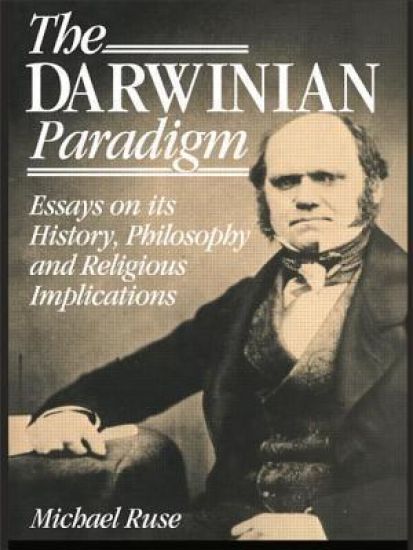
The Darwinian Paradigm

The Darwinian Paradigm

Michael Ruse

Routledge
2015
nidottu
Charles Darwin's Origin of Species is now 130 years old, yet it continues to provoke fierce and impassioned debate. Michael Ruse, a distinguished champion of Darwin's theory of evolution, here presents a collection of essays - many previously unpublished - which look at Darwinism from both historical and contemporary perspectives. Written in a lively and accessible style, these essays cover philosophical and theological as well as scientific issues. Michael Ruse's claims are often highly controversial, particularly in discussions on the relations between science and religion, and they should provoke much comment.
Sociobiology: Sense or Nonsense?
In June 1975, the distinguished Harvard entomologist Edward O. Wilson published a truly huge book entitled, Sociobiology: The New Synthesis. In this book, drawing on both fact and theory, Wilson tried to present a com­ prehensive overview of the rapidly growing subject of 'sociobiology', the study of the biological nature and foundations of animal behaviour, more precisely animal social behaviour. Although, as the title rather implies, Wilson was more surveying and synthesising than developing new material, he com­ pensated by giving the most thorough and inclusive treatment possible, beginning in the animal world with the most simple of forms, and progressing via insects, lower invertebrates, mammals and primates, right up to and in­ cluding our own species, Homo sapiens. Initial reaction to the book was very favourable, but before the year was out it came under withering attack from a group of radical scientists in the Boston area, who styled themselves 'The Science for the People Sociobiology Study Group'. Criticism, of course, is what every academic gets (and needs!); but, for two reasons, this attack was particularly unpleasant. First, not only were Wilson's ideas attacked, but he himself was smeared by being linked with the most reactionary of political thinkers, including the Nazis.
The Philosophy of Human Evolution

The Philosophy of Human Evolution

Michael Ruse

Cambridge University Press
2012
pokkari
This book provides a unique discussion of human evolution from a philosophical viewpoint, looking at the facts and interpretations since Charles Darwin's The Descent of Man. Michael Ruse explores such topics as the nature of scientific theories, the relationships between culture and biology, the problem of progress and the extent to which evolutionary issues pose problems for religious beliefs. He identifies these issues, highlighting the problems for morality in a world governed by natural selection. By taking a philosophical viewpoint, the full ethical and moral dimensions of human evolution are examined. This book engages the reader in a thorough discussion of the issues, appealing to students in philosophy, biology and anthropology.
Defining Darwin

Defining Darwin

Michael Ruse

Prometheus Books
2009
sidottu
Michael Ruse is one of the foremost Charles Darwin scholars of our time. For forty years he has written extensively on Darwin, the scientific revolution that his work precipitated, and the nature and implications of evolutionary thinking for today. Now, in the year marking the two hundredth anniversary of Darwin's birth and the one hundred fiftieth anniversary of his masterpiece, On the Origin of Species, Ruse reevaluates the legacy of Darwin in this collection of new and recent essays. Beginning with pre-Darwinian concepts of organic origins proposed by the great German philosopher Immanuel Kant, Ruse shows the challenges that Darwin's radically different idea faced. He then discusses natural selection as a powerful metaphor; Alfred Russel Wallace, the co-discoverer of the theory of evolution; Herbert Spencer's contribution to evolutionary biology; the synthesis of Mendelian genetics and natural selection; the different views of Julian Huxley and George Gaylord Simpson on evolutionary ethics; and the influence of Darwin's ideas on literature. In the final section, Ruse brings the discussion up to date with a consideration of "evolutionary development" (dubbed "evo devo") as a new evolutionary paradigm and the effects of Darwin on religion, especially the debate surrounding Intelligent Design theory. Ruse offers a fresh perspective on topics old and new, challenging the reader to think again about the nature and consequences of what has been described as the biggest idea ever conceived.
Monad to Man

Monad to Man

Michael Ruse

Harvard University Press
2009
nidottu
The idea of evolution: it fascinates some of us, disturbs others, and leaves only a very few people indifferent. In a major new interpretation of evolutionary theory, Michael Ruse pinpoints the common source of this attraction and discomfort. A renowned writer on evolutionary theory and its history, Ruse has long been sensitive to the fact that many people--and not simply religious enthusiasts--find something deeply troubling about much of what passes for science in evolutionary circles. What causes this tension, he finds in his search of evolutionism's 250-year history, is the intimate relationship between evolution and the secular ideology of progress.Ubiquitous in Darwin's time, the idea of an unceasing improvement in life insinuated its way into evolutionary theory from the first. In interviews with today's major figures in evolutionary biology--including Stephen Jay Gould, Edward O. Wilson, Ernst Mayr, and John Maynard Smith--and in an intimate look at the discoveries and advances in the history and philosophy of science, Ruse finds this belief just as prevalent today--however it might be denied or obscured. His book traces the delicate line between those who argue that science is and must be objective and those who deem science a "social construction" in the fashion of religion or the rest of culture. It offers an unparalleled account of evolutionary theory, from popular books to museums to the most complex theorizing, at a time when its status as science is under greater scrutiny than ever before.