Kirjojen hintavertailu. Mukana 12 126 144 kirjaa ja 12 kauppaa.

Kirjailija

Michael S. C. Thomas

Kirjat ja teokset yhdessä paikassa: 9 kirjaa, julkaisuja vuosilta 2007-2026, suosituimpien joukossa A-Z of Educational Neuroscience. Vertaile teosten hintoja ja tarkista saatavuus suomalaisista kirjakaupoista.

9 kirjaa

Kirjojen julkaisuhaarukka 2007-2026.

A-Z of Educational Neuroscience

A-Z of Educational Neuroscience

Cathy Rogers; Michael S. C. Thomas; Roisin Perry

TAYLOR FRANCIS LTD
2026
sidottu
This accessible guide explores the fascinating intersections between neuroscience, psychology, and education, offering an easy-to-navigate A-Z format that unpacks key concepts, debates, and themes essential to understanding how the brain learns. From emotions and motivation to memory and attention, the authors reveal how groundbreaking neuroscience challenges traditional beliefs about learning and provides practical insights for transforming education. With clear explanations, concrete examples, and evidence-based recommendations, it empowers readers to apply neuroscience to real-world teaching and learning. Readers can dip into individual entries or explore the guide in its entirety. It serves as a trusted reference for topics such as growth mindset, screen time, dyslexia, and more. Cross-referenced entries allow readers to follow interconnected ideas, while curated “top ten” lists offer tailored starting points for specific audiences. This indispensable resource is essential reading for students of psychology, neuroscience, and education, providing a lively and comprehensive primer. It is equally valuable for teachers, school leaders, SEND specialists and policymakers, equipping them with evidence-based insights to inform their decisions and unlock the potential of every learner.
A-Z of Educational Neuroscience

A-Z of Educational Neuroscience

Cathy Rogers; Michael S. C. Thomas; Roisin Perry

TAYLOR FRANCIS LTD
2026
nidottu
This accessible guide explores the fascinating intersections between neuroscience, psychology, and education, offering an easy-to-navigate A-Z format that unpacks key concepts, debates, and themes essential to understanding how the brain learns. From emotions and motivation to memory and attention, the authors reveal how groundbreaking neuroscience challenges traditional beliefs about learning and provides practical insights for transforming education. With clear explanations, concrete examples, and evidence-based recommendations, it empowers readers to apply neuroscience to real-world teaching and learning. Readers can dip into individual entries or explore the guide in its entirety. It serves as a trusted reference for topics such as growth mindset, screen time, dyslexia, and more. Cross-referenced entries allow readers to follow interconnected ideas, while curated “top ten” lists offer tailored starting points for specific audiences. This indispensable resource is essential reading for students of psychology, neuroscience, and education, providing a lively and comprehensive primer. It is equally valuable for teachers, school leaders, SEND specialists and policymakers, equipping them with evidence-based insights to inform their decisions and unlock the potential of every learner.
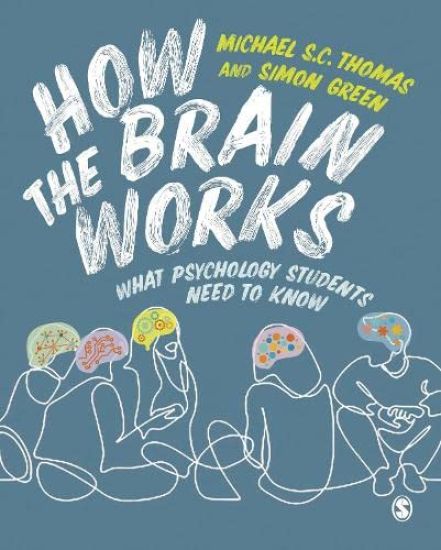
How the Brain Works

How the Brain Works

Michael S. C. Thomas; Simon Green

SAGE PUBLICATIONS LTD
2023
sidottu
Delve into the intricacies of the human mind with this engaging and insightful guide to how the brain works. Written in a playful style and beautifully illustrated, this book is designed to support you as you embark on the beginning of your psychology degree. It provides an accessible guide to how the brain’s structures and functions determine how the mind works, and how this fits into the bigger picture of our evolution and biology as a species. From focus boxes that delve into specific topics to entertaining puzzles that bring the subject to life, this book will captivate your imagination while building your understanding of biological and cognitive psychology. This is an essential read for undergraduate psychology students. Michael S.C. Thomas is Professor of Cognitive Neuroscience at Birkbeck, University of London. Simon Green is a Chartered Psychologist and retired Senior Lecturer in Psychology at Birkbeck, University of London.
How the Brain Works

How the Brain Works

Michael S. C. Thomas; Simon Green

SAGE PUBLICATIONS LTD
2023
nidottu
Delve into the intricacies of the human mind with this engaging and insightful guide to how the brain works. Written in a playful style and beautifully illustrated, this book is designed to support you as you embark on the beginning of your psychology degree. It provides an accessible guide to how the brain’s structures and functions determine how the mind works, and how this fits into the bigger picture of our evolution and biology as a species. From focus boxes that delve into specific topics to entertaining puzzles that bring the subject to life, this book will captivate your imagination while building your understanding of biological and cognitive psychology. This is an essential read for undergraduate psychology students. Michael S.C. Thomas is Professor of Cognitive Neuroscience at Birkbeck, University of London. Simon Green is a Chartered Psychologist and retired Senior Lecturer in Psychology at Birkbeck, University of London.
Thinking Developmentally from Constructivism to Neuroconstructivism

Thinking Developmentally from Constructivism to Neuroconstructivism

Annette Karmiloff-Smith; Michael S. C. Thomas; Mark H Johnson

TAYLOR FRANCIS LTD
2023
nidottu
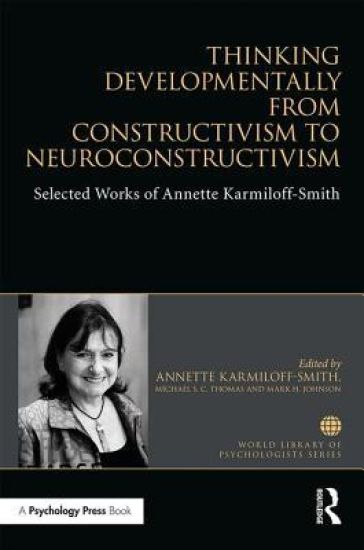
In the World Library of Psychologists series, international experts present career-long collections of what they judge to be their finest pieces - extracts from books, key articles, salient research findings, and their major practical theoretical contributions.This influential volume of papers, chosen by Professor Annette Karmiloff-Smith before she passed away, recognises her major contribution to the field of developmental psychology. Published over a 40-year period, the papers included here address the major themes that permeate through Annette’s work: from typical to atypical development, genetics and computation modelling approaches, and neuroimaging of the developing brain. A newly written introduction by Michael S. C. Thomas and Mark H. Johnson gives an overview of her research journey and contextualises her selection of papers in relation to changes in the field over time.Thinking Developmentally from Constructivism to Neuroconstructivism: Selected Works of Annette Karmiloff-Smith is of great interest to researchers and postgraduates in child development specialising in atypical development, developmental disorders, and developmental neuroscience. It also has appeal to clinical neuropsychologists and rehabilitation professionals.
Educational Neuroscience

Educational Neuroscience

Cathy Rogers; Michael S. C. Thomas

TAYLOR FRANCIS LTD
2022
nidottu
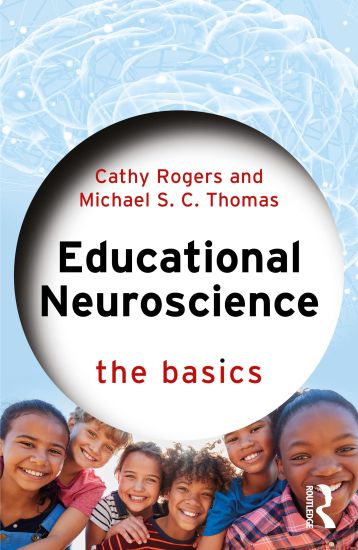
Educational Neuroscience: The Basics is an engaging introduction to this emerging, interdisciplinary field. It explains how the brain works and its priorities for learning, and shows how educational neuroscience, when combined with existing knowledge of human and social psychology, and with teacher expertise, can improve outcomes for students. Cathy Rogers and Michael S. C. Thomas reveal how neuroscientific evidence is forcing us to question our assumptions about how our brains learn and what this means for education. The chapters in this vital volume step through the brain’s priorities: processing senses and moving our bodies, emotional processing, and the difficult job of dealing with other people. It unpacks the tricky tasks of thinking and learning, considering how memory works and the many systems involved in learning. It draws this all together to offer guidance for effective classroom practice, current and future. Chapter features include key issues for special educational needs and neurodiversity, case studies of novel interventions, debunking of common neuromyths, and guidance for teachers on how to evaluate their own practice.This book is a compact, lively introductory text for students of psychology, neuroscience and education and courses where these disciplines interconnect. It will also be essential reading for educational professionals, including teachers, heads, educational advisors and the many industry bodies who govern and train them, as well as anyone interested in the fascinating story of how we learn.
Educational Neuroscience

Educational Neuroscience

Cathy Rogers; Michael S. C. Thomas

TAYLOR FRANCIS LTD
2022
sidottu
Educational Neuroscience: The Basics is an engaging introduction to this emerging, interdisciplinary field. It explains how the brain works and its priorities for learning, and shows how educational neuroscience, when combined with existing knowledge of human and social psychology, and with teacher expertise, can improve outcomes for students. Cathy Rogers and Michael S. C. Thomas reveal how neuroscientific evidence is forcing us to question our assumptions about how our brains learn and what this means for education. The chapters in this vital volume step through the brain’s priorities: processing senses and moving our bodies, emotional processing, and the difficult job of dealing with other people. It unpacks the tricky tasks of thinking and learning, considering how memory works and the many systems involved in learning. It draws this all together to offer guidance for effective classroom practice, current and future. Chapter features include key issues for special educational needs and neurodiversity, case studies of novel interventions, debunking of common neuromyths, and guidance for teachers on how to evaluate their own practice.This book is a compact, lively introductory text for students of psychology, neuroscience and education and courses where these disciplines interconnect. It will also be essential reading for educational professionals, including teachers, heads, educational advisors and the many industry bodies who govern and train them, as well as anyone interested in the fascinating story of how we learn.
Thinking Developmentally from Constructivism to Neuroconstructivism

Thinking Developmentally from Constructivism to Neuroconstructivism

Annette Karmiloff-Smith; Michael S. C. Thomas; Mark H Johnson

Routledge
2018
sidottu
In the World Library of Psychologists series, international experts present career-long collections of what they judge to be their finest pieces - extracts from books, key articles, salient research findings, and their major practical theoretical contributions.This influential volume of papers, chosen by Professor Annette Karmiloff-Smith before she passed away, recognises her major contribution to the field of developmental psychology. Published over a 40-year period, the papers included here address the major themes that permeate through Annette’s work: from typical to atypical development, genetics and computation modelling approaches, and neuroimaging of the developing brain. A newly written introduction by Michael S. C. Thomas and Mark H. Johnson gives an overview of her research journey and contextualises her selection of papers in relation to changes in the field over time.Thinking Developmentally from Constructivism to Neuroconstructivism: Selected Works of Annette Karmiloff-Smith is of great interest to researchers and postgraduates in child development specialising in atypical development, developmental disorders, and developmental neuroscience. It also has appeal to clinical neuropsychologists and rehabilitation professionals.
Neuroconstructivism - I

Neuroconstructivism - I

Denis Mareschal; Mark H Johnson; Sylvain Sirois; Michael Spratling; Michael S. C. Thomas; Gert Westermann

Oxford University Press
2007
nidottu
What are the processes, from conception to adulthood, that enable a single cell to grow into a sentient adult? The processes that occur along the way are so complex that any attempt to understand development necessitates a multi-disciplinary approach, integrating data from cognitive studies, computational work, and neuroimaging - an approach till now seldom taken in the study of child development. Neuroconstructivism is a major new 2 volume publication that seeks to redress this balance, presenting an integrative new framework for considering development. In the first volume, the authors review up-to-to date findings from neurobiology, brain imaging, child development, computer and robotic modelling to consider why children's thinking develops the way it does. They propose a new synthesis of development that is based on 5 key principles found to operate at many levels of descriptions. They use these principles to explain what causes a number of key developmental phenomena, including infants' interacting with objects, early social cognitive interactions, and the causes of dyslexia. The "neuroconstructivist" framework also shows how developmental disorders do not arise from selective damage to the normal cognitive system, but instead arise from developmental processes that operate under atypical constraints. How these principles work is illustrated in several case studies ranging from perceptual to social and reading development. Finally, the authors use neuroimaging, behavioural analyses, computational simulations and robotic models to provide a way of understanding the mechanisms and processes that cause development to occur.