Kirjojen hintavertailu. Mukana 12 595 353 kirjaa ja 12 kauppaa.

Kirjailija

Michael S. Gazzaniga

Kirjat ja teokset yhdessä paikassa: 20 kirjaa, julkaisuja vuosilta 1978-2025, suosituimpien joukossa Cognitive Neuroscience. Vertaile teosten hintoja ja tarkista saatavuus suomalaisista kirjakaupoista.

20 kirjaa

Kirjojen julkaisuhaarukka 1978-2025.

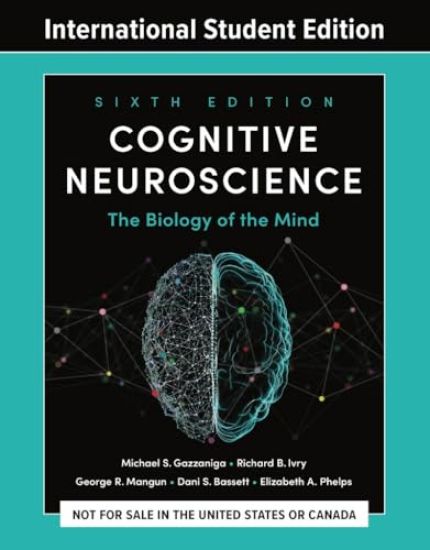
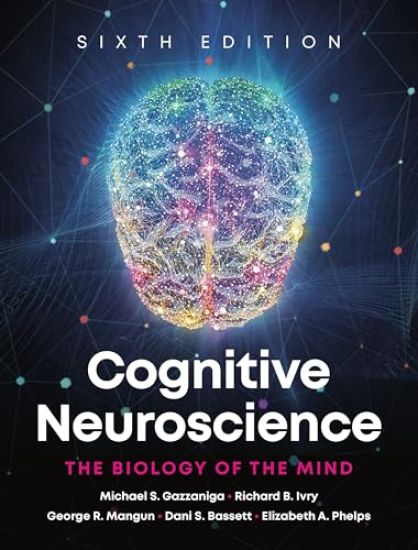
Cognitive Neuroscience

Cognitive Neuroscience

Michael S. Gazzaniga; Elizabeth A. Phelps; Dani S. Bassett; George R. Mangun; Richard B. Ivry

WW NORTON CO
2025
muu
Cognitive Neuroscience is universally recognized as the gold-standard text for undergraduate students. For the Sixth Edition, the authors, led by Michael Gazzaniga, are proud to welcome star neuroscientists Elizabeth Phelps and Dani Bassett to the author team. Phelps and Bassett are widely viewed as two of the most accomplished neuroscientists working today, and together they bring cutting-edge research and a modern perspective to this highly esteemed text.
Psychology in Your Life

Psychology in Your Life

Sarah Grison; Michael S. Gazzaniga

W W Norton Co Inc
2022
pokkari
Psychology in Your Life, Fourth Edition, provides instructors and students with new research-based, inclusive solutions to today's teaching challenges. A new IMPACT learning scaffold guides students on how to best learn and retain course material and new content addresses diversity both historically and in the field today. The content, pedagogy and digital tools reflect the new learning outcomes and themes of the APA IPI. InQuizitive evidence-based assessment helps students build their comprehension of core concepts, while new Testmaker helps instructors create customised, outcome-driven summative assessments. A new interactive 3D brain, new interactive neuron animations and new ZAPS 3.0 interactive labs make the psychological concepts interactive and accessible for students.
Tietoisuusvaisto

Tietoisuusvaisto

Michael S. Gazzaniga

Terra Cognita
2020
nidottu
Miten neuronit muuttuvat mieleksi? Miten atomien, molekyylien, kemikaalien ja solujen fysikaalinen “aine” luovat monenlaisia eläviä maailmoja sinunkin pääsäsi?Tämä tietoisuuden ongelma on kestänyt vuosituhansia. Viime vuosisadan laajat aivojen rakennetta koskevat tiedot eivät ole tuoneet sen ratkaisua yhtään lähemmäksi kuin muinaisessa Kreikassa.Tässä teoksessa neurotieteen pioneeri Michael S. Gazzaniga esittelee tietoisuuden ongelman laajasti ja päätyy uuden tutkimuksen havaintoon, että aivot ovat oikeastaan yhdessä toimivien, toisistaan riippumattomien neuronien liittoutuma. Ja tietoisuus on liittoutuman tuotos: vaisto.
The Consciousness Instinct: Unraveling the Mystery of How the Brain Makes the Mind
"The father of cognitive neuroscience" illuminates the past, present, and future of the mind-brain problem How do neurons turn into minds? How does physical "stuff"--atoms, molecules, chemicals, and cells--create the vivid and various worlds inside our heads? The problem of consciousness has gnawed at us for millennia. In the last century there have been massive breakthroughs that have rewritten the science of the brain, and yet the puzzles faced by the ancient Greeks are still present. In The Consciousness Instinct, the neuroscience pioneer Michael S. Gazzaniga puts the latest research in conversation with the history of human thinking about the mind, giving a big-picture view of what science has revealed about consciousness. The idea of the brain as a machine, first proposed centuries ago, has led to assumptions about the relationship between mind and brain that dog scientists and philosophers to this day. Gazzaniga asserts that this model has it backward--brains make machines, but they cannot be reduced to one. New research suggests the brain is actually a confederation of independent modules working together. Understanding how consciousness could emanate from such an organization will help define the future of brain science and artificial intelligence, and close the gap between brain and mind. Captivating and accessible, with insights drawn from a lifetime at the forefront of the field, The Consciousness Instinct sets the course for the neuroscience of tomorrow.
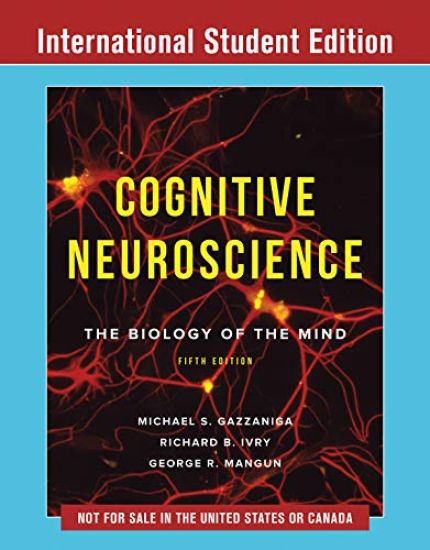
Cognitive Neuroscience

Cognitive Neuroscience

Michael S. Gazzaniga; Richard B. Ivry; George R. Mangun

WW Norton Co
2019
muu
Written by world-renowned researchers, including Michael Gazzaniga, Cognitive Neuroscience remains the gold standard in its field, showcasing the latest discoveries and clinical applications. In its new Fifth Edition, updated material is woven into the narrative of each chapter and featured in new Hot Science and Lessons from the Clinic sections. The presentation is also more accessible and focused as the result of Anatomical Orientation figures, Take-Home Message features, and streamlined chapter openers.
Cognitive Neuroscience

Cognitive Neuroscience

Michael S. Gazzaniga; Richard B. Ivry; George R. Mangun

WW NORTON CO
2018
muu
Written by world-renowned researchers, including Michael Gazzaniga, Cognitive Neuroscience remains the gold standard in its field, showcasing the latest discoveries and clinical applications. In its new Fifth Edition, updated material is woven into the narrative of each chapter and featured in new Hot Science and Lessons from the Clinic sections. The presentation is also more accessible and focused as the result of Anatomical Orientation figures, Take-Home Message features, and streamlined chapter openers.
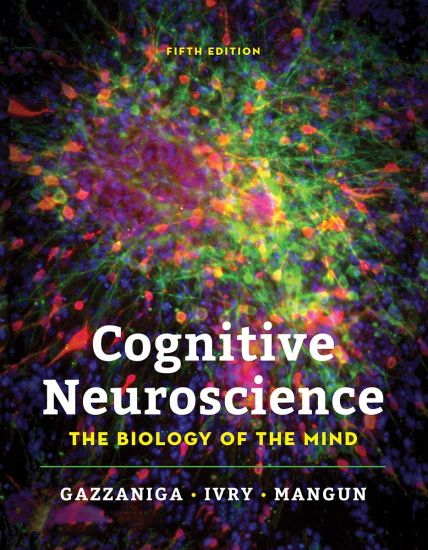
Cognitive Neuroscience

Cognitive Neuroscience

Michael S. Gazzaniga; Richard B. Ivry; George R. Mangun

WW NORTON CO
2018
muu
Written by world-renowned researchers, including Michael Gazzaniga, Cognitive Neuroscience remains the gold standard in its field, showcasing the latest discoveries and clinical applications. In its new Fifth Edition, updated material is woven into the narrative of each chapter and featured in new Hot Science and Lessons from the Clinic sections. The presentation is also more accessible and focused as the result of Anatomical Orientation figures, Take-Home Message features, and streamlined chapter openers.
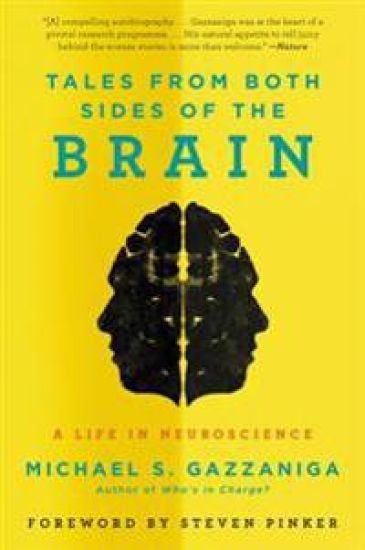
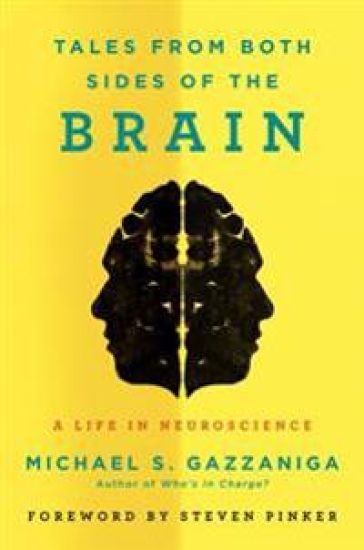
Tales from Both Sides of the Brain: A Life in Neuroscience
Michael S. Gazzaniga, one of the most important neuroscientists of the twentieth century, gives us an exciting behind-the-scenes look at his seminal work on that unlikely couple, the right and left brain. Foreword by Steven Pinker.In the mid-twentieth century, Michael S. Gazzaniga, "the father of cognitive neuroscience," was part of a team of pioneering neuroscientists who developed the now foundational split-brain brain theory: the notion that the right and left hemispheres of the brain can act independently from one another and have different strengths.In Tales from Both Sides of the Brain, Gazzaniga tells the impassioned story of his life in science and his decades-long journey to understand how the separate spheres of our brains communicate and miscommunicate with their separate agendas. By turns humorous and moving, Tales from Both Sides of the Brain interweaves Gazzaniga's scientific achievements with his reflections on the challenges and thrills of working as a scientist. In his engaging and accessible style, he paints a vivid portrait not only of his discovery of split-brain theory, but also of his comrades in arms--the many patients, friends, and family who have accompanied him on this wild ride of intellectual discovery.
Tales from Both Sides of the Brain: A Life in Neuroscience
Michael S. Gazzaniga, one of the most important neuroscientists of the twentieth century, gives us an exciting behind-the-scenes look at his seminal work on that unlikely couple, the right and left brain. Foreword by Steven Pinker.In the mid-twentieth century, Michael S. Gazzaniga, "the father of cognitive neuroscience," was part of a team of pioneering neuroscientists who developed the now foundational split-brain brain theory: the notion that the right and left hemispheres of the brain can act independently from one another and have different strengths.In Tales from Both Sides of the Brain, Gazzaniga tells the impassioned story of his life in science and his decades-long journey to understand how the separate spheres of our brains communicate and miscommunicate with their separate agendas. By turns humorous and moving, Tales from Both Sides of the Brain interweaves Gazzaniga's scientific achievements with his reflections on the challenges and thrills of working as a scientist. In his engaging and accessible style, he paints a vivid portrait not only of his discovery of split-brain theory, but also of his comrades in arms--the many patients, friends, and family who have accompanied him on this wild ride of intellectual discovery.
The Integrated Mind

The Integrated Mind

Michael S. Gazzaniga; Joseph E. LeDoux

Springer-Verlag New York Inc.
2013
nidottu
In this book we are trying to illuminate the persistent and nag­ ging questions of how mind, life, and the essence of being relate to brain mechanisms. We do that not because we have a commit­ ment to bear witness to the boring issue of reductionism but be­ cause we want to know more about what it's all about. How, in­ deed, does the brain work? How does it allow us to love, hate, see, cry, suffer, and ultimately understand Kepler's laws? We try to uncover clues to these staggering questions by con­ sidering the results of our studies on the bisected brain. Several years back, one of us wrote a book with that title, and the ap­ proach was to describe how brain and behavior are affected when one takes the brain apart. In the present book, we are ready to put it back together, and go beyond, for we feel that split-brain studies are now at the point of contributing to an understanding of the workings of the integrated mind. We are grateful to Dr. Donald Wilson of the Dartmouth Medi­ cal School for allowing us to test his patients. We would also like to thank our past and present colleagues, including Richard Naka­ mura, Gail Risse, Pamela Greenwood, Andy Francis, Andrea El­ berger, Nick Brecha, Lynn Bengston, and Sally Springer, who have been involved in various facets of the experimental studies on the bisected brain described in this book.
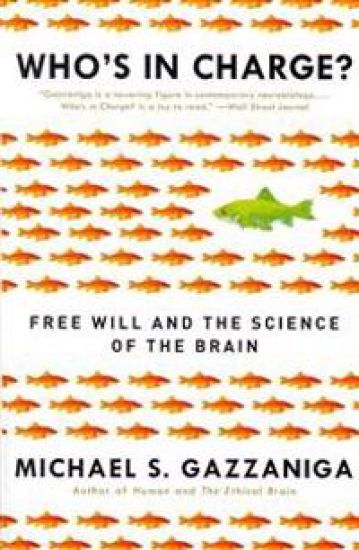
Who's in Charge?: Free Will and the Science of the Brain
"Gazzaniga is one of the most brilliant experimental neuroscientists in the world." --Tom WolfeMichael S. Gazzaniga has been called the "father of cognitive neuroscience." In his remarkable book, Who's in Charge?, he makes a powerful and provocative argument that counters the common wisdom that our lives are wholly determined by physical processes we cannot control. There is no "you" consciously making decisions. So how do we make decisions? How can we have free will if we don't pull the levers of our own behavior?What moral and legal implications follow if we don't have free well? Who's in Charge is a primer for a new era in the understanding of human behavior that ranges across neuroscience, psychology, ethics, and the law with a light touch but profound implications.His well-reasoned case against the idea that we live in a "determined" world is fascinating and liberating, solidifying his place among the likes of Oliver Sacks, Antonio Damasio, V.S. Ramachandran, and other bestselling science authors exploring the mysteries of the human brain.
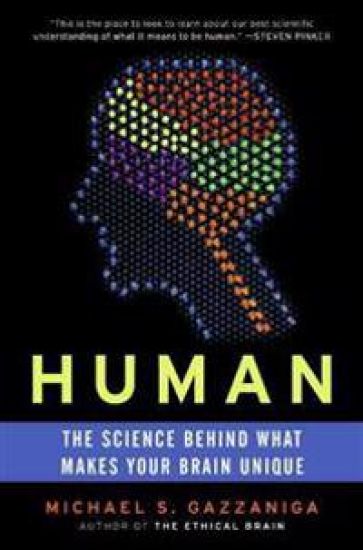
Human: The Science Behind What Makes Your Brain Unique
What happened along the evolutionary trail that made humans so unique? In his accessible style, Michael Gazzaniga pinpoints the change that made us thinking, sentient humans different from our predecessors. He explores what makes human brains special, the importance of language and art in defining the human condition, the nature of human consciousness, and even artificial intelligence.
Human: The Science Behind What Makes Us Unique

Human: The Science Behind What Makes Us Unique

Michael S. Gazzaniga

Ecco Press
2008
sidottu
One of the world's leading neuroscientists explores how best to understand the human condition by examining the biological, psychological, and highly social nature of our species within the social context of our lives.What happened along the evolutionary trail that made humans so unique? In his widely accessible style, Michael Gazzaniga looks to a broad range of studies to pinpoint the change that made us thinking, sentient humans, different from our predecessors.Neuroscience has been fixated on the life of the psychological self for the past fifty years, focusing on the brain systems underlying language, memory, emotion, and perception. What it has not done is consider the stark reality that most of the time we humans are thinking about social processes, comparing ourselves to and estimating the intentions of others. In Human, Gazzaniga explores a number of related issues, including what makes human brains unique, the importance of language and art in defining the human condition, the nature of human consciousness, and even artificial intelligence.
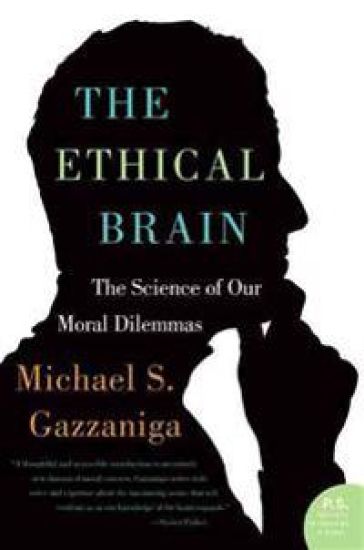
The Ethical Brain: The Science of Our Moral Dilemmas
A provocative and fascinating look at new discoveries about the brain that challenge our ethicsThe rapid advance of scientific knowledge has raised ethical dilemmas that humankind has never before had to address. Questions about the moment when life technically begins and ends or about the morality of genetically designing babies are now relevant and timely. Our ever-increasing knowledge of the workings of the human brain can guide us in the formation of new moral principles in the twenty-first century. In The Ethical Brain, preeminent neuroscientist Michael S. Gazzaniga presents the emerging social and ethical issues arising out of modern-day brain science and challenges the way we look at them. Courageous and thought-provoking -- a work of enormous intelligence, insight, and importance -- this book explores the hitherto uncharted landscape where science and society intersect.
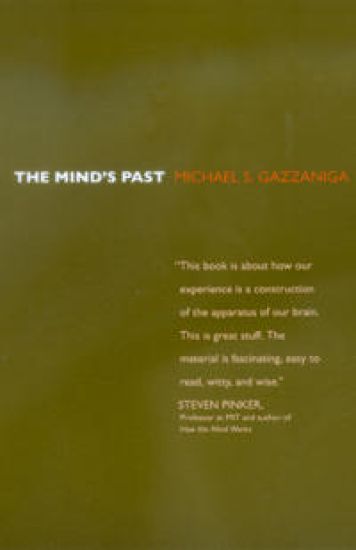
The Mind's Past

The Mind's Past

Michael S. Gazzaniga

University of California Press
2000
pokkari
Why does the human brain insist on interpreting the world and constructing a narrative? In this ground-breaking work, Michael S. Gazzaniga, one of the world's foremost cognitive neuroscientists, shows how our mind and brain accomplish the amazing feat of constructing our past - a process clearly fraught with errors of perception, memory, and judgment. By showing that the specific systems built into our brain do their work automatically and largely outside of our conscious awareness, Gazzaniga calls into question our everyday notions of self and reality. The implications of his ideas reach deeply into the nature of perception and memory, the profundity of human instinct, and the ways we construct who we are and how we fit into the world around us. Over the past thirty years, the mind sciences have developed a picture not only of how our brains are built but also of what they were built to do. The emerging picture is wonderfully clear and pointed, underlining William James' notion that humans have far more instincts than other animals. Every baby is born with circuits that compute information enabling it to function in the physical world. Even what helps us to establish our understanding of social relations may have grown out of perceptual laws delivered to an infant's brain. Indeed, the ability to transmit culture - an act that is only part of the human repertoire - may stem from our many automatic and unique perceptual-motor processes that give rise to mental capacities such as belief and culture. Gazzaniga explains how the mind interprets data the brain has already processed, making 'us' the last to know. He shows how what 'we' see is frequently an illusion and not at all what our brain is perceiving. False memories become a part of our experience; autobiography is fiction. In exploring how the brain enables the mind, Gazzaniga points us toward one of the greatest mysteries of human evolution: how we become who we are.
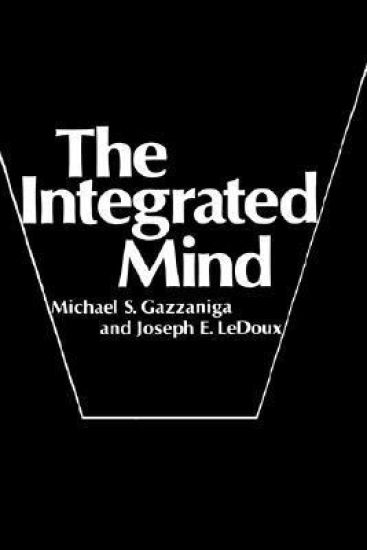
The Integrated Mind

The Integrated Mind

Michael S. Gazzaniga; Joseph E. LeDoux

Kluwer Academic/Plenum Publishers
1978
sidottu
In this book we are trying to illuminate the persistent and nag­ ging questions of how mind, life, and the essence of being relate to brain mechanisms. We do that not because we have a commit­ ment to bear witness to the boring issue of reductionism but be­ cause we want to know more about what it's all about. How, in­ deed, does the brain work? How does it allow us to love, hate, see, cry, suffer, and ultimately understand Kepler's laws? We try to uncover clues to these staggering questions by con­ sidering the results of our studies on the bisected brain. Several years back, one of us wrote a book with that title, and the ap­ proach was to describe how brain and behavior are affected when one takes the brain apart. In the present book, we are ready to put it back together, and go beyond, for we feel that split-brain studies are now at the point of contributing to an understanding of the workings of the integrated mind. We are grateful to Dr. Donald Wilson of the Dartmouth Medi­ cal School for allowing us to test his patients. We would also like to thank our past and present colleagues, including Richard Naka­ mura, Gail Risse, Pamela Greenwood, Andy Francis, Andrea El­ berger, Nick Brecha, Lynn Bengston, and Sally Springer, who have been involved in various facets of the experimental studies on the bisected brain described in this book.