Kirjojen hintavertailu. Mukana 12 322 267 kirjaa ja 12 kauppaa.

Kirjailija

Michael Scott

Kirjat ja teokset yhdessä paikassa: 153 kirjaa, julkaisuja vuosilta 1982-2026, suosituimpien joukossa Ledarskap och statskonst : studier i makt. Vertaile teosten hintoja ja tarkista saatavuus suomalaisista kirjakaupoista.

153 kirjaa

Kirjojen julkaisuhaarukka 1982-2026.

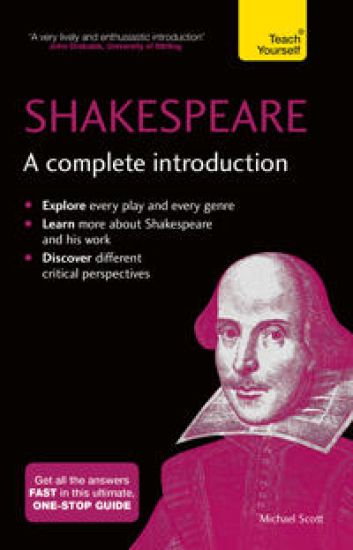
Shakespeare: A Complete Introduction

Shakespeare: A Complete Introduction

Michael Scott

Teach Yourself
2016
pokkari
Your complete introduction to ShakespeareWilliam Shakespeare has been hailed as one of the greatest thinkers of all time, one of the world's finest artists, poets and dramatists. Shakespeare: A Complete Introduction introduces and explains the plays by looking at how they work, taking you on a journey through the genres of comedy, history and tragedy. The best known and most popular plays are discussed in detail and even plays in which Shakespeare may have had only the briefest creative and collaborative interest as a writer, get at least a mention. With material on his poetry and discussions on aspects of his life too, this truly is a complete introduction to Shakespeare.'A very lively and enthusiastic introduction to the full range of Shakespeare's plays' John Drakakis, Professor of English, University of Stirling'A masterpiece of the genre, written as it is with passion, without condescension, without jargon, thoughtful and open to changing critical theories, but always returning to the plays themselves, plays that fully reveal themselves most in performance.' Martin Wine, Professor Emeritus of English at the University of Illinois at Chicago (UIC)
Making New Zealand's Pop Renaissance
Since the early 2000s New Zealand has undergone a pop renaissance. Domestic artists' sales, airplay and concert attendance have all grown dramatically while new avenues for 'kiwi' pop exports emerged. Concurrent with these trends was a new collective sentiment that embraced and celebrated domestic musicians. In Making New Zealand's Pop Renaissance, Michael Scott argues that this revival arose from state policies and shows how the state built market opportunities for popular musicians through public-private partnerships and organizational affinity with existing music industry institutions. New Zealand offers an instructive case for the ways in which 'after neo-liberal' states steer and co-ordinate popular culture into market exchange by incentivizing cultural production. Scott highlights how these music policies were intended to address various economic and social problems. Arriving with the creative industries' discourse and policy making, politicians claimed these expanded popular music supports would facilitate sustainable employment and a sense of national identity. Yet popular music as economic and social policy presents a paradox: the music industry generates commercial failure and thus requires a large unattached pool of potential talent. Considering this feature, Scott analyses how state programs induced an informal economy of proto-pop production aimed at accessing competitive state funding while simultaneously encouraging musicians to adopt entrepreneurial subjectivities. In doing so he argues New Zealand's music policies are a form of social policy that unintentionally deploy hierarchical structures to foster social inclusion amongst growing numbers of creative workers.
Not to the Swiftest: A Brutal Joy

Not to the Swiftest: A Brutal Joy

Michael Scott

Createspace Independent Publishing Platform
2016
nidottu
Young manual worker, Mick seizes the bicycle as a way to transcend his industrial life and to escape to one of beauty and joy; and which, in turn, offers him the opportunity to compete - to become a road-racing cyclist. His ambitious yet modest talent, carries him far, but not far enough. To compensate for his shortcomings, his mentor, Jack - an old ex-professional rider - takes him in hand. Unfortunately Jack s methods may not be quite legal. Jack helps Mick to overcome his vulnerability to infection; but such help brings prosecution by the cycling authority, the Federation. Some of the issues of what are legitimate methods for competition are dramatized during a tribunal. Compromises are reached, and Mick is allowed to participate in a forthcoming international race. During the event Mick comes to realize that he isn t good enough to compete at the top level, and after having received illegal assistance from his mentor Jack, is banned from racing. Sometime later, at the World Cycling Championship, in France, Mick, now working as a minor assistant for the Federation, comes across his old coach - Jack is riding in the Veteran category of the championship and, growing old and irrelevant, wishes to have one final attempt at competition. Mick sees an opportunity to repay his friend. Turn by turn, the realities and brutality of road racing - along with its joys - bring both reward and condemnation; and Mick and Jack are happy to help each other to succeed, and fail, in their different ways; culminating in an apparent place on the podium at the World Cycling Championship - but not quite.
Stumbling in Paradise: Fools for Fortune

Stumbling in Paradise: Fools for Fortune

Michael Scott

Createspace Independent Publishing Platform
2016
nidottu
Happily, jokingly - and ignorantly, they clambered aboard their magic-carpet. And the world opened like a flower to offer its vast invitation to adventure and success. It is a time of the Vietnam War and the Swinging Sixties, both of which seems to have passed them by. They leave - on their beloved Champ, a Second World War jeep, and take their little world with them, while the big one can only look on and smile. Language and cultures might change, an innocent foolishness might survive, but the big, bad, beautiful world is round for a reason, and they will have to stumble and blunder abroad as they had stumbled and blundered at home. To those who like the idea of escape, to those who believe, somehow, that chance might bring some of those things that more rational, more considered ways of believing and behaving fail to, this little story is dedicated.
Mirror Image

Mirror Image

Michael Scott

St. Martins Press-3PL
2016
pokkari
A mirror that feeds on human souls wreaks destruction on those around it in Mirror Image, the new novel from internationally bestselling author Michael Scott and Melanie Ruth Rose. In an auction house in London, there is a mirror no one will buy. Standing seven feet tall and reaching four feet across, its size makes it unusual. Its horrific powers make it extraordinary. For centuries, the mirror has fed off of the lives of humans, giving them agonizing deaths and sucking their souls into its hellish world. When Jonathan Frazer, the wealthy owner of a furniture and antiques shop in Los Angeles, buys the mirror at an auction, he believes he is getting the bargain of a lifetime. With its age and size, it is easily worth eight times what he paid for it. At this point, the mirror has sat dormant for years. But within days of Jonathan's purchase, the deaths begin again. One employee is crushed when the mirror falls on top of him. A few days later, the corpse of another is found in front of the mirror, brutally stabbed. A third is burned beyond all recognition. All the while, an enormous man with a scarred face is following Jonathan, demanding that he give him the mirror and killing any police officer that gets in his way. The police are becoming desperate. As the death toll rises, Jonathan himself becomes a suspect. He knows there is something wrong with the mirror. He knows it's dangerous. But he cannot bring himself to get rid of it. Everyday he becomes more captivated by the mirror. For the mirror is awakening, and its powers are resurfacing.
Mirror Image

Mirror Image

Michael Scott

Tor Books
2016
sidottu
A mirror that feeds on human souls wreaks destruction on those around it in Mirror Image, the new novel from internationally bestselling author Michael Scott and Melanie Ruth Rose. In an auction house in London, there is a mirror no one will buy. Standing seven feet tall and reaching four feet across, its size makes it unusual. Its horrific powers make it extraordinary. For centuries, the mirror has fed off of the lives of humans, giving them agonizing deaths and sucking their souls into its hellish world. When Jonathan Frazer, the wealthy owner of a furniture and antiques shop in Los Angeles, buys the mirror at an auction, he believes he is getting the bargain of a lifetime. With its age and size, it is easily worth eight times what he paid for it. At this point, the mirror has sat dormant for years. But within days of Jonathan's purchase, the deaths begin again. One employee is crushed when the mirror falls on top of him. A few days later, the corpse of another is found in front of the mirror, brutally stabbed. A third is burned beyond all recognition. All the while, an enormous man with a scarred face is following Jonathan, demanding that he give him the mirror and killing any police officer that gets in his way. The police are becoming desperate. As the death toll rises, Jonathan himself becomes a suspect. He knows there is something wrong with the mirror. He knows it's dangerous. But he cannot bring himself to get rid of it. Everyday he becomes more captivated by the mirror. For the mirror is awakening, and its powers are resurfacing.
The Fifth Revelation

The Fifth Revelation

Michael Scott

Fisher King Publishing
2016
pokkari
This book started as an analysis of the heroic fallacy but became several other kinds of story. Primarily, the portrait of a protracted breakdown in the author Michael Scott's psychological and physical make-up, although he struggles hard not to go under, making his account more useful for others to read. It's neither pathological, nor self-indulgently self-pitying. There are useful accounts of coping strategies, particularly appropriate to age-related weakness and physical infirmity, especially when their onset is sudden as it was for Scott. The book focuses on puzzling features of human behaviour, and whether the species Homo sapiens is anything like the triumphant evolutionary achievement we pretend it to be. We are repeatedly warned about our anthropic megalomania, amply illustrated by unflinching description of the author's own egotism. Two other primary considerations in the book are consciousness and love. Scott questions the airy assumptions made about consciousness, arguing that it is fundamentally unknown and unanalysable. He claims that consciousness is part of life itself, and possibly non-living systems too. He evidences Daniel Dennett writing that the human brain creates a "narrative of consciousness", Scott believes the universe itself is the set of brain-narratives we choose to regard as 'reality'. As for love, Scott is a passionate advocate of it as the only saving grace in our collective and individual behaviour: the supreme brain-narrative, but believes that we are superficial and hypocritical in our attempts to give love its full majesty. In a vivid sense, therefore, The Fifth Revelation becomes a love story. Scott's deeply cherished wife of sixty years marriage died a short time after the book was finished.
Programming Language Pragmatics

Programming Language Pragmatics

Michael Scott

Morgan Kaufmann Publishers In
2015
nidottu
Programming Language Pragmatics, Fourth Edition, is the most comprehensive programming language textbook available today. It is distinguished and acclaimed for its integrated treatment of language design and implementation, with an emphasis on the fundamental tradeoffs that continue to drive software development. The book provides readers with a solid foundation in the syntax, semantics, and pragmatics of the full range of programming languages, from traditional languages like C to the latest in functional, scripting, and object-oriented programming. This fourth edition has been heavily revised throughout, with expanded coverage of type systems and functional programming, a unified treatment of polymorphism, highlights of the newest language standards, and examples featuring the ARM and x86 64-bit architectures.
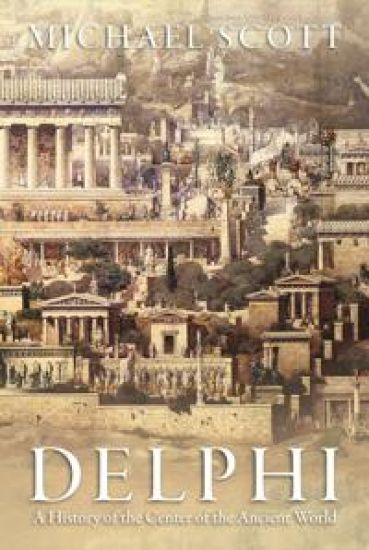
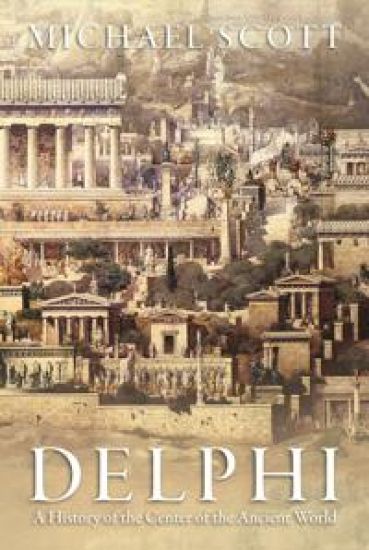
Delphi

Delphi

Michael Scott

Princeton University Press
2015
pokkari
The oracle and sanctuary of the Greek god Apollo at Delphi were known as the "omphalos"--the "center" or "navel"--of the ancient world for more than 1000 years. Individuals, city leaders, and kings came from all over the Mediterranean and beyond to consult Delphi's oracular priestess; to set up monuments to the gods; and to take part in competitions. In this richly illustrated account, Michael Scott covers the history and nature of Delphi, from the literary and archaeological evidence surrounding the site, to its rise as a center of worship, to the constant appeal of the oracle despite her cryptic prophecies. He describes how Delphi became a contested sacred site for Greeks and Romans and a storehouse for the treasures of rival city-states and foreign kings. He also examines the eventual decline of the site and how its meaning and importance have continued to be reshaped. A unique window into the center of the ancient world, Delphi will appeal to general readers, tourists, students, and specialists.
Shakespeare's Tragedies: All That Matters

Shakespeare's Tragedies: All That Matters

Michael Scott

John Murray Learning
2015
nidottu
In Shakespeare's Tragedies: All That Matters, Michael Scott explores and explains the secrets that have made Shakespeare's tragedies so enduring that they continue to be performed, watched and studied by millions of people every year. Professor Scott concentrates on the four great tragedies - Hamlet, King Lear, Othello and Macbeth - and builds an argument based around Shakespeare's use of language to prompt the audience's imagination and thought. This original little book, and its companion volume, Shakespeare's Comedies, will help you understand each of the plays in the context of its oeuvre and the changing concept of Shakespearean tragedy across the centuries.Appealing to both students and general readers, this book gives a fascinating introduction to Shakespeare's tragedies - and what matters most about them.
Shakespeare's Comedies: All That Matters

Shakespeare's Comedies: All That Matters

Michael Scott

John Murray Learning
2014
nidottu
In Shakespeare's Comedies: All That Matters, Mike Scott explores and explains the secrets that have made Shakespeare's comedies so enduring that they continue to be performed, watched and studied by millions of people every year. Professor Scott focuses in turn on he Comedy of Errors, A Midsummer Night's Dream, Twelfth Night, As You Like It and The Merchant of Venice and builds an argument based around Shakepeare's use of language to prompt the audience's imagination and thought. This original little book, and its companion volume Shakespeare's Tragedies, fills a major gap in the market for a book which will enable readers to understand a Shakesperean play in the context of its ouevre. This accessible and readable book will appeal both to students and general readers, giving a fascinating intoruduction to Shakespeare's comedies - and what matters most about them. "'Comedy is a serious business' says Michael Scott - it is, and his splendid short book takes it very seriously as it should, but remains lively and wonderfully readable withall." Dr Drummond Bone, Master of Balliol College, Oxford "An authoritative and expert overview of the entire fields of Shakespearean Comedy and Tragedy combined with persuasive and eminently accessible close readings of particular plays. Michael Scott brings to the task and infectious enthusiasm and deep knowledge of their theatrical, literary and cultural significance and he provides a clear and compelling endorsement of their continued relevance. These books provide an exemplary introduction to the complex world of Shakespearean drama, full of insights, observations, and ideas, all of which are brought firmly to bear on the abiding question of what these plays mean for us today." John Drakakis, Professor of English at the University of Stirling "Everything is so clear - no academic jargon, for instance. With Shakespeare's Comedies, even the most critical scholars can learn something...as well as students at the start of their encounter with Shakespeare and the same for regular theatre goers. To address all three at once...has to be an accomplishment...from the Introduction to the Conclusion...to the last sentence: (the) reader will readily grasp why this series of books is called All That Matters. " Professor M.L.Wine, Evanston, USA
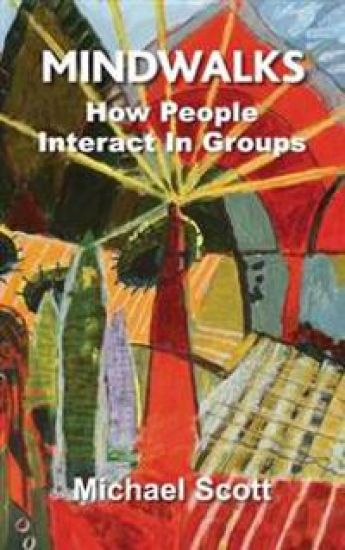
MindWalks

MindWalks

Michael Scott

Fisher King Publishing
2014
pokkari
The body of the human animal is astoundingly complex. There are, for example, about one hundred trillion cells, plus one thousand trillion micro-organisms, in each of us. This micro-universe more or less behaves as a unity, which is another miracle. Most of us think, it seems, in terms of being a personal self, as if we were truly single individuals. Each of us could, theoretically, behave as an isolated creature, grubbing around for food, maybe occasionally mating as mindlessly as we foraged and fed. We could each be a castaway on the endless ocean of meaninglessness. Yet we seek out other human multicellulars and try to communicate. The extraordinary fact is that some communication does occur. We are even surprised to encounter diversity, as if we might expect unanimity merely because we are the same species. There is a certain degree of community achieved, sometimes aspiring to the dizzy heights of civilisation. We ought to celebrate our fragile, spasmodic, appearance of oneness. These essays consist of explorations of the interactions between about twenty humans who are well-known to the author and who, collectively, form his mini-community of close friends. Names are invented and most of the encounters are semi-imaginary. The essays represent a year in the author's life, focusing on occurrences that seemed epiphanic, that took the author to a new position of awareness. The book is intended as a celebration of personal relationships. These relationships may be all we have, between the reality-bubbles we choose to call 'ourselves'.
Delphi

Delphi

Michael Scott

Princeton University Press
2014
sidottu
The oracle and sanctuary of the Greek god Apollo at Delphi were known as the "omphalos"--the "center" or "navel"--of the ancient world for more than 1000 years. Individuals, city leaders, and kings came from all over the Mediterranean and beyond to consult Delphi's oracular priestess; to set up monuments to the gods; and to take part in competitions. In this richly illustrated account, Michael Scott covers the history and nature of Delphi, from the literary and archaeological evidence surrounding the site, to its rise as a center of worship, to the constant appeal of the oracle despite her cryptic prophecies. He describes how Delphi became a contested sacred site for Greeks and Romans and a storehouse for the treasures of rival city-states and foreign kings. He also examines the eventual decline of the site and how its meaning and importance have continued to be reshaped. A unique window into the center of the ancient world, Delphi will appeal to general readers, tourists, students, and specialists.
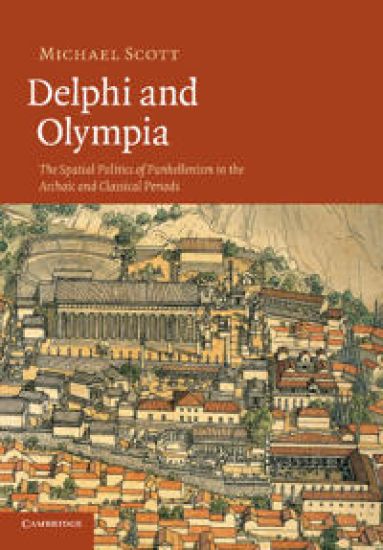
Delphi and Olympia

Delphi and Olympia

Michael Scott

Cambridge University Press
2014
pokkari
Most people think about the sanctuary of Delphi as the seat of the famous oracle and of Olympia as the site of the Olympic games. The oracle and the games, however, were but two of the many activities ongoing at both sites. This book investigates the physical remains of both sanctuaries to show how different visitors interacted with the sacred spaces of Delphi and Olympia in an important variety of ways during the archaic and classical periods. It highlights how this fluid usage impacted upon, and was itself affected by, the development of the sanctuary space and how such usage influenced the place and relationship of these two sites in the wider landscape. As a result, it argues for the re-evaluation of the roles of Delphi and Olympia in the Greek world and for a re-thinking of the usefulness of the term 'panhellenism' in Greek politics, religion and culture.
Making New Zealand's Pop Renaissance

Making New Zealand's Pop Renaissance

Michael Scott

Ashgate Publishing Limited
2013
sidottu
Since the early 2000s New Zealand has undergone a pop renaissance. Domestic artists' sales, airplay and concert attendance have all grown dramatically while new avenues for 'kiwi' pop exports emerged. Concurrent with these trends was a new collective sentiment that embraced and celebrated domestic musicians. In Making New Zealand's Pop Renaissance, Michael Scott argues that this revival arose from state policies and shows how the state built market opportunities for popular musicians through public-private partnerships and organizational affinity with existing music industry institutions. New Zealand offers an instructive case for the ways in which 'after neo-liberal' states steer and co-ordinate popular culture into market exchange by incentivizing cultural production. Scott highlights how these music policies were intended to address various economic and social problems. Arriving with the creative industries' discourse and policy making, politicians claimed these expanded popular music supports would facilitate sustainable employment and a sense of national identity. Yet popular music as economic and social policy presents a paradox: the music industry generates commercial failure and thus requires a large unattached pool of potential talent. Considering this feature, Scott analyses how state programs induced an informal economy of proto-pop production aimed at accessing competitive state funding while simultaneously encouraging musicians to adopt entrepreneurial subjectivities. In doing so he argues New Zealand's music policies are a form of social policy that unintentionally deploy hierarchical structures to foster social inclusion amongst growing numbers of creative workers.