Kirjojen hintavertailu. Mukana 12 595 353 kirjaa ja 12 kauppaa.

Kirjailija

Michael Shanks

Kirjat ja teokset yhdessä paikassa: 17 kirjaa, julkaisuja vuosilta 1987-2026, suosituimpien joukossa Planning and Politics. Vertaile teosten hintoja ja tarkista saatavuus suomalaisista kirjakaupoista.

17 kirjaa

Kirjojen julkaisuhaarukka 1987-2026.

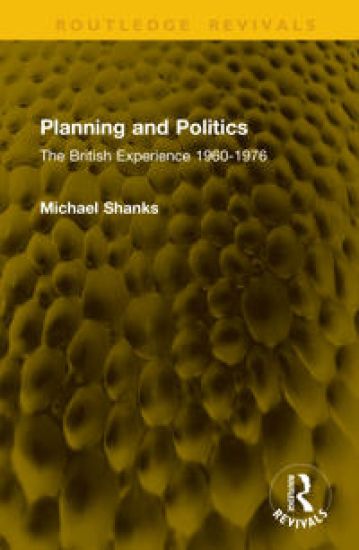
Planning and Politics

Planning and Politics

Michael Shanks

TAYLOR FRANCIS LTD
2026
sidottu
First published in 1977, Planning and Politics examines Britain’s economic planning experiments during a period when the country’s seemingly intractable economic problems had become one of the major weaknesses of the western world. Since 1960, both Conservative and Labour governments carried out a series of experiments to plan the country’s affairs better and involve industry and trade unions in vital policy decisions. Despite limited domestic success, these experiments attracted significant international interest, establishing planning as a continuing feature of British national life. Why did planning persist despite apparent failures? What went wrong with previous attempts, and what constitutional changes would result from planning instruments acquiring extra standing? Michael Shanks, without political affiliations but close to policymaking since 1960 as journalist, civil servant, industrialist, and director-general in the Common Market Commission, brings unique qualifications to this analysis. His study for PEP assesses the roles of bodies such as the NEDC, TUC, CBI and IMF, establishing reasons for failure and recipes for future success. This objective and informed analysis poses challenging questions not only for Great Britain’s future but for the western world as a whole during this critical period of economic uncertainty.
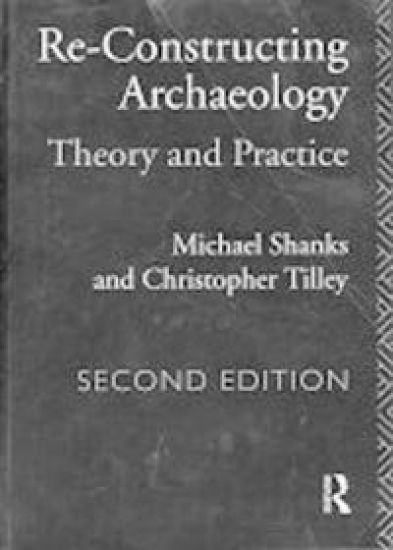
Re-constructing Archaeology

Re-constructing Archaeology

Michael Shanks; Christopher Tilley

Routledge
2016
sidottu
InRe-Constructing Archaeology, Shanks and Tilley aim to challenge the disciplinary practices of both traditional and the `new' archaeology and to present a radical alternative - a critically self-consious archaeology aware of itself as pracitce in the present, and equally a social archaeology that appreciates artefacts not merely as ovjects of analysis but as part of a social world of past and present that is charged with meaning. It is a fresh and invigorating contribution to the emergence of a philosophically and politically informed archaeology.
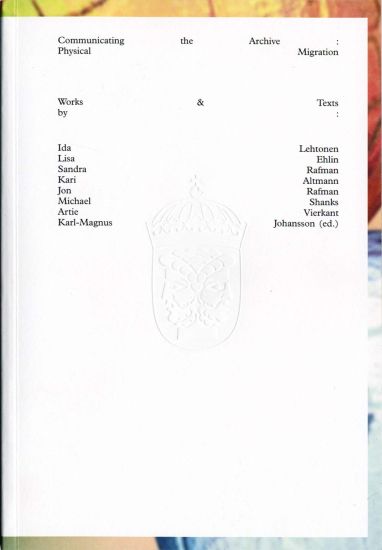
Communicating the archive : physical migration

Communicating the archive : physical migration

Ida Lehtonen; Lisa Ehlin; Sandra Rafman; Kari Altmann; Jon Rafman; Michael Shanks; Artie Vierkant; Karl-Magnus Johansson

Landsarkivet i Göteborg
2013
nidottu
There is no offline space. Or at least the experience of the Internet so deeply affects media users today that it influences their perspectives of the world outside the Web. This situation has been described as post-Internet, a term that has loosely emerged as an approach within contemporary art, defined by the social and technological conditions of networked society. The Regional State Archives in Gothenburg invited the artist Ida Lehtonen to let her artistic practice encounter the archives. In Communicating the Archive: Physical Migration, Lehtonen's work is presented and examined from an archival and media archaeological standpoint. Somewhat disregarding traditional archival values such as preservation, security and authenticity, this volume reconsiders the archive post-Internet through contributions from scholars and practitioners of diverse fields: art, psychology, digital culture, archaeology and fashion.
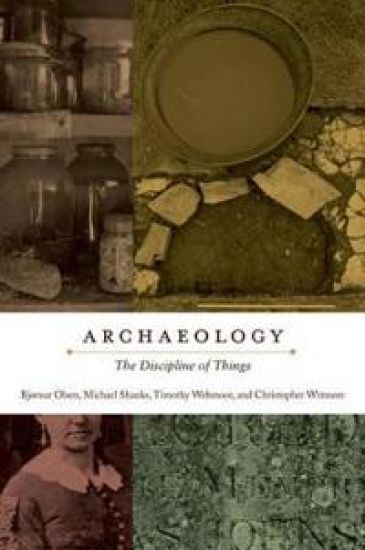
Archaeology

Archaeology

Bjørnar Olsen; Michael Shanks; Timothy Webmoor; Christopher Witmore

University of California Press
2012
sidottu
Archaeology has always been marked by its particular care, obligation, and loyalty to things. While archaeologists may not share similar perspectives or practices, they find common ground in their concern for objects monumental and mundane. This book considers the myriad ways that archaeologists engage with things in order to craft stories, both big and small, concerning our relations with materials and the nature of the past. Literally the "science of old things", archaeology does not discover the past as it was but must work with what remains. Such work involves the tangible mediation of past and present, of people and their cultural fabric, for things cannot be separated from society. Things are us. This book does not set forth a sweeping new theory. It does not seek to transform the discipline of archaeology. Rather, it aims to understand precisely what archaeologists do and to urge practitioners toward a renewed focus on and care for things.
Archaeology

Archaeology

Bjørnar Olsen; Michael Shanks; Timothy Webmoor; Christopher Witmore

University of California Press
2012
pokkari
Archaeology has always been marked by its particular care, obligation, and loyalty to things. While archaeologists may not share similar perspectives or practices, they find common ground in their concern for objects monumental and mundane. This book considers the myriad ways that archaeologists engage with things in order to craft stories, both big and small, concerning our relations with materials and the nature of the past. Literally the "science of old things", archaeology does not discover the past as it was but must work with what remains. Such work involves the tangible mediation of past and present, of people and their cultural fabric, for things cannot be separated from society. Things are us. This book does not set forth a sweeping new theory. It does not seek to transform the discipline of archaeology. Rather, it aims to understand precisely what archaeologists do and to urge practitioners toward a renewed focus on and care for things.
The Archaeological Imagination

The Archaeological Imagination

Michael Shanks

Left Coast Press Inc
2012
nidottu
Archaeology is a way of acting and thinking—about what is left of the past, about the temporality of what remains, about material and temporal processes to which people and their goods are subject, about the processes of order and entropy, of making, consuming and discarding at the heart of human experience. These elements, and the practices that archaeologists follow to uncover them, is the essence of the archaeological imagination. In this extended essay, renowned archaeological theorist Michael Shanks offers his colleagues and students a window on this imaginative world of past and present and the creative role archaeology can play in uncovering it, analyzing it, and interpreting it.
The Archaeological Imagination

The Archaeological Imagination

Michael Shanks

Left Coast Press Inc
2012
sidottu
Archaeology is a way of acting and thinking—about what is left of the past, about the temporality of what remains, about material and temporal processes to which people and their goods are subject, about the processes of order and entropy, of making, consuming and discarding at the heart of human experience. These elements, and the practices that archaeologists follow to uncover them, is the essence of the archaeological imagination. In this extended essay, renowned archaeological theorist Michael Shanks offers his colleagues and students a window on this imaginative world of past and present and the creative role archaeology can play in uncovering it, analyzing it, and interpreting it.
Art and the Early Greek State

Art and the Early Greek State

Michael Shanks

Cambridge University Press
2004
pokkari
Widely known as an innovative figure in contemporary archaeology, Michael Shanks has written a challenging contribution to recent debates on the emergence of the Greek city states in the first millennium BC. He interprets the art and archaeological remains of Korinth to elicit connections between new urban environments, foreign trade, warfare, and the ideology of male sovereignty. Adopting an interdisciplinary perspective, which draws on an anthropologically informed archaeology, ancient history, art history, material culture studies and structural approaches to the classics, his book raises large questions about the links between design and manufacture, political and social structure, and culture and ideology in the ancient Greek world.
Theatre/Archaeology

Theatre/Archaeology

Mike Pearson; Michael Shanks

Routledge
2001
sidottu
Theatre/Archaeology is a provocative challenge to disciplinary practice and intellectual boundaries. It brings together radical proposals in both archaeological and performance theory to generate a startlingly original and intriguing methodological framework.
Theatre/Archaeology

Theatre/Archaeology

Mike Pearson; Michael Shanks

Routledge
2001
nidottu
Theatre/Archaeology is a provocative challenge to disciplinary practice and intellectual boundaries. It brings together radical proposals in both archaeological and performance theory to generate a startlingly original and intriguing methodological framework.
The Classical Archaeology of Greece

The Classical Archaeology of Greece

Michael Shanks

Routledge
1997
nidottu
Archaeologists do not discover the past but take the fragmentary remains which they recover and make something of them. Archaeology is a process of detection and supposition; this is what makes it so fascinating. However, the interpretations of archaeologists differ and change over time. They depend upon the amount of evidence available, the ideas and preconceptions of the archaeologist and their interests and aims.Michael Shanks's enlivening work is a guide to the discipline of classical archaeology and its objects. It assesses archaeology as a means of reconstructing ancient Greek society using the latest approaches of social archaeology. In addition, The Classical Archaeology of Greece outlines the history of the discipline and discusses why Classical Greece continues to fascinate us and why it has had such an impact on European civilization and identity.
The Classical Archaeology of Greece

The Classical Archaeology of Greece

Michael Shanks

Routledge
1995
sidottu
Archaeologists do not discover the past but take the fragmentary remains which they recover and make something of them. Archaeology is a process of detection and supposition; this is what makes it so fascinating. However, the interpretations of archaeologists differ and change over time. They depend upon the amount of evidence available, the ideas and preconceptions of the archaeologist and their interests and aims.Michael Shanks's enlivening work is a guide to the discipline of classical archaeology and its objects. It assesses archaeology as a means of reconstructing ancient Greek society using the latest approaches of social archaeology. In addition, The Classical Archaeology of Greece outlines the history of the discipline and discusses why Classical Greece continues to fascinate us and why it has had such an impact on European civilization and identity.
Re-constructing Archaeology

Re-constructing Archaeology

Michael Shanks; Christopher Tilley

Routledge
1992
nidottu
InRe-Constructing Archaeology, Shanks and Tilley aim to challenge the disciplinary practices of both traditional and the `new' archaeology and to present a radical alternative - a critically self-consious archaeology aware of itself as pracitce in the present, and equally a social archaeology that appreciates artefacts not merely as ovjects of analysis but as part of a social world of past and present that is charged with meaning. It is a fresh and invigorating contribution to the emergence of a philosophically and politically informed archaeology.
Social Theory and Archaeology

Social Theory and Archaeology

Michael Shanks; Christopher Tilley

Polity Press
1987
nidottu
Archaeological theory and method have recently become the subject of vigorous debate centred on the growing realization that archaeological theory is social theory and as such can be looked at by means of a wide variety of sociological frameworks, such as structuralism and post-structuralism, Marxism and critical theory. In this analysis, Shanks and Tilley argue against the functionalism and positivism which result from an inadequate assimilation of social theory into the day-to-day practice of archaeology. Aimed at an advanced undergraduate audience, the book presents a challenge to the traditional idea of the archaeologist as explorer or discoverer and the more recent emphasis on archaeology as behavioural science. The authors examine and evaluate the new possibilities for a self-reflexive, critical and political practice of archaeology, productively linking the past to the present.