Kirjojen hintavertailu. Mukana 12 595 353 kirjaa ja 12 kauppaa.

Kirjailija

Michael Sharwood Smith

Kirjat ja teokset yhdessä paikassa: 9 kirjaa, julkaisuja vuosilta 1978-2026, suosituimpien joukossa Aspects of Future Reference in a Pedagogical Grammar of English. Vertaile teosten hintoja ja tarkista saatavuus suomalaisista kirjakaupoista.

9 kirjaa

Kirjojen julkaisuhaarukka 1978-2026.

The Human Mind Revealed

The Human Mind Revealed

Michael Sharwood Smith

TAYLOR FRANCIS LTD
2026
nidottu
This book provides readers with a new working model of the human mind based on contemporary trends in cognitive science. Taking a distinct biological approach, the book presents mind and brain as two sides of the same coin while at the same time emphasizing the need for separate accounts. The reader is introduced step by step to the mind account showing how it operates. The text explores the mind's basic architecture examining how its family of eleven systems interact flexibly and collaboratively to process information, mostly subconsciously. Key topics include the five systems that build specialized representations from sensory input, consciousness, memory, emotions, comparisons between human and animal cognition, language processing, and concepts of Self, Free Will, and spirituality. The book illuminates how general principles of activation, association, and competition act in combination with the unique principles that govern each of the mind’s specialized systems. One chapter explains two of these systems in more detail to illustrate how expertise from any relevant area of research can be used elaborate the basic model. Written in an accessible style, The Human Mind Revealed offers valuable insights for students and scholars across cognitive science disciplines as well as general readers curious about how the mind works.
The Human Mind Revealed

The Human Mind Revealed

Michael Sharwood Smith

TAYLOR FRANCIS LTD
2026
sidottu
This book provides readers with a new working model of the human mind based on contemporary trends in cognitive science. Taking a distinct biological approach, the book presents mind and brain as two sides of the same coin while at the same time emphasizing the need for separate accounts. The reader is introduced step by step to the mind account showing how it operates. The text explores the mind's basic architecture examining how its family of eleven systems interact flexibly and collaboratively to process information, mostly subconsciously. Key topics include the five systems that build specialized representations from sensory input, consciousness, memory, emotions, comparisons between human and animal cognition, language processing, and concepts of Self, Free Will, and spirituality. The book illuminates how general principles of activation, association, and competition act in combination with the unique principles that govern each of the mind’s specialized systems. One chapter explains two of these systems in more detail to illustrate how expertise from any relevant area of research can be used elaborate the basic model. Written in an accessible style, The Human Mind Revealed offers valuable insights for students and scholars across cognitive science disciplines as well as general readers curious about how the mind works.
The Multilingual Mind

The Multilingual Mind

Michael Sharwood Smith; John Truscott

Cambridge University Press
2019
pokkari
Language lies at the heart of the way we think, communicate and view the world. Most people on this planet are in some sense multilingual. The Multilingual Mind explores, within a processing perspective, how languages share space and interact in our minds. The mental architecture proposed in this volume permits research across many domains in cognitive science to be integrated and explored within one explanatory framework, recasting compatible insights and findings in terms of a common set of terms and concepts. The MOGUL framework has already proven effective for shedding light on the relationship between processing and learning, metalinguistic knowledge, consciousness, optionality, crosslinguistic influence, the initial state, 'UG access', ultimate attainment, input enhancement, and even language instruction. This groundbreaking work will be essential reading for linguists working in language acquisition, multilingualism, and language processing, as well as for those working in related areas of psychology, neurology and cognitive science.
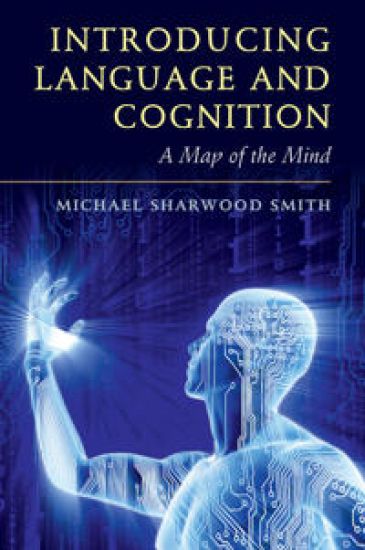
Introducing Language and Cognition

Introducing Language and Cognition

Michael Sharwood Smith

Cambridge University Press
2017
sidottu
In this accessible introduction, Mike Sharwood Smith provides a working model or 'map' of the mind, with language as its centrepiece. Drawing on cutting-edge research across linguistics, psychology and neuroscience, it allows students to quickly grasp how each separate aspect of the mind's operations can be related. This 'big picture' view includes the way the mind makes, stores and loses memories of all kinds as well how its various 'expert systems' combine and collaborate to solve, typically beyond our conscious awareness, the myriad of tasks we are faced with every minute and millisecond of our existence. The book also focuses on language, that is, the mind of monolingual, bilingual and multilingual speakers. It will be of interest to all students wishing to learn more about the complex relationship between language - one of the most important ways in which we define ourselves as human - and the mind.
Introducing Language and Cognition

Introducing Language and Cognition

Michael Sharwood Smith

Cambridge University Press
2017
pokkari
In this accessible introduction, Mike Sharwood Smith provides a working model or 'map' of the mind, with language as its centrepiece. Drawing on cutting-edge research across linguistics, psychology and neuroscience, it allows students to quickly grasp how each separate aspect of the mind's operations can be related. This 'big picture' view includes the way the mind makes, stores and loses memories of all kinds as well how its various 'expert systems' combine and collaborate to solve, typically beyond our conscious awareness, the myriad of tasks we are faced with every minute and millisecond of our existence. The book also focuses on language, that is, the mind of monolingual, bilingual and multilingual speakers. It will be of interest to all students wishing to learn more about the complex relationship between language - one of the most important ways in which we define ourselves as human - and the mind.
Second Language Learning

Second Language Learning

Michael Sharwood Smith; Christopher N. Candlin

Routledge
2016
sidottu
A survey and analysis of second language theory discusses the development of ideas in this expanding area of language studies. It looks at the implications of these ideas and directions for future research. Contains study questions and activities as well as practical guidelines on the use of available research resources.
The Multilingual Mind

The Multilingual Mind

Michael Sharwood Smith; John Truscott

Cambridge University Press
2014
sidottu
Language lies at the heart of the way we think, communicate and view the world. Most people on this planet are in some sense multilingual. The Multilingual Mind explores, within a processing perspective, how languages share space and interact in our minds. The mental architecture proposed in this volume permits research across many domains in cognitive science to be integrated and explored within one explanatory framework, recasting compatible insights and findings in terms of a common set of terms and concepts. The MOGUL framework has already proven effective for shedding light on the relationship between processing and learning, metalinguistic knowledge, consciousness, optionality, crosslinguistic influence, the initial state, 'UG access', ultimate attainment, input enhancement, and even language instruction. This groundbreaking work will be essential reading for linguists working in language acquisition, multilingualism, and language processing, as well as for those working in related areas of psychology, neurology and cognitive science.
Second Language Learning

Second Language Learning

Michael Sharwood Smith

Longman
1994
nidottu
A survey and analysis of second language theory discusses the development of ideas in this expanding area of language studies. It looks at the implications of these ideas and directions for future research. Contains study questions and activities as well as practical guidelines on the use of available research resources.
Aspects of Future Reference in a Pedagogical Grammar of English

Aspects of Future Reference in a Pedagogical Grammar of English

Michael Sharwood Smith

Herbert Cie Lang AG, Buchhandlung Antiquariat
1978
nidottu
This study sets out a theoretical approach to designing pedagogical grammars based on both psychological and linguistic principles in an attempt to devise a principled rather than electic way in which to select and present language data to the learner. These principles are illustrated by means of an investigation into verbal means of expressing future time in English and into suitable ways of presenting the relevant facts in a pedagogical grammar.