Kirjailija
Michael Shermer
Kirjat ja teokset yhdessä paikassa: 34 kirjaa, julkaisuja vuosilta 2002-2026, suosituimpien joukossa Truth. Vertaile teosten hintoja ja tarkista saatavuus suomalaisista kirjakaupoista.
34 kirjaa
Kirjojen julkaisuhaarukka 2002-2026.
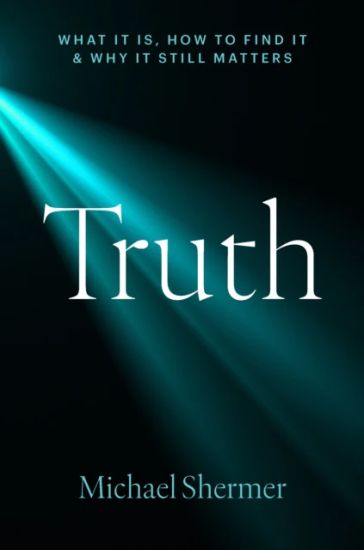
A clear-eyed look at thinking straight in a world crowded with noise, bias, and misinformation. "Fake news." "Alternative facts." "Post-truth." Misinformation is everywhere, sparking public confusion and polarization. In Truth, best-selling author Michael Shermer cuts through the noise to argue that not only does truth still matter—but also that it's essential to our individual and collective flourishing. This sharp-sighted and accessible book provides a framework for thinking more clearly in an age clouded by doubt and distortion. Shermer, the author of Conspiracy: Why the Rational Believe the Irrational, explores why truth deserves our attention, how falsehoods take hold in the public's imagination, and how we can resist manipulation through reason, evidence, and open inquiry. This book introduces powerful tools for evaluating claims, including the concepts of causality, correlation, and Bayesian reasoning. Beyond these abstract ideas, Shermer also examines how we determine truth in specific domains—such as science, history, and religion—and brings clarity to hot-button topics like UFOs, conspiracy theories, miracles, mystical experiences, consciousness, morality, God, and even existence. With his trademark wit and intellectual rigor, Shermer reveals how even the most intelligent among us fall prey to such pitfalls as "myside bias" and motivated reasoning and how a commitment to universal realism can help push back against tribalism and misinformation. Truth offers a timely antidote to cynicism and confusion. It emphasizes critical thinking and urges readers to rebuild the intellectual foundations of a functioning democracy by embracing the pursuit of truth, however complex or inconvenient it may be.
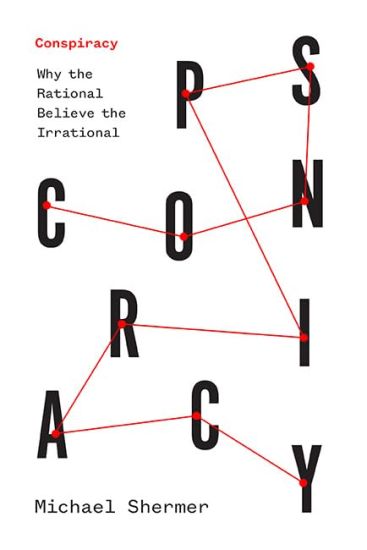
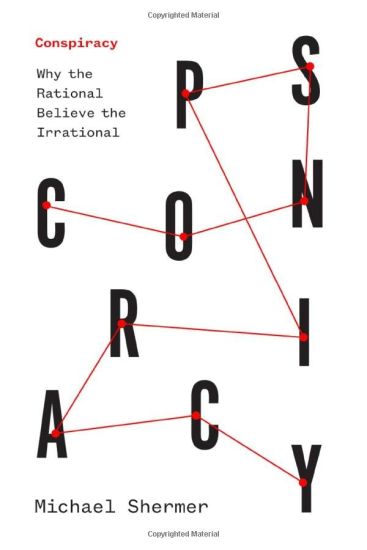
"A well-written and essential tool for those navigating today's complicated geopolitical landscape."—Library Journal Best-selling author Michael Shermer presents an overarching theory of conspiracy theories—who believes them and why, which ones are real, and what we should do about them.Nothing happens by accident, everything is connected, and there are no coincidences: that is the essence of conspiratorial thinking. Long a fringe part of the American political landscape, conspiracy theories are now mainstream: 147 members of Congress voted in favor of objections to the 2020 presidential election based on an unproven theory about a rigged electoral process promoted by the mysterious group QAnon. But this is only the latest example in a long history of ideas that include the satanic panics of the 1980s, the New World Order and Vatican conspiracy theories, fears about fluoridated water, speculations about President John F. Kennedy's assassination, and the notions that the Sandy Hook massacre was a false-flag operation and 9/11 was an inside job. In Conspiracy, Michael Shermer presents an overarching review of conspiracy theories—who believes them and why, which ones are real, and what we should do about them. Trust in conspiracy theories, he writes, cuts across gender, age, race, income, education level, occupational status—and even political affiliation. One reason that people believe these conspiracies, Shermer argues, is that enough of them are real that we should be constructively conspiratorial: elections have been rigged (LBJ's 1948 Senate race); medical professionals have intentionally harmed patients in their care (Tuskegee); your government does lie to you (Watergate, Iran-Contra, and Afghanistan); and, tragically, some adults do conspire to sexually abuse children. But Shermer reveals that other factors are also in play: anxiety and a sense of loss of control play a role in conspiratorial cognition patterns, as do certain personality traits. This engaging book will be an important read for anyone concerned about the future direction of American politics, as well as anyone who's watched friends or family fall into patterns of conspiratorial thinking.
Who is the 'Devil'? And what is he due? The Devil is anyone who disagrees with you. And what he is due is the right to speak his mind. He must have this for your own safety's sake because his freedom is inextricably tied to your own. If he can be censored, why shouldn't you be censored? If we put barriers up to silence 'unpleasant' ideas, what's to stop the silencing of any discussion? This book is a full-throated defense of free speech and open inquiry in politics, science, and culture by the New York Times bestselling author and skeptic Michael Shermer. The new collection of essays and articles takes the Devil by the horns by tackling five key themes: free thought and free speech, politics and society, scientific humanism, religion, and the ideas of controversial intellectuals. For our own sake, we must give the Devil his due.
Aliens. Ley lines. Water dowsing. Conspiracies and myths captivate imaginations and promise mystery and magic. Whether it's arguing about the moon landing hoax or a Frisbee-like Earth drifting through space, when held up to science and critical thinking, these ideas fall flat. In Weird Earth: Debunking Strange Ideas About Our Planet, Donald R. Prothero demystifies these conspiracies and offers answers to some of humanity's most outlandish questions. Applying his extensive scientific knowledge, Prothero corrects misinformation that con artists and quacks use to hoodwink others about geology—hollow earth, expanding earth, and bizarre earthquakes—and mystical and paranormal happenings—healing crystals, alien landings, and the gates of hell. By deconstructing wild claims such as prophesies of imminent natural disasters, Prothero provides a way for everyone to recognize dubious assertions. Prothero answers these claims with facts, offering historical and scientific context in a light-hearted manner that is accessible to everyone, no matter their background. With a careful layering of evidence in geology, archaeology, and biblical and historical records, Prothero's Weird Earth examines each conspiracy and myth and leaves no question unanswered.
Who is the 'Devil'? And what is he due? The Devil is anyone who disagrees with you. And what he is due is the right to speak his mind. He must have this for your own safety's sake because his freedom is inextricably tied to your own. If he can be censored, why shouldn't you be censored? If we put barriers up to silence 'unpleasant' ideas, what's to stop the silencing of any discussion? This book is a full-throated defense of free speech and open inquiry in politics, science, and culture by the New York Times bestselling author and skeptic Michael Shermer. The new collection of essays and articles takes the Devil by the horns by tackling five key themes: free thought and free speech, politics and society, scientific humanism, religion, and the ideas of controversial intellectuals. For our own sake, we must give the Devil his due.
Nebesa na zemli. Scho kazhe nauka pro potojbichne zhittja ta bezsmertja
Michael Shermer
Nash Format
2019
sidottu
Naukovo-populjarna rozpovid pro kljuchovi istorichni, antropologichni ta psikhologichni kontseptsiji, jaki pojasnjujut smert, ta jikhnij zv'jazok iz mifami ta religijami.TematikaPopuljarna nauka.Pro knizhkuUsvidomlennja nashoji smertnosti j nedoskonalosti porodilo bezlich viruvan ta postijno pidshtovkhuje do naukovikh doslidzhen schodo zmolodzhennja ljudini. U riznikh formakh ljudi pragnut dukhovnogo bezsmertja na nebesakh, fizichnogo bezsmertja na zemli chi mozhlivosti vdoskonalennja tut i zaraz. Svitski filosofi ta vcheni shukajut sposobiv radikalnogo prodovzhennja zhittja, pismenniki-fantasti sperechajutsja pro majbutnje ljudstva, mrijniki-utopisti namagajutsja stvoriti dlja nogo idealni umovi, pesimisti prorokujut zagibel tsivilizatsiji, a diktatori j demagogi ekspluatujut usi tsi strakhi.Dlja kogo knizhkaDlja vsikh, khto tsikavitsja naukoju, zakhopljujetsja naukovo-populjarnoju literaturoju.Chomu tsja knizhkaU tsij knizhtsi populjarizator nauki Majkl Shermer analizuje kljuchovi istorichni, antropologichni, psikhologichni kontseptsiji, jaki pojasnjujut smert, rozpovidaje, khto buli ti ljudi, jaki pershimi usvidomili svoju smertnist, i jak tse rozuminnja privelo do stvorennja mifiv ta religij.Pro avtoraMajkl Shermer - amerikanskij naukovo-populjarnij avtor, zasnovnik "Spilnoti skeptikiv", jaka zajmajetsja rozsliduvannjam psevdonaukovikh zajav ta povidomlen pro nadprirodni javisch. Dopisuvach Scientific American ta Time.com.Knizhki na skhozhu tematiku* "Shoste Vimirannja: neprirodna istorija", Elizabet Kolbert, "Nash format", 2016 rik * "Chomu evoljutsija pravdiva", Dzherri Kojn, "Nash format", 2015 rikVidguki"Shermer - tse majak ratsionalnogo rozumu v okeani irratsionalnosti". Nil Degrass Tajson, direktor planetariju Gajdena u Amerikanskomu muzeji prirodoznavstva "Absoljutno vrazhajucha, napovnena glibokimi idejami knizhka". Emi Chua, profesorka Jelskogo universitetu TsitatiPro usvidomlennja smertnosti Odnijeju z najglibshikh nashikh dumok je usvidomlennja vlasnoji smertnosti, ale ne vona je golovnim rushijem ljudskoji dumki j povedinki, tvorchosti j produktivnosti. Nasha nezdatnist ujaviti vlasne nebuttja oznachaje, scho ostatochne rozuminnja vlasnoji smertnosti zavzhdi vislizatime vid nas, zalishajuchi nas zhiti tut i zaraz, khoch nas i vabit majbutnje.Pro sprijnjatta raju ta pekla U 2009 rotsi opituvannja gromadskoji dumki, provedene institutom Garrisa, vijavilo, scho v isnuvannja tsarstva nebesnogo virjat 75 vidsotkiv amerikantsiv, prichomu najnizhchij rezultat, 48 vidsotkiv, pokazali jevreji, a najvischij, 97 vidsotkiv, - pererodzheni khristijani. TSikavo, scho vira v isnuvannja dijavola j nadija na sili zla postupovo zmenshujetsja jak u liberalnikh, tak i v konservativnikh tserkvakh, i v usikh opituvannjakh vira v isnuvannja pekla vidstaje vid viri v isnuvannja raju na 20-25 vidsotkiv, demonstrujuchi tim samim skhilnist opitanikh do nadmirnogo optimizmu.PerekladachOlga Zakharchenko
Heavens on Earth: The Scientific Search for the Afterlife, Immortality, and Utopia
Michael Shermer
St. Martin's Griffin
2019
nidottu
A scientific exploration into humanity's obsession with the afterlife and quest for immortality from the bestselling author and skeptic Michael ShermerIn his most ambitious work yet, Shermer sets out to discover what drives humans' belief in life after death, focusing on recent scientific attempts to achieve immortality along with utopian attempts to create heaven on earth. For millennia, religions have concocted numerous manifestations of heaven and the afterlife, and though no one has ever returned from such a place to report what it is really like--or that it even exists--today science and technology are being used to try to make it happen in our lifetime. From radical life extension to cryonic suspension to mind uploading, Shermer considers how realistic these attempts are from a proper skeptical perspective. Heavens on Earth concludes with an uplifting paean to purpose and progress and how we can live well in the here-and-now, whether or not there is a hereafter.
A psychiatrist presents a compelling argument for how human purpose and caring emerged in a spontaneous and unguided universe. Can there be purpose without God? This book is about how human purpose and caring, like consciousness and absolutely everything else in existence, could plausibly have emerged and evolved unguided, bottom-up, in a spontaneous universe. A random world--which according to all the scientific evidence and despite our intuitions is the actual world we live in--is too often misconstrued as nihilistic, demotivating, or devoid of morality and meaning. Drawing on years of wide-ranging, intensive clinical experience as a psychiatrist, and his own family experience with cancer, Dr. Lewis helps readers understand how people cope with random adversity without relying on supernatural belief. In fact, as he explains, although coming to terms with randomness is often frightening, it can be liberating and empowering too. Written for those who desire a scientifically sound yet humanistic view of the world, Lewis's book examines science's inroads into the big questions that occupy religion and philosophy. He shows how our sense of purpose and meaning is entangled with mistaken intuitions that events in our lives happen for some intended cosmic reason and that the universe itself has inherent purpose. Dispelling this illusion, and integrating the findings of numerous scientific fields, he shows how not only the universe, life, and consciousness but also purpose, morality, and meaning could, in fact, have emerged and evolved spontaneously and unguided. There is persuasive evidence that these qualities evolved naturally and without mystery, biologically and culturally, in humans as conscious, goal-directed social animals. While acknowledging the social and psychological value of progressive forms of religion, the author respectfully critiques even the most sophisticated theistic arguments for a purposeful universe. Instead, he offers an evidence-based, realistic yet optimistic and empathetic perspective. This book will help people to see the scientific worldview of an unguided, spontaneous universe as awe-inspiring and foundational to building a more compassionate society.
A fascinating new popular psychology book about how and why were are attracted to the notion of heaven, and how religious and secular people alike look ahead to 'the next life'.
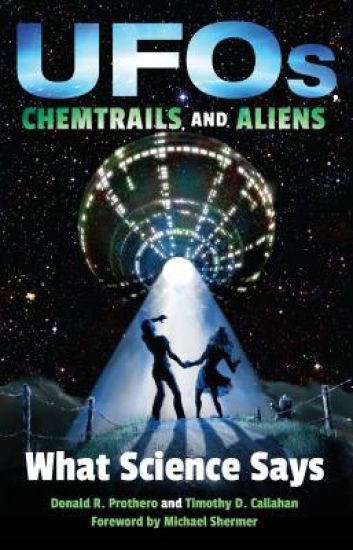
UFOs, Chemtrails, and Aliens
Donald R. Prothero; Timothy D. Callahan; Michael Shermer
Indiana University Press
2017
sidottu
UFOs. Aliens. Strange crop circles. Giant figures scratched in the desert surface along the coast of Peru. The amazing alignment of the pyramids. Strange lines of clouds in the sky. The paranormal is alive and well in the American cultural landscape. In UFOs, Chemtrails, and Aliens, Donald R. Prothero and Tim Callahan explore why such demonstrably false beliefs thrive despite decades of education and scientific debunking. Employing the ground rules of science and the standards of scientific evidence, Prothero and Callahan discuss a wide range of topics including the reliability of eyewitness testimony, psychological research into why people want to believe in aliens and UFOs, and the role conspiratorial thinking plays in UFO culture. They examine a variety of UFO sightings and describe the standards of evidence used to determine whether UFOs are actual alien spacecraft. Finally, they consider our views of aliens and the strong cultural signals that provide the shapes and behaviors of these beings. While their approach is firmly based in science, Prothero and Callahan also share their personal experiences of Area 51, Roswell, and other legendary sites, creating a narrative that is sure to engross both skeptics and believers.
UFOs, Chemtrails, and Aliens
Donald R. Prothero; Timothy D. Callahan; Michael Shermer
Indiana University Press
2017
pokkari
UFOs. Aliens. Strange crop circles. Giant figures scratched in the desert surface along the coast of Peru. The amazing alignment of the pyramids. Strange lines of clouds in the sky. The paranormal is alive and well in the American cultural landscape. In UFOs, Chemtrails, and Aliens, Donald R. Prothero and Tim Callahan explore why such demonstrably false beliefs thrive despite decades of education and scientific debunking. Employing the ground rules of science and the standards of scientific evidence, Prothero and Callahan discuss a wide range of topics including the reliability of eyewitness testimony, psychological research into why people want to believe in aliens and UFOs, and the role conspiratorial thinking plays in UFO culture. They examine a variety of UFO sightings and describe the standards of evidence used to determine whether UFOs are actual alien spacecraft. Finally, they consider our views of aliens and the strong cultural signals that provide the shapes and behaviors of these beings. While their approach is firmly based in science, Prothero and Callahan also share their personal experiences of Area 51, Roswell, and other legendary sites, creating a narrative that is sure to engross both skeptics and believers.
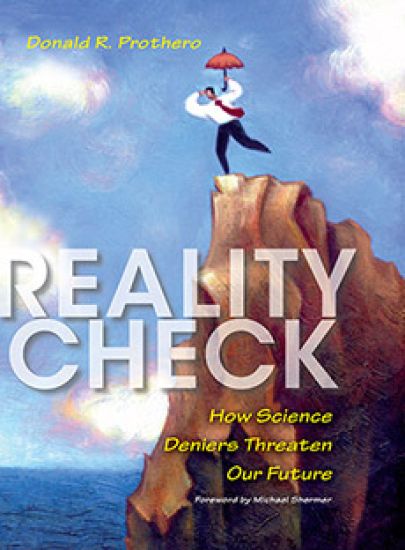
The battles over evolution, climate change, childhood vaccinations, and the causes of AIDS, alternative medicine, oil shortages, population growth, and the place of science in our country—all are reaching a fevered pitch. Many people and institutions have exerted enormous efforts to misrepresent or flatly deny demonstrable scientific reality to protect their nonscientific ideology, their power, or their bottom line. To shed light on this darkness, Donald R. Prothero explains the scientific process and why society has come to rely on science not only to provide a better life but also to reach verifiable truths no other method can obtain. He describes how major scientific ideas that are accepted by the entire scientific community (evolution, anthropogenic global warming, vaccination, the HIV cause of AIDS, and others) have been attacked with totally unscientific arguments and methods. Prothero argues that science deniers pose a serious threat to society, as their attempts to subvert the truth have resulted in widespread scientific ignorance, increased risk of global catastrophes, and deaths due to the spread of diseases that could have been prevented.
In Skeptic, Shermer "turns a critical eye toward questions big, small, and trivial." His trademark combination of deep scientific understanding and entertaining writing style has thrilled his huge and devoted audience for years. Now, seventy-five of these columns are available together for the first time, taking on a wide range of subjects, from psychology and human nature to religion and pseudoscience. A welcome addition for his fans and a stimulating introduction for new readers, Skeptic is a must-read collection from one of our leading science commentators, "Dense with facts, convincing arguments, and curious statistics, this is an ingenious collection of light entertainment for readers who believe that explaining stuff is a good idea."
En skriftlig dialog mellom Rupert Sheldrake og Michael Shermer. Sommeren 2015 var nettstedet The Best Schools vert for en skriftlig dialog mellom Rupert Sheldrake og Michael Shermer. Dialogene foregikk skriftlig over tre måneder med tre hovedtema - hvert med åpningsinnlegg, respons og replikk. The Best Schools var bevisst på å kalle dette dialog og ikke debatt, med det siktemål å nærme seg bedre forståelse, fremfor å score poeng. Denne boken samler dialogene, for første gang i trykt form. Shermer og Sheldrake er grunnleggende uenige når det gjelder de tre hovedtemaene: vitenskap, Gud og paranormale fenomener. En sjelden sjanse til selv å reflektere over sentrale og kompliserte spørsmål!
Abominable Science!
Daniel Loxton; Donald R. Prothero; Michael Shermer
Columbia University Press
2015
pokkari
Throughout our history, humans have been captivated by mythic beasts and legendary creatures. Tales of Bigfoot, the Yeti, and the Loch Ness monster are part of our collective experience. Now comes a book from two dedicated investigators that explores and elucidates the fascinating world of cryptozoology. Daniel Loxton and Donald R. Prothero have written an entertaining, educational, and definitive text on cryptids, presenting the arguments both for and against their existence and systematically challenging the pseudoscience that perpetuates their myths. After examining the nature of science and pseudoscience and their relation to cryptozoology, Loxton and Prothero take on Bigfoot; the Yeti, or Abominable Snowman, and its cross-cultural incarnations; the Loch Ness monster and its highly publicized sightings; the evolution of the Great Sea Serpent; and Mokele Mbembe, or the Congo dinosaur. They conclude with an analysis of the psychology behind the persistent belief in paranormal phenomena, identifying the major players in cryptozoology, discussing the character of its subculture, and considering the challenge it poses to clear and critical thinking in our increasingly complex world.
Pseudoscience and Deception is a compilation of some of the most eye-opening skeptical articles pertaining to extraordinary claims and pseudoscience. The articles explore paranormal, extraordinary, or fringe-science claims and reveal logical explanations or outline the deceptive tactics involved in convincing the vulnerable. Topics include claims of astrology, psychic ability, alternative medicine, after-death communication, psychotherapy, and pseudoscience. The contributors to this book are among the most accomplished critical thinkers, scientists, and educators in the world and tackle their respective topics from a rational, logical, and skeptical perspective. Most students are seldom excited to study “critical thinking”—with the exception of allegedly paranormal phenomena as the subject matter. Educators must seize this golden opportunity to witness and experience students’ genuine engagement in studying critical thinking.
Abominable Science!
Daniel Loxton; Donald R. Prothero; Michael Shermer
Columbia University Press
2013
sidottu
Throughout our history, humans have been captivated by mythic beasts and legendary creatures. Tales of Bigfoot, the Yeti, and the Loch Ness monster are part of our collective experience. Now comes a book from two dedicated investigators that explores and elucidates the fascinating world of cryptozoology. Daniel Loxton and Donald R. Prothero have written an entertaining, educational, and definitive text on cryptids, presenting the arguments both for and against their existence and systematically challenging the pseudoscience that perpetuates their myths. After examining the nature of science and pseudoscience and their relation to cryptozoology, Loxton and Prothero take on Bigfoot; the Yeti, or Abominable Snowman, and its cross-cultural incarnations; the Loch Ness monster and its highly publicized sightings; the evolution of the Great Sea Serpent; and Mokele Mbembe, or the Congo dinosaur. They conclude with an analysis of the psychology behind the persistent belief in paranormal phenomena, identifying the major players in cryptozoology, discussing the character of its subculture, and considering the challenge it poses to clear and critical thinking in our increasingly complex world.
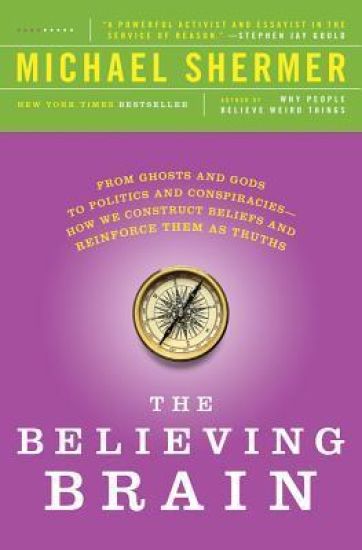
The Believing Brain: From Ghosts and Gods to Politics and Conspiracies - How We Construct Beliefs and Reinforce Them as Truths
Michael Shermer
St. Martin's Griffin
2012
nidottu
The Believing Brain is bestselling author Michael Shermer's comprehensive and provocative theory on how beliefs are born, formed, reinforced, challenged, changed, and extinguished Synthesizing thirty years of research, psychologist and science historian Michael Shermer upends the traditional thinking about how humans form beliefs about the world. Simply put, beliefs come first and explanations for beliefs follow. The brain, Shermer argues, is a belief engine. Using sensory data that flow in through the senses, the brain naturally begins to look for and find patterns, and then infuses those patterns with meaning, forming beliefs. Once beliefs are formed the brain begins to look for and find confirmatory evidence in support of those beliefs, accelerating the process of reinforcing them, and round and round the process goes in a positive-feedback loop. In The Believing Brain, Shermer provides countless real-world examples of how this process operates, from politics, economics, and religion to conspiracy theories, the supernatural, and the paranormal. And ultimately, he demonstrates why science is the best tool ever devised to determine whether or not our beliefs match reality.