Kirjojen hintavertailu. Mukana 12 390 323 kirjaa ja 12 kauppaa.
Kirjailija
Michael Silberstein
Kirjat ja teokset yhdessä paikassa: 7 kirjaa, julkaisuja vuosilta 2010-2024, suosituimpien joukossa Die soziale Frage und die mosaische Gesetzgebung. Vertaile teosten hintoja ja tarkista saatavuus suomalaisista kirjakaupoista.
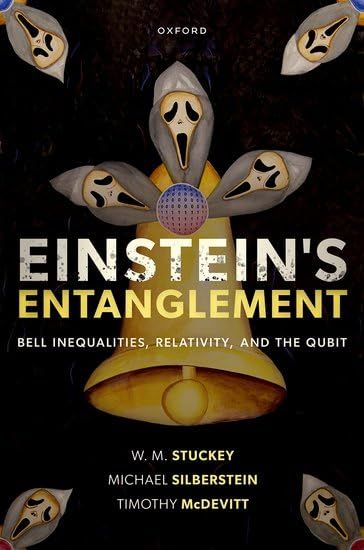
Einstein introduced quantum entanglement in 1935 and referred to it as “spooky actions at a distance” because it seemed to conflict with his theory of special relativity. Today, some refer to it as "the greatest mystery in physics" and the 2022 Nobel Prize in Physics was even awarded for experimental confirmation of the "spookiness." While the mystery is experimentally well-established, its solution remains elusive because it is commonly believed that quantum entanglement entails that quantum mechanics is incomplete, that the world works according to "spooky actions at a distance," that causes from the future create effects in the present, that there is "superdeterministic" causal control of experimental procedures, that people can correctly disagree on the outcome of one and the same experiment, and that a single experimental measurement can produce all possible outcomes. In this book, a rigorous solution to the mystery of quantum entanglement is provided that entails none of those things. The key to this seemingly impossible feat is - to use Einstein's own language - a "principle" explanation that foregoes the need for any "constructive" explanation of quantum entanglement, such as those listed above. Ironically, the proposed principle explanation is Einstein's own relativity principle as grounded in quantum information theory. So contrary to popular belief, quantum mechanics and special relativity are far from inconsistent, as both are a consequence of the exact same relativity principle.
Science, philosophy of science, and metaphysics have long been concerned with the question of how order, stability, and novelty are possible and how they happen. How can order come out of disorder? This book introduces a new account, contextual emergence, seeking to answer these questions. The authors offer an alternative picture of the world with an alternative account of how novelty and order arise, and how both are possible. Contextual emergence is grounded primarily in the sciences as opposed to logic or metaphysics. It is both an explanatory and ontological account of emergence that gets beyond the impasse between “weak” and “strong” emergence in the emergence debates. It challenges the “foundationalist” or hierarchical picture of reality and emphasizes the ontological and explanatory fundamentality of multiscale stability conditions and their contextual constraints, often operating globally over interconnected, interdependent, and interacting entities and their multiscale relations. It also focuses on the conditions that make the existence, stability, and persistence of emergent systems and their states and observables possible. These conditions and constraints are irreducibly multiscale relations, so it is not surprising that scientific explanation is often multiscale. Such multiscale conditions act as gatekeepers for systems to access modal possibilities (e.g., reducing or enhancing a system's degrees of freedom). Using examples from across the sciences, ranging from physics to biology to neuroscience and beyond, this book demonstrates that there is an empirically well-grounded, viable alternative to ontological reductionism coupled with explanatory anti-reductionism (weak emergence) and ontological disunity coupled with the impossibility of robust scientific explanation (strong emergence). Central metaphysics of science concerns are also addressed. Emergence in Context: A Treatise in Twenty-First Century Natural Philosophy is written primarily for philosophers of science, but also professional scientists from multiple disciplines who are interested in emergence and particularly in the metaphysics of science.
Die soziale Frage und die mosaische Gesetzgebung - Vortrag gehalten in der Lesegesellschaft zu M nsingen am 3. M rz 1873 ist ein unver nderter, hochwertiger Nachdruck der Originalausgabe aus dem Jahr 1873. Hansebooks ist Herausgeber von Literatur zu unterschiedlichen Themengebieten wie Forschung und Wissenschaft, Reisen und Expeditionen, Kochen und Ern hrung, Medizin und weiteren Genres. Der Schwerpunkt des Verlages liegt auf dem Erhalt historischer Literatur. Viele Werke historischer Schriftsteller und Wissenschaftler sind heute nur noch als Antiquit ten erh ltlich. Hansebooks verlegt diese B cher neu und tr gt damit zum Erhalt selten gewordener Literatur und historischem Wissen auch f r die Zukunft bei.
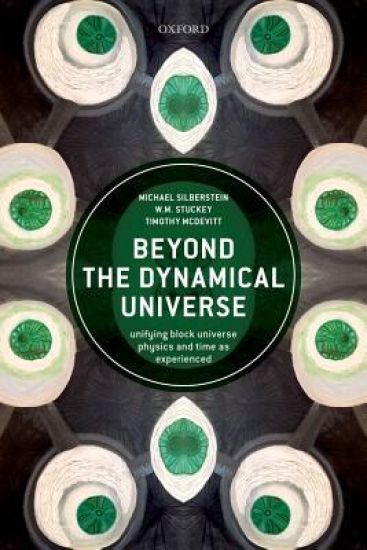
Theoretical physics and foundations of physics have not made much progress in the last few decades. Whether we are talking about unifying general relativity and quantum field theory (quantum gravity), explaining so-called dark energy and dark matter (cosmology), or the interpretation and implications of quantum mechanics and relativity, there is no consensus in sight. In addition, both enterprises are deeply puzzled about various facets of time including above all, time as experienced. The authors argue that, across the board, this impasse is the result of the "dynamical universe paradigm," the idea that reality is fundamentally made up of physical entities that evolve in time from some initial state according to dynamical laws. Thus, in the dynamical universe, the initial conditions plus the dynamical laws explain everything else going exclusively forward in time. In cosmology, for example, the initial conditions reside in the Big Bang and the dynamical law is supplied by general relativity. Accordingly, the present state of the universe is explained exclusively by its past. This book offers a completely new paradigm (called Relational Blockworld), whereby the past, present and future co-determine each other via "adynamical global constraints," such as the least action principle. Accordingly, the future is just as important for explaining the present as is the past. Most of the book is devoted to showing how Relational Blockworld resolves many of the current conundrums of both theoretical physics and foundations of physics, including the mystery of time as experienced and how that experience relates to the block universe.