Kirjojen hintavertailu. Mukana 12 595 353 kirjaa ja 12 kauppaa.

Kirjailija

Michael Solomon

Kirjat ja teokset yhdessä paikassa: 47 kirjaa, julkaisuja vuosilta 1997-2025, suosituimpien joukossa MyLab Foundational Skills without Pearson eText -- Standalone Access Card -- 6 Months. Vertaile teosten hintoja ja tarkista saatavuus suomalaisista kirjakaupoista.

47 kirjaa

Kirjojen julkaisuhaarukka 1997-2025.

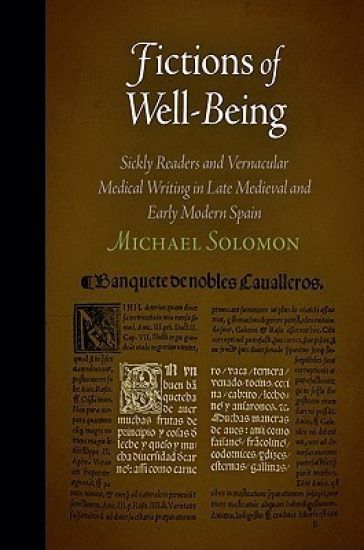
Fictions of Well-Being

Fictions of Well-Being

Michael Solomon

University of Pennsylvania Press
2010
sidottu
From the fourteenth through the sixteenth centuries in Spain, health-related information in the vernacular began to circulate widely in treatises, compendiums, manuals, plague tracts, summaries, encyclopedias, and recipe collections. These were often the work of concerned physicians who attempted to refashion medical information to appeal to nonprofessionals. In Fictions of Well-Being Michael Solomon explores the shaping of this audience of sickly readers, highly motivated individuals who, when confronted with the painful, disruptive, and often alienating conditions of physical disorder, looked for relief in books. Vernacular medical writing from late medieval and early modern Spain emerged from the interrelated imperatives to address the immediate or future hygienic and pathological needs of the patient while promoting the reputation and learned credentials of the physician. For sickly readers, a medical treatise was more than just a collection of technical information; such a work implied that they could do with a medical text what the physician normally did at the bedside. In their imagination, the treatise became a type of palpable instrument that encouraged the reader to take advantage of its possible use and benefits. In these fictions of well-being, we may see the antecedents of the self-help and popular medical books so prominent on today's best-seller lists.

Blank

Blank

Michael Solomon

HarperCollins
2006
nidottu
This book appeals to readers of parodies; readers of "Blink" 400,000 copy bestseller. Its extract appeared in national newspaper eg "The Mirror". Its reviews were featured in men's magazines eg "Nuts", "Bizarre". A smart, hilarious parody of Malcolm Gladwell's bestselling "Blink". Stop! Don't think! You already know what this book is about. That is the power of "Blank: The Power of Not Actually Thinking at all". Your brain has already decided whether you're going to like "Blank", whether its cover goes with your shirt, and whether it will make you look smart if somebody sees you reading it on the train. Chances are you and your shirt are both liking it a lot, you're going to buy several copies, and you don't even know why! That's why you've absolutely got to read "Blank": to find out why your brain keeps doing these wacky things without your permission. In "Blank", a hilarious parody of the number-one bestseller it looks eerily like (and sort of rhymes with) and that your brain wisely advised you to just read a review or magazine excerpt about while avoiding the actual book itself.
Success By Default

Success By Default

Michael Solomon

AuthorHouse
2004
sidottu
Everyone who has ever known the Author has told him he has a story that must be told-now he has. The author shows how he has taken control of his life after many negative experiences in his personal life and in the corporate world. He has witnessed people, including himself, being belittled and stepped on. In his business he defies the corporate bullies and uses their competitive edge to his advantage.Through his father's teachings, the author passes to us a valuable lesson by putting the humanness back into business. He does this by not stepping on his employee's and customers but, by making heroes of them all. Then when he became successful, he gave some of it away. He shows the reader how to look defeat in the face and laugh.
The Literature of Misogyny in Medieval Spain

The Literature of Misogyny in Medieval Spain

Michael Solomon

Cambridge University Press
1997
sidottu
The Literature of Misogyny in Medieval Spain examines the medical underpinnings of two major misogynist works from fifteenth-century Iberia: Alonso de Martínez's Arcipreste de Talavera and Jacme Roig's Spill. Michael Solomon argues that these works gain their persuasive force by linking concerns over health and illness with men's behaviour towards women. Solomon shows how the demonization of women in medieval society was more than a cultural phenomenon; it was a legitimate aspect of the healing arts, considered vital to the well-being of men.