Kirjojen hintavertailu. Mukana 12 595 353 kirjaa ja 12 kauppaa.
Kirjailija
Michael Stein
Kirjat ja teokset yhdessä paikassa: 24 kirjaa, julkaisuja vuosilta 1998-2024, suosituimpien joukossa Einkunftserzielungsabsicht oder Liebhaberei bei Immobilienvermietung. Vertaile teosten hintoja ja tarkista saatavuus suomalaisista kirjakaupoista.
George Moshe Stein was a Jewish young man growing up with his family in the village of Oradea in Romania. In 1942 the scourge of Nazisim came to them and upturned their lives and aspirations forever. Initially forced into an unbearable ghetto, the family was forcibly 'relocated' in May 1944. Transported to Auschwitz-Birkenau the family was divided - never to be whole again. George, confused and desperate, did what he could to stay alive and maintain hope.This is his story of survival, endurance and ultimately triumph against the odds. Lovingly written by George's son - Michael - it includes first-hand accounts of George's experiences and achievements, as well as testimonies from friends and family.
We will all be patients sooner or later. And when we go to the doctor, when we're hurting, we tend to think in terms of cause and condemnation. We often look for relief not only from physical symptoms but also from our self-blame. We want from our doctors kindness under any of its many names: empathy, caring, compassion, humanity. We look for safety and forgiveness. But we forget that doctors, too, are often in need of forgivenes—from their patients and from themselves. No doctor enters the medical profession expecting to be unkind or to make mistakes, but because of the complexity of our current medical system and because doctors are human, they often find themselves acting much less kindly than they would like to. Drawing on his work as a primary care physician and a behavioral scientist, Michael Stein artfully examines the often conflicting goals of patients and their doctors. In those differences, Stein recognizes that kindness should not be a patient's forbidden or unrealistic expectation. This book leaves us with new knowledge of and insights into what we might hope for, and what might go wrong, or right, in the most intimate clinical moments.
We will all be patients sooner or later. And when we go to the doctor, when we're hurting, we tend to think in terms of cause and condemnation. We often look for relief not only from physical symptoms but also from our self-blame. We want from our doctors kindness under any of its many names: empathy, caring, compassion, humanity. We look for safety and forgiveness. But we forget that doctors, too, are often in need of forgivenes—from their patients and from themselves. No doctor enters the medical profession expecting to be unkind or to make mistakes, but because of the complexity of our current medical system and because doctors are human, they often find themselves acting much less kindly than they would like to. Drawing on his work as a primary care physician and a behavioral scientist, Michael Stein artfully examines the often conflicting goals of patients and their doctors. In those differences, Stein recognizes that kindness should not be a patient's forbidden or unrealistic expectation. This book leaves us with new knowledge of and insights into what we might hope for, and what might go wrong, or right, in the most intimate clinical moments.
An Introduction to Aviation Psychology covers basic introductory psychology topics with specific application to the aviation industry. It is a student-friendly text suitable for undergraduate or introductory level master's courses in aviation psychology. Basic foundational principles in research, neurophysiology and psychology, sensation and perception, memory and learning, motivation and emotion, stress and fatigue, cognition, personality, and social psychology are brought to life through real-life applications to aviation across all sectors from pilots to cabin crews to organizational structures. Additional chapters explore the psychology of the increasing reliance of aviation on human-machine interfaces and interactions as well as cislunar and translunar space explorations. Using many real examples of aviation incidents and accidents the student will gain an understanding of how aviation psychology can impact flight safety and operations.
Die DASH-Di t ist ein einfaches und nachhaltiges Werkzeug, um einen gesunden Lebensstil zu schaffen.Sich gesund ern hren bedeutet nicht, dass Sie auf Ihre Lieblingsspeisen verzichten m ssen, auch wenn Sie unter Bluthochdruck und Bluthochdruck leiden.Sie m ssen nur wissen, wie Sie Lebensmittel mischen und aufeinander abstimmen und die richtigen Portionsgr en haben, um sicherzustellen, dass Sie Ihr gesundes Tageslimit f r Kalorien und Natrium nicht berschreiten.DASH steht f r Dietary Approaches to Stop Hypertension und hilft Ihnen, einen gesunden Blutdruck aufrechtzuerhalten. Es reduziert auch das Risiko von Darmproblemen und Krebs.Es senkt das schlechte Cholesterin im Blut und st rkt die Knochen.Dieser Ern hrungsplan basiert auf den richtigen Proportionen. Es erfordert den Verzehr von proteinreichem Gem se, die Begrenzung der Salzaufnahme auf 200 mg pro Tag, die Reduzierung des Verzehrs von rotem Fleisch, S igkeiten und zuckerges ten Getr nken sowie den Verzehr von Lebensmitteln mit niedrigem Cholesterin- und Gesamtfettgehalt.Mit so vielen Rezepten zum Ausprobieren f llt es Ihnen leichter, sich an Ihren Speiseplan zu halten. Dadurch werden Sie vergessen, zu viele verarbeitete und salzige Lebensmittel zu essen.Der DASH-Ern hrungsplan ist ein Lebensstil. Es erfordert allm hliche nderungen Ihrer Essgewohnheiten und die Verpflichtung, andere Gesundheitstechniken zu befolgen, um die Wirkung zu verst rken.Worauf warten Sie noch?Holen Sie sich jetzt Ihr Exemplar
In this age of shortened office visits, doctors take care of their patients' immediate needs and often elide their own personal histories. But as reflected in Broke, Michael Stein takes the time to listen to the experiences of his patients whose financial challenges complicate every decision in life they make. Stein asks his patients to tell him about their financial conditions not only to find out how to better treat them but also to bear witness to their very survival and the power of human resilience. Stein's intimate vignettes capture these encounters, allowing his patients to offer profound, moving, and unguarded reflections about their struggles, sometimes in a single sentence. Broke is a quietly passionate critique of a country that has grown callous to the plight of the poor, the tens of millions of people in the United States who live below the poverty line and who have no obvious path to security. Full of heartbreaking and surprising details and framed by a wry, knowing, and empathic humor, there is no other book that illuminates the experience of people facing economic hardship in this way.
In this age of shortened office visits, doctors take care of their patients' immediate needs and often elide their own personal histories. But as reflected in Broke, Michael Stein takes the time to listen to the experiences of his patients whose financial challenges complicate every decision in life they make. Stein asks his patients to tell him about their financial conditions not only to find out how to better treat them but also to bear witness to their very survival and the power of human resilience. Stein's intimate vignettes capture these encounters, allowing his patients to offer profound, moving, and unguarded reflections about their struggles, sometimes in a single sentence. Broke is a quietly passionate critique of a country that has grown callous to the plight of the poor, the tens of millions of people in the United States who live below the poverty line and who have no obvious path to security. Full of heartbreaking and surprising details and framed by a wry, knowing, and empathic humor, there is no other book that illuminates the experience of people facing economic hardship in this way.
A POLITICAL PROVOCATION FROM A PAIR OF PHYSICIANS WRITING OUTSIDE THEIR LANE Americans care about their health. Americans pay lots of money in hopes of maintaining their health. So why are Americans so unhealthy? The reason is simple: as a country, the United States overinvests in medical care at the expense of the social, economic, and cultural forces that produce health. The rise of medicine as a cornerstone of American life and culture has coincided with a social and political devaluation of factors demonstrated to mean more to our vitality than anything else -- influences like where we live, work, and play; livable wages that create opportunity for healthy living; and gender and racial equity. In Pained, physicians Michael Stein and Sandro Galea push the conversation around American health where it belongs: toward matters of class, money, and culture. Across more than 50 essays and data illustrations, Pained casts a light on how the structural components of everyday life -- like school, housing, police, even cell phones -- ultimately determine who gets to be healthy in today's America. In doing so, it makes a case for reframing our political discourse in less myopic, more effectual terms. Accessible and surprising, political but not partisan, Pained is the urgent, uncomfortable conversation that American needs in this challenging moment. It will delight and infuriate readers of all political stripes.
Diese Arbeit legt im Einzelnen dar, weshalb die Entscheidung des BFH vom 20.10.2016, VIII R 55/13 mit den Grunds tzen methodengerechter Gesetzesauslegung nicht mehr zu vereinbaren ist.
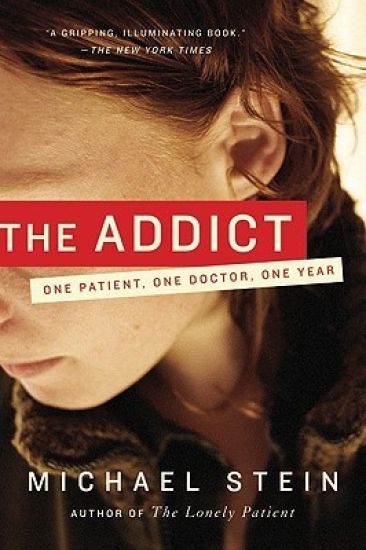
The Addict opens a window on the very private world of prescription drug addiction, revealing the harrowing story of a young woman whose life has been taken over by a need she can't extinguish. Lucy's first appointment with Dr. Michael Stein on a sunny April day began a yearlong series of encounters that took her back to the origins of her addiction and unraveled a life driven by compulsion and the constant pursuit of the next pill. The Addict follows Lucy from the start of her treatment, through relapse, to her eventual long-term recovery, including her breakup with a destructive boyfriend whose own drug addiction surpassed hers. It is an unforgettable tale of a young woman living on the edge but determined to take control of her life--and a deeply personal account of a doctor on the front lines of an epidemic.