Kirjojen hintavertailu. Mukana 12 390 323 kirjaa ja 12 kauppaa.

Kirjailija

Michael Steinberg

Kirjat ja teokset yhdessä paikassa: 21 kirjaa, julkaisuja vuosilta 1999-2026, suosituimpien joukossa Au Revoir: Comida, Vino y el Final de Francia = Au Revoir. Vertaile teosten hintoja ja tarkista saatavuus suomalaisista kirjakaupoista.

21 kirjaa

Kirjojen julkaisuhaarukka 1999-2026.

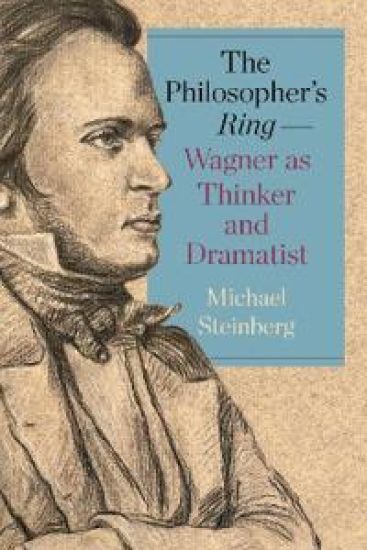
The Philosopher’s Ring—Wagner as Thinker and Dramatist
Presents Wagner as a serious philosopher and offers a fresh perspective on the Ring and its unique fusion of myth, human drama, and philosophical insight. Few figures of the nineteenth century were more influential than Richard Wagner, and few works of art have the scope and historical significance of The Ring of the Nibelung. Wagner himself said that it expressed his entire philosophy of life. Yet little attention has been paid to him as a philosopher, aesthetic theories aside. Instead, the Ring has been viewed in the light of Schopenhauer, Feuerbach, or even Hegel. Wagner's own ideas do not deserve this neglect, and this book addresses that omission. It starts with the more widely read philosophers of his day, such as Fichte; in their context Wagner's often fragmentary thoughts reveal a coherent "materialist idealism" that constitutes a late but significant contribution to Classical German philosophy. His acute social and psychological insights are still relevant, and so is the philosophical history that he saw prefigured in Greek tragedy. Wagner's philosophy also illuminates the structure of the Ring and offers fresh insights into the characters and conflicts of that endlessly interpretable work. Approachable and engagingly written, balancing narrative, philosophical analysis, and a detailed consideration of the Ring's four music dramas, The Philosopher's Ring shows the cycle to be a work of unparalleled philosophical depth, one reason that it continues to challenge audiences even now, a century and a half after its premiere.
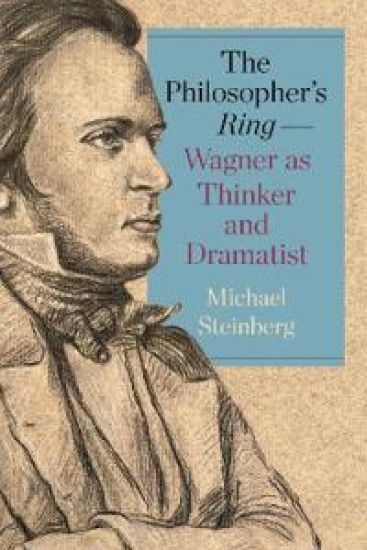
The Philosopher’s Ring—Wagner as Thinker and Dramatist
Presents Wagner as a serious philosopher and offers a fresh perspective on the Ring and its unique fusion of myth, human drama, and philosophical insight. Few figures of the nineteenth century were more influential than Richard Wagner, and few works of art have the scope and historical significance of The Ring of the Nibelung. Wagner himself said that it expressed his entire philosophy of life. Yet little attention has been paid to him as a philosopher, aesthetic theories aside. Instead, the Ring has been viewed in the light of Schopenhauer, Feuerbach, or even Hegel. Wagner's own ideas do not deserve this neglect, and this book addresses that omission. It starts with the more widely read philosophers of his day, such as Fichte; in their context Wagner's often fragmentary thoughts reveal a coherent "materialist idealism" that constitutes a late but significant contribution to Classical German philosophy. His acute social and psychological insights are still relevant, and so is the philosophical history that he saw prefigured in Greek tragedy. Wagner's philosophy also illuminates the structure of the Ring and offers fresh insights into the characters and conflicts of that endlessly interpretable work. Approachable and engagingly written, balancing narrative, philosophical analysis, and a detailed consideration of the Ring's four music dramas, The Philosopher's Ring shows the cycle to be a work of unparalleled philosophical depth, one reason that it continues to challenge audiences even now, a century and a half after its premiere.
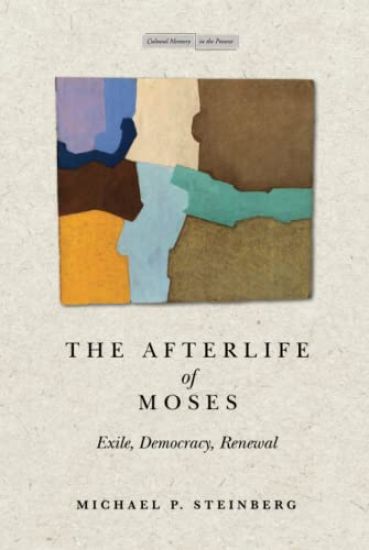
The Afterlife of Moses

The Afterlife of Moses

Michael Steinberg

STANFORD UNIVERSITY PRESS
2022
sidottu
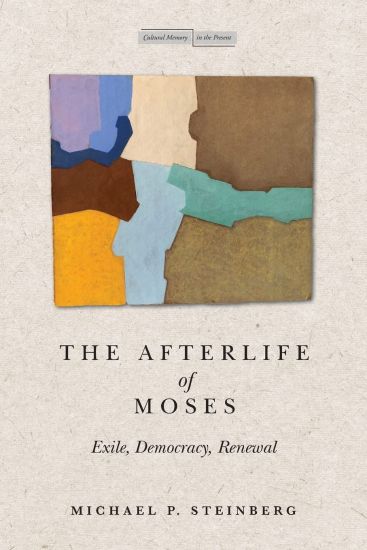
In this elegant and personal new work, Michael P. Steinberg reflects on the story of Moses and the Exodus as a foundational myth of politics—of the formation not of a nation but of a political community grounded in universal law. Modern renderings of the story of Moses, from Michelangelo to Spinoza to Freud to Schoenberg to Derrida, have seized on the story's ambivalences, its critical and self-critical power. These literal returns form the first level of the afterlife of Moses. They spin a persistent critical and self-critical thread of European and transatlantic art and argument. And they enable the second strand of Steinberg's argument, namely the depersonalization of the Moses and Exodus story, its evolving abstraction and modulation into a varied modern history of political beginnings. Beginnings, as distinct from origins, are human and historical, writes Steinberg. Political constitutions, as a form of beginning, imply the eventuality of their own renewals and their own reconstitutions. Motivated in part by recent reactionary insurgencies in the US, Europe, and Israel, this astute work of intellectual history posits the critique of myths of origin as a key principle of democratic government, affect, and citizenship, of their endurance as well as their fragility.
The Afterlife of Moses

The Afterlife of Moses

Michael Steinberg

STANFORD UNIVERSITY PRESS
2022
pokkari
In this elegant and personal new work, Michael P. Steinberg reflects on the story of Moses and the Exodus as a foundational myth of politics—of the formation not of a nation but of a political community grounded in universal law. Modern renderings of the story of Moses, from Michelangelo to Spinoza to Freud to Schoenberg to Derrida, have seized on the story's ambivalences, its critical and self-critical power. These literal returns form the first level of the afterlife of Moses. They spin a persistent critical and self-critical thread of European and transatlantic art and argument. And they enable the second strand of Steinberg's argument, namely the depersonalization of the Moses and Exodus story, its evolving abstraction and modulation into a varied modern history of political beginnings. Beginnings, as distinct from origins, are human and historical, writes Steinberg. Political constitutions, as a form of beginning, imply the eventuality of their own renewals and their own reconstitutions. Motivated in part by recent reactionary insurgencies in the US, Europe, and Israel, this astute work of intellectual history posits the critique of myths of origin as a key principle of democratic government, affect, and citizenship, of their endurance as well as their fragility.
Enlightenment Interrupted – The Lost Moment of German Idealism and the Reactionary Present
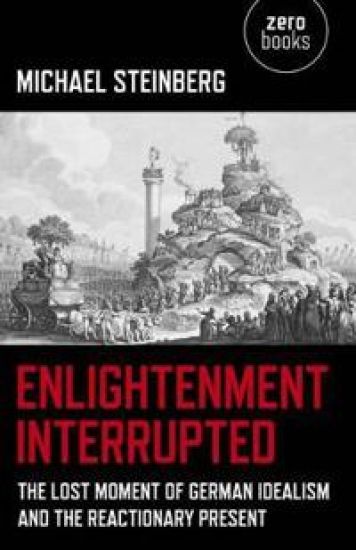
For most of the eighteenth century the best minds in Europe took up the task of providing a foundation for human life and human society in which individual fulfillment was to be achieved within a rational public order. When it became apparent that this task was based on an illusionthe separation of self and worldand was thus doomed to failure, however, that insight and the consequent crisis were forgotten and repressed. After 1815 all parties, reactionary and liberal, chose to proceed as if we had achieved what we knew, somewhere, we could not carry off. To secure that false confidence the challenges of the late Enlightenment had to be silenced and its doubts swept under the carpet. This book concerns a founding act of bad faith and of willed blindness, the self-forgetting of the rootlessness and the falsity of the basic presuppositions of the modern world, that have haunted that world from its birth. Enlightenment Interrupted takes the metaphysical arguments of the idealists seriously. Its methodological foundation is the belief that in every era there are deep structures of thought and experience that define the range of theoretical and political possibilities available. The great achievement of the post-Kantian generation was to critique and ultimately to move beyond the self-world dichotomy at the heart of Western thought. This can be seen as a continuation of the Enlightenment project of subjecting everything to the test of reason, but it was also part of a larger cultural movement that found expression in Romanticism, in an openness to Indian and other non-Western thought, and in the political and social experimentation of the French Revolution. What followed in the post-Revolutionary years was not a development of those tendencies to openness and egalitarian, common process but a retreat to the opposition of self and world and a drastic reduction in intellectual and social possibilities. This is one source of the collective impotence that sees the twenty-first century in a lockstep march to disaster.
A New Biology of Religion: Spiritual Practice and the Life of the Body
This book is unique in its focus on bodily experience as an independent source of knowledge and insight, an important aspect of recent discoveries in neurology and psychology. By rethinking what it is to be human and what role self-consciousness plays, it finds striking points of intersection between science and religion and challenges readers to rediscover their spiritual connections to the physical world. Combining scientific rigor with the spiritual quest, A New Biology of Religion: Spiritual Practice and the Life of the Body reframes the science-religion debate. This profound work examines how all things are connected-both scientifically and spiritually-and shows how religious practices mirror the biological processes of life.
A New Biology of Religion

A New Biology of Religion

Michael Steinberg

Praeger Publishers Inc
2012
sidottu
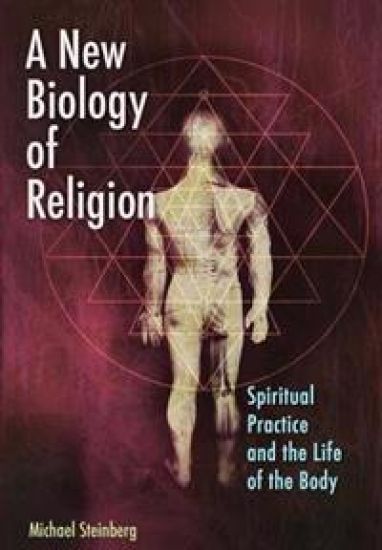
This study provides a fresh look at the debate between science and religion that documents how the experiences produced by spiritual practice are surprisingly consistent with the findings of modern biology, despite the difficulty in reconciling scientific theories and religious dogma.This book is unique in its focus on bodily experience as an independent source of knowledge and insight, an important aspect of recent discoveries in neurology and psychology. By rethinking what it is to be human and what role self-consciousness plays, it finds striking points of intersection between science and religion and challenges readers to rediscover their spiritual connections to the physical world.Combining scientific rigor with the spiritual quest, A New Biology of Religion: Spiritual Practice and the Life of the Body reframes the science-religion debate. This profound work examines how all things are connected—both scientifically and spiritually—and shows how religious practices mirror the biological processes of life.
Fourth Genre,  The

Fourth Genre, The

Robert Root; Michael Steinberg

Pearson
2012
nidottu
The Fourth Genre offers the most comprehensive, teachable, and current introduction available today to the cutting-edge, evolving genre of creative nonfiction. While acknowledging the literary impulse of nonfiction to be a fourth genre equivalent to poetry, fiction, and drama, this text focuses on subgenres of the nonfiction form, including memoir, nature writing, personal essays, literary journalism, cultural criticism, and travel writing. This anthology was the first to draw on the common ground of the practicing writer and the practical scholar and to make the pedagogical connections between creative writing practice and composition theory, bridging some of the gaps between the teaching of composition, creative writing, and literature in English departments.
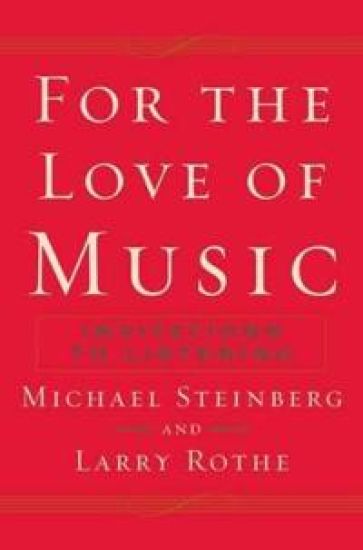
For The Love of Music

For The Love of Music

Michael Steinberg; Rothe Larry

Oxford University Press Inc
2009
nidottu
The power of music, the way it works on the mind and heart, remains an enticing mystery. Now two noted writers on classical music, Michael Steinberg and Larry Rothe, explore the allure of this melodious art—not in the clinical terms of social scientists—but through stories drawn from their own experience. In For the Love of Music, Steinberg and Rothe draw on a lifetime of listening to, living with, and writing about music, sharing the delights and revelatory encounters they have had with Mozart, Brahms, Stravinsky, and a host of other great (and almost-great) composers. At once highly personal and immediately accessible, their writings shed light on those who make music and those who listen to it—drawing readers into the beautiful and dangerous terrain that has meant so much to the authors. In recounting how they themselves came to love music, Steinberg and Rothe offer keys for listening. You will meet the man who created the sound of Hollywood's Golden Age and you will learn how composers have addressed issues as contemporary as AIDS and the terrorist attacks of September 11.
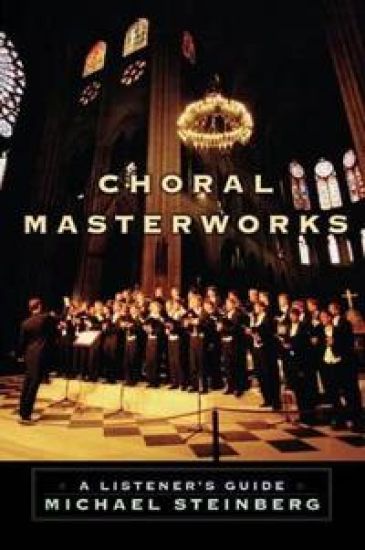
Choral Masterworks

Choral Masterworks

Michael Steinberg

Oxford University Press Inc
2008
nidottu
Michael Steinberg follows his warmly received listener's guides on the symphony and the concerto with Choral Masterworks: A Listener's Guide, a book of descriptive-analytical essays on the great masterpieces in the supremely inspiring repertoire for chorus and orchestra. This collection includes illuminating commentary on such works as Handel's Messiah, Bach's Passion settings and B-minor Mass, the Mozart Requiem, and the great choral works of Haydn and Beethoven. Steinberg also discusses the monuments of the Romantic era such as the stupendous Requiem settings of Berlioz and Verdi as well as the supremely tender one by Fauré. Venturing into the twentieth century and the dawning of the twenty-first, he provides insights into the great achievements of Elgar, Rachmaninoff, Vaughan Williams, and Stravinsky, and, nearer our own time, such masters as John Adams. Steinberg's writes without jargon, in language that grabs the technically untrained music-lover, but which is still of riveting interest to conductors, singers, and others who make music their life. His guidebook brings impeccable scholarship, insight into the spiritual content of the works, a deep love of music, and surprising corners of humor and whimsy.
The Fiction of a Thinkable World

The Fiction of a Thinkable World

Michael Steinberg

Monthly Review Press,U.S.
2005
nidottu
Discarding once and for all the discredited Cartesian dichotomy of mind and body, Steinberg considers the consequences of current research in neurology and cognitive science that show that people think with their bodies and in interaction with others. He considers the ways that the structures of daily experience in capitalist societies reinforce th
The Fiction of a Thinkable World

The Fiction of a Thinkable World

Michael Steinberg

Monthly Review Press,U.S.
2005
sidottu
In the culture of the modern West, we see ourselves as thinking subjects, defined by our conscious thought, autonomous and separate from each other and the world we survey. Current research in neurology and cognitive science shows that this picture is false. We think with our bodies, and in interaction with others, and our thought is never completed. The Fiction of a Thinkable World is a wide-ranging exploration of the meaning of this insight for our understanding of history, ethics, and politicsAmbitious but never overwhelming, carrying its immense learning lightly, The Fiction of a Thinkable World shows how the Western conception of the human subject came to be formed historically, how it contrasts with that of Eastern thought, and how it provides the basic justification for the institutions of liberal capitalism. The fiction of a world separated from each of us as we are separated from each other, from which we make our choices in solitary thought, is enacted by the voter in the voting booth and the consumer at the supermarket shelf. The structure of daily experience in capitalist society reinforces the fictions of the Western intellectual tradition, stunt human creativity, and create the illusion that the capitalist order is natural and unsurpassable.Steinberg's critique of the intellectual world of Western capitalism at the same time illuminates the paths that have been closed off in that world. It draws on Chinese ethics to show how our actions can be brought in accord with the world as it is, in its ever-changing interaction and mutual transformation, and sketches a radical political perspective that sheds the illusions of the Western model. Beautifully conceived and written, The Fiction of a Thinkable World provides new ways of thinking and opens new horizons.
Evaluating the Feasibility of Developing National Outcomes

Evaluating the Feasibility of Developing National Outcomes

Michael Greenberg; Michael Steinberg; Elizabeth A. McGlynn; Cheryl Damberg; Liisa Hiatt; Kitty S. Chan; Matthius Schonlau; Jennifer Malin

RAND
2004
pokkari
This report examines issues surrounding the establishment of a national patient outcomes database that would be used by patients and providers to make more informed treatment decisions. It focuses on prostate cancer and surgery for osteoarthritis.
The Concerto

The Concerto

Michael Steinberg

Oxford University Press Inc
2000
nidottu
Michael Steinberg's 1996 volume The Symphony: A Reader's Guide received glowing reviews across America. It was hailed as "wonderfully clear...recommended warmly to music lovers on all levels" (Washington Post), "informed and thoughtful" (Chicago Tribune), and "composed by a master stylist" (San Francisco Chronicle). Seiji Ozawa wrote that "his beautiful and effortless prose speaks from the heart." Michael Tilson Thomas called The Symphony "an essential book for any concertgoer." Now comes the companion volume—The Concerto: A Listener's Guide. In this marvelous book, Steinberg discusses over 120 works, ranging from Johann Sebastian Bach in the 1720s to John Adams in 1994. Readers will find here the heart of the standard repertory, among them Bach's Brandenburg Concertos, eighteen of Mozart's piano concertos, all the concertos of Beethoven and Brahms, and major works by Mendelssohn, Schumann, Liszt, Bruch, Dvora'k, Tchaikovsky, Grieg, Elgar, Sibelius, Strauss, and Rachmaninoff. The book also provides luminous introductions to the achievement of twentieth-century masters such as Arnold Schoenberg, Be'la Barto'k, Igor Stravinsky, Alban Berg, Paul Hindemith, Sergei Prokofiev, Aaron Copland, and Elliott Carter. Steinberg examines the work of these musical giants with unflagging enthusiasm and bright style. He is a master of capturing the expressive, dramatic, and emotional values of the music and of conveying the historical and personal context in which these wondrous works were composed. His writing blends impeccable scholarship, deeply felt love of music, and entertaining whimsy.
The Symphony

The Symphony

Michael Steinberg

Oxford University Press Inc
1999
nidottu
Presents an exhaustive listener's guide to the symphony, replete with musical examples, biographical details, historical background, and commentaries on more than one hundred major works