Kirjojen hintavertailu. Mukana 12 595 353 kirjaa ja 12 kauppaa.

Kirjailija

Michael Strawser

Kirjat ja teokset yhdessä paikassa: 6 kirjaa, julkaisuja vuosilta 1996-2024, suosituimpien joukossa The Internship Handbook. Vertaile teosten hintoja ja tarkista saatavuus suomalaisista kirjakaupoista.

6 kirjaa

Kirjojen julkaisuhaarukka 1996-2024.

The Internship Handbook

The Internship Handbook

Michael Strawser; Stephanie Smith; Lauren Pieper Coffey

Cognella, Inc
2024
pokkari
The Internship Handbook is designed to prepare students and then guide them through the internship experience. It combines theoretical knowledge to help readers better understand their personalities, traits, values, and strengths with practical activities such as discussion questions and activities to streamline the internship process.The handbook begins with self-assessment, encouraging readers to engage in self-awareness and exploration to identify their personal strengths and professional values. Succeeding chapters detail how to navigate the job market, emphasizing the importance of networking, and presenting strategies for the application process. The book offers insight into the dynamics of securing an internship, thriving within one, and transitioning smoothly at its conclusion. It places a strong emphasis on the development of soft skills alongside the acquisition of professional competencies, describing internships as pivotal to gaining practical experience while facilitating reflection on personal growth and career paths.The Internship Handbook is an excellent resource for students embarking upon the internship experience. It could also be used in courses or programs focused on career development and professional readiness.
Spinoza and the Philosophy of Love

Spinoza and the Philosophy of Love

Michael Strawser

Lexington Books
2021
sidottu
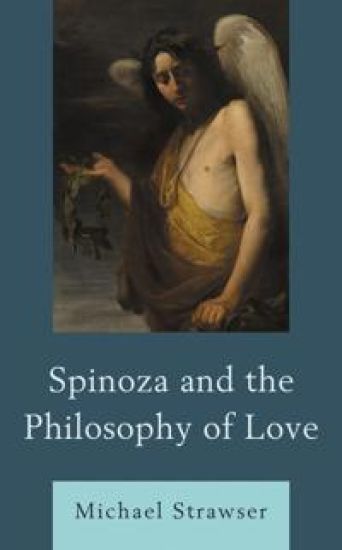
In Spinoza and the Philosophy of Love, Michael Strawser provides a new reading of Spinoza as a philosopher of love, and one who centered in his thought an ethically qualified conception of noble love. Strawser examines the threefold conception of love found in Spinoza’s Ethics and argues that what is most important for Spinoza’s philosophy is a unified conception of love centered on nobility (amor sive generositas). This active conception of love can conquer hatred and bring people together. Situating Spinoza’s philosophy of love within both Jewish and Western philosophical traditions, Strawser investigates questions in the philosophy of love together with Spinoza and thinkers such as Saadia Gaon, Maimonides, Leono Ebreo, Tullia d’Aragona, and René Descartes. He shows how Spinoza deepens our understanding of amorous perfectionism and how this reading of Spinoza’s philosophy of love serves as both a corrective to problematic readings, such as those found in Isaac Bashevis Singer and Emmanuel Levinas, and a counter to speciesism. With careful examination of Spinoza’s writings, Strawser demonstrates that the goal of his philosophy is best understood as the love of other people who are to be helped and united with in friendship: Spinoza’s philosophy of love calls for collective nobility.
Kierkegaard and the Philosophy of Love

Kierkegaard and the Philosophy of Love

Michael Strawser

Lexington Books
2017
nidottu
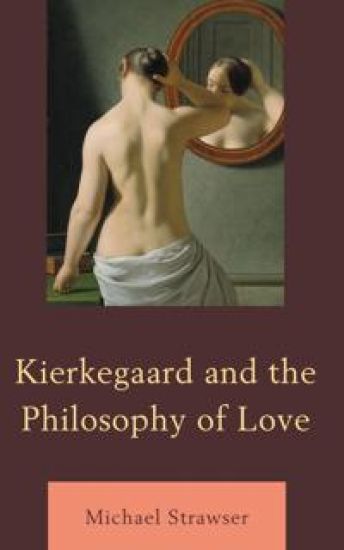
Ironically, the philosophy of love has long been neglected by philosophers, so-called “lovers of wisdom,” who would seemingly need to understand how one best becomes a lover. In Kierkegaard and the Philosophy of Love, Michael Strawser shows that the philosophy of love lies at the heart of Kierkegaard’s writings, as he argues that the central issue of Kierkegaard’s authorship can and should be understood more broadly as the task of becoming a lover. Strawser starts by identifying the questions (How should I love the other? Is self-love possible? How can I love God?) and themes (love’s immediacy, intentionality, unity, and eternity) that are central to the philosophy of love, and he develops a rich context that includes analyses of the conceptions of love found in Plato, Spinoza, and Hegel, as well as prominent contemporary thinkers. Strawser provides an original and wide-ranging analysis of Kierkegaard’s writings—from the early The Concept of Irony and Edifying Discourses to the late The Moment, while maintaining the prominence of Works of Love— to demonstrate how Kierkegaard’s writings on love are relevant to the emerging study of the philosophy of love today. The most unique perspective of this work, however, is Strawser’s argument that Kierkegaard’s writings on love are most fruitfully understood within the context of a phenomenology of love. In interpreting Kierkegaard as a phenomenologist of love, Strawser claims that it is not Husserl and Heidegger that we should look to for a connection in the first instance, but rather Max Scheler, Dietrich von Hildebrand, Emmanuel Levinas, and most importantly, Jean-Luc Marion, who for the most part center their thinking on the phenomenological nature of love. Based on an analysis of the works of these thinkers together with Kierkegaard’s writings, Strawser argues that Kierkegaard presents readers with a first phenomenology of love, a point of view that serves as a unifying perspective throughout this work while also pointing to areas for future scholarship. Overall, this work brings seemingly divergent perspectives into a unity brought about through a focus on love—which is, after all, a unifying force.
Kierkegaard and the Philosophy of Love

Kierkegaard and the Philosophy of Love

Michael Strawser

Lexington Books
2015
sidottu
Ironically, the philosophy of love has long been neglected by philosophers, so-called “lovers of wisdom,” who would seemingly need to understand how one best becomes a lover. In Kierkegaard and the Philosophy of Love, Michael Strawser shows that the philosophy of love lies at the heart of Kierkegaard’s writings, as he argues that the central issue of Kierkegaard’s authorship can and should be understood more broadly as the task of becoming a lover. Strawser starts by identifying the questions (How should I love the other? Is self-love possible? How can I love God?) and themes (love’s immediacy, intentionality, unity, and eternity) that are central to the philosophy of love, and he develops a rich context that includes analyses of the conceptions of love found in Plato, Spinoza, and Hegel, as well as prominent contemporary thinkers. Strawser provides an original and wide-ranging analysis of Kierkegaard’s writings—from the early The Concept of Irony and Edifying Discourses to the late The Moment, while maintaining the prominence of Works of Love— to demonstrate how Kierkegaard’s writings on love are relevant to the emerging study of the philosophy of love today. The most unique perspective of this work, however, is Strawser’s argument that Kierkegaard’s writings on love are most fruitfully understood within the context of a phenomenology of love. In interpreting Kierkegaard as a phenomenologist of love, Strawser claims that it is not Husserl and Heidegger that we should look to for a connection in the first instance, but rather Max Scheler, Dietrich von Hildebrand, Emmanuel Levinas, and most importantly, Jean-Luc Marion, who for the most part center their thinking on the phenomenological nature of love. Based on an analysis of the works of these thinkers together with Kierkegaard’s writings, Strawser argues that Kierkegaard presents readers with a first phenomenology of love, a point of view that serves as a unifying perspective throughout this work while also pointing to areas for future scholarship. Overall, this work brings seemingly divergent perspectives into a unity brought about through a focus on love—which is, after all, a unifying force.
Both/And

Both/And

Michael Strawser

Fordham University Press
1999
pokkari
Both/And is a new interpretation of Kierkegaard's writings which attempts to make sense of a very diverse authorship by offering a comprehensive interpretation of both Kierkegaard's so-called aesthetic and his religious writings. Soren Kierkegaard (1813-1855) stands for a turning point in philosophy from a systematic philosophy - which, with its focus on objectivity, attempts to place itself on the secure path of science - to a "philosophy" that focuses its attention in subjectivity and openly acknowledges itself as fragmentary and provisional. Strawser examines Kierkegaard's works as religious, aesthetic/poetic, and philosophical and argues that irony runs through both the aesthetic and the religious works - indeed, Kierkegaard referred to himself as the Magister of Irony. But Strawser goes beyond these boundaries to draw in the interpretation of Kierkegaard's writing not a line which cuts off the aesthetic from the religious, but connects them. This is what Strawser calls the line from irony to edification. This line is the line of both/and, the line of connection. Strawser addresses the problematic but natural relationship between Kierkegaard and postmodernism and offers exciting possibilities. Strawser believes that contemporary postmodern philosophical considerations aid a critical reading of Kierkegaard, but such a reading must not be overwhelmed by them. Such a comprehensive reading is what Strawser offers the reader in Both/And.
Both/And

Both/And

Michael Strawser

Fordham University Press
1996
sidottu
Both/And is a new interpretation of Kierkegaard's writings which attempts to make sense of a very diverse authorship by offering a comprehensive interpretation of both Kierkegaard's so-called aesthetic and his religious writings. Soren Kierkegaard (1813-1855) stands for a turning point in philosophy from a systematic philosophy - which, with its focus on objectivity, attempts to place itself on the secure path of science - to a "philosophy" that focuses its attention in subjectivity and openly acknowledges itself as fragmentary and provisional. Strawser examines Kierkegaard's works as religious, aesthetic/poetic, and philosophical and argues that irony runs through both the aesthetic and the religious works - indeed, Kierkegaard referred to himself as the Magister of Irony. But Strawser goes beyond these boundaries to draw in the interpretation of Kierkegaard's writing not a line which cuts off the aesthetic from the religious, but connects them. This is what Strawser calls the line from irony to edification. This line is the line of both/and, the line of connection. Strawser addresses the problematic but natural relationship between Kierkegaard and postmodernism and offers exciting possibilities. Strawser believes that contemporary postmodern philosophical considerations aid a critical reading of Kierkegaard, but such a reading must not be overwhelmed by them. Such a comprehensive reading is what Strawser offers the reader in Both/And.