Kirjojen hintavertailu. Mukana 12 152 606 kirjaa ja 12 kauppaa.

Kirjailija

Michael T. Klare

Kirjat ja teokset yhdessä paikassa: 4 kirjaa, julkaisuja vuosilta 1985-2020, suosituimpien joukossa Rising Powers, Shrinking Planet. Vertaile teosten hintoja ja tarkista saatavuus suomalaisista kirjakaupoista.

Mukana myös kirjoitusasut: Michael T Klare

4 kirjaa

Kirjojen julkaisuhaarukka 1985-2020.

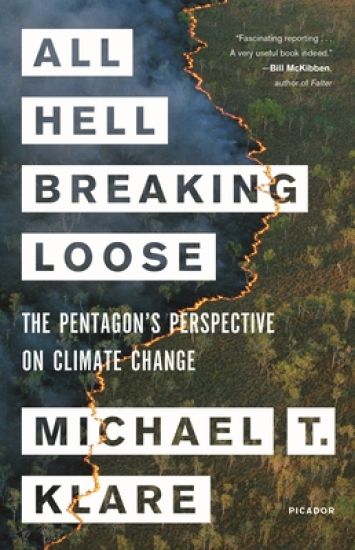
All Hell Breaking Loose

All Hell Breaking Loose

Michael Klare; Michael T. Klare

Picador USA
2020
nidottu
Drawing on previously obscure reports and government documents, renowned security expert Michael Klare shows that the Pentagon now regards climate change as one of the top threats to American national security and is busy developing strategies to cope with it. Its response makes it clear that where it counts, the immense impact of climate change is not in doubt.
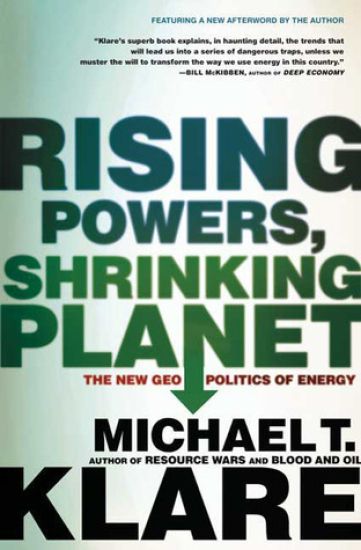
Rising Powers, Shrinking Planet

Rising Powers, Shrinking Planet

Michael T. Klare

Henry Holt Company Inc
2009
pokkari
From the author of the now-classic Resource Wars, an indispensable account of how the world's diminishing sources of energy are radically changing the international balance of powerRecently, an unprecedented Chinese attempt to acquire the major American energy firm Unocal was blocked by Congress amidst hysterical warnings of a Communist threat. But the political grandstanding missed a larger point: the takeover bid was a harbinger of a new structure of world power, based not on market forces or on arms and armies but on the possession of vital natural resources.Surveying the energy-driven dynamic that is reconfiguring the international landscape, Michael Klare, the preeminent expert on resource geopolitics, forecasts a future of surprising new alliances and explosive danger. World leaders are now facing the stark recognition that all materials vital for the functioning of modern industrial societies (not just oil and natural gas but uranium, coal, copper, and others) are finite and being depleted at an ever-accelerating rate. As a result, governments rather than corporations are increasingly spearheading the pursuit of resources. In a radically altered world where Russia is transformed from battered Cold War loser to arrogant broker of Eurasian energy, and the United States is forced to compete with the emerging "Chindia" juggernaut the only route to survival on a shrinking planet, Klare shows, lies through international cooperation.Rising Powers, Shrinking Planet surveys the energy-driven dynamic that is reconfiguring the international landscape, and argues that the only route to survival in our radically altered world lies through international cooperation."Klare's superb book explains, in haunting detail, the trends that will lead us into a series of dangerous traps unless we muster the will to transform the way we use energy." -- Bill McKibben"
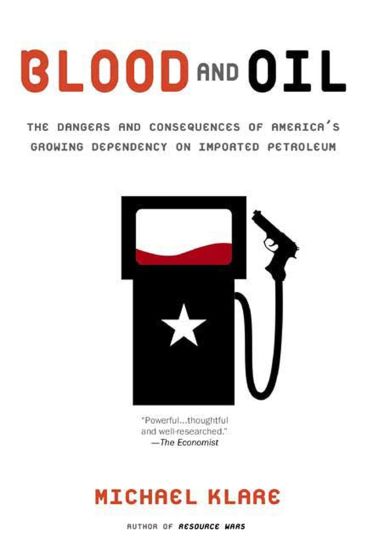
Blood and Oil

Blood and Oil

Michael T Klare

St. Martins Press-3PL
2005
pokkari
A world security expert and author of Resource Wars assesses the critical role that petroleum plays in America's actions abroad, warning that the nation's ever-increasing dependency on foreign oil from turbulent countries is bound to lead to recurrent military involvement in these areas. Reprint.
American Arms Supermarket

American Arms Supermarket

Michael T. Klare

University of Texas Press
1985
nidottu
U.S. arms sales to Third World countries rapidly escalated from $250 million per year in the 1950s and 1960s to $10 billion and above in the 1970s and 1980s. But were these military sales, so critical in their impact on Third World nations and on America’s perception of its global role, achieving the ends and benefits attributed to them by U.S. policymakers? In American Arms Supermarket, Michael T. Klare responds to this troubling, still-timely question with a resounding no, showing how a steady growth in arms sales places global security and stability in jeopardy.Tracing U.S. policies, practices, and experiences in military sales to the Third World from the 1950s to the 1980s, Klare explains how the formation of U.S. foreign policy did not keep pace with its escalating arms sales-how, instead, U.S. arms exports proved to be an unreliable instrument of policy, often producing results that diminished rather than enhanced fundamental American interests. Klare carefully considers the whole spectrum of contemporary American arms policy, focusing on the political economy of military sales, the evolution of U.S. arms export policy from John F. Kennedy to Ronald Reagan, and the institutional framework for arms export decision making. Actual case studies of U.S. arms sales to Latin America, Iran, and the Middle East provide useful data in assessing the effectiveness of arms transfer programs in meeting U.S. foreign policy objectives. The author also rigorously examines trouble spots in arms policy: the transfer of arms-making technology to Third World arms producers, the relationship between arms transfers and human rights, and the enforcement of arms embargoes on South Africa, Chile, and other “pariah” regimes. Klare also compares the U.S. record on arms transfers to the experiences of other major arms suppliers: the Soviet Union and the “big four” European nations-France, Britain, the former West Germany, and Italy. Concluding with a reasoned, carefully drawn proposal for an alternative arms export policy, Klare vividly demonstrates the need for cautious, restrained, and sensitive policy.