Kirjojen hintavertailu. Mukana 12 595 353 kirjaa ja 12 kauppaa.

Kirjailija

Michael T. Nietzel

Kirjat ja teokset yhdessä paikassa: 7 kirjaa, julkaisuja vuosilta 2017-2026, suosituimpien joukossa No Confidence. Vertaile teosten hintoja ja tarkista saatavuus suomalaisista kirjakaupoista.

7 kirjaa

Kirjojen julkaisuhaarukka 2017-2026.

No Confidence

No Confidence

Michael T. Nietzel; Charles M. Ambrose

Johns Hopkins University Press
2026
pokkari
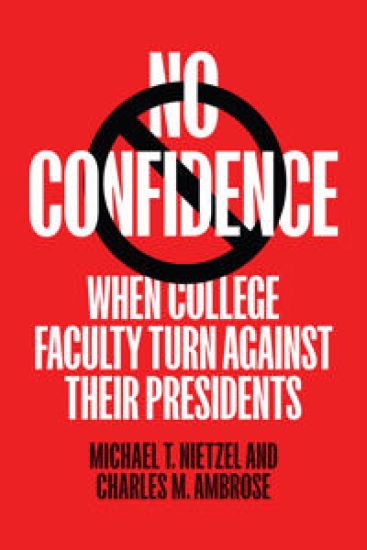
How to reckon with no-confidence votes and rebuild trust in higher ed leadership. Faculty votes of no confidence in college presidents have become a defining feature of leadership turmoil in American higher education. Often dismissed as merely symbolic, these votes can nonetheless mark a turning point in campus governance—and frequently signal the end of a presidency. In No Confidence, Michael T. Nietzel and Charles M. Ambrose present the first comprehensive analysis of this dramatic and increasingly visible phenomenon. This book examines the origins, causes, and consequences of no-confidence votes, placing them in the wider context of higher education's evolving governance structures. Nietzel and Ambrose explain why these votes have increased in frequency, especially in the wake of financial crises, political pressures, and a rapidly shifting academic workforce. What happens after such votes are cast—who resigns, who survives, and what do these outcomes mean for the institutions involved? Through detailed case studies and critical insights, No Confidence reveals how diminishing shared governance, declining faculty influence, and rising tensions between academic and corporate management styles have created fertile ground for conflict. To prevent and repair campus conflict, Nietzel and Ambrose recommend focusing on improving trust, transparency, and collaboration among presidents, governing boards, and faculty. These essential actions, they argue, can help maintain institutional stability in an increasingly volatile higher education landscape.
Colleges on the Brink

Colleges on the Brink

Charles M. Ambrose; Michael T. Nietzel

BLOOMSBURY PUBLISHING PLC
2023
nidottu
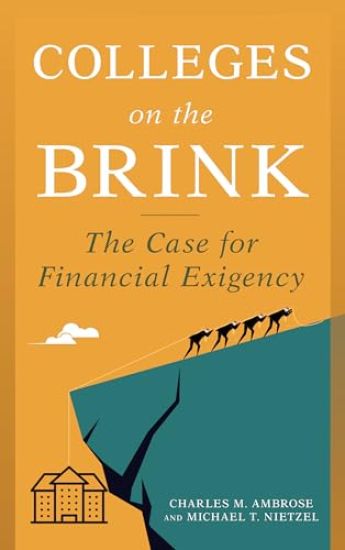
This book is about the serious financial struggles that an increasing number of colleges are facing in the post-pandemic era and what can be done to help resolve them. The tools described – including the extreme measures associated with financial exigency – can be used to change the ways colleges spend their money while still maintaining the academic values most institutions want to honor. This book highlight the major financial headwinds facing American higher education and why those headwinds may be stronger than at earlier points in history. The authors discuss financial exigency and several of its close counterparts or “near exigencies” when institutions undergo large-scale reorganizations or budget resets to reduce their expenses. They outline the conditions that give rise to the need for major financial overhauls, and discuss the steps that can maximize the likelihood they’ll help institutions regain their financial health.The challenge these colleges face is to build a road back from that brink and become better institutions that are leaner, more financially stable, and ready to provide the education that students and society need. This book offers a road back, albeit a hard one, but one that is navigable by the resourceful colleges and universities that remain one of America’s greatest assets.
Colleges on the Brink

Colleges on the Brink

Charles M. Ambrose; Michael T. Nietzel

BLOOMSBURY PUBLISHING PLC
2023
sidottu
This book is about the serious financial struggles that an increasing number of colleges are facing in the post-pandemic era and what can be done to help resolve them. The tools described – including the extreme measures associated with financial exigency – can be used to change the ways colleges spend their money while still maintaining the academic values most institutions want to honor. This book highlight the major financial headwinds facing American higher education and why those headwinds may be stronger than at earlier points in history. The authors discuss financial exigency and several of its close counterparts or “near exigencies” when institutions undergo large-scale reorganizations or budget resets to reduce their expenses. They outline the conditions that give rise to the need for major financial overhauls, and discuss the steps that can maximize the likelihood they’ll help institutions regain their financial health.The challenge these colleges face is to build a road back from that brink and become better institutions that are leaner, more financially stable, and ready to provide the education that students and society need. This book offers a road back, albeit a hard one, but one that is navigable by the resourceful colleges and universities that remain one of America’s greatest assets.
Coming to Grips with Higher Education

Coming to Grips with Higher Education

Michael T. Nietzel

Rowman Littlefield
2018
sidottu
The American university faces many challenges. It has become too costly and inefficient. It fails too many students. It spends too much time and money on matters that should not be its priorities. It clings to policies and practices that need to go away. And it is too disconnected from the students and communities it must serve. This book proposes several changes to standard policies in our colleges and universities that will sharpen their missions, redirect funding to the highest priorities, improve student learning and attainment, redefine faculty engagement, slow down spending on amenities, and reduce the excesses of intercollegiate athletics. The recommended reforms remain true to the essential academic values embraced by the academy, but at the same time they recognize and respond to the new realities facing higher education.
Coming to Grips with Higher Education

Coming to Grips with Higher Education

Michael T. Nietzel

Rowman Littlefield
2018
nidottu
The American university faces many challenges. It has become too costly and inefficient. It fails too many students. It spends too much time and money on matters that should not be its priorities. It clings to policies and practices that need to go away. And it is too disconnected from the students and communities it must serve. This book proposes several changes to standard policies in our colleges and universities that will sharpen their missions, redirect funding to the highest priorities, improve student learning and attainment, redefine faculty engagement, slow down spending on amenities, and reduce the excesses of intercollegiate athletics. The recommended reforms remain true to the essential academic values embraced by the academy, but at the same time they recognize and respond to the new realities facing higher education.
Degrees and Pedigrees

Degrees and Pedigrees

Michael T. Nietzel

Rowman Littlefield
2017
sidottu
The book answers the questions of how and where America educates its leading chief executive officers. Where are America’s top executives educated? What do they study? Do they typically attend the nation’s most elite colleges? Or do they, like millions of other students, choose colleges because of reasons like proximity, cost, and state pride? How important are advanced degrees to their success? Is the MBA a prerequisite for becoming a CEO? I address these questions based on a study of 344 of the country’s highest profile CEOs selected to represent a wide range of organizations and businesses. The book will establish a theme that the majority of America's most high-powered CEOs did not attend elite colleges/universities or earn an MBA or graduate from highly selective institutions. Certainly, a significant number did so and were advantaged by the opportunity, but more often they were able to fashion for themselves a high-quality education at a rich array of institutions - public and private, regional and flagship, small and large, religious and secular. What proves more important than what colleges these leading executives attended, is the kinds of deep relationships and mentored experiences they developed. I illuminate these experiences through several vignettes in each chapter.
Degrees and Pedigrees

Degrees and Pedigrees

Michael T. Nietzel

Rowman Littlefield
2017
nidottu
The book answers the questions of how and where America educates its leading chief executive officers. Where are America’s top executives educated? What do they study? Do they typically attend the nation’s most elite colleges? Or do they, like millions of other students, choose colleges because of reasons like proximity, cost, and state pride? How important are advanced degrees to their success? Is the MBA a prerequisite for becoming a CEO? I address these questions based on a study of 344 of the country’s highest profile CEOs selected to represent a wide range of organizations and businesses. The book will establish a theme that the majority of America's most high-powered CEOs did not attend elite colleges/universities or earn an MBA or graduate from highly selective institutions. Certainly, a significant number did so and were advantaged by the opportunity, but more often they were able to fashion for themselves a high-quality education at a rich array of institutions - public and private, regional and flagship, small and large, religious and secular. What proves more important than what colleges these leading executives attended, is the kinds of deep relationships and mentored experiences they developed. I illuminate these experiences through several vignettes in each chapter.