Kirjojen hintavertailu. Mukana 12 216 148 kirjaa ja 12 kauppaa.

Kirjailija

Michael T. Todinov

Kirjat ja teokset yhdessä paikassa: 5 kirjaa, julkaisuja vuosilta 2006-2026, suosituimpien joukossa Designing Out Failure. Vertaile teosten hintoja ja tarkista saatavuus suomalaisista kirjakaupoista.

5 kirjaa

Kirjojen julkaisuhaarukka 2006-2026.

Designing Out Failure

Designing Out Failure

Michael T. Todinov

TAYLOR FRANCIS LTD
2026
sidottu
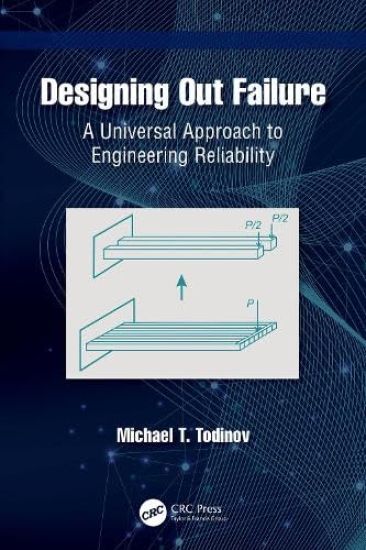
Designing Out Failure is a comprehensive textbook that introduces a unique, domain-independent methodology for eliminating failure modes and improving reliability across all engineering disciplines. The book presents a systematic innovative framework for risk reduction and reliability enhancement through a structured methodology applicable to diverse engineering fields. Over 60 worked examples and case studies, spanning mechanical, electrical, structural, and environmental engineering domains, showcase creative, solutions of exceptional quality. Each case study is structured not only to demonstrate the principles in action but also to provide actionable insights for transferable application in one's own design for reliability efforts. Each chapter is complemented by comprehensive practical exercises, tutorial questions, and detailed solutions that reinforce learning and foster creative thinking. Designed specifically for undergraduate and postgraduate engineering curricula, this textbook teaches creative thinking in engineering design while building core competencies in reliability engineering. It serves as an invaluable resource for students, educators, practicing engineers, and researchers seeking to master the art and science of reliable design
Reverse Engineering of Algebraic Inequalities

Reverse Engineering of Algebraic Inequalities

Michael T. Todinov

TAYLOR FRANCIS LTD
2024
sidottu
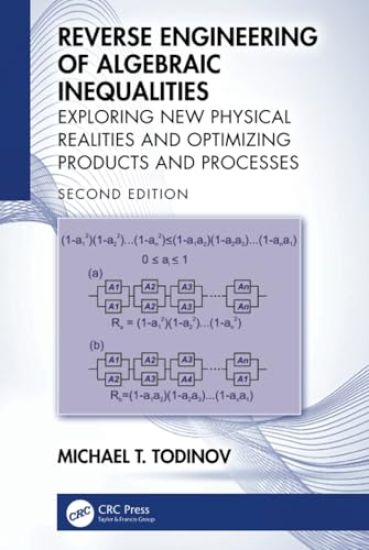
The second edition of Reverse Engineering of Algebraic Inequalities is a comprehensively updated new edition demonstrating the exploration of new physical realities in various unrelated domains of human activity through reverse engineering of algebraic inequalities.This book introduces a groundbreaking method for generating new knowledge in science and technology that relies on reverse engineering of algebraic inequalities. By using this knowledge, the purpose is to optimize systems and processes in diverse fields such as mechanical engineering, structural engineering, physics, electrical engineering, reliability engineering, risk management and economics. This book will provide the reader with methods to enhance the reliability of systems in total absence of knowledge about the reliabilities of the components building the systems; to develop light-weight structures with very big materials savings; to develop structures with very big load-bearing capacity; to enhance process performance and decision-making; to obtain new useful physical properties; and to correct serious flaws in the current practice for predicting system reliability.This book will greatly benefit professionals and mathematical modelling researchers working on optimising processes and systems in diverse disciplines. It will also benefit undergraduate students introduced to mathematical modelling, post-graduate students and post-doctoral researchers working in the area of mathematical modelling, mechanical engineering, reliability engineering, structural engineering, risk management, and engineering design..
Risk and Uncertainty Reduction by Using Algebraic Inequalities
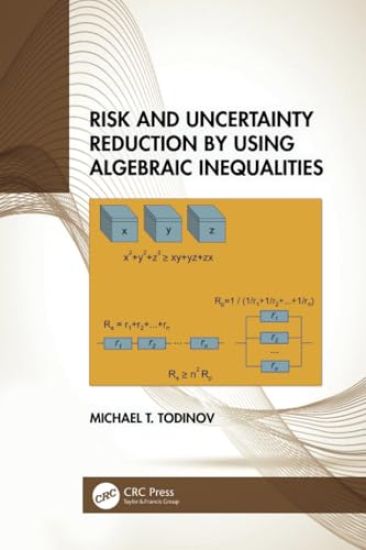
This book covers the application of algebraic inequalities for reliability improvement and for uncertainty and risk reduction. It equips readers with powerful domain-independent methods for reducing risk based on algebraic inequalities and demonstrates the significant benefits derived from the application for risk and uncertainty reduction.Algebraic inequalities:• Provide a powerful reliability improvement, risk and uncertainty reduction method that transcends engineering and can be applied in various domains of human activity• Present an effective tool for dealing with deep uncertainty related to key reliability-critical parameters of systems and processes• Permit meaningful interpretations which link abstract inequalities with the real world • Offer a tool for determining tight bounds for the variation of risk-critical parameters and complying the design with these bounds to avoid failure• Allow optimising designs and processes by minimising the deviation of critical output parameters from their specified values and maximising their performanceThis book is primarily for engineering professionals and academic researchers in virtually all existing engineering disciplines.
Risk and Uncertainty Reduction by Using Algebraic Inequalities
This book covers the application of algebraic inequalities for reliability improvement and for uncertainty and risk reduction. It equips readers with powerful domain-independent methods for reducing risk based on algebraic inequalities and demonstrates the significant benefits derived from the application for risk and uncertainty reduction.Algebraic inequalities:• Provide a powerful reliability improvement, risk and uncertainty reduction method that transcends engineering and can be applied in various domains of human activity• Present an effective tool for dealing with deep uncertainty related to key reliability-critical parameters of systems and processes• Permit meaningful interpretations which link abstract inequalities with the real world • Offer a tool for determining tight bounds for the variation of risk-critical parameters and complying the design with these bounds to avoid failure• Allow optimising designs and processes by minimising the deviation of critical output parameters from their specified values and maximising their performanceThis book is primarily for engineering professionals and academic researchers in virtually all existing engineering disciplines.
Risk-Based Reliability Analysis and Generic Principles for Risk Reduction
This book has been written with the intention to fill two big gaps in the reliability and risk literature: the risk-based reliability analysis as a powerful alternative to the traditional reliability analysis and the generic principles for reducing technical risk. An important theme in the book is the generic principles and techniques for reducing technical risk. These have been classified into three major categories: preventive (reducing the likelihood of failure), protective (reducing the consequences from failure) and dual (reducing both, the likelihood and the consequences from failure). Many of these principles (for example: avoiding clustering of events, deliberately introducing weak links, reducing sensitivity, introducing changes with opposite sign, etc.) are discussed in the reliability literature for the first time. Significant space has been allocated to component reliability. In the last chapter of the book, several applications are discussed of a powerful equation which constitutes the core of a new theory of locally initiated component failure by flaws whose number is a random variable.