Kirjojen hintavertailu. Mukana 12 595 353 kirjaa ja 12 kauppaa.

Kirjailija

Michael Tonry

Kirjat ja teokset yhdessä paikassa: 16 kirjaa, julkaisuja vuosilta 1991-2021, suosituimpien joukossa Punishment and Politics. Vertaile teosten hintoja ja tarkista saatavuus suomalaisista kirjakaupoista.

16 kirjaa

Kirjojen julkaisuhaarukka 1991-2021.

Crime and Justice, Volume 49 – Organizing Crime: Mafias, Markets, and Networks

Crime and Justice, Volume 49 – Organizing Crime: Mafias, Markets, and Networks

Michael Tonry; Peter Reuter

University of Chicago Press
2021
nidottu
For most Americans, The Godfather, The Sopranos, and the Cosa Nostra exemplify organized crime. In Asia the term conjures up images of Japanese yakuza and Chinese triads, in Italy the Cosa Nostra and ‘Ndrangheta, in Latin America Mexican narco-gangs and Colombian drug cartels, in the Netherlands transnational drug and human trafficking, and in Scandinavia outlaw motorcycle gangs. Some but not all those organizations are “mafias” with centuries-long histories, distinctive cultures, and complicated relationships with local communities and governments. Others are new, large but transitory and with no purpose other than maximizing profits from illegal markets. Organized crime organizations have existed for centuries. Serious scholarly, as opposed to journalistic or law enforcement, efforts to understand them, however, date back only a few decades. Authoritative overviews were, until very recently, impossible. Rigorous, analytically acute, and methodologically sophisticated literatures did not exist. They have begun to emerge. They have developed in many countries, involve work in different languages and disciplines, and deploy a wide range of methods. Organizing Crime: Mafias, Markets, and Networks provides the most exhaustive overview ever published of knowledge about organized crime. It provides intensive accounts of American, Italian, and Dutch developments, covers both national mafias and transnational criminality, and delves in depth into gender, human capital, and money laundering issues. The writers are based in seven countries. To a person they are, or are among, the world’s most distinguished specialists in their subjects. At last, credible explanations and testable hypotheses are available concerning when, why, and under what circumstances mafias and other organized crime organizations come into being, what makes them distinctive, what they do and with what effects, and how to contain them.

Crime and Justice, Volume 49 – Organizing Crime: Mafias, Markets, and Networks

Crime and Justice, Volume 49 – Organizing Crime: Mafias, Markets, and Networks

Michael Tonry; Peter Reuter

University of Chicago Press
2020
sidottu
For most Americans, The Godfather, The Sopranos, and the Cosa Nostra exemplify organized crime. In Asia the term conjures up images of Japanese yakuza and Chinese triads, in Italy the Cosa Nostra and ‘Ndrangheta, in Latin America Mexican narco-gangs and Colombian drug cartels, in the Netherlands transnational drug and human trafficking, and in Scandinavia outlaw motorcycle gangs. Some but not all those organizations are “mafias” with centuries-long histories, distinctive cultures, and complicated relationships with local communities and governments. Others are new, large but transitory and with no purpose other than maximizing profits from illegal markets. Organized crime organizations have existed for centuries. Serious scholarly, as opposed to journalistic or law enforcement, efforts to understand them, however, date back only a few decades. Authoritative overviews were, until very recently, impossible. Rigorous, analytically acute, and methodologically sophisticated literatures did not exist. They have begun to emerge. They have developed in many countries, involve work in different languages and disciplines, and deploy a wide range of methods. Organizing Crime: Mafias, Markets, and Networks provides the most exhaustive overview ever published of knowledge about organized crime. It provides intensive accounts of American, Italian, and Dutch developments, covers both national mafias and transnational criminality, and delves in depth into gender, human capital, and money laundering issues. The writers are based in seven countries. To a person they are, or are among, the world’s most distinguished specialists in their subjects. At last, credible explanations and testable hypotheses are available concerning when, why, and under what circumstances mafias and other organized crime organizations come into being, what makes them distinctive, what they do and with what effects, and how to contain them.
Doing Justice, Preventing Crime

Doing Justice, Preventing Crime

Michael Tonry

Oxford University Press Inc
2020
sidottu
Punishment policies and practices in the United States today are unprincipled, chaotic, and much too often unjust. The financial costs are enormous. The moral cost is greater: countless individual injustices, mass incarceration, the world's highest imprisonment rate, extreme disparities, especially affecting members of racial and ethnic minority groups, high rates of wrongful conviction, assembly line case processing, and a general absence of respectful consideration of offenders' interests, circumstances, and needs. In Doing Justice, Preventing Crime, Michael Tonry lays normative and empirical foundations for building new, more just, and more effective systems of sentencing and punishment in the twenty-first century. The overriding goals are to treat people convicted of crimes justly, fairly, and even-handedly; to take sympathetic account of the circumstances of peoples' lives; and to punish no one more severely than he or she deserves. Drawing on philosophy and punishment theory, this book explains the structural changes needed to uphold the rule of law and its requirement that the human dignity of every person be respected. In clear and engaging prose, Michael Tonry surveys what is known about the deterrent, incapacitative, and rehabilitative effects of punishment, and explains what needs to be done to move from an ignoble present to a better future.
Thinking about Punishment

Thinking about Punishment

Michael Tonry

Routledge
2019
nidottu
Thinking about Punishment pulls together the key writings by Michael Tonry on penal policy trends in western countries, racial and ethnic disparities, and sentencing policies, practices, and theories. Recent research in the past few decades shows that these topics are inextricably interrelated. Tonry argues that the distinct historical and cultural characteristics of a country offer the best explanation of national patterns of punishment at any one time, and over time. More general theories and models fall apart when applied to individual national experiences. In the United States, the key factors explaining both penal policy trends and sentencing patterns and policies include historical patterns of race relations, obsolete constitutional arrangements, moral attitudes related to the continental expansion of the United States and the country's fundamentalist Protestant religious origins. Comparable - but different - characteristics explain other countries' experiences. This excellent collection of Michael Tonry's work is essential reading for anyone interested in penal policy and criminal justice.
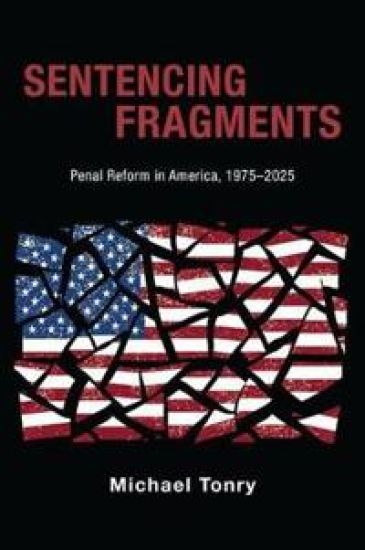
Sentencing Fragments

Sentencing Fragments

Michael Tonry

Oxford University Press Inc
2016
sidottu
Sentencing matters. Life, liberty, and property are at stake. Convicted offenders and victims care about it for obvious reasons, while judges and prosecutors also have a moral stake in the process. Never-the-less, the current system of sentencing criminal offenders is in a shambles, with a crazy quilt of incompatible and conflicting laws, policies, and practices in each state, not to mention an entirely different process at the federal level. In Sentencing Fragments, Michael Tonry traces four decades of American sentencing policy and practice to illuminate the convoluted sentencing system, from early reforms in the mid-1970's to the transition towards harsher sentences in the mid-1980's. The book combines a history of policy with an examination of current research findings regarding the consequences of the sentencing system, calling attention to the devastatingly unjust effects on the lives of the poor and disadvantaged. Tonry concludes with a set of proposals for creating better policies and practices for the future, with the hope of ultimately creating a more just legal system. Lucid and engaging, Sentencing Fragments sheds a much-needed light on the historical foundation for the current dynamic of the American criminal justice system, while simultaneously offering a useful tool for potential reform.
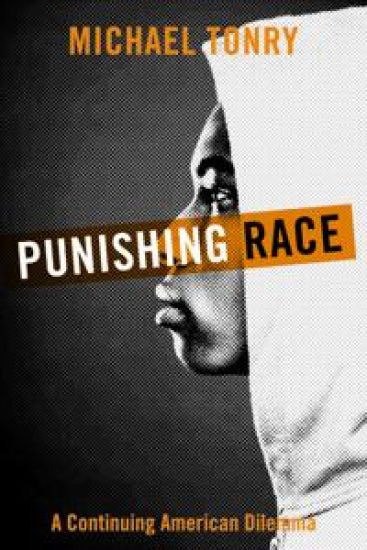
Punishing Race

Punishing Race

Michael Tonry

Oxford University Press Inc
2012
nidottu
How can it be, in a nation that elected Barack Obama, that one third of African American males born in 2001 will spend time in a state or federal prison, and that black men are seven times likelier than white men to be in prison? Blacks are much more likely than whites to be stopped by the police, arrested, prosecuted, convicted, and imprisoned, and are much less likely to have confidence in justice system officials, especially the police. In Punishing Race, Michael Tonry demonstrates in lucid, accessible language that these patterns result not from racial differences in crime or drug use but primarily from drug and crime control policies that disproportionately affect black Americans. These policies in turn stem from a lack of white empathy for black people, and from racial stereotypes and resentments provoked partly by the Republican Southern Strategy of using coded "law and order" appeals to race to gain support from white voters. White Americans, Tonry observes, have a remarkable capacity to endure the suffering of disadvantaged black and, increasingly, Hispanic men. Crime policies are among a set of social policies enacted since the 1960s that have maintained white dominance over black people despite the end of legal discrimination. To redress these injustices, Tonry offers a number of proposals: stop racial profiling by the police, shift the emphasis of drug law enforcement to treatment and prevention, eliminate mandatory sentencing laws, and change sentencing guidelines to allow judges discretion to take account of offenders' life circumstances. Those proposals are all attainable and would all reduce unjustifiable racial disparities and the collateral human and social harms they cause. A damning indictment of decades of misguided criminal justice policy, Punishing Race takes a crucial look at persisting racial injustice in America. "Michael Tonry's discussion and explanation of the racial disparities in prison, including black arrests for drug offenses, will change the way we think about fairness in our criminal justice system. Punishing Race is replete with original insights on how contemporary crime and drug policies have been shaped by a political climate that reflects America's unique history of race relations. Tonry documents the adverse racial effects of these policies and shows how they can be changed to do less unnecessary future harm to African Americans. This authoritative book is a must read."-William Julius Wilson, Lewis P. and Linda L. Geyser University Professor, Harvard University "With Punishing Race, Michael Tonry has once again shown us why he must be counted among America's foremost criminologists. The topic of this book could not be more important, its appearance at this moment could not be more timely, nor could Tonry's mastery of his subject be more impressively complete. If you want to understand the historical, political, and sociological roots of the mess we Americans have gotten ourselves into with our criminal justice policies, and if you want help in thinking about how we might get out of that mess, then you simply must read this book."-Glenn Loury, Merton P. Stoltz Professor of the Social Sciences, Professor of Economics and of Public Policy, Brown University "Punishing Race dramatically shows how politicians, playing on a long history of deeply troubled race relations, set up a criminal justice system that actively over-incarcerates blacks and Latinos, and thus disadvantages and disenfranchises too many minority Americans. Michael Tonry offers wise, valuable, and practical ideas on how to reform criminal justice policies and truly ensure freedom and justice for all."-Anthony D. Romero, Executive Director of the American Civil Liberties Union
Human Development and Criminal Behavior

Human Development and Criminal Behavior

Michael Tonry; Lloyd E. Ohlin; David P. Farrington

Springer-Verlag New York Inc.
2011
nidottu
Human Development and Criminal Behavior proposes an exten- sive agenda for crime research. The book is part of a pio- neering effort to understand the causes of crime, particu- larly its developmental course. It defines and sets the con- ditions necessary to conduct an accelerated longitudinal study of individuals at risk to become engaged in criminal careers. This work offers a blueprint for research to eluci- date and possibly prevent crime in our society.
Punishing Race

Punishing Race

Michael Tonry

Oxford University Press Inc
2011
sidottu
How can it be, in a nation that elected Barack Obama, that one third of African American males born in 2001 will spend time in a state or federal prison, and that black men are seven times likelier than white men to be in prison? Blacks are much more likely than whites to be stopped by the police, arrested, prosecuted, convicted, and imprisoned, and are much less likely to have confidence in justice system officials, especially the police. In Punishing Race, Michael Tonry demonstrates in lucid, accessible language that these patterns result not from racial differences in crime or drug use but primarily from drug and crime control policies that disproportionately affect black Americans. These policies in turn stem from a lack of white empathy for black people, and from racial stereotypes and resentments provoked partly by the Republican Southern Strategy of using coded "law and order " appeals to race to gain support from white voters. White Americans, Tonry observes, have a remarkable capacity to endure the suffering of disadvantaged black and, increasingly, Hispanic men. Crime policies are among a set of social policies enacted since the 1960s that have maintained white dominance over black people despite the end of legal discrimination. To redress these injustices, Tonry offers a number of proposals: stop racial profiling by the police, shift the emphasis of drug law enforcement to treatment and prevention, eliminate mandatory sentencing laws, and change sentencing guidelines to allow judges discretion to take account of offenders' life circumstances. Those proposals are all attainable and would all reduce unjustifiable racial disparities and the collateral human and social harms they cause. A damning indictment of decades of misguided criminal justice policy, Punishing Race takes a crucial look at persisting racial injustice in America.
Why Punish? How Much?

Why Punish? How Much?

Michael Tonry

Oxford University Press Inc
2011
sidottu
Punishment is a complex human institution. It has normative, political, social, psychological, and legal dimensions, and ways of thinking about each of them change over time. For this reader on punishment, Michael Tonry, a leading authority in the field, has composed a comprehensive collection of 28 essays ranging from classic and contemporary writings on normative theories by philosophers and penal theorists to writings on restorative justice, on how people think about punishment, and on social theories about the functions punishment performs in human societies. This volume includes an accessible, non-technical introduction on the development of punishment theory, as well as an introduction and annotated bibliography for each section. The readings cover foundational traditions of punishment theory such as consequentialism, retributivism, and functionalism, new approaches like restorative, communitarian, and therapeutic justice, as well as mixed approaches that attempt to link theory and policy. It follows the evolution and development of thinking about punishment spanning from writings by classical theorists such as Kant and Hegel to recent developments in the behavioral and medical sciences for thinking about punishment. The result is a collection of empirically-informed efforts to explain what punishment does that should spark contemplation and debate about why and how punishment is carried out.
Why Punish? How Much?

Why Punish? How Much?

Michael Tonry

Oxford University Press Inc
2011
nidottu
Punishment is a complex human institution. It has normative, political, social, psychological, and legal dimensions, and ways of thinking about each of them change over time. For this reader on punishment, Michael Tonry, a leading authority in the field, has composed a comprehensive collection of 28 essays ranging from classic and contemporary writings on normative theories by philosophers and penal theorists to writings on restorative justice, on how people think about punishment, and on social theories about the functions punishment performs in human societies. This volume includes an accessible, non-technical introduction on the development of punishment theory, as well as an introduction and annotated bibliography for each section. The readings cover foundational traditions of punishment theory such as consequentialism, retributivism, and functionalism, new approaches like restorative, communitarian, and therapeutic justice, as well as mixed approaches that attempt to link theory and policy. It follows the evolution and development of thinking about punishment spanning from writings by classical theorists such as Kant and Hegel to recent developments in the behavioral and medical sciences for thinking about punishment. The result is a collection of empirically-informed efforts to explain what punishment does that should spark contemplation and debate about why and how punishment is carried out.
Thinking about Punishment

Thinking about Punishment

Michael Tonry

Ashgate Publishing Limited
2009
sidottu
Thinking about Punishment pulls together the key writings by Michael Tonry on penal policy trends in western countries, racial and ethnic disparities, and sentencing policies, practices, and theories. Recent research in the past few decades shows that these topics are inextricably interrelated. Tonry argues that the distinct historical and cultural characteristics of a country offer the best explanation of national patterns of punishment at any one time, and over time. More general theories and models fall apart when applied to individual national experiences. In the United States, the key factors explaining both penal policy trends and sentencing patterns and policies include historical patterns of race relations, obsolete constitutional arrangements, moral attitudes related to the continental expansion of the United States and the country's fundamentalist Protestant religious origins. Comparable - but different - characteristics explain other countries' experiences. This excellent collection of Michael Tonry's work is essential reading for anyone interested in penal policy and criminal justice.
Punishment and Politics

Punishment and Politics

Michael Tonry

Willan Publishing
2004
nidottu
Labour has embarked upon a root and branch remaking of the criminal justice system in England and Wales, with a mass of new legislation implemented or planned. It has ensured a continuously high profile for criminal justice issues, and they have been at the centre of wider political discourse. Yet the basis and evidence on which these reforms are being introduced is both uncertain and highly controversial. Despite spending tens of millions of pounds of research into the criminal justice system in the name of evidence-based policy, evidence has counted only in relation to lowlevel technocratic issues. On the big issues the clear weight of evidence points in opposite directions to those which the government has taken. The primary drivers of recent policies have rather been the emulation of recent USA policies (at a time when these are now being abandoned in the USA because they have been shown to be ineffective); and a media-driven agenda with a focus on conspicuous crime prevention which have had the effect of heightening rather than assuaging public fears and concerns. This provocative yet authoritative book seeks to expose and to unravel what has really driven the making of criminal justice policy in the UK. It will be essential reading for anybody interested in knowing what is going on in criminal justice, and why it is so central to political debate more generally.
Punishment and Politics

Punishment and Politics

Michael Tonry

Willan Publishing
2004
sidottu
Labour has embarked upon a root and branch remaking of the criminal justice system in England and Wales, with a mass of new legislation implemented or planned. It has ensured a continuously high profile for criminal justice issues, and they have been at the centre of wider political discourse. Yet the basis and evidence on which these reforms are being introduced is both uncertain and highly controversial. Despite spending tens of millions of pounds of research into the criminal justice system in the name of evidence-based policy, evidence has counted only in relation to lowlevel technocratic issues. On the big issues the clear weight of evidence points in opposite directions to those which the government has taken. The primary drivers of recent policies have rather been the emulation of recent USA policies (at a time when these are now being abandoned in the USA because they have been shown to be ineffective); and a media-driven agenda with a focus on conspicuous crime prevention which have had the effect of heightening rather than assuaging public fears and concerns. This provocative yet authoritative book seeks to expose and to unravel what has really driven the making of criminal justice policy in the UK. It will be essential reading for anybody interested in knowing what is going on in criminal justice, and why it is so central to political debate more generally.
Sentencing Matters

Sentencing Matters

Michael Tonry

Oxford University Press Inc
1999
nidottu
Michael Tonry offers a comprehensive overview of research, policy developments, and practical experience concerning sentencing and sanctions. He considers what we know about the effects of innovations of the past twenty years on sentencing disparities, and what directions policy should move in the next twenty years.
Youth Violence

Youth Violence

Michael Tonry; Mark Moore

University of Chicago Press
1998
sidottu
Youth violence has become one of the most contentious and perplexing issues in recent debates on crime policy. Youth gangs have become increasingly associated in the public eye with drug-dealing, firearms and random violence. Magazines publish stories on "superpredators" and warn that demographic change will lead to an explosion of predatory violence. Congress provides billions to the states as an incentive to get tough with juvenile offenders, including the effective abolition of the juvenile court. Developmental researchers seek to identify the aspects of childhood that either lead to, or prevent, juvenile crime. This study provides an up-to-date, comprehensive overview of policy issues and research developments concerning crime and violence among the young.