

Kirjailija
Michael Urban
Kirjat ja teokset yhdessä paikassa: 14 kirjaa, julkaisuja vuosilta 1997-2025, suosituimpien joukossa Building 18. Vertaile teosten hintoja ja tarkista saatavuus suomalaisista kirjakaupoista.
14 kirjaa
Kirjojen julkaisuhaarukka 1997-2025.
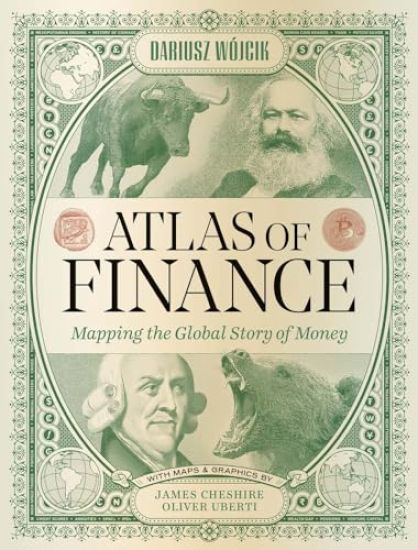
Atlas of Finance
Dariusz Wojcik; Panagiotis Iliopoulos; Stefanos Ioannou; Liam Keenan; Julien Migozzi; Timothy Monteath; Vladimir Pazitka; Morag Torrance; Michael Urban
YALE UNIVERSITY PRESS
2024
sidottu
A unique illustrated exploration of the development of finance that combines data from every part of the world and covers five thousand years of history “The book is a lot of fun. Data-fixated readers will enjoy unpicking its main content: a series of elegantly produced maps, graphs and other visualisations. These are eclectic in scope and ambitious in intent.”—Jonathan Guthrie, Financial Times From the emergence of money in the ancient world to today’s interconnected landscape of high-frequency trading and cryptocurrency, the story of finance has always taken place on an international stage. Finance is one of the most globalized and networked of human activities, and one of the most important social technologies ever invented. This volume, the first visually based book dedicated to finance, uses graphics and maps to bring the complex and abstract world of finance down to earth, showing how geography is fundamental for understanding finance, and vice versa. It illuminates the people—including Adam Smith, Karl Marx, and John Maynard Keynes—who have shaped our thinking about global finance; brings to life the ways that place-specific histories, laws, regulations, and institutions influence finance; shows how finance relates to innovation, globalization, and environmental change; and details how finance plays a key part in drawing the landscape of uneven development, inequality, and instability. The Atlas of Finance, with word and image, will change the way you view both your money and your world.


Murach's Python Programming (2nd Edition)
Joel Murach; Michael Urban
Mike Murach Associates Inc.
2021
pokkari

Music, magic and myth are elements essential to the identities of New Orleans musicians. The city's singular contributions to popular music around the world have been unrivaled; performing this music authentically requires collective improvisation, taking performers on sonorous sojourns in unanticipated, 'magical' moments; and membership in the city's musical community entails participation in the myth of New Orleans, breathing new life into its storied traditions. On the basis of 56 open-ended interviews with those in the city's musical community, Michael Urban discovers that, indeed, community is what it is all about. In their own words, informants explain that commercial concerns are eclipsed by the pleasure of playing in 'one big band' that disassembles daily into smaller performing units whose rosters are fluid, such that, over time, 'everybody plays with everybody'. Although Hurricane Katrina nearly terminated the city, New Orleans and its music—in no small part due to the sacrifices and labors of its musicians—have come back even stronger. Dancing to their own drum, New Orleanians again prove themselves to be admirably out of step with the rest of America.
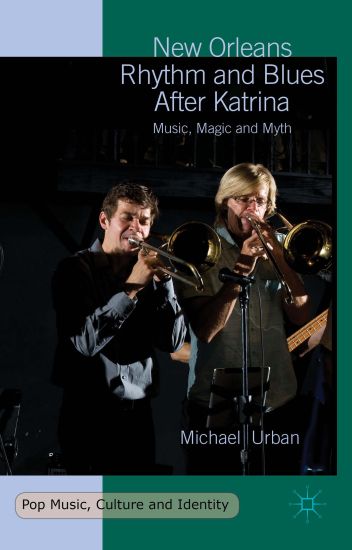
Music, magic and myth are elements essential to the identities of New Orleans musicians. The city's singular contributions to popular music around the world have been unrivaled; performing this music authentically requires collective improvisation, taking performers on sonorous sojourns in unanticipated, 'magical' moments; and membership in the city's musical community entails participation in the myth of New Orleans, breathing new life into its storied traditions. On the basis of 56 open-ended interviews with those in the city's musical community, Michael Urban discovers that, indeed, community is what it is all about. In their own words, informants explain that commercial concerns are eclipsed by the pleasure of playing in 'one big band' that disassembles daily into smaller performing units whose rosters are fluid, such that, over time, 'everybody plays with everybody'. Although Hurricane Katrina nearly terminated the city, New Orleans and its music—in no small part due to the sacrifices and labors of its musicians—have come back even stronger. Dancing to their own drum, New Orleanians again prove themselves to be admirably out of step with the rest of America.
In Russian politics reliable information is scarce, formal relations are of relatively little significance, and things are seldom what they seem. Applying an original theory of political language to narratives taken from interviews with 34 of Russia's leading political figures, Michael Urban explores the ways in which political actors construct themselves with words. By tracing individual narratives back to the discourses available to speakers, he identifies what can and cannot be intelligibly said within the bounds of the country's political culture, and then documents how elites rely on the personal elements of political discourse at the expense of those addressed to the political community. Urban shows that this discursive orientation is congruent with social relations prevailing in Russia and helps to account for the fact that, despite two revolutions proclaiming democracy in the last century, Russia remains an authoritarian state.
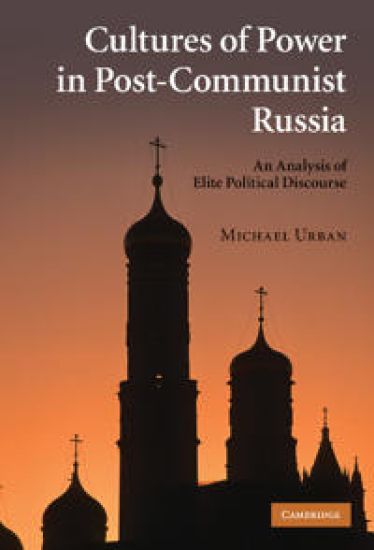
In Russian politics reliable information is scarce, formal relations are of relatively little significance, and things are seldom what they seem. Applying an original theory of political language to narratives taken from interviews with 34 of Russia's leading political figures, Michael Urban explores the ways in which political actors construct themselves with words. By tracing individual narratives back to the discourses available to speakers, he identifies what can and cannot be intelligibly said within the bounds of the country's political culture, and then documents how elites rely on the personal elements of political discourse at the expense of those addressed to the political community. Urban shows that this discursive orientation is congruent with social relations prevailing in Russia and helps to account for the fact that, despite two revolutions proclaiming democracy in the last century, Russia remains an authoritarian state.

Die Frage nach dem Verhaltnis zwischen den Einzelnen und dem Sozialen ist spatestens seit der Erfindung der Soziologie im 19. Jahrhundert Thema einer Vielzahl theoretischer Klarungs- und Beschreibungsansatze. In immer wieder neuen Varianten wurde versucht, dieses Verhaltnis zu begreifen als die Relation von Teil und Ganzem, von Individuum und Gesellschaft, von psychischen und sozialen oder von subjektiven und objektiven Strukturen - um nur die wichti- ten der zumeist binar strukturierten Begrifflichkeiten anzusprechen, die zur Theoretisierung dieses Zusammenhangs genutzt wurden. Der Diskurszus- menhang der soziologischen Systemtheorie in der von Luhmann (insbesondere 1 1987, 1997) begrundeten und von einer Reihe anderer Autoren weiterent- ckelten Form hat zur Bestimmung dieses Verhaltnisses einen spezifischen und von den bisherigen Konzepten stark abweichenden Vorschlag hervorgebracht: In Anschluss an die Arbeiten Luhmanns (vgl. etwa 1987: 32, 192) wird das Feld des Sozialen uber den Ausschluss des Psychischen konstituiert. Soziale Systeme bilden sich nach dieser theoretischen Konstruktion nicht uber das gemeinsame Handeln oder Interagieren von Menschen, Individuen oder Subjekten, sondern werden als operativ geschlossene, ihrer eigenen Autopoiesis folgende Systeme konzipiert, die sich uber die Selbstkontinuierung der Vernetzung eines spezi- schen Typus von Operationen bilden. Dieser systemkonstituierende Operatio- typus wird fur soziale Systeme in der Kommunikation gefunden (Luhmann 1987: 193, 1997: 81).
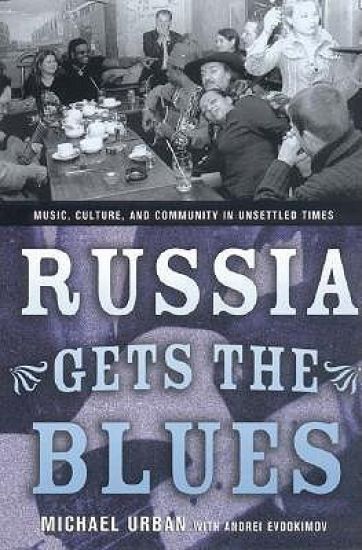
Michael Urban chronicles the advent of blues music in Russia and explores the significance of the genre in the turbulent, postcommunist society. Russians, he explains, have taken a music originating in the "low" culture of the American South and transformed it into an object of "high" culture, fashioning a social identity that distinguishes blues adherents from both the discredited Soviet past and the vulgar consumerism associated with the country's Westernization. While adapting the idiom to their own conditions, Russia's bliuzmeny (bluesmen) have absorbed the blues ethos encoded in the music by their American forebears, using it to invert their social world, thus deriving dignity and satisfaction from those very things that give one the blues. Based on more than forty interviews with blues musicians and fans, nightclub managers, and others, Russia Gets the Blues reveals the fascinating history of blues in Russia, from the initial mimicry of British blues-rock to the recent emergence of a specifically "Russian blues." The gradual mastering of the idiom in Russia has been conditioned by the culture of the country's intelligentsia, a fact explaining why, on one hand, bliuzmeny feel compelled to proselytize on behalf of the music, to share with others this treasure of "world culture," while, on the other, they perform blues almost exclusively in English—which almost no one understands—and condemn any and all efforts to make the music commercially successful.

Fuzzy-Konzepte Fuer Just in Time-Produktion Und -Beschaffung
Michael Urban
Peter Lang AG
1998
nidottu
Die Umsysteme von Produktionsunternehmen sind heute durch gravierende, diskontinuierliche Veranderungen gepragt. Zur Reduktion des Absatzrisikos sind kleine, kostengunstige Losgrossen hoher Qualitat in einer - auch zeitlich - flexiblen Produktion notig. Dies alles ist mit JiT und den Teilkonzepten JiT-Produktion, -Beschaffung sowie JiT-orientierter Qualitats- und Personalstrategie durch Rationalisierung in- und externer Informations- und Materialflusse bei gleichzeitiger Vermeidung von Lagern erreichbar. Der Lagerverzicht impliziert jedoch hohe Risiken bei Stockungen der Materialflusse. Planungs- und Bewertungsentscheidungen sind daher sorgfaltig und Korrekturentscheidungen bei laufenden JiT-Prozessen schnell zu treffen. Mit Fuzzy-Konzepten kann diesem Sachverhalt effektiv begegnet werden. Multikriterielle Fuzzy Lineare Produktionsprogrammplanung fuhrt zu Produktionsmengen, die eher zu spateren Prozessbedingungen passen und so die Materialflusskontinuitat verbessern. Durchlaufterminierung mit Fuzzy-Netzplanen kann Materialflussstockungen infolge unrealistischer Durchlaufzeiten vermeiden. Expertensysteme auf Basis von Fuzzy Logic und Fuzzy Petri-Netzen konnen die Produktionssteuerung verbessern. Lieferantenauswahl und -Controlling sind erst mit Fuzzy Logic-basierter Verarbeitung von Expertenregeln JiT-gerecht."
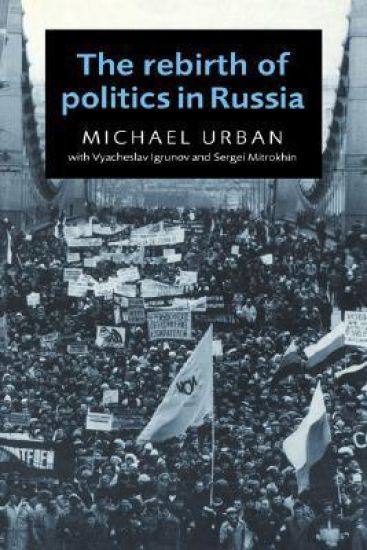
The Rebirth of Politics in Russia
Michael Urban; Vyacheslav Igrunov; Sergei Mitrokhin
Cambridge University Press
1997
pokkari
Blending first hand accounts of grassroots politics with an original theory of social relations under communism, this book seeks to explain one of the seminal events of this century: the rebirth of politics in Russia amid the collapse of the USSR. The authors trace the process from the pre-political period of dissident activity, through perestroika and the appearance of political groups and publications, elections, the formation of political parties and mass movements, counter-revolution and coup d’état, the victory of democratic forces and the organization of a Russian state; to the struggle of power in the post-communist epoch, the violent end of the first republic and the contentious relations engulfing its successor. By focusing on the popular forces which accomplished Russia’s political rebirth, rather than the reforms of the Soviet establishment, this book offers an original perspective on this critical period.
The Rebirth of Politics in Russia
Michael Urban; Vyacheslav Igrunov; Sergei Mitrokhin
Cambridge University Press
1997
sidottu
Blending first hand accounts of grassroots politics with an original theory of social relations under communism, this 1997 book seeks to explain one of the seminal events of this century: the rebirth of politics in Russia amid the collapse of the USSR. The authors trace the process from the pre-political period of dissident activity, through perestroika and the appearance of political groups and publications, elections, the formation of political parties and mass movements, counter-revolution and coup d'état, the victory of democratic forces and the organization of a Russian state; to the struggle of power in the post-communist epoch, the violent end of the first republic and the contentious relations engulfing its successor. By focusing on the popular forces which accomplished Russia's political rebirth, rather than the reforms of the Soviet establishment, this book offers an original perspective on this critical period.