Kirjojen hintavertailu. Mukana 12 390 323 kirjaa ja 12 kauppaa.

Kirjailija

Michael Useem

Kirjat ja teokset yhdessä paikassa: 21 kirjaa, julkaisuja vuosilta 1986-2024, suosituimpien joukossa Leading Up. Vertaile teosten hintoja ja tarkista saatavuus suomalaisista kirjakaupoista.

21 kirjaa

Kirjojen julkaisuhaarukka 1986-2024.

Resolute Japan

Resolute Japan

Jusuke JJ Ikegami; Harbir Singh; Michael Useem

Wharton Digital Press
2024
sidottu
Discover how Japan's new leadership model has transformed its top companies and created a new paradigm for business success In Resolute Japan, Waseda University's Jusuke J. J. Ikegami and the Wharton School's Harbir Singh and Michael Useem reveal a new leadership model that has led Japan's corporations to make a stunning comeback. In the process, they share what they have learned from interviews with more than 100 CEOs and top executives of Japan's largest and most influential companies, including Hitachi, Honda, Mitsubishi, Nissan, NTT, and Panasonic. In this book, you will discover: + How Japan's new leadership model has led to superior performance in the stock market and beyond; + The core principles and practices that characterize Japan's new leadership model and how they differ from the old models; + How Japan's new leadership model enables companies to balance multiple and often conflicting objectives, such as shareholder value and social responsibility, short-term results and long-term growth, and agility and stability; + How Japan's new leadership model fosters innovation, resilience, and competitiveness in a rapidly changing global environment; + Why, even in an environment of macroeconomic stagnation due to economic policies at the national level, individual companies can achieve sustainable development through this new leadership model; and + How Japan's new leadership model can inspire and inform business leaders in the West and elsewhere who are facing similar challenges and opportunities. Resolute Japan offers a rare and insightful perspective on the new corporate fabric of Japan, one that is sure to both challenge and enlighten leaders around the world.
Resolute Japan

Resolute Japan

Jusuke JJ Ikegami; Harbir Singh; Michael Useem

Wharton Digital Press
2024
pokkari
Discover how Japan's new leadership model has transformed its top companies and created a new paradigm for business success In Resolute Japan, Waseda University's Jusuke J. J. Ikegami and the Wharton School's Harbir Singh and Michael Useem reveal a new leadership model that has led Japan's corporations to make a stunning comeback. In the process, they share what they have learned from interviews with more than 100 CEOs and top executives of Japan's largest and most influential companies, including Hitachi, Honda, Mitsubishi, Nissan, NTT, and Panasonic. In this book, you will discover: + How Japan's new leadership model has led to superior performance in the stock market and beyond; + The core principles and practices that characterize Japan's new leadership model and how they differ from the old models; + How Japan's new leadership model enables companies to balance multiple and often conflicting objectives, such as shareholder value and social responsibility, short-term results and long-term growth, and agility and stability; + How Japan's new leadership model fosters innovation, resilience, and competitiveness in a rapidly changing global environment; + Why, even in an environment of macroeconomic stagnation due to economic policies at the national level, individual companies can achieve sustainable development through this new leadership model; and + How Japan's new leadership model can inspire and inform business leaders in the West and elsewhere who are facing similar challenges and opportunities. Resolute Japan offers a rare and insightful perspective on the new corporate fabric of Japan, one that is sure to both challenge and enlighten leaders around the world.
The Strategic Leader's Roadmap, Revised and Updated Edition

The Strategic Leader's Roadmap, Revised and Updated Edition

Harbir Singh; Michael Useem

Wharton Digital Press
2021
sidottu
"The Strategic Leader's Roadmap provides an essential playbook for combining business strategy with great leadership."-William P. Lauder, Executive Chairman, The EstÉe Lauder Companies Inc. In The Strategic Leader's Roadmap, Updated and Revised Edition: 6 Steps for Integrating Leadership and Strategy, Wharton management professors Harbir Singh and Michael Useem offer a six-point checklist for today's leaders to follow. They explain how leading strategically will help managers strengthen their capacity to develop strategy and to lead its execution. Drawing on one-on-one interviews with CEOs, in-depth research, and their experience teaching today's executives and tomorrow's leaders, Singh and Useem take readers into the offices-and mindsets-of some of today's foremost strategic leaders. In this fully updated and revised edition, Singh and Useem explore: How Indra Nooyi rose to become CEO of PepsiCo and led its successful strategic redirection; How Jack Ma consistently pivoted and outflanked competition to position Alibaba to become a global behemoth; How John Chambers, executive chairman of Cisco Systems, changed his and other company leaders' leadership to stay ahead of disruption; How Lawrence Culp Jr., the CEO of General Electric, has increased efficiency by up to 900% by undertaking a thorough examination of process and strategy. Fast-reading and actionable, The Strategic Leader's Roadmap will enable leaders at all levels to master the abilities necessary to keep their companies ahead of the competition.
The Leader's Checklist, 10th Anniversary Edition

The Leader's Checklist, 10th Anniversary Edition

Michael Useem

Wharton Digital Press
2021
sidottu
Envision this scenario: An industrial manufacturer is breaking itself in three, and its board chair asks you, the chief financial officer, to step up to the helm of one of the spin-offs. You will take charge of everything, from plant operations and product marketing to human resources and governance practices. Are you ready to lead? In The Leader's Checklist, 10th Anniversary Edition: 16 Mission-Critical Principles, world-renowned leadership expert and Wharton professor Michael Useem shows you how to lead through any challenge—and shares how ITT's Denise Ramos did just that when she encountered this situation. In this illuminating guide, Useem offers a Leader's Checklist that will help you develop your ability to make good and timely decisions in unpredictable and stressful environments—for those moments when leadership really matters. To illustrate the principles, Useem examines where leaders go right—and wrong. He looks at:How Ramos, the former CEO of ITT, turned around the once-struggling enterprise; How AIG's tone-deaf response to the tumultuous events of the global financial crisis left the company vulnerable to one of the greatest corporate collapses in business history; andHow Virginia Rometty, the former executive chair of IBM, acquired and integrated a cloud-computing company to help turn around IBM's fortunes. Based on Useem's own research experience and an array of leadership investigators, thinkers, and practitioners, The Leader's Checklist offers actionable insights you can put into practice as a leader today.
The Leader's Checklist, 10th Anniversary Edition

The Leader's Checklist, 10th Anniversary Edition

Michael Useem

Wharton Digital Press
2021
pokkari
Envision this scenario: An industrial manufacturer is breaking itself in three, and its board chair asks you, the chief financial officer, to step up to the helm of one of the spin-offs. You will take charge of everything, from plant operations and product marketing to human resources and governance practices. Are you ready to lead? In The Leader's Checklist, 10th Anniversary Edition: 16 Mission-Critical Principles, world-renowned leadership expert and Wharton professor Michael Useem shows you how to lead through any challenge—and shares how ITT's Denise Ramos did just that when she encountered this situation. In this illuminating guide, Useem offers a Leader's Checklist that will help you develop your ability to make good and timely decisions in unpredictable and stressful environments—for those moments when leadership really matters. To illustrate the principles, Useem examines where leaders go right—and wrong. He looks at:How Ramos, the former CEO of ITT, turned around the once-struggling enterprise; How AIG's tone-deaf response to the tumultuous events of the global financial crisis left the company vulnerable to one of the greatest corporate collapses in business history; andHow Virginia Rometty, the former executive chair of IBM, acquired and integrated a cloud-computing company to help turn around IBM's fortunes. Based on Useem's own research experience and an array of leadership investigators, thinkers, and practitioners, The Leader's Checklist offers actionable insights you can put into practice as a leader today.
The Strategic Leader's Roadmap, Revised and Updated Edition

The Strategic Leader's Roadmap, Revised and Updated Edition

Harbir Singh; Michael Useem

Wharton Digital Press
2021
pokkari
"The Strategic Leader's Roadmap provides an essential playbook for combining business strategy with great leadership."-William P. Lauder, Executive Chairman, The EstÉe Lauder Companies Inc. In The Strategic Leader's Roadmap, Updated and Revised Edition: 6 Steps for Integrating Leadership and Strategy, Wharton management professors Harbir Singh and Michael Useem offer a six-point checklist for today's leaders to follow. They explain how leading strategically will help managers strengthen their capacity to develop strategy and to lead its execution. Drawing on one-on-one interviews with CEOs, in-depth research, and their experience teaching today's executives and tomorrow's leaders, Singh and Useem take readers into the offices-and mindsets-of some of today's foremost strategic leaders. In this fully updated and revised edition, Singh and Useem explore: How Indra Nooyi rose to become CEO of PepsiCo and led its successful strategic redirection; How Jack Ma consistently pivoted and outflanked competition to position Alibaba to become a global behemoth; How John Chambers, executive chairman of Cisco Systems, changed his and other company leaders' leadership to stay ahead of disruption; How Lawrence Culp Jr., the CEO of General Electric, has increased efficiency by up to 900% by undertaking a thorough examination of process and strategy. Fast-reading and actionable, The Strategic Leader's Roadmap will enable leaders at all levels to master the abilities necessary to keep their companies ahead of the competition.
The Edge

The Edge

Michael Useem

PublicAffairs,U.S.
2021
sidottu
A leader's job-in a radically changing world-is standing on the cliff edge, getting a grip on unfamiliar landscapes, and acquiring the skills for leading the enterprise into new territory. In a world facing the unprecedented challenges of global pandemic and economic distruption, every leader needs to find the edge for leaping across the breach and breaking new ground on the other side.Michael Useem provides rare insight into how ten leaders confronted hard realities. He looked close-in at the lide and work of people such as Bill McNabb of Vanguard, Jeffrey Lurie of the Philadelphia Eagles, Alex Gorsky of Johnson & Johnson, and Tricia Griffith of Progressive Insurance. His "you are there" profiles chronicle fateful decisions such as:Meeting the concerns of a next-generation workforce that considers inclusiveness an integral part of businessDeveloping a strategy for growth in a market that is crateringEscaping the confines of an insane, always-on, 24/7 world to learn about the real, granular changes happening in the marketplace Useem's profiles of leaders on the edge provide the inspiration and the guidance we all need for adapting and thriving in an era of massive disruption and continuous transformation.
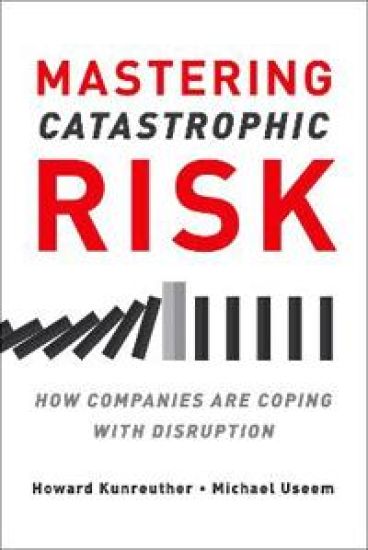
Mastering Catastrophic Risk

Mastering Catastrophic Risk

Howard Kunreuther; Michael Useem

Oxford University Press Inc
2021
nidottu
A profound and insightful look at how company leaders prepare for and respond to shocks and crises that threaten their business. Successful firms strategically manage and are more accurate in their assessment of large-scale risks. Doing so is increasingly challenging given the pace of change, whether financial, technological, regulatory, or environmental. Mastering Catastrophic Risk provides real-world practical insights into how large companies are responding to this new reality and develops a framework for smarter thinking about events that can damage a business. As leading authorities on risk management, strategy, and company leadership, Howard Kunreuther and Michael Useem take us on a groundbreaking tour of firms' decision making process. They demonstrate how improving readiness for and resilience against future shocks is now an integral part of company strategy. Using the "DISRUPT" model they have developed, they highlight the seven primary Drivers of disruption: Interdependencies increase exposure; Short-term focus results in limited vision; Regulations require change and constrain opportunities; Urbanization increases the costs of disasters; Probabilities of disasters have increased; and Transparency has enhanced public awareness of problems and impacts on firms' reputations. This updated paperback edition includes a new preface to address threats to business that have emerged or intensified in the past two years including existential threats like the coronavirus, self-inflicted calamities like the Wells Fargo customer account scandal, and natural disasters like the West Coast wildfires and hurricanes on the Atlantic. Some disruptions can be anticipated, while others arrive without warning. Their onset stresses decision makers, impairs company operations, and may even put the enterprise at risk. The bottom-line: business leaders and their governing boards face ever more challenging disruptions and must be ever more on guard. If your company is hit tomorrow, will it bounce back, or drown?
Mastering Catastrophic Risk

Mastering Catastrophic Risk

Howard Kunreuther; Michael Useem

Oxford University Press Inc
2018
sidottu
A profound and insightful look at how company leaders prepare for and respond to shocks and crises that threaten their business. Successful firms strategically manage and are more accurate in their assessment of large-scale risks. Doing so is increasingly challenging given the pace of change, whether financial, technological, regulatory, or environmental. Mastering Catastrophic Risk provides real-world practical insights into how large companies are responding to this new reality and develops a framework for smarter thinking about events that can damage a business. As leading authorities on risk management, strategy, and company leadership, Howard Kunreuther and Michael Useem take us on a groundbreaking tour of firms' decision making process. They demonstrate how improving readiness for and resilience against future shocks is now an integral part of company strategy. Using the "DISRUPT" model they have developed, they highlight the seven primary Drivers of disruption: Interdependencies increase exposure; Short-term focus results in limited vision; Regulations require change and constrain opportunities; Urbanization increases the costs of disasters; Probabilities of disasters have increased; and Transparency has enhanced public awareness of problems and impacts on firms' reputations. Some disruptions can be anticipated, while others arrive without warning. Their onset stresses decision makers, impairs company operations, and may even put the enterprise at risk. The bottom-line: business leaders and their governing boards face ever more challenging disruptions and must be ever more on guard. If your company is hit tomorrow, will it bounce back, or drown?
Go Long

Go Long

Dennis Carey; Brian Dumaine; Michael Useem; Rodney Zemmel

Wharton School Press
2018
pokkari
800-CEO-READ BESTSELLER Featured in Fortune, Harvard Business Review, and Entrepreneur, Go Long is "mandatory reading for the CEOs and boards of all public companies," according to David M. Rubenstein, co-founder and co-executive chairman of The Carlyle Group. The lifespans of companies are growing shorter each day. Why do some companies thrive and grow, while others fail? Inspired by the CEO Academy, the annual off-the-record gathering of chief executives organized by the authors, reveals how some of the world's most prominent business leaders resisted short-term pressures to successfully manage their organizations for the long term, and in turn, aim to create more jobs, more satisfied customers, and more shareholder wealth. In Go Long, authors Dennis Carey, Brian Dumaine, Michael Useem, and Rodney Zemmel take you behind the scenes to witness the business decisions that are enabling leading organizations to outsmart and outlast the competition. Why did CEO Larry Merlo allow CVS to take a $2 billion hit-on purpose? How did former CEO Alan Mulally maneuver Ford's $48 billion turnaround? How did director Maggie Wilderotter and her fellow board members engage top management to embark on an unusual exercise to help Hewlett Packard Enterprise build a long-term strategy? Why did former CEO Paul Polman turn back to Unilever's original mission of leading with a purpose to fuel profits? How did former Verizon CEO Ivan Seidenberg convince his investors and board to allow him to make a $150 billion bet? How did former CEO George Buckley find a way to address investor calls for 3M to spend less on research and development while still finding a way to innovate? These leaders argue that a short-term mindset might satisfy investors for this quarter or next, but there's a heavy price to be paid. Instead, they argue, long-term thinking is your best short-term strategy. "Considering the enormous harm that short-term investing has done not only to companies, but to countries as well, this book should be required reading in boardrooms everywhere. A concise, powerful call for responsible, long-term business practices."-Kirkus Reviews "A must-read. If you're looking to build or lead a company that grows consistently not just from quarter to quarter, but year to year … this book is for you."-Indra Nooyi, Board of Directors, Amazon; former Chairman and CEO, PepsiCo, Inc.
Go Long

Go Long

Dennis Carey; Brian Dumaine; Michael Useem; Rodney Zemmel

Wharton Digital Press
2018
sidottu
800-CEO-READ BESTSELLER Featured in Fortune, Harvard Business Review, and Entrepreneur, Go Long is "mandatory reading for the CEOs and boards of all public companies," according to David M. Rubenstein, co-founder and co-executive chairman of The Carlyle Group. The lifespans of companies are growing shorter each day. Why do some companies thrive and grow, while others fail? Inspired by the CEO Academy, the annual off-the-record gathering of chief executives organized by the authors, reveals how some of the world's most prominent business leaders resisted short-term pressures to successfully manage their organizations for the long term, and in turn, aim to create more jobs, more satisfied customers, and more shareholder wealth. In Go Long, authors Dennis Carey, Brian Dumaine, Michael Useem, and Rodney Zemmel take you behind the scenes to witness the business decisions that are enabling leading organizations to outsmart and outlast the competition. Why did CEO Larry Merlo allow CVS to take a $2 billion hit-on purpose? How did former CEO Alan Mulally maneuver Ford's $48 billion turnaround? How did director Maggie Wilderotter and her fellow board members engage top management to embark on an unusual exercise to help Hewlett Packard Enterprise build a long-term strategy? Why did former CEO Paul Polman turn back to Unilever's original mission of leading with a purpose to fuel profits? How did former Verizon CEO Ivan Seidenberg convince his investors and board to allow him to make a $150 billion bet? How did former CEO George Buckley find a way to address investor calls for 3M to spend less on research and development while still finding a way to innovate? These leaders argue that a short-term mindset might satisfy investors for this quarter or next, but there's a heavy price to be paid. Instead, they argue, long-term thinking is your best short-term strategy. "Considering the enormous harm that short-term investing has done not only to companies, but to countries as well, this book should be required reading in boardrooms everywhere. A concise, powerful call for responsible, long-term business practices."-Kirkus Reviews "A must-read. If you're looking to build or lead a company that grows consistently not just from quarter to quarter, but year to year … this book is for you."-Indra Nooyi, Board of Directors, Amazon; former Chairman and CEO, PepsiCo, Inc.
Fortune Makers

Fortune Makers

Michael Useem; Harbir Singh; Liang Neng; Peter Cappelli

PublicAffairs,U.S.
2017
sidottu
When Peter Drucker wrote Concept of the Corporation in 1946, he revealed what made the large American corporation tick. Similarly, The Art of Japanese Management by Richard Pascale in 1981 explained the unique practices developed by the Japanese to bring that country's economy out of the ashes. The emerging Chinese juggernauts-the Alibabas, Lenovos, and Haiers-need similar revelation since they are a different breed in their own right. Little is understood about them, how they work, and what makes them such potentially imposing competitors.Now, based on unprecedented access to the people who have created and grown the great private companies of China-the "General Electrics and Sonys" of that country, Michael Useem, Harbir Singh, Peter Cappelli and Neng Liang bring to life the distinctive practices of Chinese business leaders as they invent their own way forward to create world-class companies, and provide a comprehensive look at the leaders and businesses that are the future of the Chinese economy-and major competition to Western companies.Chinese companies are emerging on the global stage as never before, and their leadership lessons are invaluable in understanding and coping with their growing commercial presence worldwide. Company managers everywhere will want to understand China's distinct way of doing business if they are to compete against the companies that already dominate the domestic Chinese market and are coming to the fore in foreign markets, including the U.S.
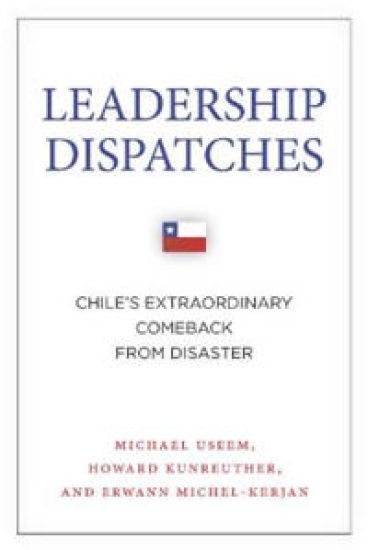
Leadership Dispatches

Leadership Dispatches

Michael Useem; Howard Kunreuther; Erwann Michel-Kerjan

Stanford University Press
2015
sidottu
On February 27, 2010, Chile was rocked by a violent earthquake five hundred times more powerful than the one that hit Haiti just six weeks prior. The Chilean earthquake devastated schools, hospitals, roads, and homes, paralyzing the country for weeks and causing economic damage that was equal to 18 percent of Chile's GDP. This calamity hit just as an incumbent political regime was packing its bags and a new administration was preparing to take office. For most countries, it would have taken years, if not decades, to recover from such an event. Yet, only one year later, Chile's economy had reached a six percent annual growth rate. In Leadership Dispatches, Michael Useem, Howard Kunreuther, and Erwann Michel-Kerjan look at how the nation's leaders—in government, business, religion, academia, and beyond—facilitated Chile's recovery. They attribute Chile's remarkable comeback to a two-part formula consisting of strong national leadership on the one hand, and deeply rooted institutional practices on the other. Coupled with strategic, deliberative thinking, these levers enabled Chile to bounce back quickly and exceed its prior national performance. The authors make the case that the Chilean story contains lessons for a broad range of organizations and governments the world over. Large-scale catastrophes of many kinds—from technological meltdowns to disease pandemics—have been on the rise in recent years. Now is the time to seek ideas and guidance from other leaders who have triumphed in the wake of a disaster. In this vein, Leadership Dispatches is both a remarkable story of resilience and an instructive look at how those with the greatest responsibility for a country, company, or community should lead.
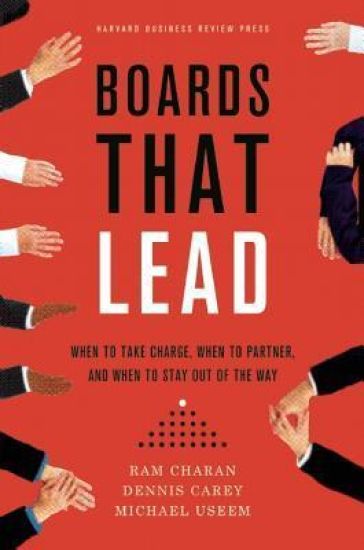
Boards That Lead

Boards That Lead

Ram Charan; Dennis Carey; Michael Useem

Harvard Business Review Press
2013
sidottu
Is your firm's board creating value--or destroying it? Change is coming. Leadership at the top is being redefined as boards take a more active role in decisions that once belonged solely to the CEO. But for all the advantages of increased board engagement, it can create debilitating questions of authority and dangerous meddling in day-to-day operations. Directors need a new road map--for when to lead, when to partner, and when to stay out of the way. Boardroom veterans Ram Charan, Dennis Carey, and Michael Useem advocate this new governance model--a sharp departure from what has been demanded by governance activists, raters, and regulators--and reveal the emerging practices that are defining shared leadership of directors and executives. Based on personal interviews and the authors' broad and deep experience working with executives and directors from dozens of the world's largest firms, including Apple, Boeing, Ford, Infosys, and Lenovo, Boards That Lead tells the inside story behind the successes and pitfalls of this new leadership model and explains how to: * Define the central idea of the company * Ensure that the right CEO is in place and potential successors are identified * Recruit directors who add value * Root out board dysfunction * Select a board leader who deftly bridges the divide between management and the board * Set a high bar on ethics and risk With a total of eighteen checklists that will transform board directors from monitors to leaders, Charan, Carey, and Useem provide a smart and practical guide for businesspeople everywhere--whether they occupy the boardroom or the C-suite.
The India Way

The India Way

Peter Cappelli; Harbir Singh; Jitendra Singh; Michael Useem

Harvard Business Review Press
2010
sidottu
Exploding growth. Soaring investment. Incoming talent waves. India's top companies are scoring remarkable successes on these fronts - and more. How? Instead of adopting management practices that dominate Western businesses, they're applying fresh practices of their ownin strategy, leadership, talent, and organizational culture. In The India Way, the Wharton School India Team unveils these companies' secrets. Drawing on interviews with leaders of India's largest firms - including Mukesh Ambani of Reliance Industries, Narayana Murthy of Infosys Technologies, and Vineet Nayar of HCL Technologies - the authors identify what Indian managers do differently, including: Looking beyond stockholders' interests to public mission and national purpose Drawing on improvisation, adaptation, and resilience to overcome endless hurdles Identifying products and services of compelling value to customers Investing in talent and building a stirring culture The authors explain how these innovations work within Indian companies, identifying those likely to remain indigenous and those that can be adapted to the Western context. With its in-depth analysis and research, The India Way offers valuable insights for all managers seeking to strengthen their organization's performance.
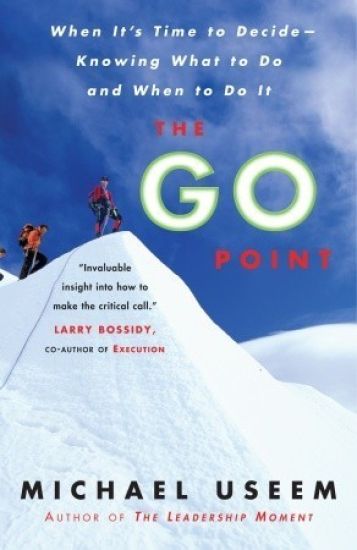
The Go Point: When It's Time to Decide--Knowing What to Do and When to Do It
What do you do when it's time to get off the fence? One of the world's most noted leadership experts, Michael Useem uses dramatic story-telling to show how to master the art and science of being decisive. He places you smack in the middle of people who faced their go point, when actions-or lack of them-determined the fates of individuals, companies, and countries. - Why on earth did Robert E. Lee send General George Pickett on an almost suicidal charge against the Union lines at Gettysburg? - How does the leader of a firefighting crew make life-or-death decisions when one direction means safety, the other danger? - You've just assumed responsibility for a scandal-wracked corporation, a company teetering on the brink of disaster. What you decide over the course of the next several days will have consequences for thousands of employees and investors. How do you fulfill your responsibilities? You'll discover why some decisions were flawless, perfectly on target, and others utterly disastrous. Most of all, you'll learn how to make the right calls yourself, whether you're changing your career, launching a product, or deciding on a potential acquisition or merger.
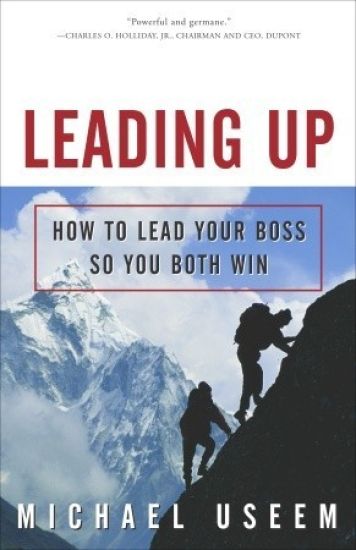
Leading Up

Leading Up

Michael Useem

Random House USA Inc
2003
pokkari
A leadership expert draws on the examples of real people--representing a variety of fields--to share the secret of "leading up" or gently moving a superior to work at his or her own potential. Reprint. 20,000 first printing.
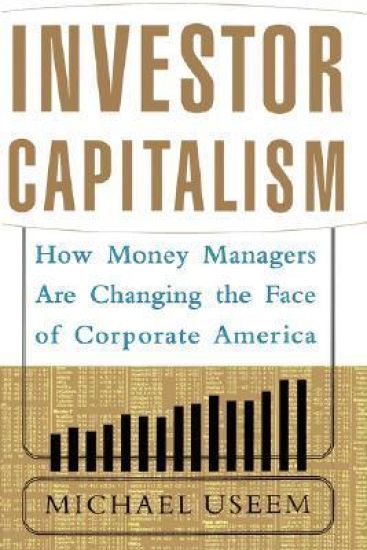
Investor Capitalism

Investor Capitalism

Michael Useem

Basic Books
1999
pokkari
A behind-the-scenes look at today's kingmakers: institutional investors. Out of the public eye, a small group of professionals- investment experts who handle other people's monies- are exerting ever-greater control over corporate managers, firing CEOs and pushing through'restructurings' that cost thousands of jobs. Michael Useem's "Investor Capitalism" portrays the quiet, veiled nature of this dance of elephants, and portrays the enormous implications of its results. - John Rekenthaler, Publisher, Morningstar, Inc.
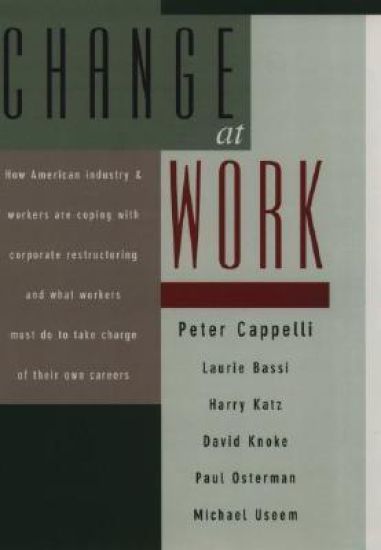
Change at Work

Change at Work

Peter Cappelli; Laurie Bassi; Harry Katz; David Knoke; Paul Osterman; Michael Useem

Oxford University Press Inc
1997
sidottu
This book illuminates what is really happening in the American workplace. The contributors explain how the widespread restructuring of American firms--usually resulting in a reduction of the workforce to cut costs--has had a profound impact on the lives of workers. The book explains how the new relationship requires high skill levels, but does not provide training for them. Workers themselves now must take charge of their personal development instead of relying on their employers. Their alienation from their firms is compounded by the large disparity between the pay of top managers and that of workers. The future is uncertain, but the authors argue that the traditional relationship between employer and employees will continue to erode.
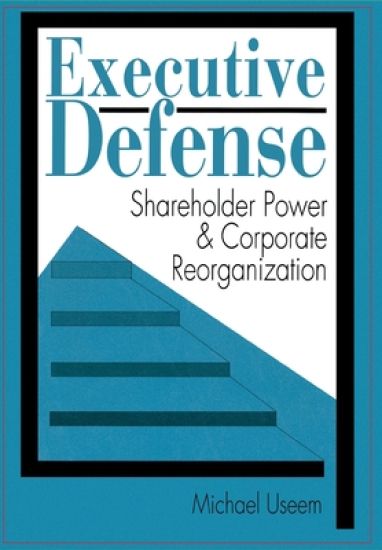
Executive Defense

Executive Defense

Michael Useem

Harvard University Press
1993
sidottu
A quiet revolution came to corporate America during the late 1980s and early 1990s. Large shareholders—pension funds, insurance companies, money manages, and commercial banks—exercised new-found muscle, pressuring senior managers to improve disappointing financial results by reshaping their organization. Michael Useem reveals how those investor pressures have transformed the inside structures of many corporations, better aligning them with shareholder interest.Useem draws on numerous sources, including interviews with senior managers and intensive studies of seven large corporations representing a range of restructuring experiences and industries—including pharmaceuticals, transportation, chemicals, retailing, electronics, and financial services. He shows that organizational changes have affected many areas of corporate life: headquarters staffs have been reduced authority has filtered down to operating units, and compensation has become more closely tied to performance. Change also extends to corporate governance, where managers have fought back by seeking legal safeguards against takeovers and by staggering board terms. They’ve also put significant resources into building more effective relations with shareholders.As Useem demonstrates, this revolution has reached beyond the corporation, influencing American politics and law. As increasing ownership concentration has caused companies to focus more attention on shareholders, corporate political agendas have shifted from fighting government regulation to resisting shareholder intrusion.