Kirjojen hintavertailu. Mukana 12 595 353 kirjaa ja 12 kauppaa.

Kirjailija

Michael W. Champion

Kirjat ja teokset yhdessä paikassa: 2 kirjaa, julkaisuja vuosilta 2014-2022, suosituimpien joukossa Dorotheus of Gaza and Ascetic Education. Vertaile teosten hintoja ja tarkista saatavuus suomalaisista kirjakaupoista.

2 kirjaa

Kirjojen julkaisuhaarukka 2014-2022.

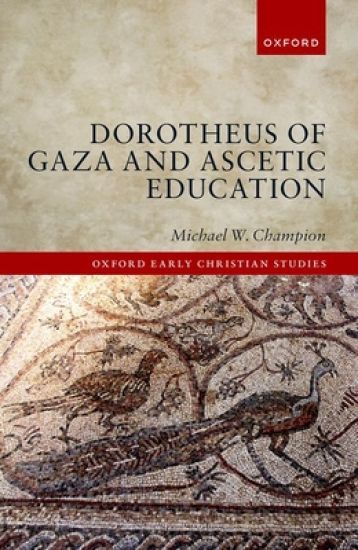
Dorotheus of Gaza and Ascetic Education

Dorotheus of Gaza and Ascetic Education

Michael W. Champion

Oxford University Press
2022
sidottu
Dorotheus of Gaza and Ascetic Education approaches fundamental questions about the role and function of education in late antiquity through a detailed study of the thought of Dorotheus of Gaza, a sixth-century Palestinian monk. It illumines the thought of a significant figure in Palestinian monasticism, clarifies relationships between ascetic and classical education, and contributes to debates about how different educational projects related to late-antique cultural change. Dorotheus appropriates and reconfigures classical discourses of rhetoric, philosophy, and medicine and builds on earlier ascetic traditions. Education is a powerful site for the reconfiguration and reproduction of culture, and Dorotheus' educational programme can be read as a microcosm of the wider culture he aims to construct partly through his adaptation and representation of classical and ascetic discourses. Key features of his educational programme include the role of the notion of godlikeness, the governing role of humility as an epistemic virtue intended to organize affective and ethical development, and his notion of education as life-long habituation. For Dorotheus, education is irreducibly affective and transformative rather than merely informative at the individual and communal scales. His epistemology and ethics are set within an account of the divine plan of salvation which is intended to provide a narrative framework through which his students come to understand the world and their place in it. His account of ways of knowing and ordering knowledge, ethics and moral development, emotions of education, and relationships between affect, cognition, and ethical action aims towards transformation of his students and their communities.
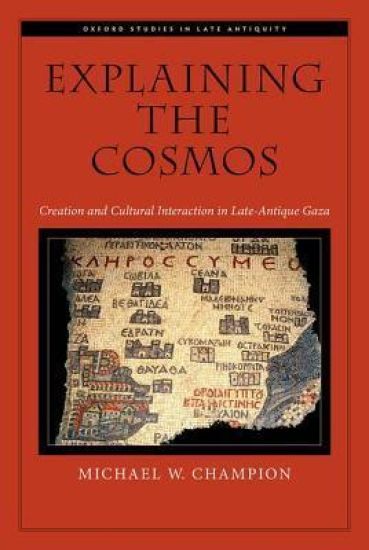
Explaining the Cosmos

Explaining the Cosmos

Michael W. Champion

Oxford University Press Inc
2014
sidottu
Explaining the Cosmos analyzes the writings of three thinkers associated with Gaza: Aeneas, Zacharias and Procopius. Together, they offer a case study for the appropriation, adaptation, and transformation of classical philosophy in late antiquity, and for cultural transitions more generally in Gaza. Aeneas claimed that the "Academy and Lyceum" had been transferred to Gaza. This book asks what the cultural and intellectual characteristics of the Gazan "Academies" were, and how members of the schools mixed with local cultures of Christians, philosophers, rhetoricians and monks from the local monasteries. Aeneas, Zacharias and Procopius each contributed to debates about the creation and eternity of the world, which ran from the Neoplatonist Proclus into the sixth-century disputes between Philoponus, Simplicius and Cosmas Indicopleustes. The Gazan contribution is significant in its own right, highlighting distinctive aspects of late-antique Christianity, and it throws the later philosophical debates into sharper relief. Focusing on the creation debates also allows for exploration of the local cultures that constituted Gazan society in the late-fifth and early-sixth centuries. Explaining the Cosmos further explores cultural dynamics in the Gazan schools and monasteries and the wider cultural history of the city. The Gazans adapt and transform aspects of Classical and Neoplatonic culture while rejecting Neoplatonic religious claims. The study also analyses the Gazans' intellectual contributions in the context of Neoplatonism and early Christianity. The Gaza which emerges from this study is a set of cultures in transition, mutually constituting and transforming each other through a fugal pattern of exchange, adaptation, conflict and collaboration.