Kirjojen hintavertailu. Mukana 12 152 606 kirjaa ja 12 kauppaa.

Kirjailija

Michael W. Cole

Kirjat ja teokset yhdessä paikassa: 7 kirjaa, julkaisuja vuosilta 2010-2026, suosituimpien joukossa Sofonisba - History's Forgotten Miracle. Vertaile teosten hintoja ja tarkista saatavuus suomalaisista kirjakaupoista.

7 kirjaa

Kirjojen julkaisuhaarukka 2010-2026.

Sofonisba - History's Forgotten Miracle

Sofonisba - History's Forgotten Miracle

Andrea Rygg Karberg; Giorgio Vasari; Leticia Ruiz Gómez; Griselda Pollock; Søren Thorlak Madsen; Michael W. Cole; Antoon Van Dyck; Fie Ellen Jannerup

-
2023
nidottu
Hun var kendt som sin tids største kvindelige kunstmaler, et mirakel. Siden blev hun skrevet ud af kunsthistorien og glemt. Fortællingen om Sofonisba Anguissolas lange, virksomme liv under italiensk renæssance og ind i barokken er helt usædvanlig. I 2022 blev hun atter skrevet frem i historien med en ambitiøs særudstilling på Nivaagaards Malerisamling.Sofonisbas historie og mesterlige kunst er stadig til stor inspiration. Trods mere end 400 års afstand træder den eventyrlige kvindeskikkelse levende frem for os i sine selvportrætter, skriftlige kilder og gennem hendes gengivelser af mennesker, der betød noget for hende. Hun skildrede som ingen andre tidens kostbare tekstiler og smykker, oprigtige barneansigter, menneskeblikke og drømmende landskaber i baggrunden af sine tindrende smukke malerier.Sofonisba Anguissola var en kvindelig mønsterbryder og en sjælden rollemodel for sin tid. Siden gik hun i glemmebogen i takt med, at kvinder særligt i 1800-tallet blev skrevet ud af kunsthistorien.
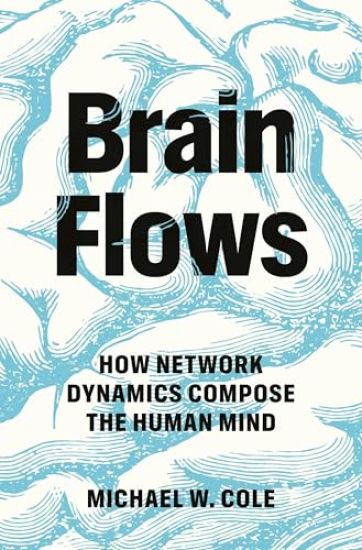
Brain Flows

Brain Flows

Michael W. Cole

PRINCETON UNIVERSITY PRESS
2026
sidottu
A pioneering theory of how brain network flows compose the neural symphonies that make us who we are What enables us not only to comprehend the world but also to find meaning in it? How does a brain engender a mind? In Brain Flows, cognitive neuroscientist Michael Cole argues that movements (flows) of activity through brain networks create an improvised electrochemical symphony that generates our thoughts, feelings, perceptions, and actions. Drawing on his decades of brain research, Cole traces the brain’s complex network organization, which transforms brain flows into representations, goal pursuits, and entire minds. Central to this transformation, he explains, is compositionality, which allows neural representations to be reused and recombined to produce a brain state rich enough not only to perceive the constant novelty of the world but also to help generate it. Cole describes the work of brain flows layer by layer, from simple network interactions to hallmarks of the human mind: consciousness, intelligence, free will, mental health, and creativity. After laying the groundwork—introducing the idea of brain flows and discussing goal pursuit, novelty, and hierarchies—he offers an innovative account of how brain flow patterns create the mind, putting cognitive and network neuroscience findings within rich theoretical and empirical contexts. Throughout , he offers lively examples from daily life that shed light on the dynamic origin of our minds. Ultimately, Cole shows that brain flows are central to what the brain does and thus who we are.
Sofonisba's Lesson, New Edition

Sofonisba's Lesson, New Edition

Michael W. Cole

PRINCETON UNIVERSITY PRESS
2026
sidottu
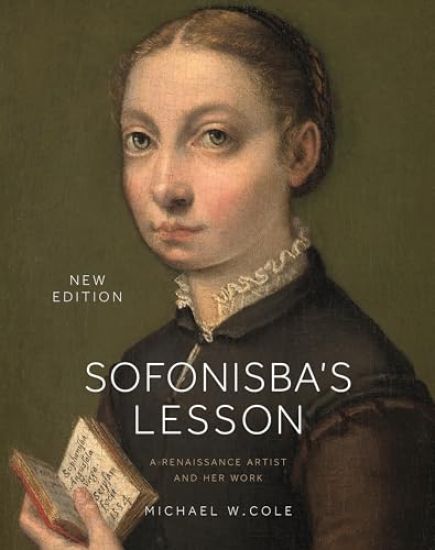
The landmark study of the first major woman painter of the Renaissance—now revised and expanded to include new discoveries Since it was first published, Sofonisba’s Lesson has ushered in a major reassessment of Sofonisba Anguissola (1532–1625), a remarkable painter who changed the image of women’s education in Europe and transformed Western attitudes about who could be an artist. In this revised and expanded edition, Michael Cole reconsiders some central questions of authorship and shares the major discoveries that have been made since this influential book first came out. The daughter of minor Lombard aristocrats who made the unprecedented decision to have her trained as a painter outside the family house, Sofonisba produced more self-portraits than any known painter before her. She was the first known artist to use her parents and siblings as primary subjects and may have painted the first group portrait featuring only women. Recent research also reveals her to have been not only a key model for painters around her but also the rare early modern Italian artist to take up a subject demonstrably related to the reform of the Catholic Church. The expanded volume offers new assessments of paintings whose status has long been uncertain. Providing a comprehensive and up-to-date illustrated catalog of the more than two hundred known paintings and drawings that writers have associated with Sofonisba over the centuries, Sofonisba’s Lesson will remain the definitive account of the artist and her work for decades to come.
Sofonisba's Lesson

Sofonisba's Lesson

Michael W. Cole

PRINCETON UNIVERSITY PRESS
2020
sidottu
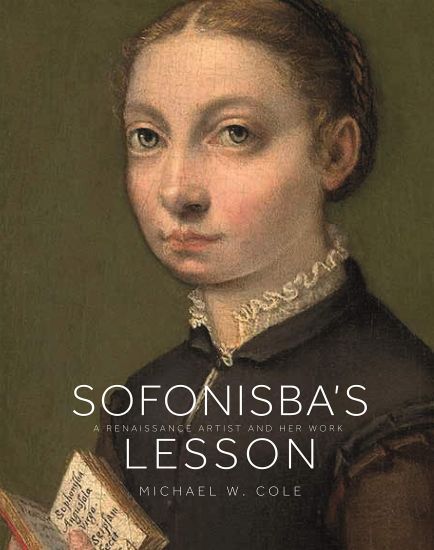
The formation and career of the first major woman artist of the RenaissanceSofonisba Anguissola (ca. 1535–1625) was the daughter of minor Lombard aristocrats who made the unprecedented decision to have her trained as a painter outside the family house. She went on to serve as an instructor to Isabel of Valois, the young queen of Spain. Sofonisba’s Lesson sheds new light on Sofonisba’s work, offering a major reassessment of a Renaissance painter who changed the image of women’s education in Europe—and who transformed Western attitudes about who could be an artist.In this book, Michael Cole demonstrates how teaching and learning were central themes of Sofonisba’s art, which shows women learning to read, play chess, and paint. He looks at how her pictures challenged conventional ideas about the teaching of young girls, and he discusses her place in the history of the amateur, a new Renaissance type. The book examines Sofonisba’s relationships with the group of people for whom her practice was important—her father Amilcare, her teacher Bernardino Campi, the men and women who sought to be associated with her, and her sisters and the other young women who followed her path.Sofonisba’s Lesson concludes with a complete illustrated catalog of the more than two hundred known paintings and drawings that writers have associated with Sofonisba over the past 450 years, with a full accounting of modern scholarly opinion on each.
Donatello, Michelangelo, Cellini

Donatello, Michelangelo, Cellini

Michael W. Cole; Oliver Tostmann

Paul Holberton Publishing
2014
pokkari
The self-portrait of Baccio Bandinelli in the Isabella Stewart Gardner Museum, Boston, shows the sculptor pointing not to a work of marble or bronze, but to a drawing. Bandinelli was particularly proud of his skills as a draftsman, and he was prolific in his production of works on paper. This set him apart from contemporaries in his profession; many Renaissance sculptors left us no drawings at all. Accompanying an exhibition at the Gardner Museum, this publication will put Bandinelli’s portrait in context by looking at the practice of drawing by sculptors from the Renaissance to the Baroque in Central Italy. A focus of the book will be Bandinelli’s own drawings and the development of his practice across his career and his experimentation with different media. Bandinelli’s drawings will be compared with those of Michelangelo and Cellini. The broader question considered, however, is when, how and why sculptors drew. Every Renaissance sculptor who set out to make a work in metal or stone would first have made a series of preparatory models in wax, clay and/or stucco. Drawing was not an essential practice for sculptors in the way it was for painters, and indeed, most surviving sculptors’ drawings are not preparatory studies for works they subsequently executed in three dimensions. By comparing both rough sketches and more finished drawings with related three-dimensional works by the same artists, the importance of drawing for various individual sculptors will be examined. When sculptors did draw, it often indicated something about the artist’s training or about his ambitions. Among the most accomplished draftsmen were artists like Pollaiuolo, Verrocchio and Cellini, who had come to sculpture by way of goldsmithery, a profession that required proficiency in ornamental design. Artists who sought to become architects, meanwhile – the likes of Michelangelo, Giambologna and Ammanati – similarly needed to learn to draw, since architects had to provide plans, elevations and other drawings to assistants and clients and had to imagine the place of individual figures within a larger multi-media ensemble. Certain kinds of projects, moreover – fountains and tombs, for example – required drawings to a degree that others did not. Sections on the Renaissance goldsmith-sculptor and sculptor-architect will allow comparison of the place drawing had in various artists’ careers. Beginning with a chapter dedicated to the importance of draftsmanship in the education of sculptors, showing works by Finiguerra, Cellini Bandinelli and Giambologna, the book will be split up into chapters dealing with the various challenges sculptors faced while drawing objects in the round, reliefs, and architectural structures. A central section will focus on Bandinelli, demonstrating the importance drawing held for him while he was preparing sculptures and as an independent token of his artistry.
Ambitious Form

Ambitious Form

Michael W. Cole

Princeton University Press
2010
sidottu
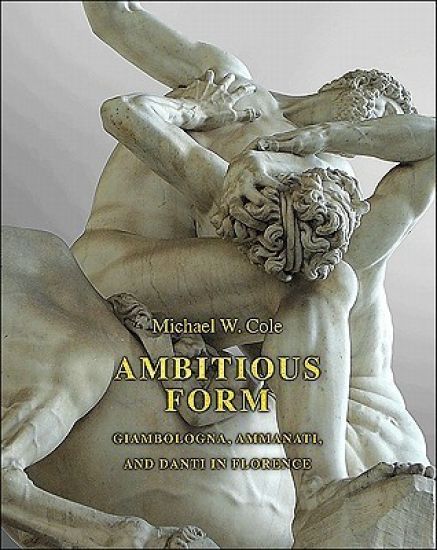
Ambitious Form describes the transformation of Italian sculpture during the neglected half century between the death of Michelangelo and the rise of Bernini. The book follows the Florentine careers of three major sculptors--Giambologna, Bartolomeo Ammanati, and Vincenzo Danti--as they negotiated the politics of the Medici court and eyed one another's work, setting new aims for their art in the process. Only through a comparative look at Giambologna and his contemporaries, it argues, can we understand them individually--or understand the period in which they worked. Michael Cole shows how the concerns of central Italian artists changed during the last decades of the Cinquecento. Whereas their predecessors had focused on specific objects and on the particularities of materials, late sixteenth-century sculptors turned their attention to models and design. The iconic figure gave way to the pose, individualized characters to abstractions. Above all, the multiplicity of master crafts that had once divided sculptors into those who fashioned gold or bronze or stone yielded to a more unifying aspiration, as nearly every ambitious sculptor, whatever his training, strove to become an architect.