Kirjojen hintavertailu. Mukana 12 595 353 kirjaa ja 12 kauppaa.

Kirjailija

Michael W. Eysenck

Kirjat ja teokset yhdessä paikassa: 22 kirjaa, julkaisuja vuosilta 1992-2026, suosituimpien joukossa Happiness. Vertaile teosten hintoja ja tarkista saatavuus suomalaisista kirjakaupoista.

Mukana myös kirjoitusasut: Michael W Eysenck

22 kirjaa

Kirjojen julkaisuhaarukka 1992-2026.

Happiness

Happiness

Michael W Eysenck

TAYLOR FRANCIS LTD
2026
nidottu
First published in 1990, Happiness is based fairly and squarely on scientific evidence and provides realistic insights into the following questions: What is happiness? How can you tell if you are happy? How important are love, sex, money, and family relationships? Can happiness last? Is there a blueprint for happiness? Is unhappiness a terminal illness? Is there a ‘happiness gone’? This book will be of interest to students of psychology and other mental health experts.
Memory

Memory

Alan Baddeley; Michael W. Eysenck; Michael C. Anderson

TAYLOR FRANCIS LTD
2025
nidottu
This key textbook, now in its fourth edition, provides students with the most comprehensive introduction to the study of human memory and its applications in the field. Written by three leading experts, it delivers an authoritative and accessible overview of key topic areas. Each chapter combines breadth of content coverage with a wealth of relevant practical examples, while the engaging writing style invites the reader to share the authors’ fascination with the exploration of memory through their individual areas of expertise. Across the text, the scientific theory is connected to a range of real-world questions and everyday human experiences.This new edition:Has been fully revised and updated to address the latest research, theories, and applications, including a new second chapter that acts as a one-stop overview of the full range of neuroscience methods for studying memoryIncludes new or expanded coverage of collective memory, spatial memory, explicit and implicit memory, episodic and autobiographical memory, and the functional role of memory in more complex tasks. It also features a greater emphasis on memory in the real world, practical applications, and the impact of memory research on everyday lifeHas been updated for more inclusive language and representation of people and research across race, ethnicity, sexuality, gender identity, and neurodiversityThis edition of Memory is an essential resource for those embarking on their studies in this important field, or with an interest in the topic.
Memory

Memory

Alan Baddeley; Michael W. Eysenck; Michael C. Anderson

TAYLOR FRANCIS LTD
2025
sidottu
This key textbook, now in its fourth edition, provides students with the most comprehensive introduction to the study of human memory and its applications in the field. Written by three leading experts, it delivers an authoritative and accessible overview of key topic areas. Each chapter combines breadth of content coverage with a wealth of relevant practical examples, while the engaging writing style invites the reader to share the authors’ fascination with the exploration of memory through their individual areas of expertise. Across the text, the scientific theory is connected to a range of real-world questions and everyday human experiences.This new edition:Has been fully revised and updated to address the latest research, theories, and applications, including a new second chapter that acts as a one-stop overview of the full range of neuroscience methods for studying memoryIncludes new or expanded coverage of collective memory, spatial memory, explicit and implicit memory, episodic and autobiographical memory, and the functional role of memory in more complex tasks. It also features a greater emphasis on memory in the real world, practical applications, and the impact of memory research on everyday lifeHas been updated for more inclusive language and representation of people and research across race, ethnicity, sexuality, gender identity, and neurodiversityThis edition of Memory is an essential resource for those embarking on their studies in this important field, or with an interest in the topic.
Rethinking Psychology

Rethinking Psychology

Michael W. Eysenck

TAYLOR FRANCIS LTD
2025
sidottu
Can subliminal messages motivate behaviour? Can you train your brain to increase your intelligence? Does parenting style affect personality?Psychologists and non-psychologists looking to understand human behaviour and cognition are forced to contend with a number of complexities unique to the field. Not least amongst these is the fact that psychology lacks the superficially attractive precision of theories in the hard sciences. It is inevitable, then, that non-psychologists are susceptible to numerous psychological myths.In this thought-provoking exploration of 43 of the most common psychological myths, Michael W. Eysenck examines the complexity of psychological science as well as the distortion of data, not only through the media, but also by researchers, textbook writers, and individuals themselves. He challenges the notion that the substantial progress made by psychology has provided enough convincing experimental evidence to successfully demolish these inaccuracies and explores the ways in which psychological research should be systematically improved so that psychology can take its place as a robust scientific discipline. Highly engaging, this is an informative read for psychologists at all levels, as well as members of the general public interested in challenging their own psychological understanding.
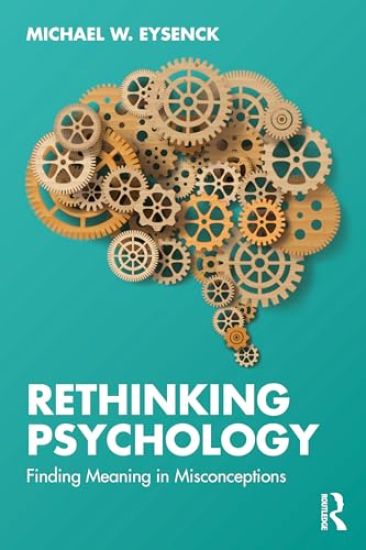
Rethinking Psychology

Rethinking Psychology

Michael W. Eysenck

TAYLOR FRANCIS LTD
2025
nidottu
Can subliminal messages motivate behaviour? Can you train your brain to increase your intelligence? Does parenting style affect personality?Psychologists and non-psychologists looking to understand human behaviour and cognition are forced to contend with a number of complexities unique to the field. Not least amongst these is the fact that psychology lacks the superficially attractive precision of theories in the hard sciences. It is inevitable, then, that non-psychologists are susceptible to numerous psychological myths.In this thought-provoking exploration of 43 of the most common psychological myths, Michael W. Eysenck examines the complexity of psychological science as well as the distortion of data, not only through the media, but also by researchers, textbook writers, and individuals themselves. He challenges the notion that the substantial progress made by psychology has provided enough convincing experimental evidence to successfully demolish these inaccuracies and explores the ways in which psychological research should be systematically improved so that psychology can take its place as a robust scientific discipline. Highly engaging, this is an informative read for psychologists at all levels, as well as members of the general public interested in challenging their own psychological understanding.
Happiness

Happiness

Michael W Eysenck

TAYLOR FRANCIS LTD
2024
sidottu
First published in 1990, Happiness is based fairly and squarely on scientific evidence and provides realistic insights into the following questions: What is happiness? How can you tell if you are happy? How important are love, sex, money, and family relationships? Can happiness last? Is there a blueprint for happiness? Is unhappiness a terminal illness? Is there a ‘happiness gone’? This book will be of interest to students of psychology and other mental health experts.
Fundamentals of Cognition

Fundamentals of Cognition

Michael W. Eysenck; Marc Brysbaert

TAYLOR FRANCIS LTD
2023
sidottu
Is it possible to learn something without being aware of it? How does emotion influence the way we think? How can we improve our memory?Fundamentals of Cognition, Fourth Edition, provides a basic, reader-friendly introduction to the key cognitive processes we use to interact successfully with the world around us. Our abilities in attention, perception, learning, memory, language, problem solving, thinking, and reasoning are all vitally important in enabling us to cope with everyday life. Understanding these processes through the study of cognitive psychology is essential for understanding human behaviour.This edition has been thoroughly updated and revised with an emphasis on making it even more accessible to introductory-level students. This new edition includes:updated references for readers who are looking for more detailed information;checks to make sure that statements made in the previous version are still valid, given recent findings on replication issues;extended research activities and "In the Real World" case studies to make it easy for students to engage with the material;real-world topics such as discussions of attention-deficit/hyperactivity disorder, the reading problems of individuals with dyslexia, why magic tricks work, and why we cannot remember the Apple logo accurately;an extensive set of "Key term" definitions;supporting Instructor and Student Resources containing multiple choice questions, flashcards, simulations of key experiments, and instructor resources.The book provides a perfect balance between traditional approaches to cognition and cutting-edge cognitive neuroscience and cognitive neuropsychology. Covering all the key topics within cognition, this comprehensive overview is essential reading for all students interested in psychology.
Fundamentals of Cognition

Fundamentals of Cognition

Michael W. Eysenck; Marc Brysbaert

TAYLOR FRANCIS LTD
2023
nidottu
Is it possible to learn something without being aware of it? How does emotion influence the way we think? How can we improve our memory?Fundamentals of Cognition, Fourth Edition, provides a basic, reader-friendly introduction to the key cognitive processes we use to interact successfully with the world around us. Our abilities in attention, perception, learning, memory, language, problem solving, thinking, and reasoning are all vitally important in enabling us to cope with everyday life. Understanding these processes through the study of cognitive psychology is essential for understanding human behaviour.This edition has been thoroughly updated and revised with an emphasis on making it even more accessible to introductory-level students. This new edition includes:updated references for readers who are looking for more detailed information;checks to make sure that statements made in the previous version are still valid, given recent findings on replication issues;extended research activities and "In the Real World" case studies to make it easy for students to engage with the material;real-world topics such as discussions of attention-deficit/hyperactivity disorder, the reading problems of individuals with dyslexia, why magic tricks work, and why we cannot remember the Apple logo accurately;an extensive set of "Key term" definitions;supporting Instructor and Student Resources containing multiple choice questions, flashcards, simulations of key experiments, and instructor resources.The book provides a perfect balance between traditional approaches to cognition and cutting-edge cognitive neuroscience and cognitive neuropsychology. Covering all the key topics within cognition, this comprehensive overview is essential reading for all students interested in psychology.
Simply Psychology

Simply Psychology

Michael W. Eysenck

TAYLOR FRANCIS LTD
2022
nidottu
Simply Psychology, fifth edition, is an engaging and reader-friendly introduction to the key principles of psychology. Organised around the major approaches to the subject, it covers biological, developmental, social, and cognitive psychology, as well as individual differences.Supported by a wealth of colour illustrations, this textbook provides students new to the subject with straightforward and clear explanations of all the key topics within contemporary psychology. The features spread throughout the book are designed to help readers to engage with the material and include: highlighted key terms and comprehensive glossary chapter introductions and summaries further reading and evaluation boxes structured essay and self-assessment questions case studies and examples illustrating the application of key theories a practical chapter that offers students tips and advice to help them improve their study skills and get the most out of the book and their studies.Additional features new to the fifth edition include: new quizzes updated further reading advice an extra chapter on clinical psychology an expanded section on quantitative research methods additional coverage of popular topics, like sleep.This is an ideal text for students new to psychology and those in related fields such as nursing, social work, and the social sciences.
Simply Psychology

Simply Psychology

Michael W. Eysenck

TAYLOR FRANCIS LTD
2022
sidottu
Simply Psychology, fifth edition, is an engaging and reader-friendly introduction to the key principles of psychology. Organised around the major approaches to the subject, it covers biological, developmental, social, and cognitive psychology, as well as individual differences.Supported by a wealth of colour illustrations, this textbook provides students new to the subject with straightforward and clear explanations of all the key topics within contemporary psychology. The features spread throughout the book are designed to help readers to engage with the material and include: highlighted key terms and comprehensive glossary chapter introductions and summaries further reading and evaluation boxes structured essay and self-assessment questions case studies and examples illustrating the application of key theories a practical chapter that offers students tips and advice to help them improve their study skills and get the most out of the book and their studies.Additional features new to the fifth edition include: new quizzes updated further reading advice an extra chapter on clinical psychology an expanded section on quantitative research methods additional coverage of popular topics, like sleep.This is an ideal text for students new to psychology and those in related fields such as nursing, social work, and the social sciences.
AI vs Humans

AI vs Humans

Michael W. Eysenck; Christine Eysenck

Routledge
2021
sidottu
The great majority of books on artificial intelligence are written by AI experts who understandably focus on its achievements and potential transformative effects on society. In contrast, AI vs Humans is written by two psychologists (Michael and Christine Eysenck) whose perspective on AI (including robotics) is based on their knowledge and understanding of human cognition. This book evaluates the strengths and limitations of people and AI. The authors’ expertise equips them well to consider this by seeing how well (or badly) AI compares to human intelligence. They accept that AI matches or exceeds human ability in many spheres such as mathematical calculations, complex games (e.g., chess, Go, and poker), diagnosis from medical images, and robotic surgery.However, the human tendency to anthropomorphise has led many people to claim mistakenly that AI systems can think, infer, reason, and understand while engaging in information processing. In fact, such systems lack all those cognitive skills and are also deficient in the quintessentially human abilities of flexibility of thinking and general intelligence. At a time when human commitment to AI appears unstoppable, this up-to-date book advocates a symbiotic and co-operative relationship between humans and AI. It will be essential reading for anyone interested in AI and human cognition.
AI vs Humans

AI vs Humans

Michael W. Eysenck; Christine Eysenck

Routledge
2021
nidottu
The great majority of books on artificial intelligence are written by AI experts who understandably focus on its achievements and potential transformative effects on society. In contrast, AI vs Humans is written by two psychologists (Michael and Christine Eysenck) whose perspective on AI (including robotics) is based on their knowledge and understanding of human cognition. This book evaluates the strengths and limitations of people and AI. The authors’ expertise equips them well to consider this by seeing how well (or badly) AI compares to human intelligence. They accept that AI matches or exceeds human ability in many spheres such as mathematical calculations, complex games (e.g., chess, Go, and poker), diagnosis from medical images, and robotic surgery.However, the human tendency to anthropomorphise has led many people to claim mistakenly that AI systems can think, infer, reason, and understand while engaging in information processing. In fact, such systems lack all those cognitive skills and are also deficient in the quintessentially human abilities of flexibility of thinking and general intelligence. At a time when human commitment to AI appears unstoppable, this up-to-date book advocates a symbiotic and co-operative relationship between humans and AI. It will be essential reading for anyone interested in AI and human cognition.
Memory

Memory

Alan Baddeley; Michael W. Eysenck; Michael C. Anderson

Routledge
2020
sidottu
The third edition of Memory provides students with the most comprehensive introduction to the study of human memory and its applications in the field. Written by three leading experts, this bestselling textbook delivers an authoritative and accessible overview of key topic areas. Each chapter combines breadth of content coverage with a wealth of relevant practical examples, whilst the engaging writing style invites the reader to share the authors’ fascination with the exploration of memory through their individual areas of expertise. Across the text, the scientific theory is connected to a range of real-world questions and everyday human experiences. As a result, this edition of Memory is an essential resource for those interested in this important field and embarking on their studies in the subject. Key features of this edition:it is fully revised and updated to address the latest research, theories, and findings;chapters on learning, organization, and autobiographical memory form a more integrated section on long-term memory and provide relevant links to neuroscience research; it has new material addressing current research into visual short-term and working memory, and links to research on visual attention; it includes content on the state-of-play on working memory training; the chapter on “memory across the lifespan” strengthens the applied emphasis, including the effects of malnutrition in developing nations on cognition and memory. The third edition is supported by a Companion Website providing a range of core resources for students and lecturers.
Memory

Memory

Alan Baddeley; Michael W. Eysenck; Michael C. Anderson

Routledge
2020
nidottu
The third edition of Memory provides students with the most comprehensive introduction to the study of human memory and its applications in the field. Written by three leading experts, this bestselling textbook delivers an authoritative and accessible overview of key topic areas. Each chapter combines breadth of content coverage with a wealth of relevant practical examples, whilst the engaging writing style invites the reader to share the authors’ fascination with the exploration of memory through their individual areas of expertise. Across the text, the scientific theory is connected to a range of real-world questions and everyday human experiences. As a result, this edition of Memory is an essential resource for those interested in this important field and embarking on their studies in the subject. Key features of this edition:it is fully revised and updated to address the latest research, theories, and findings;chapters on learning, organization, and autobiographical memory form a more integrated section on long-term memory and provide relevant links to neuroscience research; it has new material addressing current research into visual short-term and working memory, and links to research on visual attention; it includes content on the state-of-play on working memory training; the chapter on “memory across the lifespan” strengthens the applied emphasis, including the effects of malnutrition in developing nations on cognition and memory. The third edition is supported by a Companion Website providing a range of core resources for students and lecturers.
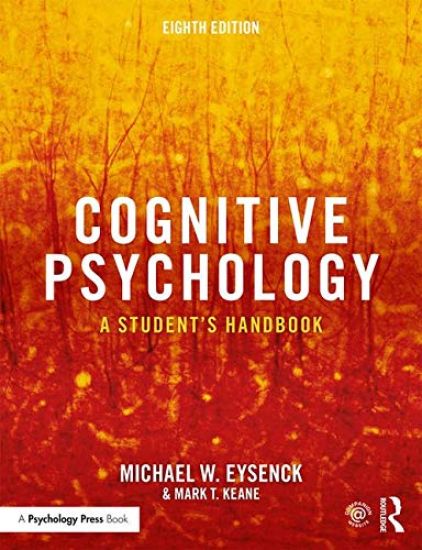
Cognitive Psychology

Cognitive Psychology

Michael W. Eysenck; Mark T. Keane

Psychology Press Ltd
2020
nidottu
The fully updated eighth edition of Cognitive Psychology: A Student’s Handbook provides comprehensive yet accessible coverage of all the key areas in the field ranging from visual perception and attention through to memory and language. Each chapter is complete with key definitions, practical real-life applications, chapter summaries and suggested further reading to help students develop an understanding of this fascinating but complex field.The new edition includes:an increased emphasis on neuroscienceupdated references to reflect the latest researchapplied ‘in the real world’ case studies and examples.Widely regarded as the leading undergraduate textbook in the field of cognitive psychology, this new edition comes complete with an enhanced accompanying companion website. The website includes a suite of learning resources including simulation experiments, multiple-choice questions, and access to Primal Pictures’ interactive 3D atlas of the brain. The companion website can be accessed at: www.routledge.com/cw/eysenck.
Cognitive Psychology

Cognitive Psychology

Michael W. Eysenck; Mark T. Keane

Psychology Press Ltd
2020
sidottu
The fully updated eighth edition of Cognitive Psychology: A Student’s Handbook provides comprehensive yet accessible coverage of all the key areas in the field ranging from visual perception and attention through to memory and language. Each chapter is complete with key definitions, practical real-life applications, chapter summaries and suggested further reading to help students develop an understanding of this fascinating but complex field.The new edition includes:an increased emphasis on neuroscienceupdated references to reflect the latest researchapplied ‘in the real world’ case studies and examples.Widely regarded as the leading undergraduate textbook in the field of cognitive psychology, this new edition comes complete with an enhanced accompanying companion website. The website includes a suite of learning resources including simulation experiments, multiple-choice questions, and access to Primal Pictures’ interactive 3D atlas of the brain. The companion website can be accessed at: www.routledge.com/cw/eysenck.
A2 Level Psychology

A2 Level Psychology

Michael W. Eysenck

Psychology Press Ltd
2017
sidottu
This thoroughly updated edition of the bestselling Psychology for A2 Level has been written specifically for the new AQA-A Psychology A2-level specification for teaching from September 2009. It is the ideal follow-up to AS Level Psychology, 4th edition by the same author, but also to any AS-level textbook. This full-colour book, which builds on the ideas and insights explored at AS Level to promote a deeper understanding of psychology, is written in an engaging and accessible style by a highly experienced author. It incorporates contributions, advice and feedback from a host of A-Level teachers and psychologists including Philip Banyard, Evie Bentley, Clare Charles, Diana Dwyer, Mark Griffiths and Craig Roberts. At this level, students select options from a range of specified topics and this book includes chapters on all of the compulsory and optional topics that are on the new A2 syllabus in sufficient depth for the requirements of the course. It has a new focus on the nature and scope of psychology as a science with an emphasis on how science works, and guidance on how to engage students in practical scientific research activities. Presented in a clear, reader-friendly layout, the book is packed with advice on exam technique, hints and tips to give students the best chance possible of achieving the highest grade. The book is supported by our comprehensive package of online student and teacher resources, A2 Psychology Online. Student resources feature a wealth of multimedia materials to bring the subject to life, including our new A2 revision guide and A2 Workbook, multiple choice quizzes, revision question tips, interactive exercises and podcasts by key figures in psychology. Teacher resources include a teaching plan, chapter-by-chapter lecture presentations, and classroom exercises and activities.
Anxiety

Anxiety

Michael W. Eysenck

Psychology Press Ltd
2015
nidottu
Theorists are increasingly arguing that it is fruitful to approach anxiety from the cognitive perspective, and the empirical evidence supports that contention. The cognitive perspective is also adopted in this book, but the approach represents a development and extension of earlier ones. For example, most previous theories and research have been based on anxiety either in clinical or in normal groups. In contrast, one of the central themes of this book is that there are great advantages to be gained from a joint consideration of clinical and normal anxiety.Another theme of this book is that it is of major importance to establish whether or not there is a cognitive vulnerability factor which is associated with at least some forms of clinical anxiety. It is argued (with supporting evidence) that there is a latent cognitive vulnerability factor for generalized anxiety disorder which manifests itself under stressful conditions. This vulnerability factor is characterized by hypervigilance, and is found predominantly in normals high in the personality dimension of trait anxiety.The scope of the book extends to the effects of anxiety on performance and to the phenomenon of worry, which is regarded as the cognitive component of anxiety. In both cases, a new theoretical framework is presented.Correction notice: In chapter 4, on pages 70-71, Christos Halkiopoulos should have been credited for his role as the inventor of the Dot Probe Paradigm and for the design and execution of the experiment discussed in Eysenck, M. W. (1991 a). Trait anxiety and cognition. In C. D. Spielberger, I. G. Sarason, Z. Kulczar, and J. Van Heck (Eds.), Stress and Emotion, Vol. 14. London: Hemisphere.
A2 Level Psychology

A2 Level Psychology

Michael W. Eysenck

Psychology Press Ltd
2009
nidottu
This thoroughly updated edition of the bestselling Psychology for A2 Level has been written specifically for the new AQA-A Psychology A2-level specification for teaching from September 2009. It is the ideal follow-up to AS Level Psychology, 4th edition by the same author, but also to any AS-level textbook.This full-colour book, which builds on the ideas and insights explored at AS Level to promote a deeper understanding of psychology, is written in an engaging and accessible style by a highly experienced author. It incorporates contributions, advice and feedback from a host of A-Level teachers and psychologists including Philip Banyard, Evie Bentley, Clare Charles, Diana Dwyer, Mark Griffiths and Craig Roberts.At this level, students select options from a range of specified topics and this book includes chapters on all of the compulsory and optional topics that are on the new A2 syllabus in sufficient depth for the requirements of the course. It has a new focus on the nature and scope of psychology as a science with an emphasis on how science works, and guidance on how to engage students in practical scientific research activities. Presented in a clear, reader-friendly layout, the book is packed with advice on exam technique, hints and tips to give students the best chance possible of achieving the highest grade.The book is supported by our comprehensive package of online student and teacher resources, A2 Psychology Online. Student resources feature a wealth of multimedia materials to bring the subject to life, including our new A2 revision guide and A2 Workbook, multiple choice quizzes, revision question tips, interactive exercises and podcasts by key figures in psychology. Teacher resources include a teaching plan, chapter-by-chapter lecture presentations, and classroom exercises and activities.
Individual Differences

Individual Differences

Michael W. Eysenck; University of London College

Psychology Press Ltd
1994
nidottu
A title in the modular "Principles of Psychology" series, designed for A- level and other introductory courses. While normal individuals obviously differ from each other in various ways, psychologists have emphasized differences in intelligence and personality. This emphasis is reflected in the book, and various different views are discussed at length.; Abnormality has always been a source of fascination, although it has been difficult to form a good understanding of why and how abnormality develops. Psychologists have also grappled with other complex issues, such as how to classify abnormal individuals and what forms of treatment will prove beneficial. In spite of complexities, much progress has been made.