Kirjojen hintavertailu. Mukana 12 390 323 kirjaa ja 12 kauppaa.

Kirjailija

Michael Williams

Kirjat ja teokset yhdessä paikassa: 140 kirjaa, julkaisuja vuosilta 1970-2026, suosituimpien joukossa Expressivism, Pragmatism and Representationalism. Vertaile teosten hintoja ja tarkista saatavuus suomalaisista kirjakaupoista.

140 kirjaa

Kirjojen julkaisuhaarukka 1970-2026.

A Dictionary of Law Enforcement

A Dictionary of Law Enforcement

Graham Gooch; Michael Williams

Oxford University Press
2007
nidottu
A Dictionary of Law Enforcement is the only dictionary available with a primary focus on UK law enforcement terms. Succinct and practical in its approach, it contains over 3,400 entries covering ever aspect of this diverse field, including terms related to law, pathology, forensic medicine, accountancy, insurance, shipping, commerce and trade, criminology, and psychology. Entries are supported by a wealth of practical information, including (where appropriate) citations and references to statutes and legislation. In addition to the definitions, the dictionary also contains five useful appendices: Abbreviations and Acronyms, Recordable Offences, Disclosure Code, Disclosure Guidelines and Disclosure Protocol.. Written by two former police officers, both now lecturers in law and criminal investigation, the dictionary fills a significant gap in the law market and will be invaluable to police officers and trainee officers, students and lecturers of criminology, criminal justice, and police studies, and other professionals needing clear definitions of law enforcement terms.
Culture and Security

Culture and Security

Michael Williams

Routledge
2007
nidottu
This book examines the role of culture in contemporary security policies, providing a critical overview of the ways in which culture has been theorized in security studies. Developing a theoretical framework that stresses the relationship between culture, power, security and strategy, the volume argues that cultural practices have been central to transformations in European and US security policy in the wake of the Cold War – including the evolution of NATO and the expansion of the EU. Michael C. Williams maintains that cultural practices continue to play powerful roles in international politics today, where they are essential to grasping the ascendance of neoconservatism in US foreign policy. Investigating the rise in popularity of culture and constructivism in security studies in relation to the structure and exercise of power in post-Cold War security relations, the book contends that this poses significant challenges for considering the connection between analytic and political practices, and the relationship between scholarship and power in the construction of security relations. Culture and Security will be of interest to students and researchers in the fields of international relations, security studies and European politics.
Culture and Security

Culture and Security

Michael Williams

Routledge
2006
sidottu
This book examines the role of culture in contemporary security policies, providing a critical overview of the ways in which culture has been theorized in security studies. Developing a theoretical framework that stresses the relationship between culture, power, security and strategy, the volume argues that cultural practices have been central to transformations in European and US security policy in the wake of the Cold War – including the evolution of NATO and the expansion of the EU. Michael C. Williams maintains that cultural practices continue to play powerful roles in international politics today, where they are essential to grasping the ascendance of neoconservatism in US foreign policy. Investigating the rise in popularity of culture and constructivism in security studies in relation to the structure and exercise of power in post-Cold War security relations, the book contends that this poses significant challenges for considering the connection between analytic and political practices, and the relationship between scholarship and power in the construction of security relations. Culture and Security will be of interest to students and researchers in the fields of international relations, security studies and European politics.
In The Light of Day

In The Light of Day

Michael Williams

Xlibris Us
2006
sidottu
Delight in each passing moment with author Michael Williams, as he celebrates the trials, triumphs and discoveries of living through his poetry. In the Light of Day is a remarkable collection of memories, messages, conversations and experiences that chronicle life lessons from childhood to adulthood from a father to his children. The verses of In the Light of Day are more than a father's advice to his sons; they are a man's hopeful glimpse into a future of promise for all children. It is truly a tribute to the strength of the human spirit, and a reminder to every reader that dreams are meant to be realized, futures are meant to be built and that anything can be accomplished if you believe. In the Light of Day is one of the few books written from a father's perspective to his children, providing a unique view that has yet to be thoroughly explored in the genre of poetry. The universality of this wonderful collection of poems lends itself to readers young and old, at any stage in their life, and most importantly, reminds us all that "It is a miracle that love only remembers what remains in the light of day".
Deforesting the Earth

Deforesting the Earth

Michael Williams

University of Chicago Press
2006
nidottu
Published in 2002, "Deforesting the Earth" was a landmark study of the history and geography of deforestation. Now available as an abridgement, this edition retains the breadth of the original while rendering its arguments accessible to a general readership. Deforestation - the thinning, changing, and wholesale clearing of forests for fuel, shelter, and agriculture - is among the most important ways humans have transformed the environment. Surveying ten thousand years to trace human-induced deforestation's effect on economies, societies, and landscapes around the world, "Deforesting the Earth" is the pre-eminent history of this process and its consequences. Beginning with the return of the forests after the ice age to Europe, North America, and the tropics, Michael Williams traces the impact of human-set fires for gathering and hunting, land clearing for agriculture, and other activities from the Paleolithic age through the classical world and the medieval period. He then focuses on forest clearing both within Europe and by European imperialists and industrialists abroad, from the 1500s to the early 1900s, in such places as the New World, India, and Latin America, and considers indigenous clearing in India, China, and Japan. Finally, he covers the current alarming escalation of deforestation, with our ever-increasing human population placing a potentially unsupportable burden on the world's forests.
Problems of Knowledge

Problems of Knowledge

Michael Williams

Oxford University Press
2001
nidottu
What is epistemology or 'the theory of knowledge'? What is it really about? Why does it matter? What makes theorising about knowledge 'philosophical'? Why do some philosophers argue that epistemology - perhaps even philosophy itself - is dead? In this exciting and original introduction, Michael Williams shows how epistemological theorizing is sensitive to a range of questions about the nature, limits, methods, and value of knowing. He pays special attention to the challenge of philosophical scepticism: does our 'knowledge' rest on brute assumptions? Does the rational outlook undermine itself? Williams explains and criticises all the main contemporary philopsophical perspectives on human knowledge, such as foundationalism, the coherence theory, and 'naturalistic' theories. As an alternative to all of them, he defends his distinctive contextualist approach. While accessible to the undergraduate and general reader, this book contains Williams' own original ideas and is essential reading for all philosophers concerned with the theory of knowledge.
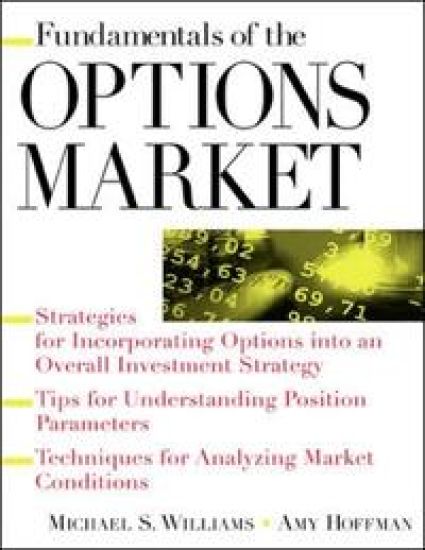
Fundamentals of Options Market

Fundamentals of Options Market

Michael Williams; Amy Hoffman

McGraw-Hill Professional
2001
nidottu
Find out how any investor can use options to lock in fast trading profits - and decrease portfolio risk. Options are today's most complex, versatile investment tool. Ignored by investors who see them as an aggressive, no-limits trading gambit - which they definitely can be - options can, in addition, provide conservative investors with risk-hedging qualities available nowhere else. One thing is certain: all investors who trade options, regardless of their goals and strategies, quickly learn that the leverage provided by options opens the door to a world of innovative, profitable trading possibilities."Fundamentals of the Options Market" is a step-by-step guidebook for gaining increased trading profits - while protecting against market downturns - by using listed stock options, index options, and LEAPS. Plain-English analyses and explanations combine with quizzes, checklists, charts, graphs, and more to reveal: how to open an options account, map out your strategy, and place your first trade; trading tools - from synthetics to Greeks - for protecting positions and exploiting any market; and, tips of the trade - how to remain focused, keep control of risks, and manage your options position.From hands-on basics to advanced technical skills, "Fundamentals of the Stock Market" will provide everything you need to profit from options in today's volatile markets. Let this hands-on book - along with its companion fundamentals of investing guides - help you build the skills and confidence for options trading success ...before you risk money in the no-room-for-error waters of real-time trading! Hone your trading skills with McGraw-Hill's "Fundamentals of Investing" series! Other titles include: "Fundamentals of the Stock Market" by O'Neill Wyss "Fundamentals of the Futures Market" by Donna Kline "Fundamentals of the Bond Market" by Esme Faerber.
Groundless Belief

Groundless Belief

Michael Williams

Princeton University Press
1999
pokkari
Inspired by the work of Wilfrid Sellars, Michael Williams launches an all-out attack on what he calls "phenomenalism," the idea that our knowledge of the world rests on a perceptual or experiential foundation. The point of this wider-than-normal usage of the term "phenomenalism," according to which even some forms of direct realism deserve to be called phenomenalistic, is to call attention to important continuities of thought between theories often thought to be competitors. Williams's target is not phenomenalism in its classical sense-datum and reductionist form but empiricism generally. Williams examines and rejects the idea that, unless our beliefs are answerable to a "given" element in experience, objective knowledge will be impossible. Groundless Belief was first published in 1977. This second edition contains a new afterword in which Williams places his arguments in the context of some current discussions of coherentism versus the Myth of the Given and explains their relation to subsequent developments in his own epistemological views.
Civil-Military Relations and Peacekeeping

Civil-Military Relations and Peacekeeping

Michael Williams

Oxford University Press Inc
1998
nidottu
Peacekeeping in the late 1990s is a complex and diverse task, in which civilian and military personnel are working together to a greater degree than ever before. However, when an international body such as the UN takes strategic decisions, it does so with inadequate input from the military; in the field, there are clashes of culture, confusion over command and control arrangements and insufficient operational coordination. These issues also affect regional organisations such as NATO. The awkward management of operations and their uneven level of achievement have contributed to a decline in the number of UN peacekeeping operations since 1994. This paper argues that the balance between civilian and military expertise and advice at all levels of a peacekeeping mission - strategic, tactical and operational - needs to be reappraised.At the strategic level: * mandates must be clear, and must respond both to the needs of the situation and to the resources available * there must be regular dialogue between all the principal players, military and civilian; the military-staff capacity at UN headquarters should be made more effective, and should be responsible to the Security Council * major troop-contributing countries should be systematically involved in determining mandates, as well as in reviewing operational plans * senior military officers from all large troop-contributing countries should be based at a mission's field headquarters. At the operational level: * the office of the Special Representative of the Secretary-General - the head of a UN peacekeeping mission - should be strengthened.In non-UN operations, the authority of the High Representative needs to be increased * a cadre of civilian officials with peacekeeping experience needs to be developed; standard operating procedures for the civilian head of a mission to follow when dealing with the military need to be developed * greater emphasis should be placed on the 'softer' aspects of military science - managing resources, civilian control and human rights * the reluctance of civilians and non-governmental organisations to engage with the military should be addressed. Much experience has been gained from the peacekeeping operations of the 1990s, but both military and civilian participants must make considerably more progress before they can be said to have forged a partnership that makes them an effective intervention force
Unnatural Doubts

Unnatural Doubts

Michael Williams

Princeton University Press
1996
pokkari
In Unnatural Doubts, Michael Williams constructs a masterly polemic against the very idea of epistemology, as traditionally conceived. Although philosophers have often found problems in efforts to study the nature and limits of human knowledge, Williams provides the first book that systematically argues against there being such a thing as knowledge of the external world. He maintains that knowledge of the world consitutes a theoretically coherent kind of knowledge, whose possibility needs to be defended, only given a deeply problematic doctrine he calls "epistemological realism." The only alternative to epistemological realism is a thoroughgoing contextualism.
Americans and their Forests

Americans and their Forests

Michael Williams

Cambridge University Press
1992
pokkari
When Europeans first reached the land that would become the United States they were staggered by the breadth and density of the forest they found. The existence of that forest, and the effort either to use or subdue it, have been constant themes in American history, literature, economics, and geography up to the meaning of the forest in American history and culture, he describes and analyzes the clearing and use of the forest from pre-European times to the present, and he traces the subsequent regrowth of the forest since the middle of the twentieth century. Dr Williams begins by exploring the role of the forest in American culture: the symbols, themes, and concepts - for example, pioneer woodsman, lumberjack, wilderness - generated by contact with the vast land of trees. He considers the Indian use of the forest, describing the ways in which native tribes altered it, primarily through fire, to promote a subsistence economy. Early European settlers, he shows, extracted many products from the forest, and also began the extensive clearance of trees that would continue for almost three hundred years. Succeeding chapters, organized by topic and region, cover agricultural and industrial effects upon and uses of the forest. Dr Williams explores the rise (and often fall) of industries based upon forest products: naval stores, timber for building, charcoal and the iron industry, the railroads. Attention is devoted to the forests of the Middle West, the South, and the Pacific Northwest. By the late nineteenth century Americans began to realize that the forest was not boundless and moved to preserve those portions, still extensive, that remained. In the wake of the movement for preservation, Dr Williams describes how the forest began to regrow, especially after 1950, in areas where it had originally been vigorous and healthy, a development that continues today.
Adenosine and Adenosine Receptors

Adenosine and Adenosine Receptors

Michael Williams

Humana Press Inc.
1990
sidottu
Historically, the major emphasis on the study of purinergic systems has been predominantly in the areas of physiology and gross pharmacology. The last decade has seen an exponential in- crease in the number of publications related to the role of both adenosine and A TP in mammalian tissue function, a level of interest that has evolved from a more molecular focus on the identity of adenosine and A TP receptor subtypes and the search for selective ligands and development of radioligand binding assays by Fred Bruns and colleagues (especially that for A receptors) that played z a highly significant role in advancing research in the area. In the 60 years since adenosine was first shown to be a potent hypotensive agent, a considerable investment has been made by several pharmaceutical companies-including Abbott, Byk Gulden, Takeda, Warner-LambertlParke Davis, Boehringer Mann- heim, Boehringer Ingelheim, Nelson/Whitby Research and CffiA- Geigy-as well as John Daly's laboratory at the National Institutes of Health, to design new adenosine receptor ligands, and both agon- ists and antagonists with the aim of developing new therapeutic entiities. Numerous research tools have derived from these efforts including: 2-chloroadenosine, R-PIA (~-phenylisopropyladeno- sine; NECA (5' N-ethylcarboxamidoadenosine); CV1808; CI936; PD 125,944; ~-benzyladenosine; PACPX; CPX; CPT; XAC; CGS 15943 and CGS 21680. Yet in the realm of therapeutics it was only in 1989 that adenosine itself was approved for human use in the treatment of supraventricular arrythmias.
Communism, Religion, and Revolt in Banten in the Early Twentieth Century
Twice in this century popular revolts against colonial rule have occured in the Banten district of West Java. These revolts, conducted largely under an Islamic leadership, also proclaimed themselves Communist. Islamic Communism is seemingly a paradox. This is especially the case when one considers that probably no religion has proved more resistant to Communist ideology than Islam. Michael Williams here details the complicated history of the Bantenese revolts in the twentieth century and probes the ideological riddle of Islamic Communism. Modern history is replete with examples of regions with a long history of organizing themselves politically to resist intrusion on their territory, resources, and people. This book establishes that in Indonesia, the Bantenese were among the most practiced exponents of resistance.
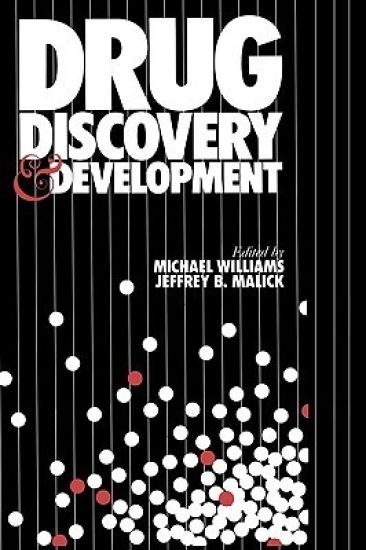
Drug Discovery and Development

Drug Discovery and Development

Michael Williams; Malick Jeffrey B.

Humana Press Inc.
1987
sidottu
The conceptual process of drug discovery is one that is often the result of an identified need in a defined disease area. This need represents a mandate from the marketing department of a phar- maceutical company or a breakthrough at the research level that has agreed applicability in response to a valid therapeutic demand. Although the intelligent design and development of new thera- peutic entities, as evidenced by Sir James Black's H -receptor an- 2 tagonist cimetidine (Tagamet), is intellectually satisfying, many novel drugs arise from serendipity, from the chance observation of the research scientist or the clinician, that a compound has unex- pected actions of use for the treatment of human disease states. Drugs that have been identified by this route include the antipsy- chotic chlorpromazine and the putative anxiolytic buspirone. The events surrounding the process of drug discovery and de- velopment are the theme of the present volume, which attempts to present, in a logical and lucid manner, the complexity of a process that is often naively assumed to represent nothing more than the identification of a new compound and its rapid introduction into humans, free of such complications as efficacy, selectivity, safety, bioavailability, toxicity, and need.
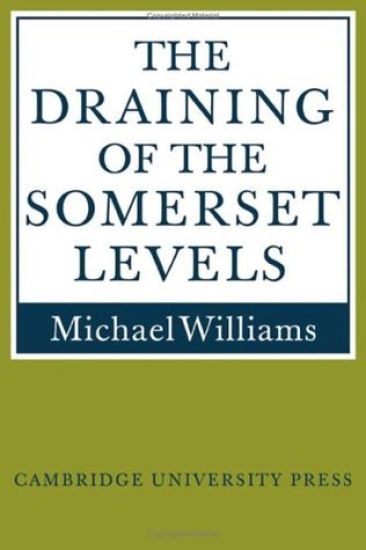
The Draining of the Somerset Levels

The Draining of the Somerset Levels

Michael Williams

Cambridge University Press
1970
sidottu
This is a detailed study of how the Somerset Levels, originally a large tract of marsh, were drained and reclaimed to becomes one of the most agriculturally productive areas of south-west England. The story of the draining of this region brings to light significant comparisons and contrasts with other reclaimed lowlands and extends our knowledge of one of the processes by which the British landscape has changed. This is an important book, which brings together information on an area that has until now received very little attention; it also shows just how early massive reclamation began. It will be of interest to both geographers and historians.