

Kirjailija
Michael Wright
Kirjat ja teokset yhdessä paikassa: 47 kirjaa, julkaisuja vuosilta 1997-2026, suosituimpien joukossa Je t'aime a la Folie. Vertaile teosten hintoja ja tarkista saatavuus suomalaisista kirjakaupoista.
47 kirjaa
Kirjojen julkaisuhaarukka 1997-2026.


One day in late summer, Michael Wright gave up his comfortable South London existence and, with only his long-suffering cat for company, set out to begin a new life. His destination was 'La Folie', a dilapidated 15th century farmhouse in need of love and renovation in the heart of rural France.
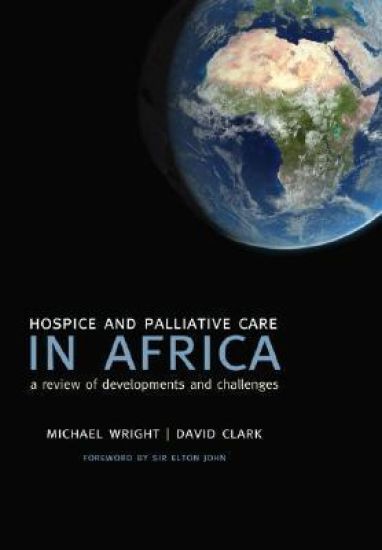
Hospice and Palliative Care in Africa
Michael Wright; David Clark
Oxford University Press
2006
nidottu
800 million people live in Africa, a continent which covers 22% of the world's surface and encompasses some 50 countries. Conflict, poverty, endemic diseases, and lack of clean water pose serious challenges for the population, made worse by a rampaging AIDS pandemic. Huge loss of life has impacted dramatically on both health systems and social and family structures. As the attention of the world focused increasingly on Africa, the International Observatory on End of Life Care was commissioned to conduct a timely review of hospice and palliative care development across the continent. The Observatory undertook this review using an approach specially designed for resource poor settings. Information was collected against an agreed template to allow comparisons between countries and regions. As a result, an insight is given into the challenges, opportunities and successes faced by hospice and palliative care workers, country by country, throughout the 26 countries in Africa where a palliative care initiative is underway. Strategies and models of care are explored, and the development of palliative care is viewed from various standpoints including ethnographic, historical, ethnic, demographic and epidemiological perspectives. This is the first comprehensive reference focusing exclusively on palliative care and hospice development in Africa, and makes fascinating reading.

New International Directions in HIV Prevention for Gay and Bisexual Men
Michael Wright; B R Simon Rosser
Routledge Member of the Taylor and Francis Group
1998
sidottu
It is widely recognized that current HIV intervention models are falling short of their goals. What are the alternatives?To answer this question, New International Directions in HIV Prevention for Gay and Bisexual Men presents a collection of articles from European and American authors that rival dominant paradigms of HIV prevention. Researchers, practitioners, and community organizations will be challenged to examine current assumptions and to consider neglected aspects of risk behavior such as love, trust, and the dynamics of sexual intimacy. New International Directions in HIV Prevention for Gay and Bisexual Men explores models and theories that will help you develop more effective HIV prevention programs to better serve patients and clients.New International Directions in HIV Prevention for Gay and Bisexual Men offers you fresh perspectives on prevention work by examining risk behaviors in the interactional, communal, and social contexts in which they are practiced. You will receive alternative explanations and reasons for HIV risk that go beyond current approaches and that introduce possibilities for new intervention strategies. Written by experts in the field, the chapters in New International Directions in HIV Prevention for Gay and Bisexual Men will give you insight into new ideas and developments, including:placing a greater emphasis on improving successful risk management strategies as opposed to quantifying risk factors examining the meaning and context of sexual acts which occur in casual encounters or steady partnerships and incorporating their relevancy into prevention work considering the effects that cultural context and socially constructed meanings have on prevention work and incorporating individuals’values and feelings into prevention strategies focusing on more realistic goals of harm reduction that take sexual decision making into consideration as opposed to expecting abstinence relating the various aspects of sexual encounters--physical attraction, intimacy, reciprocity, and power--to reasons why men choose not to use condomsExamining how gay men can underestimate the risk of HIV in order to meet needs of intimacy, New International Directions in HIV Prevention for Gay and Bisexual Men will help you understand the symbolic dimension of sexual contact. The normal, everyday reasons for having sex without a condom are explored, questioning models which often characterize unprotected sex as being the result of low self-esteem, substance abuse, or some other psychological vulnerability. Presenting data from both qualitative and quantitative research conducted at group and individual levels, this book reveals the complexity of risk behavior, the richness of sexual experience, and the importance of respecting the unique context in which gay men live their sexual lives. New International Directions in HIV Prevention for Gay and Bisexual Men will help you understand this point of view, enabling you to provide patients and clients with more effective HIV prevention and risk management services.

New International Directions in HIV Prevention for Gay and Bisexual Men
Michael Wright; B R Simon Rosser
Routledge Member of the Taylor and Francis Group
1998
nidottu
It is widely recognized that current HIV intervention models are falling short of their goals. What are the alternatives?To answer this question, New International Directions in HIV Prevention for Gay and Bisexual Men presents a collection of articles from European and American authors that rival dominant paradigms of HIV prevention. Researchers, practitioners, and community organizations will be challenged to examine current assumptions and to consider neglected aspects of risk behavior such as love, trust, and the dynamics of sexual intimacy. New International Directions in HIV Prevention for Gay and Bisexual Men explores models and theories that will help you develop more effective HIV prevention programs to better serve patients and clients.New International Directions in HIV Prevention for Gay and Bisexual Men offers you fresh perspectives on prevention work by examining risk behaviors in the interactional, communal, and social contexts in which they are practiced. You will receive alternative explanations and reasons for HIV risk that go beyond current approaches and that introduce possibilities for new intervention strategies. Written by experts in the field, the chapters in New International Directions in HIV Prevention for Gay and Bisexual Men will give you insight into new ideas and developments, including:placing a greater emphasis on improving successful risk management strategies as opposed to quantifying risk factors examining the meaning and context of sexual acts which occur in casual encounters or steady partnerships and incorporating their relevancy into prevention work considering the effects that cultural context and socially constructed meanings have on prevention work and incorporating individuals’values and feelings into prevention strategies focusing on more realistic goals of harm reduction that take sexual decision making into consideration as opposed to expecting abstinence relating the various aspects of sexual encounters--physical attraction, intimacy, reciprocity, and power--to reasons why men choose not to use condomsExamining how gay men can underestimate the risk of HIV in order to meet needs of intimacy, New International Directions in HIV Prevention for Gay and Bisexual Men will help you understand the symbolic dimension of sexual contact. The normal, everyday reasons for having sex without a condom are explored, questioning models which often characterize unprotected sex as being the result of low self-esteem, substance abuse, or some other psychological vulnerability. Presenting data from both qualitative and quantitative research conducted at group and individual levels, this book reveals the complexity of risk behavior, the richness of sexual experience, and the importance of respecting the unique context in which gay men live their sexual lives. New International Directions in HIV Prevention for Gay and Bisexual Men will help you understand this point of view, enabling you to provide patients and clients with more effective HIV prevention and risk management services.

I-Kiribati to English Dictionary
Michael Wright
Createspace Independent Publishing Platform
1997
nidottu