Kirjojen hintavertailu. Mukana 12 595 353 kirjaa ja 12 kauppaa.
Kirjailija
Michael Zank
Kirjat ja teokset yhdessä paikassa: 7 kirjaa, julkaisuja vuosilta 2010-2026, suosituimpien joukossa Jerusalem. Vertaile teosten hintoja ja tarkista saatavuus suomalaisista kirjakaupoista.
Provides a short, accessible, and lively introduction to Jerusalem Jerusalem - A Brief History shows how Jewish, Christian, and Islamic scriptures confer providential meaning to the fate of the city and how modern Jerusalem is haunted by waves of biblical fantasy aiming at mutually exclusive status-quo rectification. It presents the major epochs of the history of Jerusalem’s urban transformation, inviting readers to imagine Jerusalem as a city that is not just sacred to the many groups of people who hold it dear, but as a united, unharmed place that is, in this sense, holy. Jerusalem - A Brief History starts in modern Jerusalem—giving readers a look at the city as it exists today. It goes on to tell of its emergence as a holy city in three different ways, focusing each time on another aspect of the biblical past. Next, it discusses the transformation of Jerusalem from a formerly Jewish temple city, condemned to oblivion by its Roman destroyers, into an imperially sponsored Christian theme park, and the afterlife of that same city under later Byzantine and Muslim rulers. Lastly, the book returns to present day Jerusalem to examine the development of the modern city under the Ottomans and the British, the history of division and reunification, and the ongoing jostling over access to, and sovereignty over, Jerusalem’s contested holy places. Offers a unique integration of approaches, including urban history, the rhetoric of power, the history of art and architecture, biblical hermeneutics, and modern Middle Eastern StudiesPlaces great emphasis on how Jerusalem is a real city where different people live and coexistExamines the urban transformation that has taken place since late Ottoman timesUtilizes numerous line drawings to demonstrate how its monumental buildings, created to illustrate an alliance of divine and human power, are in fact quite ephemeral, transient, and fragile Jerusalem - A Brief History is a comprehensive and thoughtful introduction to the Holy City that will appeal to any student of religion and/or history.
Provides a short, accessible, and lively introduction to Jerusalem Jerusalem - A Brief History shows how Jewish, Christian, and Islamic scriptures confer providential meaning to the fate of the city and how modern Jerusalem is haunted by waves of biblical fantasy aiming at mutually exclusive status-quo rectification. It presents the major epochs of the history of Jerusalem’s urban transformation, inviting readers to imagine Jerusalem as a city that is not just sacred to the many groups of people who hold it dear, but as a united, unharmed place that is, in this sense, holy. Jerusalem - A Brief History starts in modern Jerusalem—giving readers a look at the city as it exists today. It goes on to tell of its emergence as a holy city in three different ways, focusing each time on another aspect of the biblical past. Next, it discusses the transformation of Jerusalem from a formerly Jewish temple city, condemned to oblivion by its Roman destroyers, into an imperially sponsored Christian theme park, and the afterlife of that same city under later Byzantine and Muslim rulers. Lastly, the book returns to present day Jerusalem to examine the development of the modern city under the Ottomans and the British, the history of division and reunification, and the ongoing jostling over access to, and sovereignty over, Jerusalem’s contested holy places. Offers a unique integration of approaches, including urban history, the rhetoric of power, the history of art and architecture, biblical hermeneutics, and modern Middle Eastern StudiesPlaces great emphasis on how Jerusalem is a real city where different people live and coexistExamines the urban transformation that has taken place since late Ottoman timesUtilizes numerous line drawings to demonstrate how its monumental buildings, created to illustrate an alliance of divine and human power, are in fact quite ephemeral, transient, and fragile Jerusalem - A Brief History is a comprehensive and thoughtful introduction to the Holy City that will appeal to any student of religion and/or history.
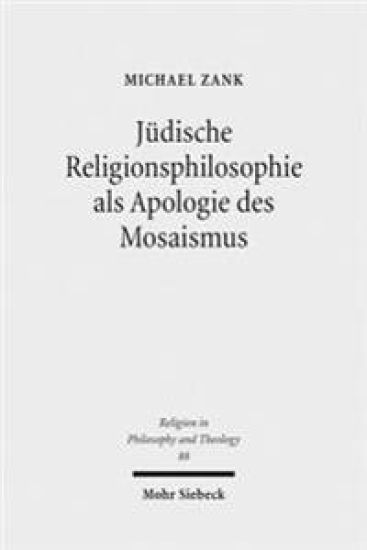
In zwanzig, hier zum großen Teil erstmals veröffentlichten, Aufsätzen und Vorträgen stellt Michael Zank die moderne jüdische Religionsphilosophie unter das Motto einer "Apologie des Mosaismus". Er geht dabei sowohl thematisch als auch historisch vor und zeigt, wie sich Hermann Cohen, Franz Rosenzweig, Martin Buber, Leo Strauss und andere mit dem christlichen und philosophischen Erbe Europas auseinandergesetzt haben. Er denkt außerdem darüber nach, was wir aus jenen Auseinandersetzungen heute noch lernen können. Das Buch versteht sich als eine Einführung in die jüdische Religionsphilosophie. Die Idee für dieses Buch entstand, als der Autor als Martin Buber Professor für jüdische Religionsphilosophie an der Goethe Universität Frankfurt lehrte.
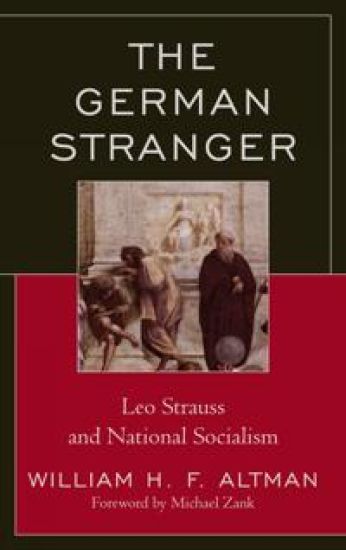
Leo Strauss's connection with Martin Heidegger and Carl Schmitt suggests a troubling proximity to National Socialism but a serious critique of Strauss must begin with F. H. Jacobi. While writing his dissertation on this apparently Christian opponent of the Enlightenment, Strauss discovered the tactical principles that would characterize his lifework: writing between the lines, a faith-based critique of rationalism, the deliberate secularization of religious language for irreligious purposes, and an "all or nothing" antagonism to middling solutions. Especially the latter is distinctive of his Zionist writings in the 1920s where Strauss engaged in an ongoing polemic against Cultural Zionism, attacking it first from an orthodox, and then from an atheist's perspective. In his last Zionist article (1929), Strauss mentions "the Machiavellian Zionism of a Nordau that would not fear to use the traditional hope for a Messiah as dynamite." By the time of his "change of orientation," National Socialism was being led by a nihilistic "Messiah" while Strauss had already radicalized Schmitt's "political theology" and Heidegger's deconstruction of the ontological Tradition. Central to Strauss's advance beyond the smartest Nazis is his "Second Cave" in which he claimed modern thought is imprisoned: only by escaping Revelation can we recover "natural ignorance." By using pseudo-Platonic imagery to illustrate what anti-Semites called "Jewification," Strauss attempted to annihilate the common ground, celebrated by Hermann Cohen, between Judaism and Platonism. Unlike those who attacked Plato for devaluing nature at the expense of the transcendent Idea, the émigré Strauss effectively employed a new "Plato" who was no more a Platonist than Nietzsche or Heidegger had been. Central to Strauss's "Platonic political philosophy" is the mysterious protagonist of Plato's Laws whom Strauss accurately recognized as the kind of Socrates whose fear of death would have caused him to flee the hemlock. Any reader who recognizes the unbridgeable gap between the real Socrates and Plato’s Athenian Stranger will understand why “the German Stranger” is the principal theoretician of an atheistic re-enactment of religion, of which genus National Socialism is an ultra-modern species.
Leo Strauss's connection with Martin Heidegger and Carl Schmitt suggests a troubling proximity to National Socialism but a serious critique of Strauss must begin with F. H. Jacobi. While writing his dissertation on this apparently Christian opponent of the Enlightenment, Strauss discovered the tactical principles that would characterize his lifework: writing between the lines, a faith-based critique of rationalism, the deliberate secularization of religious language for irreligious purposes, and an "all or nothing" antagonism to middling solutions. Especially the latter is distinctive of his Zionist writings in the 1920s where Strauss engaged in an ongoing polemic against Cultural Zionism, attacking it first from an orthodox, and then from an atheist's perspective. In his last Zionist article (1929), Strauss mentions "the Machiavellian Zionism of a Nordau that would not fear to use the traditional hope for a Messiah as dynamite." By the time of his "change of orientation," National Socialism was being led by a nihilistic "Messiah" while Strauss had already radicalized Schmitt's "political theology" and Heidegger's deconstruction of the ontological Tradition. Central to Strauss's advance beyond the smartest Nazis is his "Second Cave" in which he claimed modern thought is imprisoned: only by escaping Revelation can we recover "natural ignorance." By using pseudo-Platonic imagery to illustrate what anti-Semites called "Jewification," Strauss attempted to annihilate the common ground, celebrated by Hermann Cohen, between Judaism and Platonism. Unlike those who attacked Plato for devaluing nature at the expense of the transcendent Idea, the émigré Strauss effectively employed a new "Plato" who was no more a Platonist than Nietzsche or Heidegger had been. Central to Strauss's "Platonic political philosophy" is the mysterious protagonist of Plato's Laws whom Strauss accurately recognized as the kind of Socrates whose fear of death would have caused him to flee the hemlock. Any reader who recognizes the unbridgeable gap between the real Socrates and Plato’s Athenian Stranger will understand why “the German Stranger” is the principal theoretician of an atheistic re-enactment of religion, of which genus National Socialism is an ultra-modern species.