Kirjojen hintavertailu. Mukana 12 595 353 kirjaa ja 12 kauppaa.
Kirjailija
Michaela Mahlberg
Kirjat ja teokset yhdessä paikassa: 4 kirjaa, julkaisuja vuosilta 2007-2015, suosituimpien joukossa Corpus Stylistics and Dickens's Fiction. Vertaile teosten hintoja ja tarkista saatavuus suomalaisista kirjakaupoista.
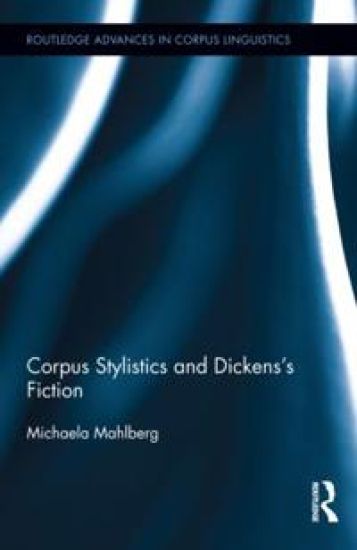
This book presents an innovative approach to the language of one of the most popular English authors. It illustrates how corpus linguistic methods can be employed to study electronic versions of texts by Charles Dickens. With particular focus on Dickens’s novels, the book proposes a way into the Dickensian world that starts from linguistic patterns. The analysis begins with clusters, i.e. repeated sequences of words, as pointers to local textual functions. Combining quantitative findings with qualitative analyses, the book takes a fresh view on Dickens’s techniques of characterisation, the literary presentation of body language and speech in fiction. The approach brings together corpus linguistics, literary stylistics and Dickens criticism. It thus contributes to bridging the gap between linguistic and literary studies and will be a useful resource for both researchers and students of English language and literature.
This book presents an innovative approach to the language of one of the most popular English authors. It illustrates how corpus linguistic methods can be employed to study electronic versions of texts by Charles Dickens. With particular focus on Dickens’s novels, the book proposes a way into the Dickensian world that starts from linguistic patterns. The analysis begins with clusters, i.e. repeated sequences of words, as pointers to local textual functions. Combining quantitative findings with qualitative analyses, the book takes a fresh view on Dickens’s techniques of characterisation, the literary presentation of body language and speech in fiction. The approach brings together corpus linguistics, literary stylistics and Dickens criticism. It thus contributes to bridging the gap between linguistic and literary studies and will be a useful resource for both researchers and students of English language and literature.
Corpus linguistics is often regarded as a methodology in its own right, but little attention has been given to the theoretical perspectives from which the subject can be approached. The present book contributes to filling this gap. Bringing together original contributions by internationally renowned authors, the chapters include coverage of the lexical priming theory, parole-linguistics, a four-part model of language system and language use, and the concept of local textual functions. The theoretical arguments are illustrated and complemented by case studies using data from large corpora such as the BNC, smaller purpose-built corpora, and Google searches. By presenting theoretical positions in corpus linguistics, "Text, Discourse, and Corpora" provides an essential overview for advanced undergraduate, postgraduate and academic readers. "Corpus and Discourse Series" editors are: Wolfgang Teubert, University of Birmingham, and Michaela Mahlberg, Liverpool Hope University College. Editorial Board: Frantisek Cermak (Prague), Susan Conrad (Portland), Geoffrey Leech (Lancaster), Elena Tognini-Bonelli (Lecce and TWC), Ruth Wodak (Lancaster and Vienna), and Feng Zhiwei (Beijing). Corpus linguistics provides the methodology to extract meaning from texts. Taking as its starting point the fact that language is not a mirror of reality but lets us share what we know, believe and think about reality, it focuses on language as a social phenomenon, and makes visible the attitudes and beliefs expressed by the members of a discourse community. Consisting of both spoken and written language, discourse always has historical, social, functional, and regional dimensions. Discourse can be monolingual or multilingual, interconnected by translations. Discourse is where language and social studies meet. "The Corpus and Discourse" series consists of two strands. The first, "Research in Corpus and Discourse", features innovative contributions to various aspects of corpus linguistics and a wide range of applications, from language technology via the teaching of a second language to a history of mentalities. The second strand, "Studies in Corpus and Discourse", is comprised of key texts bridging the gap between social studies and linguistics. Although equally academically rigorous, this strand will be aimed at a wider audience of academics and postgraduate students working in both disciplines.
Corpus linguistics is often regarded as a methodology in its own right, but little attention has been given to the theoretical perspectives from which the subject can be approached. The present book contributes to filling this gap. Bringing together original contributions by internationally renowned authors, the chapters include coverage of the lexical priming theory, parole-linguistics, a four-part model of language system and language use, and the concept of local textual functions. The theoretical arguments are illustrated and complemented by case studies using data from large corpora such as the BNC, smaller purpose-built corpora, and Google searches. By presenting theoretical positions in corpus linguistics, "Text, Discourse, and Corpora" provides an essential overview for advanced undergraduate, postgraduate and academic readers. "Corpus and Discourse Series" editors are: Wolfgang Teubert, University of Birmingham, and Michaela Mahlberg, Liverpool Hope University College. Editorial Board: Frantisek Cermak (Prague), Susan Conrad (Portland), Geoffrey Leech (Lancaster), Elena Tognini-Bonelli (Lecce and TWC), Ruth Wodak (Lancaster and Vienna), and Feng Zhiwei (Beijing). Corpus linguistics provides the methodology to extract meaning from texts. Taking as its starting point the fact that language is not a mirror of reality but lets us share what we know, believe and think about reality, it focuses on language as a social phenomenon, and makes visible the attitudes and beliefs expressed by the members of a discourse community. Consisting of both spoken and written language, discourse always has historical, social, functional, and regional dimensions. Discourse can be monolingual or multilingual, interconnected by translations. Discourse is where language and social studies meet. "The Corpus and Discourse" series consists of two strands. The first, "Research in Corpus and Discourse", features innovative contributions to various aspects of corpus linguistics and a wide range of applications, from language technology via the teaching of a second language to a history of mentalities. The second strand, "Studies in Corpus and Discourse", is comprised of key texts bridging the gap between social studies and linguistics. Although equally academically rigorous, this strand will be aimed at a wider audience of academics and postgraduate students working in both disciplines.